What Does a Double-Walled Wine Tote Actually Buy in Transit?
A double-walled wine tote is two shells with a cavity between them, and what the second wall buys is contact time. The cavity has to be filled with something that recovers, or the second wall collapses onto the first and buys nothing.
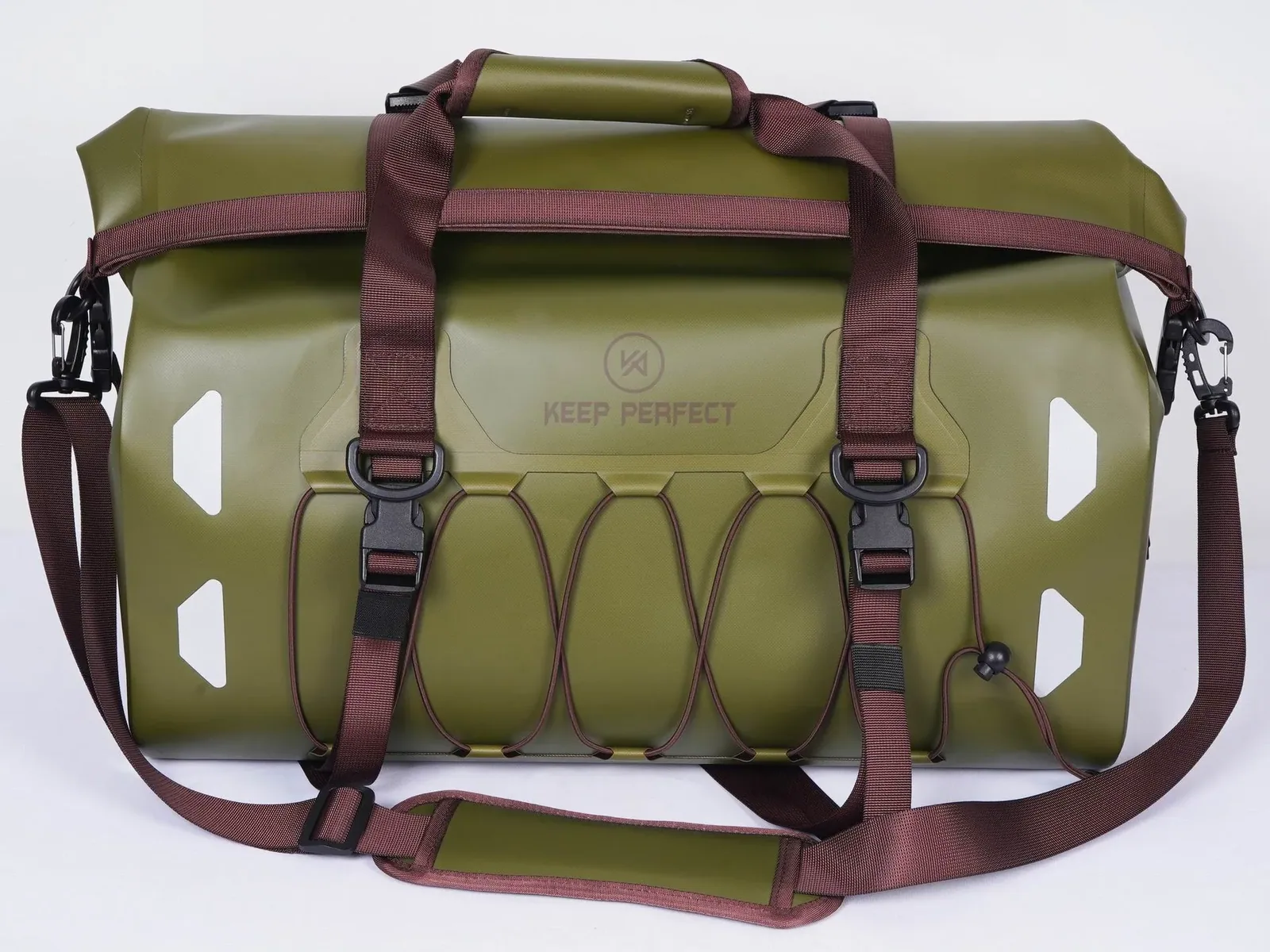
A double-walled wine tote is two shells with a cavity between them, and what the second wall buys is contact time. A bottle breaks on a short hard impact and survives a longer softer one, so anything that extends the deceleration helps. The cavity has to be filled with something that recovers — closed-cell foam or a moulded tray — or the second wall collapses onto the first and buys nothing.
Double-walling is the answer most programmes reach for when a bag fails a drop test, and it is often the right answer. It is also the most expensive way to buy protection, and the protection is only worth what the cavity between the walls contains. A double-walled bag with nothing in the cavity is two shells and a marketing claim.
The drop-test method is in Wine Bag Drop Protection Testing and the divider position is in Wine Bag Dividers for Transit. This piece is about the second wall itself.
What Does Double-Walled Mean on a Wine Tote?
Two shells with a cavity between them and something in the cavity. An inner shell wraps the bottles and an outer shell takes the handling, and between them sits either a closed-cell foam, a moulded tray or a spacer fabric. The construction is only worth what is in the middle, and the middle is the specification that gets skipped.
There are three constructions in use and they are genuinely different products. A laminated build bonds foam sheet between two fabrics, which is the lightest and the least protective. A spaced build holds the two shells apart with a spacer mesh or a foam frame, which lets the cavity work. A moulded build puts a shaped tray between the shells, which is the most protective and the most expensive and it needs a tool.
The definition matters commercially, because "double-walled" is used in the trade to mean all three and sometimes to mean nothing at all — a bag with a lining is technically two layers. Ask what is between the walls and what it weighs per unit, and the answer distinguishes the three in one question.
| Construction | What is in the cavity | Protection | Weight added | Cost | Best for |
|---|---|---|---|---|---|
| Laminated | 3-5 mm closed-cell foam bonded between shells | moderate | about 150 g | low | a two-bottle presentation bag |
| Spaced | a spacer mesh or a foam frame, 6-10 mm | good | about 250 g | moderate | a four-bottle carrier on a parcel lane |
| Moulded | a shaped tray, 8-12 mm, with a cell per bottle | high | about 400 g | high plus a tool | a six-bottle shipper at volume |
| Two shells only | nothing | none beyond the second layer | about 100 g | low | nothing — it is a claim rather than a build |
| Insulated cavity | 6-8 mm closed cell plus a welded lining | good, and thermal | about 350 g | moderate to high | a chilled lane |
How Much Impact Protection Does a Second Wall Buy?
It buys contact time, and contact time is the whole mechanism. A bottle landing on a hard surface decelerates over a few milliseconds and the peak force is high; the same bottle decelerating over twenty milliseconds sees a far lower peak. Glass breaks on peak force rather than on energy, so extending the deceleration is the only thing that reliably reduces breakage.
In practice a well-built double wall on a two-bottle carrier — 5 mm of closed cell bonded between shells — reduces the peak at the corner drop substantially and it is often the difference between a pass and a fail at 460 mm. A spaced build with 8 mm and a foam frame does more. A second shell with nothing in it does almost nothing, because the two layers bottom out against each other on the first hard impact.
The honest way to state it is in test results rather than in millimetres: run the drop test on the single-walled build and on the double-walled one, at the same weight and the same height, and compare the pass rate and the damage. That is two mornings and it is the only comparison a customer will believe.
Which Material Goes Between the Two Walls?
Closed-cell foam for protection, a moulded tray for protection plus shape, and a spacer mesh where the cavity also has to breathe. Closed-cell PE or EVA at 5 to 8 mm is the working answer: it recovers after an impact, it is unaffected by condensation and it is available in a density range you can specify. Open-cell foam does not recover and it holds water; a batting or a wadding does neither and it migrates.
Density is the number that decides whether the cavity still works in month three. A low-density foam bottoms out and stays compressed, so the bag has one good drop in it. Specify the density in kilograms per cubic metre with a tolerance and a compression-set figure, and the second run can be held to the first.
Where the bag is also insulating, the cavity doubles as the thermal layer and the same foam does both jobs — which is the case covered in Insulated Wine Bags for Whites. The specification that changes is the lining: a welded seam, because water in the cavity destroys both the thermal and the mechanical performance.
Does Double-Walling Change the Internal Cell?
It changes the external dimensions and it should not change the internal ones. The cell is set by the bottle — eight millimetres over the widest shape — and that figure does not move because a second wall was added. What moves is the outside of the bag, which grows by twice the cavity thickness plus the second shell.
That growth is the thing to plan for, because it is where the cost lands. A two-bottle carrier at 190 mm wide becomes about 210 mm; a six-bottle carrier at 290 mm becomes about 320 mm. Across a carton and a container that is a cube increase that is charged for, and it is usually larger than the material cost of the second wall.
The second consequence is the handle. The hand gap is set from the rim, and the rim has moved outward and upward with the second wall. A handle specified on the single-walled drawing will be too short on the double-walled bag, and the bag gets carried by the rim, which is not a load path.
What Does a Double-Walled Build Weigh?
About 150 to 400 g more per bag depending on the construction, and on a six-bottle carrier that is 10 to 20% of the empty weight. It matters twice: once in the parcel weight band the consignment falls into, and once in the manual handling at the warehouse. A carton of double-walled six-bottle carriers is a heavy carton.
The second weight effect is on the drop band, and it is the one that surprises people. A six-bottle carrier that was at 8.1 kg single-walled can cross 9.5 kg once the second wall is added, which moves the test height from 460 mm to 300 mm. The bag is tested more gently not because it is stronger but because it is heavier — and the programme has paid for protection it then does not get to demonstrate.
Where a programme is close to a weight band, it is worth asking for the build with a lighter cavity — a 5 mm foam rather than an 8 mm one — and testing both. Crossing a band for 50 g of foam is a poor trade.
Specifying a double-walled wine tote
- Ask what is in the cavity. A second shell with nothing between the walls buys almost nothing.
- Specify the foam by density as well as thickness, or the cavity bottoms out and stays compressed.
- The internal cell does not change; the external dimensions grow by twice the cavity plus a shell.
- Re-set the hand gap — the rim has moved outward and the handle drawn on the single-walled bag is too short.
- Watch the weight bands: crossing 9.5 kg moves the test height from 460 mm to 300 mm.
How Does the Second Wall Affect the Handle Load Path?
It puts the load into the outer shell instead of into the inner one, and that is the failure mode to design against. A handle attached to the outer shell carries the bottles through the cavity, which means the foam is in the load path and it is being compressed by the weight as well as by the impact. A handle attached to the inner shell carries them directly and it leaves the cavity to do its own job.
The working answer is a continuous loop that runs under the base and is attached to the inner shell, with the outer shell closing over it and the base board fixed to both. It is more operations and it is the construction that holds. A loop on the outer shell only is a loop pulling on foam.
The termination matters more with two shells, because the load has to cross from one to the other somewhere. Where the two shells are joined only at the binding at the top, the whole load crosses at the binding, and a binding is a seam. Join them at the base as well, or accept that the top binding is carrying eight kilograms.
Is a Double-Walled Wine Tote Enough for a Parcel Network?
Usually yes for a two or four bottle carrier on a managed lane, and usually not for a six-bottle carrier on an unmanaged one. The distinction is what the network does to the bag rather than what one drop does. A double wall answers a drop; it does not answer hours of vibration, and vibration is what walks a divider out of position and works a closure open.
Where the consignment goes through a parcel network, the procedure the network enforces is the one to test to, and ISTA 3A is the one usually named for individual parcels. It includes a drop sequence and a random vibration element, and it is the vibration element that a double wall does not answer. ASTM D5276 on its own will pass a bag that a week of sorting will open.
The honest answer for a six-bottle parcel programme is often a bag inside a box, which is the configuration covered in Wine Bag vs Gift Box. The box takes the network and the bag takes the hand, and the second wall is then spent on the moment the customer opens it rather than on the sorting hall.
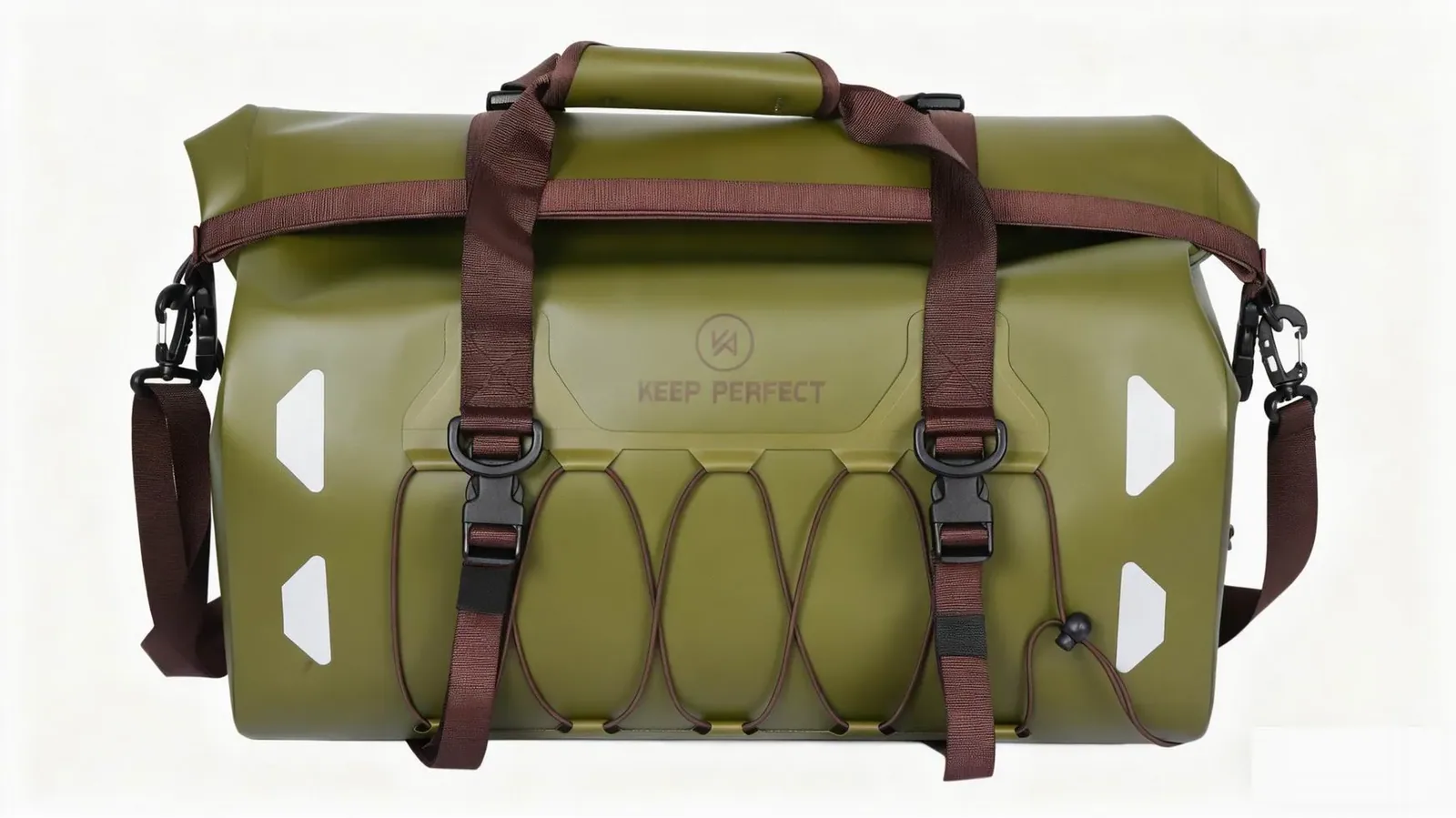
How Is a Double-Walled Wine Tote Drop-Tested?
The same way as any bottle bag, with one addition: test the cavity as well as the bag. ASTM D5276, free fall of the filled bag, one fresh production sample per orientation, base then weakest bottom corner then a flat side then the handle. Pass on no breakage, no opened seam or closure and no glass exposed.
The addition is a compression check on the cavity, and it is the test that separates a real double wall from a claim. Load the wall with a stated force over a stated area, hold it for a stated dwell, release and measure the recovery. A cavity that does not come back has bought one drop, and the second one will find that out.
The second addition is to run the test on a bag that has been through the carton rather than on a fresh unit. A double-walled bag that has been compressed in a carton for a month has partly used its cavity before the customer ever drops it, and that is the condition in which the field failures happen.
| Test | What it decides | How to run it | Pass criterion |
|---|---|---|---|
| Drop, ASTM D5276 | Whether the bag contains the bottle | Four orientations, one fresh production bag each | No breakage, no opened seam, no glass exposed |
| Cavity compression | Whether the second wall recovers | A stated force over a stated area, held, released, measured | Recovery to within a stated percentage |
| Carton-aged drop | Whether the cavity survived the pack-out | The same drop on a bag held in its carton for a stated period | The same criterion as the fresh drop |
| Divider position | Whether the cavity held the divider | Inspect the cell after the drop sequence | No cell movement beyond a stated amount |
| Handle pull | Whether the load path holds across two shells | A stated force with a stated dwell | No detachment and no stitch failure |
When Is a Shipper Better Than a Double-Walled Wine Tote?
When the bag is being asked to do a box job. A double-walled wine tote is a carrying bag that survives a drop; a shipper is a container that survives a network. Where the consignment is a six-bottle carrier going through an unmanaged parcel network on a multi-day lane, the shipper is the right article and the second wall is money spent on the wrong one.
The second case is volume and distance. On a palletised lane between two warehouses, a moulded tray in a corrugated outers costs less per bottle than any double-walled bag and it protects better, because the tray is shaped to the bottle and the outer takes the stacking. The bag is the answer when the customer carries it, not when a pallet does.
The third case is where the programme needs both thermal and mechanical performance at a high level. A double-walled bag can do both, but a shipper with a phase-change pack and a moulded cell does both better, and at volume it is a comparable cost. Where the window is over six hours, that is the answer.
- Construction
- Laminated, spaced or moulded, named rather than described
- Cavity material
- Polymer, thickness and density in kilograms per cubic metre
- Recovery
- A compression-set figure and the recovery after a stated dwell
- Internal cell
- Unchanged from the single-walled figure, eight millimetres over the bottle
- External
- The grown dimensions, with units per carton recalculated
- Hand gap
- Re-set from the new rim, 90 mm minimum
- Handle
- A continuous loop into the inner shell, joined to the outer at the base
- Weight
- Weighed on a production unit, and the drop band set from it
- Tests
- ASTM D5276, a cavity compression check and a carton-aged drop
- Reference
- A sealed sample, plus one with the cavity cut open
On the programme side: MOQ 500 pcs per style and colourway, sampling 6-10 working days from a signed-off tech pack with the physical bottles in hand, bulk production 35-50 days from written sample approval, inspection at AQL 2.5 under ISO 2859-1 General Inspection Level II, T/T 30/70, FOB Xiamen. A double-walled build is one of the cases that sits at the 12-15 working day end of sampling, because the cavity has to be laminated or the tray has to be tooled before the first unit can be made.
Ask what is in the cavity
Send the count, the bottle shapes, the network and the lane. You get a cavity specification, a handle load path and the tests that hold them, within one business day.
Frequently Asked Questions
What does double-walled mean on a wine tote?
Two shells with a cavity between them and something in the cavity. Ask what is in the middle — a second shell with nothing between the walls buys almost nothing.
How much protection does a second wall add?
It extends the contact time of an impact, and glass breaks on peak force rather than on energy. A well-built 5 mm cavity is often the difference between a pass and a fail at 460 mm.
What material goes between the two walls?
Closed-cell PE or EVA at 5 to 8 mm, specified by density as well as thickness. Open-cell foam does not recover and a batting migrates.
Does double-walling change the internal cell?
No. The cell is set by the bottle at eight millimetres over the widest shape. What grows is the outside of the bag, by twice the cavity plus a shell.
Does a double-walled bag need a different handle?
Yes. The rim has moved outward, so a handle drawn on the single-walled bag will be too short. Re-set the hand gap to 90 mm from the new rim.
How much weight does a double wall add?
About 150 to 400 g per bag. On a six-bottle carrier that can cross the 9.5 kg band, which moves the test height from 460 mm to 300 mm.
Does the handle attach to the inner or the outer shell?
The inner, as a continuous loop under the base, with the outer shell joined at the base as well. A loop on the outer shell only is a loop pulling on foam.
Is a double-walled wine tote enough for a parcel network?
For a two or four bottle carrier on a managed lane, usually. It answers a drop and not hours of vibration, and vibration is what opens a closure.
How is a double-walled bag tested?
ASTM D5276 on the filled bag, plus a compression and recovery check on the cavity, plus the same drop on a bag that has aged in its carton.
When is a shipper a better answer?
On a six-bottle parcel consignment, on a palletised warehouse-to-warehouse lane, and where the window needs thermal and mechanical performance at a high level.
What is the MOQ for a double-walled wine tote?
MOQ is 500 pcs per style and colourway, and 300 pcs can be discussed on a repeat. Sampling usually sits at 12-15 working days because the cavity or the tray has to be made first.
How long does sampling take for a double-walled build?
12-15 working days where the cavity has to be laminated or a tray tooled. A stock foam laminated into a standard build can sit inside 6-10.
What inspection applies to a double-walled order?
ISO 2859-1 at General Inspection Level II with AQL 2.5, plus a cavity thickness and density check on the drawn sample, because both are invisible in a photograph.
How do I stop the cavity drifting on a reorder?
Put the polymer, the thickness and the density on the tech pack with a tolerance, and hold a sealed sample with the cavity cut open.
People Also Ask
What is a double walled wine tote?
Two shells with a cavity between them, filled with closed-cell foam, a spacer frame or a moulded tray. The cavity is the specification.
Does a double walled bag protect bottles better?
Yes, if there is something in the cavity. It extends the impact contact time, and glass breaks on peak force rather than on energy.
How much heavier is a double walled wine bag?
About 150 to 400 g per bag, and on a six-bottle carrier that can cross the 9.5 kg drop band.
Do I need a double walled bag or a shipper?
A double-walled bag when a customer carries it; a shipper when a pallet or an unmanaged parcel network moves it.
How do I test a double walled wine bag?
ASTM D5276 on the filled bag, a compression and recovery check on the cavity, and the same drop on a carton-aged unit.
Sources and further reading
Every figure on this page is either our own programme data or attributed below. Open the originals before you write them into a specification.
- ASTM D5276 — drop test of loaded containers by free fallASTM International
- ISTA 3 Series — packaged-product performance test proceduresInternational Safe Transit Association
- ISO 2206 — packaging: identification of parts of a complete, filled transport package when testingInternational Organization for Standardization