How Should a Wine Tote Handle and Base Be Reinforced?
A wine bag comes back on two parts. The handle fails because the load goes into a seam in peel rather than into webbing in tension, and the base fails because the board floats inside the shell. Both are drawings, not descriptions.
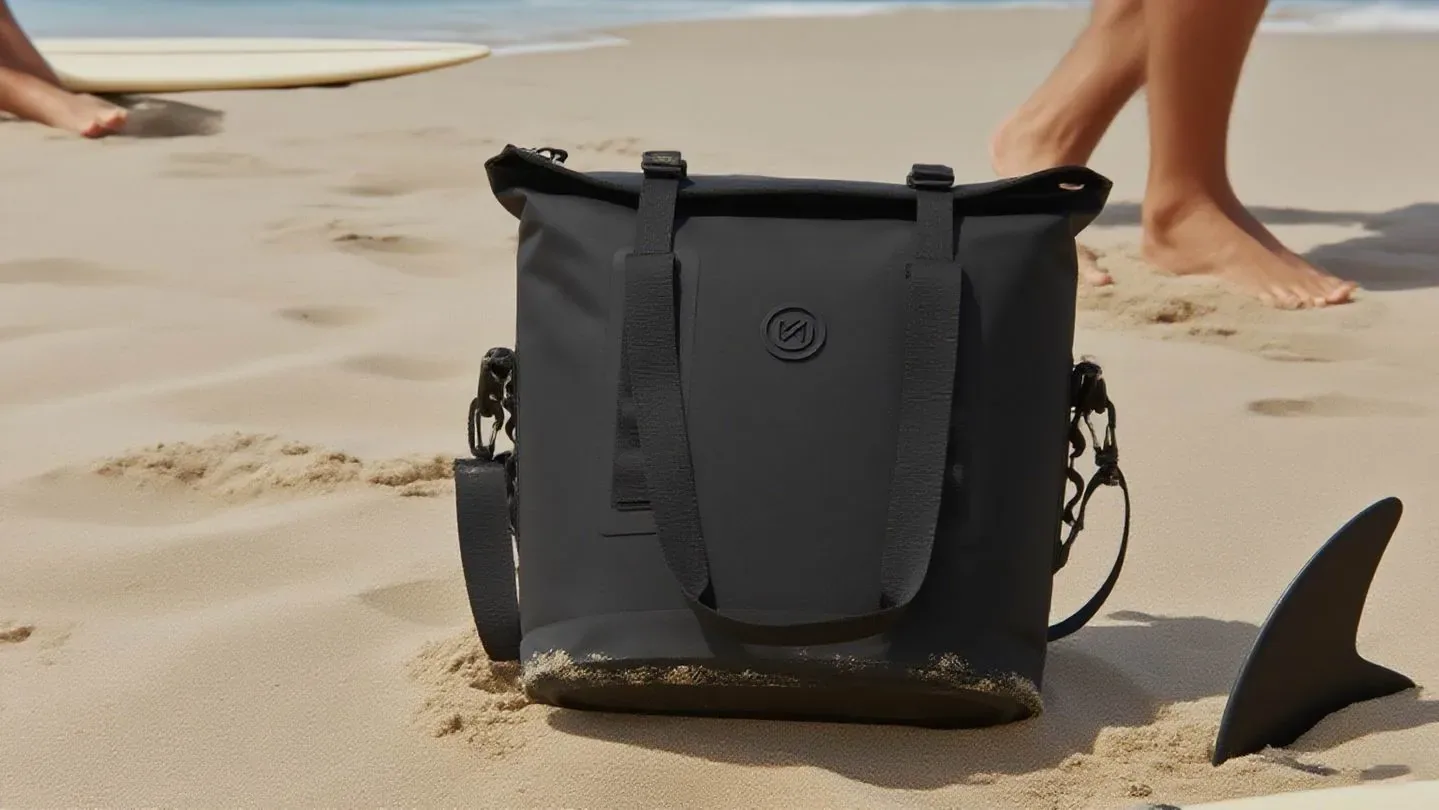
A wine bag comes back on two parts: the handle and the base. The handle fails because the load is put into a seam in peel rather than into webbing in tension, and the base fails because the board floats inside the shell instead of being fixed to it. The fixes are a continuous webbing loop running under the base, a base board on the cell footprint fixed at more than one point, and a bar-tack pattern that is drawn rather than described.
Both parts are usually specified by description. "A webbing handle" covers two constructions with very different strength, and "a reinforced base" covers a load path and a piece of foam with a fabric sleeve. Neither description survives a second run, because neither is measurable. This piece turns both into drawings: what the load path is, what the numbers are, and what gets tested before the goods leave.
The bottle dimensions behind all of it sit in the wine bag programme hub, and the count-driven changes to these two parts are in 2 vs 4 vs 6-Bottle Wine Totes. What follows is the construction itself.
Why Do Handles Fail Before the Fabric Does?
Because the handle is a load path and not a component, and the load path usually ends in a seam. Two handles stitched to the side panels put the weight of the bottles into the stitch line in peel — the direction in which a seam is weakest — and the fabric around them is barely worked at all. The bag fails at the joint with the shell almost untouched, which is why a returned bag looks nearly new and cannot be repaired.
The second reason is cycle count rather than peak load. A handle on a reusable wine bag is loaded and unloaded hundreds of times, and each cycle works the stitch line a little. A construction that holds 8 kg once will hold it, and a construction that holds 8 kg once and then flexes at the seam will not hold it four hundred times. That is the distinction a static pull test does not make.
The third reason is what the customer does when the handle is uncomfortable. A strap that is too narrow, or too short, or that cuts into the hand, gets abandoned in favour of carrying the bag by the rim — and the rim is not a load path at all. Comfort is structural here, not cosmetic.
| Failure | What you see on the returned bag | Root cause | The construction that fixes it |
|---|---|---|---|
| Peel at the side seam | Webbing intact, stitch line opened | Two handles stitched to the panels | A continuous loop running under the base |
| Pulled stitch at the bar-tack | Webbing detached with the patch | Bar-tack into the lining, not into a reinforced panel | Bar-tack into a reinforcement patch that reaches the base |
| Strap cut into the hand | No damage to the bag at all | A 25 mm strap above about 6 kg | 38 mm webbing or a padded sleeve above 6 kg |
| The rim carried instead | Rim deformed, stitching opened at the mouth | Hand gap below 90 mm | A hand gap of 90 mm or more |
| Webbing worn through | Frayed strap, bag otherwise fine | Abrasion at the contact point over cycles | A padded sleeve, or a bound edge on the webbing |
What Load Path Carries Six Bottles Safely?
One answer, and it is the continuous loop. A single length of webbing that runs under the base board, up both side panels and back to itself puts the entire load into the webbing in tension, and webbing in tension is very strong. The same load in the same bag through two side handles puts it into stitch lines in peel, and at 8.1 kg for a six-bottle carrier the peel load wins.
The loop has a precondition that is easy to miss: it turns the base into a structural member. If the webbing runs under a fabric floor with no board in it, the loop simply pulls the floor up and the load path is not closed. The base insert is therefore part of the handle construction, and the two have to be designed together. That is the reason the six-bottle carrier is a different product from the two-bottle one and not a bigger version of it.
The second precondition is the termination. The loop is bar-tacked or riveted where it meets the panel, and that termination carries the whole load into the shell. A bar-tack into the lining alone is not attached to anything that holds a load. It has to go into a reinforcement patch, and on a six-bottle carrier the patch should reach the base panel rather than stopping halfway up the side.
How Wide Should the Handle Webbing Be at Each Count?
Twenty-five millimetres below about 4 kg, 38 mm above about 6 kg, and a padded sleeve where the bag will be carried any distance at the top of that range. The number is not about strength — a 25 mm polyester webbing has a breaking force far above 8 kg — it is about the pressure on the hand and about what the customer does when the strap is uncomfortable.
A useful way to check it is the hand gap as well as the width. Below about 90 mm between the handle and the rim, a hand in a glove will not fit, and the bag gets carried by the rim instead. That is a separate failure with separate consequences: the rim is not reinforced, the stitching at the mouth opens, and the print on the panel gets grabbed.
Where a rope handle is used for a presentation bag, the same two numbers apply and one more is added: the rope is set into a grommet or a stitched channel, and the channel is reinforced. A rope pulled through an unreinforced fabric eyelet is the single most common failure on a presentation wine bag, and it is entirely a reinforcement question.
What Does a Bar-Tack Pattern Have to Cover?
The full width of the webbing, plus a margin, into a reinforcement patch, with a stated number of bar-tacks and a stated stitch count. That is four numbers and it is the difference between a handle that holds and a handle that holds for a season. A description — "bar-tacked securely" — is not a specification and it is not reproducible on the second run.
The pattern also has to put the tacks where the load goes. A single bar-tack across the middle of the webbing concentrates the load on one line and the webbing tears above it. A box pattern with a bar-tack at each end of the contact area spreads it, and an X inside the box adds a second path. Where the handle is riveted instead, the same logic applies to the washer: a rivet through fabric with no washer pulls through.
The number of bar-tacks is the one that drifts. It is invisible in a photograph, it is not on the drawing unless someone draws it, and it is the first thing reduced when a line is under pressure. Put the count on the tech pack and check it on the first production unit rather than on the sample.
Why Does a Base Board Need More Than One Fixing Point?
Because a board fixed at one point rotates. The board carries the cells, the cells carry the bottles and the bottles move when the bag is tilted, so any rotation takes the cells out of square and the bottles out of separation. A single fixing at the centre lets the board pivot; two fixings stop the rotation but allow a hinge along the line between them; three, spread across the footprint, hold it flat.
The board also has to be the footprint of the cells and not smaller. A board cut 10 mm inside the footprint looks tidy on a drawing and it puts the outer cells on fabric, where they sag under load. Outer cell on a board, board fixed to the shell, and the load goes out through the structure rather than through the lining.
There is a version of the base failure that is worth naming separately because it feels right in the sample: a padded base with no board in it. A piece of foam in a fabric sleeve spreads a static load and it does not carry a point load, and the point load here is the bottom of a bottle. Put a board in it and the foam becomes comfort rather than structure, which is the job it is good at.
| Base element | Two bottles | Four bottles | Six bottles | Why |
|---|---|---|---|---|
| Insert | 2 mm board | 2-3 mm board | 3 mm board, or 2 mm with a mid-span support | The span triples with the count |
| Footprint | the cells | the cells | the cells plus about 5 mm | The outer cell must sit on the board |
| Fixing points | one | two | three, spread across the footprint | One rotates, two hinge, three hold flat |
| Frame | none | none | a turned-up edge or a moulded tray on rigid builds | Turns a panel into a structure |
| Feet | optional | on rigid builds | on rigid builds | A rigid bag is set down and wears its base |
| Handle interface | independent of the base | handle into the base panel | continuous loop under the board | The loop needs the board to close the load path |
When Is a Moulded Base Worth the Tooling?
When the bag is rigid, when the count is four or more, or when the programme is going to repeat for more than two seasons. A moulded tray does three things a flat board cannot: it cups each bottle, it carries a turned-up edge that stiffens the whole footprint, and it gives the handle loop somewhere to run that is already structural. It costs a tool and it removes several operations.
The arithmetic is straightforward and it is worth doing explicitly rather than by feel. Compare the die and the jig for a slotted board assembly against the tool plus the lower labour per unit, at the volume the programme will actually run over two seasons rather than at the first order. Programmes that compare at first-order volume almost never tool, and programmes that compare at two-season volume often do.
One caution on a moulded base: it fixes the cell geometry permanently. If the glass supplier changes the bottle shape, the tool does not. Where the range is likely to move, a slotted board with a die that can be re-cut is the more forgiving answer, and the re-cut is a fraction of a new tool.
Turning handle and base into drawings
- The handle is a load path: a continuous loop under the base puts the load in tension, not in peel.
- A loop is only as good as the board under it — design the handle and the base together.
- Bar-tack into a reinforcement patch that reaches the base, and draw the number of tacks.
- Fix the base board at three spread points on a six-bottle carrier; one rotates and two hinge.
- A padded base with no board in it spreads a static load and does not carry a point load.
How Are Handle Attachments Tested Before Shipment?
Two tests and neither needs a laboratory. The first is a static pull: the handle is loaded to a stated force, held for a stated dwell, and the attachment is inspected for stitch failure, fabric tear or detachment. State the force and the dwell on the tech pack; a pull test without a dwell is not a test, because creep is what fails in service.
The second is a loaded carry, and it is closer to the field than any machine. Load the bag to the weight of the range, carry it a stated distance, set it down and repeat for a stated number of cycles, then inspect the attachment. It finds the cycle-count failures a static pull misses, and it takes an afternoon.
Both should be run on a production unit rather than on a sample, because the sample is usually made with more care and with slightly different tension at the seam. A handle that pulls off a production unit at 400 cycles would have pulled off in the field at 300.
What Is the Hand Gap and Why Does It Decide How the Bag Is Carried?
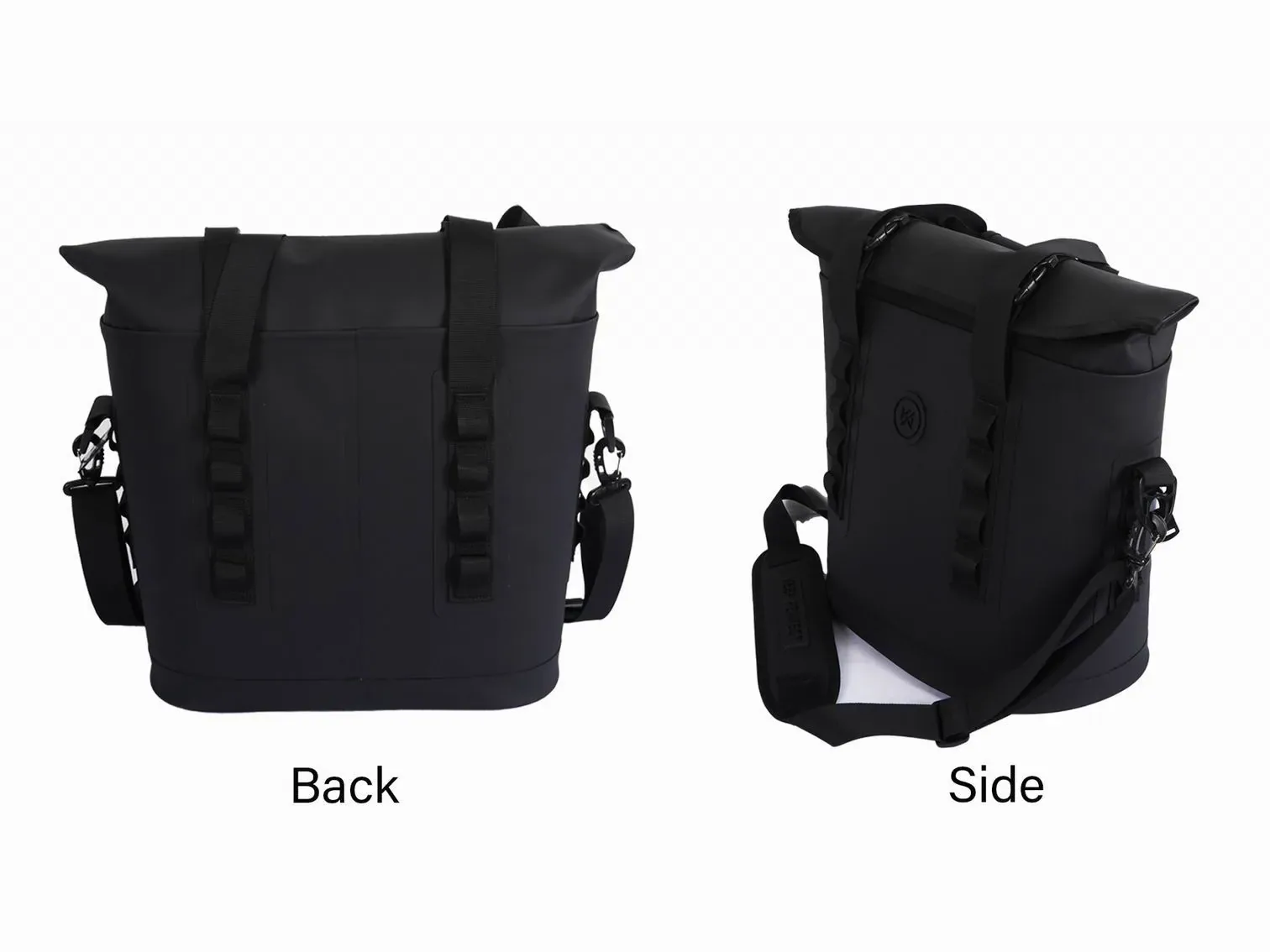
The hand gap is the clear space between the inside of the handle and the rim of the bag, and 90 mm is the working minimum. Below it a hand in a glove will not fit, and above about 130 mm the bag swings awkwardly and the bottles shift. It is a small number on a drawing and it decides whether the handle gets used at all.
It interacts with the bottle height. A bag sized to a tall Riesling with a handle set for a shorter Bordeaux ends up with a gap that is comfortable on one shape and unusable on the other, and the tall shape is the one that gets carried by the rim. Set the gap against the tallest bottle in the range, not against the house shape.
The third interaction is with the closure. Where the mouth closes over the bottles — a zip, a flap, a drawcord — the handle has to clear the closure when the bag is carried, or it pulls the closure open. That is a drawing check, it takes a minute, and it is the kind of thing nobody finds until the first customer does.
- Handle construction
- Continuous loop under the base, or two side handles below 4 kg only
- Webbing
- Material, width in millimetres, and the breaking force
- Hand gap
- 90 mm minimum, measured to the rim of the tallest bottle in the range
- Termination
- Bar-tack or rivet, into a reinforcement patch, with the patch reaching the base
- Bar-tack pattern
- Drawn: the number of tacks, the stitch count and the coverage of the webbing width
- Base insert
- Material and thickness, set from the span
- Base footprint
- The cells plus about 5 mm, drawn
- Base fixing
- Three spread points at six bottles, two at four
- Pull test
- Force and dwell, stated, run on a production unit
- Carry test
- Loaded weight, distance and cycle count, stated
How Do Handle and Base Choices Show Up on the Reorder?
As drift in three places, all of them invisible in a photograph. The webbing width is the first: 20 mm substituted for 25 mm is a cost saving nobody notices until the strap starts cutting. The number of bar-tacks is the second. And the base board thickness is the third — a 2 mm board for a 3 mm one holds the cells the same on day one and differently in month three.
The control is the same three-line addendum the rest of the category uses, and it fits on one page: a sealed reference sample held by both sides, a recorded material specification with a figure and a tolerance on each of the three, and written notice before any substitution. The reasoning is set out in keeping a reorder inside tolerance, and in this category it matters more than in most, because the two parts that drift are the two that carry the load.
The pre-production sample should also be a filled one. Three or four bags from bulk materials, packed with the actual bottles at the actual weight, then carried and dropped. An empty sample that looks right has approved nothing, and in this category it has specifically not approved the two parts that fail.
Finally, the inspection class list has to name these two. Major is a bag that gets returned: a handle attachment that fails the static pull, a base board that is not fixed, a hand gap below 90 mm. Critical is a bag that is unsafe: a base seam that releases a bottle at the drop height. At AQL 2.5 under ISO 2859-1 General Inspection Level II, a 500-piece lot draws 50 units with an accept and reject pair of 3 and 4 for majors, and criticals are zero-tolerance at every level.
Draw the load path before you price the bag
Send the count, the bottle shapes and the network. You get a handle construction, a base specification and the two tests that hold them, within one business day.
Frequently Asked Questions
What is the strongest handle for a wine bag?
A continuous webbing loop running under a boarded base and up both sides. It puts the load into webbing in tension; two side handles put the same load into a seam in peel.
What width should a wine bag handle be?
25 mm below about 4 kg and 38 mm, or a padded sleeve, above about 6 kg. The number is about pressure on the hand rather than about strength.
What is a hand gap and how big should it be?
The clear space between the handle and the rim. Ninety millimetres is the working minimum; below it a hand in a glove will not fit and the bag is carried by the rim instead.
Why does the base fail on a wine bag?
Two specification problems: the board floats inside the shell instead of being fixed to it, or it is padded with foam and has no board in it, and foam does not carry a point load.
How many fixing points does a base board need?
One at two bottles, two at four and three spread across the footprint at six. One rotates, two hinge along the line between them, three hold flat.
Should the base board be the same size as the cells?
The footprint of the cells plus about 5 mm. Cut inside the footprint and the outer cell sits on fabric and sags under load.
What does a bar-tack pattern need to specify?
The number of tacks, the stitch count, the coverage of the webbing width and a reinforcement patch that reaches the base. A description is not reproducible on a reorder.
Is a padded base with foam enough?
Not without a board. Foam spreads a static load and does not carry a point load, and the point load here is the bottom of a bottle.
When is a moulded base worth the tooling?
On a rigid bag, at four bottles or more, or on a programme repeating over more than two seasons. Compare at two-season volume rather than at first-order volume.
How is a handle attachment tested?
A static pull to a stated force with a stated dwell, and a loaded carry for a stated number of cycles. Run both on a production unit rather than on a sample.
What is the MOQ for a wine bag with a custom handle?
MOQ is 500 pcs per style and colourway, and 300 pcs can be discussed on a repeat. A moulded base or a custom handle component is a tooling line on the first invoice.
How long does sampling take for a reinforced build?
6-10 working days from a signed-off tech pack with the bottles in hand. A moulded base or a sourced handle component moves it toward 12-15 working days.
How is a handle defect classified at inspection?
Major if the attachment fails the stated static pull or the hand gap is below 90 mm. Critical if a base seam releases a bottle at the drop height, and criticals are zero-tolerance.
What sample size applies to a 500-piece wine bag order?
ISO 2859-1 at General Inspection Level II draws code letter H: 50 units, accept 3 and reject 4 at AQL 2.5 for major defects.
People Also Ask
What is the strongest handle construction for a wine bag?
A continuous webbing loop under a boarded base, bar-tacked into a reinforcement patch that reaches the base.
Why does my wine bag handle keep coming off?
The load is going into a seam in peel rather than into webbing in tension, or the bar-tack is into the lining rather than into a reinforced panel.
How thick should a wine bag base be?
Two millimetres of board at two bottles, 2-3 mm at four and 3 mm at six, on the footprint of the cells, fixed at three spread points.
What is a hand gap on a bag?
The clear space between the handle and the rim, and 90 mm is the working minimum for a hand in a glove.
How do you test a bag handle?
A static pull to a stated force held for a stated dwell, plus a loaded carry for a stated cycle count, both on a production unit.
Sources and further reading
Every figure on this page is either our own programme data or attributed below. Open the originals before you write them into a specification.
- ASTM D6193 — standard practice for stitches and seamsASTM International
- ASTM D5276 — drop test of loaded containers by free fallASTM International
- ISO 2859-1:1999 — sampling procedures for inspection by attributesInternational Organization for Standardization