What Should Be Checked on a Wine Bag Before Shipment?
Pre-shipment inspection on a wine bag is a class list and a set of measurements rather than an opinion. At AQL 2.5 under ISO 2859-1 General Inspection Level II a 500-piece lot draws 50 units, accept 3 and reject 4 for majors.
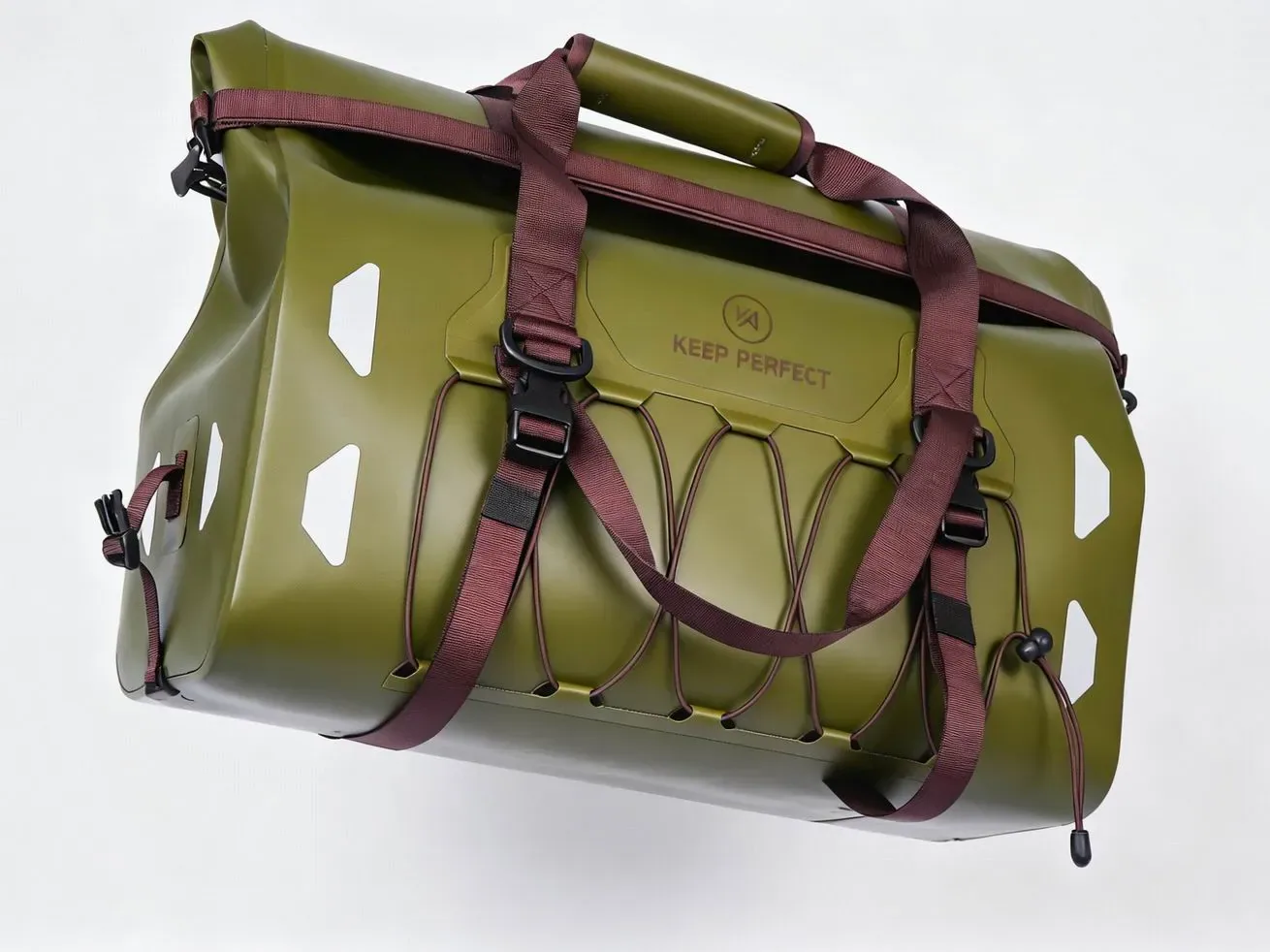
Pre-shipment inspection on a wine bag is a class list and a set of measurements rather than an opinion. At AQL 2.5 under ISO 2859-1 General Inspection Level II, a 500-piece lot draws code letter H: 50 units, accept 3 and reject 4 for major defects, with criticals zero-tolerance. The measurements are the cell, the divider height, the hand gap, the base fixings and the handle attachment.
A wine bag is inspected against a specification or it is inspected against a feeling, and the second is what happens when the class list was never written. Two inspectors looking at the same bag will reach two conclusions about whether a cell is too wide or a handle is secure, and neither can be argued from. This piece is about the numbers.
The tech pack these measurements come from is in Wine Bag Tech Pack Checklist, and the sampling table is in the AQL sampling table.
What Does a Pre-Shipment Inspection Cover on a Wine Bag?
Five things in a fixed order: the count and the packing, the measurements, the construction, the appearance, and the function tests. The order matters because the first two are objective and the last is subjective, and an inspection that starts with appearance has already decided the outcome before it gets to the numbers.
The count and the packing is a check against the documents rather than against the bag: the quantity, the carton count, the marks and the packing method. It is the part that catches a short shipment and it takes five minutes. The measurements come next and they are the ones that decide most wine bag rejections.
The construction and the function tests are the ones that catch what a customer will experience: whether the divider is fixed, whether the handle holds, whether the bottle fits, whether the bag survives the drop. An inspection that covers appearance and not these has inspected the photograph rather than the bag.
| Stage | What is checked | How it is judged | Typical finding |
|---|---|---|---|
| Count and packing | Quantity, cartons, marks | Against the documents | A short carton, a mixed carton |
| Measurements | Cell, height, divider height, hand gap | Against the tech pack with a tolerance | A cell 4 mm over, a divider short of the rim |
| Construction | Base fixings, bar-tack count, divider assembly | Against the drawing | Two fixing points instead of three |
| Appearance | Print, colour, soiling, stitching | Against the approved sample | A print 3 mm off, a shade drift |
| Function | Bottle fit, handle pull, drop test | Against the stated test | A bottle that will not drop in, a seam that opens |
How Is the Handle Attachment Checked?
By a static pull to a stated force with a stated dwell, and by a visual check of the stitch pattern. The force and the dwell are on the tech pack; without a dwell the test is not a test, because creep is what fails in service. The visual check is the number of bar-tacks, the coverage of the webbing width and whether the reinforcement patch reaches where it was drawn to reach.
The second check is the one that finds the failure a pull test does not: a loaded carry. Fill the bag to the weight of the range, carry it, set it down, and repeat for a stated number of cycles. It is the cycle count rather than the peak load that fails a seam, and a static pull on a fresh bag will pass a construction that opens at cycle three hundred.
The third is the hand gap, which is a measurement rather than a test and it is often missed: 90 mm minimum from the rim to the inside of the handle, measured with the tallest bottle in the range in the bag. A gap below that is a bag that gets carried by the rim, and it is a major defect rather than a cosmetic one.
What Stitching Defects Matter on a Wine Bag?
The ones in a load path, and the classification follows the load rather than the appearance. A skipped stitch in a side seam is minor. A skipped stitch in the handle attachment, in the base panel seam or in the binding that carries the closure is major, because those are the seams the load goes through. A broken bar-tack is major wherever it is.
The second category is stitch density, and it is the drift nobody measures. A seam specified at eight stitches per inch and sewn at six is a weaker seam and it looks identical in a photograph. Count the stitches over an inch on the drawn sample, on a load-bearing seam, and record the number.
The third is the seam allowance and the thread. A seam sewn at 5 mm where 10 mm was specified has less material behind the needle and it pulls out under load, and a thread substituted at a lighter ticket does the same. Both are on the bill of materials and both are worth a line in the inspection instruction.
How Is Bottle Fit Verified on the Line?
With the actual bottles, at goods in, on more than one unit. A cell that is 2 mm tight will not take a bottle with a wet label, and a wet label is the normal case rather than the exception. Take the tallest and the widest shape in the range, put them in and take them out, and do it on at least three units from different cartons.
The four measurements that decide it are the cell across the width, the cell across the depth, the internal height and the divider height from the base board. The first two decide whether the bottle goes in; the third decides whether the rim clears it; the fourth decides whether the bottles are held apart at the shoulder. All four are on the tech pack with tolerances.
The second half of the fit check is the rattle, and it is a test rather than a measurement. With the bottles in, tip the bag to 45 degrees and set it down. A bottle that moves has either a cell that is too wide, a divider that is short of the rim, or a base board that has moved. All three are majors.
Which Measurements Are Taken on the Sample?
The cell in two directions, the internal height, the divider height from the base board, the hand gap, the base board thickness, the webbing width, the stitch density on a load-bearing seam, and the print position from two seams. Eight measurements, taken on every unit in the sample rather than on one, because the drift is between units rather than within one.
The reason to take eight rather than three is that the three a programme usually checks — the cell, the height and the appearance — are the three that are visible in a photograph and the five that are not are the ones that drift. The base board thickness and the webbing width are the two that carry load and the two nobody measures.
The measurement instrument is worth a sentence: a steel rule and a calliper, and the calliper is for the thicknesses. A tape measure will not resolve 0.3 mm on a board and a photograph will not resolve it at all.
| Measurement | Where | Instrument | Tolerance | Class if out |
|---|---|---|---|---|
| Cell, width and depth | Inside the bag, at the base | Steel rule | plus or minus 2 mm | Major over, major under |
| Internal height | Base board to rim | Steel rule | plus or minus 3 mm | Minor |
| Divider height | From the base board | Steel rule | plus or minus 2 mm | Major if short |
| Hand gap | Rim to inside of the handle, packed | Steel rule | 90 mm minimum | Major if below |
| Base board thickness | A cut edge or a calliper on the stack | Calliper | plus or minus 0.3 mm | Major if under |
| Webbing width | The strap | Steel rule | plus or minus 1 mm | Major if under |
| Stitch density | A load-bearing seam | Count over an inch | as specified | Major on a load path |
| Print position | From two seams | Steel rule | plus or minus 3 mm | Minor, major if skewed |
How Are Defects Classified?
Three classes and the test is what the customer experiences rather than how the defect presents. Minor is what a customer will not notice at arm length: a colour a shade out, a mark 2 mm off, a thread end inside the bag. Major is what they will notice or what will fail in service: a handle attachment that fails the pull, a base board that is not fixed, a cell outside tolerance, a divider short of the rim. Critical is what makes the bag unsafe or unsellable: a seam that releases a bottle at the drop height, a wrong brand mark, a missing component.
The classification has to be written before the inspection rather than during it, because a class list written while looking at a defective bag is a class list written to let the bag ship. Write it at sampling, when there is nothing at stake, and the inspection is a measurement rather than a negotiation.
One classification is worth calling out because programmes get it wrong in both directions: a missing or a short neck block on a sparkling carrier. It is invisible when the bag is empty, it is the whole point of the insert, and it is a major defect rather than a trim omission.
Inspecting a wine bag before shipment
- Five stages in a fixed order, and start with the measurements rather than with the appearance.
- Eight measurements on every unit in the sample: the drift is between units, not within one.
- A static pull needs a stated dwell, and a loaded carry finds what a static pull misses.
- Classify at sampling, when nothing is at stake, rather than while looking at a defective bag.
- Criticals are zero-tolerance at every level: a wrong brand mark and a seam that releases a bottle.
What Sample Size Does a 500-Piece Wine Bag Order Draw?
Code letter H and 50 units, under ISO 2859-1 at General Inspection Level II, with accept 3 and reject 4 at AQL 2.5 for major defects. Criticals are zero-tolerance at every level, and minors usually sit at AQL 4.0 with their own accept and reject pair on the same table.
The table is worth reading rather than memorising, because the letter moves with the lot size: 501 to 1,200 draws J and 80 units; 1,201 to 3,200 draws K and 125; 3,201 to 10,000 draws L and 200. A programme that reorders at 300 pcs is below the first band and the sample size has to be agreed rather than read off.
The sample is drawn at random across cartons rather than from the top of one, and the cartons are chosen before the inspection starts. A sample drawn from one carton inspects one hour of the line, and on a wine bag the drift is between cartons rather than within one.
How Is a Filled Drop Test Run as a Lot Test?
On a stated number of units from the lot, to ASTM D5276, with bottles at nominal fill, one fresh bag per orientation, and the criterion written down: no breakage, no opened seam or closure, no glass exposed. It is a test on bags rather than an attribute count on defects, and it is the instrument that catches the critical failure a sample of fifty will miss.
The number of units is a decision rather than a standard, and three is the working figure for a lot test: one for the base and the corner, one for the flat side, one for the handle, or four with a bag per orientation. Where a programme wants a rule, state it in advance: two of three pass, or the mean of three with no individual shortfall.
The cost question is worth answering in advance too. The bags are destroyed, the bottles are at risk and the disposal is real, so the clause belongs in the purchase order along with who pays for a re-test. A test that is not tied to a release decision is a test that gets skipped when the date is tight.

What Happens When a Lot Fails?
Three outcomes and the order is decided in the purchase order rather than after the failure: re-test on a larger sample, re-work, or reject. A re-test on a larger sample is the answer where the failure is marginal and the defect rate is near the accept number. A re-work is the answer where the defect is identifiable and fixable — a print position, a thread end, a soiling. A reject is the answer where the defect is in the construction.
The distinction that matters is whether the defect is systematic or random. A cell that is 4 mm over on every unit in the sample is a die or a pattern problem and re-work will not fix it. A cell that is over on three units out of fifty is a cutting or an assembly problem and a sort will. An inspection report that gives the count but not the distribution has not answered the question.
The second thing to decide in advance is the schedule consequence. A re-test costs days, a re-work costs a week and a reject costs the season. A seasonal programme with a hundred and ten day calendar and no margin has no good answer to a failed lot, which is why the margin is built in July rather than argued about in October.
- Standard
- ISO 2859-1, General Inspection Level II, AQL 2.5 for majors
- Sample
- The code letter for the lot size, drawn at random across cartons
- Measurements
- Cell, height, divider height, hand gap, board, webbing, stitch density, print
- Function
- Bottle fit with the actual bottles, a static pull with a dwell, a drop test
- Instruments
- A steel rule and a calliper, and the bottles
- Class list
- Minor, major and critical, written at sampling
- Acceptance
- Accept and reject pairs for majors and minors; criticals zero-tolerance
- Distribution
- Whether a defect is systematic or random, reported
- Outcomes
- Re-test, re-work or reject, and who pays for a re-test
- Report
- Photographs, the measurements, and the result for each unit
The commercial frame around all of it is the same one the rest of the category runs on: MOQ 500 pcs per style and colourway, with 300 pcs open to discussion on a repeat; sampling 6-10 working days; bulk production 35-50 days from written sample approval; T/T 30/70; FOB Xiamen. Inspection is the last gate before the goods move, and it is the one where a specification written in July is either honoured or argued about.
Write the class list at sampling
Send the tech pack and the count. You get an inspection instruction with the measurements, the class list and the acceptance pairs, within one business day.
Frequently Asked Questions
What does a pre-shipment inspection cover on a wine bag?
Five stages in a fixed order: count and packing, measurements, construction, appearance, and the function tests. Start with the measurements rather than with the appearance.
What sample size applies to a 500-piece wine bag order?
ISO 2859-1 at General Inspection Level II draws code letter H: 50 units, accept 3 and reject 4 at AQL 2.5 for major defects, with criticals zero-tolerance.
How is a wine bag handle checked at inspection?
A static pull to a stated force with a stated dwell, a visual check of the bar-tack count, and a loaded carry for a stated number of cycles.
What measurements are taken on a wine bag sample?
Eight: the cell in two directions, the internal height, the divider height, the hand gap, the base board thickness, the webbing width, the stitch density and the print position.
How is bottle fit checked at goods in?
With the actual bottles, on at least three units from different cartons, using the tallest and the widest shape in the range, plus a tip test for rattle.
What is a critical defect on a wine bag?
A seam or closure that releases a bottle at the drop height, a wrong brand mark, or a missing structural component. Zero-tolerance at every level.
What is a major defect on a wine bag?
What a customer will notice or what will fail in service: a handle that fails the pull, a base board that is not fixed, a cell outside tolerance, a divider short of the rim.
Why does a static pull test need a dwell?
Because creep is what fails in service. A pull without a dwell will pass a construction that opens at cycle three hundred.
How is a drop test run as a lot test?
ASTM D5276 on a stated number of units from the lot, bottles at nominal fill, one fresh bag per orientation, with the acceptance rule stated in advance.
What happens when a lot fails inspection?
Re-test on a larger sample, re-work, or reject — and the outcome is decided by whether the defect is systematic or random, not by the count alone.
Why should the class list be written at sampling?
Because a class list written while looking at a defective bag is written to let the bag ship. Write it when nothing is at stake.
How is a missing neck block classified?
Major. It is invisible when the bag is empty and it is the whole point of the insert on a sparkling carrier.
What is the MOQ and the inspection standard?
MOQ 500 pcs per style and colourway, inspected at AQL 2.5 under ISO 2859-1 General Inspection Level II, on T/T 30/70, FOB Xiamen.
Who pays for a re-test when a lot fails?
It belongs in the purchase order. A test that is not tied to a release decision is a test that gets skipped when the date is tight.
People Also Ask
How do you inspect a wine bag before shipping?
Five stages: count and packing, measurements, construction, appearance and function tests, at AQL 2.5 under ISO 2859-1 General Inspection Level II.
What sample size is used for 500 bags?
Code letter H: 50 units, accept 3 and reject 4 at AQL 2.5 for major defects, with criticals zero-tolerance.
What is AQL 2.5 on a bag order?
The accept and reject pair used at inspection under ISO 2859-1. On 50 units at General Inspection Level II that is accept 3 and reject 4 for majors.
How do you test bottle fit in a wine bag?
With the real bottles on at least three units from different cartons, using the tallest and widest shape, plus a tip test for rattle.
What is a critical defect in bag inspection?
A seam or closure that releases the bottle at the drop height, a wrong brand mark, or a missing structural component — zero-tolerance at every level.
Sources and further reading
Every figure on this page is either our own programme data or attributed below. Open the originals before you write them into a specification.
- ISO 2859-1:1999 — sampling procedures for inspection by attributesInternational Organization for Standardization
- ASTM D6193 — standard practice for stitches and seamsASTM International
- ASTM D5276 — drop test of loaded containers by free fallASTM International