A team bag is specified against a squad list, not against a bag that looked right. Eighteen players need 40 L each or 80 L shared; twenty-five need 110 L shared. Match colour to the jersey by physical standard with a measured tolerance. MOQ 500 pcs, sampling 6-10 working days, bulk 35-50 days.
A matchday squad of 18 needs a bag built to a shared-kit volume of about 70-90 litres or a player-bag run of 18 identical 40-litre units; a 25-player squad with staff kit needs 110-130 litres on a wheeled base. Match the bag colour to the jersey by Pantone reference with a shade band and a dye-lot record, and separate wet from dry by compartment rather than by liner. MOQ 500 pcs per style and colourway. Sampling 6-10 working days. Bulk production 35-50 days from sample approval, FOB Xiamen, inspected at AQL 2.5 under ISO 2859-1.
How Do You Size a Team Kit Bag for 18 Players, 25 Players or a Full Squad Set?
A team bag is specified against a squad list, not against a bag that looked right. Three configurations cover almost every enquiry and they are genuinely different products, which is the first thing to settle before anyone asks about colour. A per-player bag is one unit repeated 18 or 25 times. A shared kit bag is one large unit holding balls, bibs, cones and a pump. A staff or travel bag is the one that has to survive airport handling.
The per-player number is straightforward and it is the one most orders are: 18 or 25 of the same unit, in the same colourway, with the same personalisation. The design consequence is that the personalisation method has to work at that repetition — a name printed on 25 bags is 25 setups if the method is not digital, and that difference is the whole of the unit price at this volume. The shared and travel configurations are single units, so the question for them is volume, and volume questions are about what has to fit at the same time on matchday.
| Configuration | Squad | Volume per bag | What it carries | Empty weight | Filled weight |
|---|---|---|---|---|---|
| Player bag, matchday | 18 players | 40 L | boots, kit, towel, water, warm-up top | 820 g | 6.5 kg |
| Player bag, training | 25 players | 35 L | boots, training kit, water | 740 g | 5.4 kg |
| Shared kit bag | 18 players | 80 L | 12 balls, 25 bibs, cones, pump, first-aid | 2,100 g | 22 kg |
| Shared kit bag | 25 players | 110 L | 18 balls, 30 bibs, cones, pump, medical | 2,600 g | 31 kg |
| Staff / travel bag | 3 coaches | 70 L | kit, laptops, documents, warm-up | 2,300 g | 18 kg |
| Matchday trolley | 25 players + staff | 130 L | full squad set, hydration, medical | 5,800 g | 48 kg |
Two derived numbers decide the build, and the first one is the one that gets missed. Volume gets specified; the weight of 12 inflated balls plus 25 bibs plus cones plus a pump does not, and it is the number the base panel, the wheels and the harness have to be rated for. A shared kit bag at 22 kg is a materials-handling object that happens to be made of fabric. A matchday trolley at 48 kg is one that will be lifted into a vehicle by two people who are in a hurry, and the handle specification follows from that, not from the bag.
The second is the squad-change number, and it is worth doing once. A squad that is 18 in pre-season is 25 by the time the cup roster is filed, and a bag programme sized to the first number produces a mid-season reorder for seven units in a different dye lot. That is the expensive version of the same seven bags, and it is the reason the planning conversation should happen at 25 before it happens at 18.
How Do You Match the Bag Colour to the Jersey Without a Shade Dispute?
Colour matching is the largest single source of disputes in this category, and it is a dispute that is always decided after the goods are made, which is the worst time. The mechanism is simple and worth stating: the jersey is dyed or sublimated by one supplier, the bag shell by another, the webbing and binding by a third, the zipper tape by a fourth, and the print by a fifth. Each has its own reference, its own dye house and its own tolerance, and none of them is looking at the jersey.
- Start from a physical standard, not from a screen. A Pantone reference is a name for a colour; the physical chip or the actual jersey panel is the reference that can be compared. A number printed in an email is not a colour.
- Name the reference system and the illuminant. Colours that match under one light and not under another are the normal case, not an exception, and the standard viewing condition removes the argument before it starts.
- Agree a tolerance as a colour difference number, not as a phrase. A shade band stated as a measured difference has a number that can be checked; "close enough" does not.
- Give the trim its own references. The webbing, the binding and the zipper tape are dyed separately and are usually the three items nobody checked, which is why a bag can match on the panel and not on the strap.
- Record the dye lot on the bulk fabric and keep the record. A reorder in eight months without the lot number is a fresh matching exercise and a fresh risk.
- Approve under the light the bag will be seen in. A kit bag is seen in a changing room, in a stadium tunnel and on a coach at night, and those are three different illuminants.
The system worth naming is the Pantone Matching System, which is a commercial colour reference and not a standard, and the measurement worth naming is CIELAB colour difference published by the International Commission on Illumination. The useful part is not the name: it is that a tolerance written as a measured difference with a stated illuminant can be checked by both sides with the same instrument, and "match the jersey" cannot be checked at all.
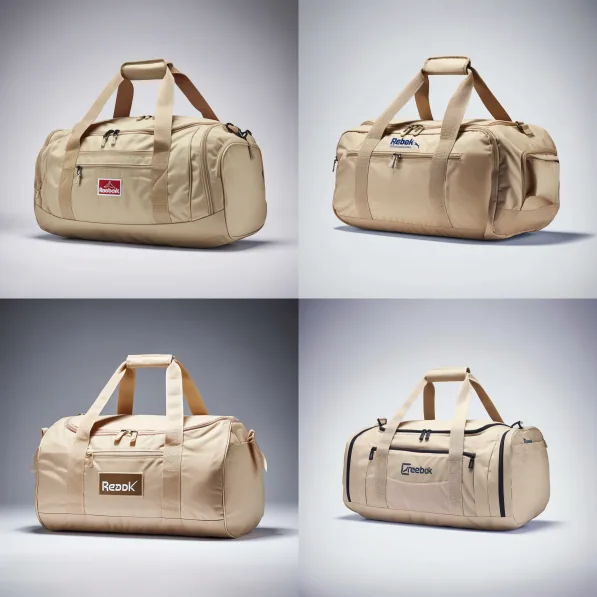
There is one more specification that prevents more disputes than any other, and it is almost never asked for. A range of the brand colour across the room — the home bag, the alternate bag, the staff bag, the laundry bag — will not be dyed together, and the differences between them are more visible than the difference between any one of them and the jersey. Approve the range in one session against one reference, and the other route is approving four bags in four months and discovering that they do not look like a set.
And the tolerance has to be economic as well as visual. A measured difference that is tight enough to be invisible is also tight enough to fail a significant share of a bulk dye lot, and that wastage is in the unit price. The conversation to have is about where the tolerance sits, not about whether it exists, and it is worth having before the sampling window is spent on a colour that cannot be produced at 500 units at a price anyone will pay.
Dye-Sublimation or Embroidery: Which One Belongs on a Team Bag?
This is a production decision before it is an aesthetic one, and the two methods behave in opposite directions with volume. Dye-sublimation costs the same for the first bag as for the five-hundredth, because the file is the file. Embroidery costs a setup per design and then a per-head machine time that does not fall much with volume, and a name on each of 25 bags is 25 tape-outs if it is done as letters, or one tape-out per name if it is done as a job. That difference is the decision.
| Factor | Dye-sublimation | Embroidery | Screen print | Heat-transfer vinyl |
|---|---|---|---|---|
| Setup at 500 units | one digital file | one tape-out per design | one screen per colour | one cut file |
| Per-unit cost at 25 names | flat | rises with each name | flat per colour | rises with each name |
| Full-colour artwork | yes, photographic | limited by thread palette | spot colours only | spot colours only |
| Hand feel | no added layer | raised, can chafe | slight film | noticeable film |
| Wash and abrasion | in the fibre, no crack | very durable | cracks over time | lifts at the edge |
| Best substrate | polyester, light colours | woven shell, caps | most woven shells | flat panels |
The sublimation constraint is the one to state early, because it decides the fabric. Sublimation is a transfer of disperse dye into polyester under heat and pressure, and it works on polyester. On a nylon shell or on cotton canvas it does not work, and on a dark panel it does not show, because the dye is transparent and it does not have white in it. So a sublimated team bag is a polyester-faced bag, or a bag with a sublimated polyester panel sewn into it, and that decision belongs at fabric selection rather than at artwork approval.
Embroidery earns its place in three specific places, and they are not the ones buyers expect. It is the right method on a structured panel that will be abraded, because the thread is more abrasion-resistant than a printed film. It is the right method for a crest that has to look like a crest, because a stitched badge has a dimension a print does not. And it is the right method on a cap or a small item, where a print would be a decal. It is the wrong method for a large full-colour graphic, because the thread count becomes the stitch count and the stitch count becomes the cost.
The failure modes are worth knowing because they arrive after delivery. A printed film cracks and a printed crest fades; a heat-transfer name lifts at the edge in a tumble dryer; a heavy embroidered patch on a lightweight panel pulls the panel and distorts it, which is a complaint that reads as a quality problem and is actually a specification one. Each of the four methods has a wash-test and an abrasion-test that can be required before the bulk fabric is cut, and a colourfastness report on the printed or embroidered panel costs very little compared with 500 returns.
How Should a Kit Bag Separate Wet Kit, Boots and Clean Kit?
The wet compartment is the specification that most directly decides whether the bag is still in use in November, and it is usually specified as "a wet pocket" without any of the four decisions that make it work. A wet pocket that is a liner is not a wet compartment. A liner slows the transfer of water and then holds it, and by week six it is the smell that gets the bag replaced, not the water.
- The barrier has to be a welded or film-coated compartment, not a fabric liner. Welded seams in a TPU or PEVA compartment are a barrier; a stitched seam in a coated fabric is a row of holes with a coating on top of it.
- It has to drain or it has to be removable. A sealed wet compartment with no drain and no removal is a container for standing water, and a removable one can be washed and dried, which is the only thing that actually deals with the smell.
- It has to be sized to the wettest item, which is boots, and boots are rigid. A compartment sized to a towel will take a towel and not a pair of boots, and boots are the item that needs separating.
- It needs its own closure and its own vent. A wet compartment sharing a closure with the main compartment is not a wet compartment, and a sealed one with no vent grows something.
Boots deserve their own treatment, and the treatment is structural rather than cosmetic. A boot compartment at the base with a stiffened floor and drainage, sized to the largest boot size in the squad rather than to the average, prevents the two things that actually damage the bag: a stud pressed through a panel from the inside, and mud ground into a seam. A stiffened floor is the least expensive part; the drainage is the part that gets left out, and a compartment that cannot be hosed out will not be hosed out.
The third separation is the clean-and-dry one, and it is the one players notice. A valuables or clean-kit pocket at the top, separated from the boot compartment by at least one barrier and ideally by the whole structure, is what keeps a phone and a clean shirt out of the same air as the boots. It is one compartment on the drawing and it is the difference between a bag that gets recommended and a bag that gets tolerated.
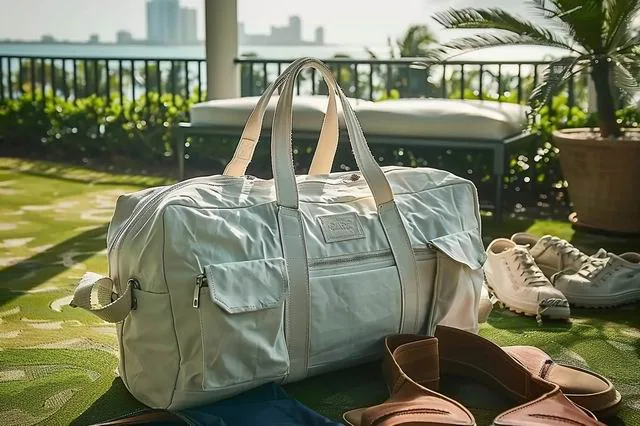
One material note that arrives as a compliance question rather than a design one. The film used in a wet compartment is a plastic, and if the bag is going into a market with a restriction on particular plasticisers or on particular substances, the requirement has to be on the film purchase order. It cannot be tested for afterwards in a way that helps, because by then the compartment is welded into five hundred bags.
Wheeled or Backpack: Which One Should a Squad Actually Use?
The answer depends on the surface the bag crosses and on who is carrying it, and those two facts are usually known to the person ordering and not mentioned to anyone. A wheeled bag is right on a smooth surface and wrong on a grass pitch, on a gravel car park, on a stair and on a coach stair. A backpack is right for a player walking to training and wrong for a 22 kg shared kit bag, because no harness makes 22 kg comfortable and a harness that could would be the most expensive part of the bag.
| Factor | Wheeled kit bag | Backpack kit bag | Convertible (wheels + straps) |
|---|---|---|---|
| Best at | shared kit, 20-48 kg, smooth surfaces | player kit, 5-8 kg, mixed surfaces | travel with both conditions |
| Worst at | grass, gravel, stairs, kerbs | carrying 20 kg or more | neither job as well |
| Weight penalty | +1,800 to +2,600 g for chassis and wheels | baseline | +2,400 to +3,100 g |
| Failure points | wheel housing, axle, handle tube, base panel | harness attachment, strap webbing | all of both |
| Air freight consequence | the chassis ships at its own volume | packs down | the chassis ships erected |
| Unit cost index | 168 | 100 | 212 |
The wheeled specification has four failure points and a wheeled bag that fails at any of them is a bag that gets dragged. The wheel housing is the first: it has to be attached to a stiffened base panel and to the frame, not to the fabric, because a housing stitched to a panel peels. The axle is the second and it should be a through-axle or a bolt, not a rivet into plastic. The handle is the third and a two-stage telescopic tube has twice the rattle and twice the failure rate of a single-stage one, which is an argument for the single-stage tube that nobody makes because the two-stage one photographs better. The base is the fourth, and it should have moulded skids, because a wheeled bag is dragged and a dragged bag wears its base.
The harness on a player bag fails in a different place, and it is the same place it fails on every bag: at the attachment. A padded strap webbed to the top of the panel with a bar-tack is a different component from the same strap tacked through the lining. The specification that prevents the failure is a load test on the attachment, and there is a published method for it. A harness rated by the supplier for a weight, with no test method behind the rating, is a number on a page.
The convertible is worth a word because it is asked for and it is usually a compromise. It costs the most, it weighs the most, and it does both jobs less well, because the chassis that makes it wheelable is in the harness that makes it wearable. It is the right answer for one specific case: a squad that flies to one away match a month and trains on grass the rest of the time. It is the wrong answer for a squad that only does one of those two things.
Which Parameters Drift Between the Approved Sample and the Second Run?
The team bag category has one drift the others do not: the squad changes. The bag does not drift, the order does, and a reorder of seven bags in a new dye lot is a colour-matching exercise that will not produce the same colour. Everything else in this section is a normal drift, and each item here can be turned into a line on the tech pack before it has to be argued about.
- Colour, in four places: the shell, the webbing and binding, the zipper tape, and the print or thread. Four suppliers, four dye lots, and typically only the shell is checked.
- The crest application. A sublimated crest placed 6 mm differently on 500 bags is a visible defect at 500 bags, and placement is a jig, so the jig has to be specified.
- The wet compartment film. A coated fabric substituted for a welded film behaves differently in month two, and it looks identical in month one.
- Wheels and bearings on a wheeled build. A substituted wheel is the single most common reason a trolley comes back, and it is a component with a supplier part number that should be on the pack.
- Handle tube wall thickness on a telescopic handle, which is invisible, unmeasured and the part that bends.
- Stitch density on the harness and on the wheel housing, which is the drift nobody sees until something pulls out.
What to lock in the tech pack before the second run
- Keep two approved samples — one sealed for colour, one used for wear — and record the dye lot numbers on both before anyone leaves the room.
- Name the trim colours to their own references with a measured tolerance, because the webbing is dyed by someone who has never seen the jersey.
- Write the wet compartment as welded, drained and removable, with the film named and a supplier part number attached.
- Record the wheel and the handle as part numbers, not as "wheels" and "handle", because those are the two parts that come back.
- Put the crest placement in a jig and put the jig in the pack, because 6 mm at 500 bags is a defect and 6 mm on one sample is invisible.
- Approve the whole colour range in one session against one physical standard, or the four bags will not look like a set.
The reasoning behind the tolerance sheet is set out in keeping reorders consistent; the working version is that a tolerance written as "same as sample" has no force, and the same words written as "within a measured difference of 1.5, at the stated illuminant, on the shell and on the webbing separately" do. In this category that sentence is the whole control, because colour is the complaint and colour is also the thing everyone agreed by eye.
The second control is the pre-production sample, and in this category it should be a squad sample rather than a single bag. Four or five bags from the bulk fabric and the bulk trim, in the four colours of the range, with the crest applied by the bulk method and placed by the bulk jig. That is a morning of work and it is the only way to see the range together before five hundred of each are cut, and it is the difference between a colour range and a colour argument.
What Does an ISO 2859-1 AQL 2.5 Inspection Actually Do on Your Lot?
ISO 2859-1 is a lot-acceptance system and it does what its title says: it returns a decision about a lot, not a grade about a bag. At General Inspection Level II with AQL 2.5, a 1,201 to 3,200 piece lot draws 125 units, and the decision rule is seven — the lot is accepted with 7 or fewer major defects and rejected at 8. Those four things belong on the purchase order together: the standard, the inspection level, the AQL and the lot band. A quotation that says only "AQL 2.5" has omitted three of them and has therefore not committed to a sample size at all.
| Lot size (pcs) | Sample size code | Sample size | Accept (Ac) | Reject (Re) | Share of lot inspected |
|---|---|---|---|---|---|
| 501 - 1,200 | J | 80 | 5 | 6 | 6.7% - 16.0% |
| 1,201 - 3,200 | K | 125 | 7 | 8 | 3.9% - 10.4% |
| 3,201 - 10,000 | L | 200 | 10 | 11 | 2.0% - 6.3% |
| 10,001 - 35,000 | M | 315 | 14 | 15 | 0.9% - 3.2% |
The far-right column is the one to read before signing anything. Two thousand pieces get 6.3% of the units looked at; twenty thousand get 1.6%. That is not a defect in the standard, it is the job the standard was written to do, and the job is accepting or rejecting lots rather than certifying individual bags. Where one failure is expensive on its own — a wheel that seizes on a matchday, a colour range that does not match across four club colours — General Level II is the wrong instrument. The useful conversation there is about checking every dye lot against the standard and running the wheels on the line, which is 100% work and costs what 100% work costs.
The part that decides whether the report means anything is the classification, and it is the part most inspection instructions leave blank. Critical means the article is unsafe or non-compliant — a harness that parts under its rated load, a finish that fails a restricted-substances requirement. Major means it would be returned: a crest 6 mm out of register across 500 bags, a wet compartment that is not welded, a telescopic tube that will not extend. Minor is cosmetic — a print a shade off, a thread end on a load path. AQL 2.5 governs the majors; criticals are zero-tolerance at every AQL; minors normally carry their own, tighter figure. Put all three in the instruction with three examples taken from your bag, because an inspector left to classify by instinct will classify differently next time.
A competitor will offer AQL 1.5. It is a genuine AQL value and the accept number is lower, but 1.5 is not one of the grades normally used with ISO 2859-1 and ANSI Z1.4 in commercial practice, and what it mainly does is raise the odds of rejecting a lot that was acceptable. It shifts who carries the risk rather than reducing how many defects leave the building. The longer version is in AQL 1.5 vs 2.5.
What Is the Realistic MOQ, Sampling Window and Bulk Lead Time?
The minimum is 500 pcs for one style in one colourway, and on a repeat it can be discussed down to 300. The constraint is the setup, not a rule. Each colourway carries its own dye lot on the shell, its own lot on the webbing and binding, its own crest setup, and on a sublimated build its own colour profile and its own fit onto the body. Splitting 500 into two colourways of 250 produces two setup costs instead of one, and it does not price like the single colourway — which is the surprise that arrives in the first enquiry more often than any other.
There is a second MOQ conversation that is specific to this category and it is worth having early. A squad order is 18 or 25 units, which is below the MOQ for a distinct style. The two ways through that are a shared style across the range — one bag, four colours, one 500-unit order split across the colours — or a sublimated panel on a stock body, which takes the personalisation out of the fabric and into the panel. Both work, and the second one is the standard answer for a club that wants its own badge and will not reorder 500.
- MOQ
- 500 pcs per style / colourway (300 on repeat)
- Sampling
- 6-10 working days (12-15 for complex builds)
- Bulk production
- 35-50 days from sample approval
- Inspection
- AQL 2.5, ISO 2859-1, General Inspection Level II
- Payment
- T/T 30/70
- Incoterm
- FOB Xiamen (CIF / DDP available)
- Capacity reference
- 7 production lines, 149 machines, 200,000 pcs per month
- Operating since
- 2014
From sample approval, the bulk run takes 35-50 days, and the spread is real rather than protective padding. It holds three things: the wait on materials that were named rather than substituted, because a matched shell colour and a specified wheel are made to order and not sitting on a shelf; the position in the cutting and sewing queue behind whatever was booked before the order; and the inspection and packing window at the far end. We do not promise the fastest 20 days. We promise a delivery date you can calculate — and the calculation runs backwards from the shelf date, which is the working set out in why bulk takes 35-50 days.
The timing discipline in this category is the season, and it is unforgiving. Kit is bought before pre-season and used through the following spring, and a delivery that misses pre-season by two weeks is a delivery that has missed a year, because nobody reorders kit in October. Work backwards from the first training session, not from the first match: subtract customs entry and inland delivery, subtract transit, subtract the 35-50 days, subtract the 6-10 working days of sampling, subtract your own approval time and your own colour approval time, which in this category is usually the longest of the five.
What Actually Drives the Unit Cost of a Custom Team Kit Bag?
The application is the answer in this category, and it is not the answer most buyers expect. On a team bag the crest, the personalisation and the labour in applying them are usually the largest single block in the bill of materials, ahead of the shell fabric and often ahead of the hardware. The reason is repetition: a badge on 500 bags is 500 applications, and the application is paid for in machine time, not in thread.
- The application method, and it is the first decision. Sublimation costs a file; embroidery costs a tape-out per design plus per-head machine time that does not fall with volume. At 25 names that difference is the unit price.
- The colour count. Each colour in a print is a screen, each screen is a setup and a pass, and a six-colour crest costs six passes whatever the method.
- The personalisation. A squad number or a name applied per bag is a per-unit operation, and it is the operation that decides whether 25 bags can be produced in a day.
- The wet compartment construction. A welded removable compartment with a drain is several operations more than a liner, and each operation is paid for.
- The wheeled chassis on a trolley, which is the single largest hardware block in the category and the one with the widest quality spread.
- The shell, by construction and by weight. A laminated shell removes a lining operation and adds a lamination one; a heavier shell costs more and lasts longer.
- Carton cube. A structured or wheeled bag ships erected, and erected volume is what the forwarder charges on.
Tooling and testing are the two costs that never appear on a unit-price line and always appear in the accounts, and they behave identically. An embroidery tape-out, an embossing plate, a moulded handle and a pulling die are paid once, on the first invoice, and never again; a colourfastness report and a colour-difference measurement behave the same way. Insist on both as separate lines. A quotation that has absorbed them into the unit price is a number that will not survive a reorder at a different quantity, and the reorder is exactly where that becomes visible.
Freight is the lever that is nearly always available and nearly always left alone, and on a trolley it is a large one. Structured and wheeled bags are charged on whichever is greater, the weight or the cube, and the cube usually wins. A trolley designed to nest with its handle retracted, in a carton specified to the nested size instead of the erected one, will move the landed figure further than a point off the unit price. That is the purpose of the landed cost calculator: the unit price is one line of eight.
Which Five Design Mistakes Cause Most Team Kit Bag Returns?
A wet compartment that is a liner
A liner slows the water and then holds it. By week six the smell is what gets the bag replaced. It has to be welded, drained and removable.
A boot compartment sized to a towel
Boots are the wettest item and they are rigid. Size it to the largest boot in the squad, stiffen the floor and drain it, or the studs will find the panel.
Colour approved on the shell and not on the trim
The webbing, the binding and the zipper tape are dyed by different suppliers. The panel can match and the strap can still be wrong.
A wheeled bag on a pitch
A trolley is right at 22 kg on a smooth floor and wrong on grass, gravel and stairs. Match the build to the surface the squad crosses.
Embroidered names at 25 units
Each name is a tape-out and a machine run whose cost does not fall with volume. Sublimation costs the same for the twenty-fifth as for the first.
All five are present in the sample that gets approved. That is what makes them expensive: the inspector works to the approved sample, so an inspection passes all five without difficulty. The only control that catches them is the drawing review against the tech pack, and it has to happen before the 6-10 working days are spent rather than after they are gone.
A sixth that is not a design error but produces the same result in this category specifically: ordering for the squad as it is in July. A squad list grows, players are signed, and a reorder of seven units in a new dye lot is the most expensive seven bags a club will buy, because the colour will not match and the lot will not be the same. Order the range together at 25, or order a sublimated panel on a shared body so the reorder is a panel and not a bag.
How Do You Classify a Team Kit Bag for Customs and Land the Cost?
Kit bags are normally entered in heading 4202. Which subheading applies is set by what is on the outside: a man-made textile or a plastic outer surface usually lands in 4202.92, and a leather outer surface lands elsewhere in the same heading. A wheeled trolley raises a further question of its own, because wheels can have it read as travel goods instead of as a sports bag, and those two lines are not rated alike everywhere. Rates are those of the destination tariff and they move, so a rate in an email is an estimate — confirm it against the official tariff or through a licensed broker before the programme is priced.
The reason to get the line right is not only the rate. Origin preferences and duty-relief schemes attach to individual tariff lines, and an error discovered at the border is corrected afterwards as a post-entry amendment rather than settled in a conversation. The Harmonized System is maintained by the World Customs Organization and reissued on a five-year cycle, so last season's line is not automatically this season's.
Two things to raise with the broker in advance. A bag shipped holding its contents — balls, bibs, a pump — may be treated as a set put up for retail sale, and that is not treated like the empty bag; it is a broker's question, not a supplier's. And the HS code finder will settle the line, while the Incoterm decision tool will say whether FOB Xiamen allocates the risk the way you want on that lane. FOB Xiamen is how it is quoted and how most orders move; it is not right on every lane, and on some of them the buyer is paying a freight margin for the sake of not taking a call.
Eight lines then add up to the number that matters: unit price, haulage to the port, origin charges, freight on the greater of weight and cube, insurance, destination handling, duty at the confirmed rate, and final delivery. There is a calculator for it, and the two lines it was built for are the two the supplier never quotes — destination handling and duty. On a wheeled bag, it is the freight line that surprises people.
Send the squad list, not just the drawing
A team kit bag quote that means anything needs the squad size, the surfaces the bag crosses, the wettest item and the physical jersey panel for matching. Send the tech pack with the colour references and the application method, and we will come back with a specification you can hold us to — plus the 6-10 working day sampling window and the 35-50 day bulk schedule in writing.
Frequently Asked Questions
What size kit bag do I need for a squad of 18 players?
It depends which of the three configurations you mean. A per-player bag for 18 players is 18 units of about 40 litres each, holding boots, kit, a towel and a warm-up top. A shared kit bag for the same squad is one unit of about 80 litres holding 12 balls, 25 bibs, cones and a pump. They are different products.
What size kit bag do I need for a squad of 25 players?
A per-player run of 25 units at 35-40 litres, or a shared kit bag of about 110 litres holding 18 balls, 30 bibs and the medical kit. If staff kit travels with the squad, the shared bag goes to 130 litres and it should be wheeled, because it will be moved at 48 kg.
What is the minimum order for custom team kit bags?
MOQ is 500 pcs per style and per colourway, and 300 is possible on a repeat. A squad order of 18 or 25 units is below that, so the two ways through it are one shared body across four colours in a single 500-unit order, or a sublimated panel on a stock body.
How do I match the bag colour to my club jersey?
Start from a physical standard — the jersey panel or a physical chip — not from a screen or a number in an email. Name the reference system and the illuminant, agree a tolerance as a measured colour difference rather than as a phrase, and give the webbing, binding and zipper tape their own references, because they are dyed separately.
Dye-sublimation or embroidery for a team bag?
Sublimation if the artwork is full-colour or if there are names, because the file is the file and 25 names cost the same as one. Embroidery if it is a crest on a structured panel that will be abraded, or a badge on a cap. Sublimation needs a polyester substrate and does not show on a dark panel.
Can I sublimate onto a nylon or canvas team bag?
No. Sublimation is a transfer of disperse dye into polyester under heat and pressure, and it works on polyester. On nylon or cotton canvas it does not work, and on a dark panel it does not show, because the dye is transparent and has no white in it. The decision belongs at fabric selection, not at artwork approval.
How should a kit bag separate wet kit and boots?
With a welded compartment, not a liner. A welded TPU or PEVA compartment is a barrier; a stitched seam in a coated fabric is a row of holes with a coating on top. It has to drain or be removable, it has to be sized to boots rather than to a towel, and it needs its own closure and its own vent.
Wheeled trolley or backpack for a team kit bag?
Wheeled for shared kit at 20-48 kg on smooth surfaces; backpack for a player bag at 5-8 kg on mixed surfaces. A trolley is wrong on grass, gravel and stairs, and a harness is wrong at 22 kg. The convertible does both less well and is right only for a squad that flies and trains on grass.
What fails first on a wheeled kit bag?
In practice, four things in order: the wheel housing when it is stitched to the panel instead of to a stiffened base, the axle when it is a rivet into plastic, a two-stage telescopic handle tube, and the base when it has no moulded skids. All four are specified by part number, not by description.
What does AQL 2.5 mean for a 2,000-piece team bag order?
Under ISO 2859-1 at General Inspection Level II, 2,000 pieces falls in the 1,201-3,200 band, so the sample size is 125 units. The lot passes with 7 or fewer major defects and fails at 8 or more. That is 6.3% of the lot inspected, which is a lot-acceptance tool and not a guarantee about individual bags.
Is AQL 1.5 better than AQL 2.5?
It is stricter on the accept number, but 1.5 is not among the AQL grades normally paired with ISO 2859-1 and ANSI Z1.4 in commercial practice. Moving to it reduces the accept number and raises the chance of rejecting a lot that was acceptable. It moves who carries the risk rather than how many defects leave the building.
What is the HS code for team kit bags?
Team kit bags generally enter under heading 4202, and the subheading follows the outer surface — a textile or plastic outer surface normally falls in 4202.92. A wheeled trolley can raise its own question, because wheels can have it read as travel goods. Confirm the rate against the official tariff or with a licensed broker.
How much does a custom team kit bag cost per unit?
The application block is usually the largest single item in the bill of materials, ahead of the shell and often ahead of the hardware, because a badge on 500 bags is 500 applications paid for in machine time. Drivers in order: the method, the colour count, the personalisation, the wet compartment construction, the chassis on a trolley, the shell and carton cube.
Why does my reorder not match the first delivery in colour?
Because the dye lot is different. The shell, the webbing and binding, the zipper tape and the print or thread are dyed by four suppliers, and a reorder without the recorded lot numbers is a fresh matching exercise. Two golden samples, a recorded lot number and a tolerance written as a measured difference is the control.
How long does sampling and bulk production take?
Sampling takes 6-10 working days from a final tech pack, and 12-15 working days for a complex build with a new handle tool or a moulded component. Bulk takes 35-50 days from sample approval. Both clocks start when the pack is final, and in this category colour approval is usually the longest part of the sampling clock.
What should the tech pack say about the crest placement?
That it is placed by a jig and the jig is part of the pack. A crest placed 6 mm differently on 500 bags is a visible defect at 500 bags, and 6 mm on one sample is invisible. Placement tolerance belongs in the pack in millimetres, measured from a named seam.
Should I order for the squad I have or the squad I might have?
Order for 25 if there is any chance the roster grows to 25. A mid-season reorder of seven units in a new dye lot is the most expensive seven bags a club will buy, because the colour will not match. Otherwise use a sublimated panel on a shared body, so the reorder is a panel and not a bag.
Can a team bag have both a wet compartment and a clean-kit pocket?
Yes, and it should. A boot compartment at the base that drains, and a clean-kit or valuables pocket at the top separated from it by the structure, is what keeps a phone and a clean shirt out of the same air as the boots. It is one compartment on the drawing and it is the difference between a recommended bag and a tolerated one.
People Also Ask
How do I specify a custom team kit bag for production?
Start with the squad list and the three configurations: per-player at 35-40 litres, shared at 80-130 litres, or staff and travel at 70 litres. Then settle the surface the bag crosses, which decides wheels or straps, then the wet separation, then the application method, and only then the colour. Colour last, and against a physical standard.
What size kit bag for 18 players versus 25 players?
Per player, 18 or 25 units at 35-40 litres. Shared, 80 litres for 18 and 110 litres for 25, going to 130 on wheels if staff kit travels too. The shared figures are driven by what has to fit at the same time, and the balls are the volume.
How do you match a bag colour to a jersey?
Against a physical jersey panel, under a stated illuminant, with the tolerance agreed as a measured colour difference. Give the webbing, binding and zipper tape their own references, because they are dyed by different suppliers and are usually the items nobody checks.
What is the MOQ for custom team kit bags?
MOQ is 500 pcs per style and per colourway, and 300 is possible on a repeat. A squad of 18 or 25 is below that, so the practical routes are one shared body across four colours in a single 500-unit order, or a sublimated panel on a stock body.
How long does bulk production take for team kit bags?
Bulk takes 35-50 days from sample approval. The range covers the lead time on the named materials — a matched fabric colour and a specified wheel are not stock items — the cutting and sewing queue behind orders already booked, and the inspection and packing window. Add 6-10 working days of sampling before it, and add your own colour approval time on top.
Sources and further reading
Every figure on this page is either our own programme data or attributed below. Open the originals before you write them into a specification.
- ISO 2859-1:1999 Sampling procedures for inspection by attributesInternational Organization for Standardization
- ISO 105-A02 — Textiles: Tests for colour fastness — Grey scale for assessing change in colourInternational Organization for Standardization
- ISO 11664-4 — Colorimetry — Part 4: CIE 1976 L*a*b* colour spaceInternational Organization for Standardization
- The Harmonized System (HS) nomenclatureWorld Customs Organization