Landed cost is the figure that leaves the buyer's account: the FOB Xiamen unit price plus freight, insurance, duty at the rate the buyer confirms, and every charge raised at destination. This calculator stacks those lines, divides the total by quantity, and shows what each one adds on top of the value of the goods.
Landed cost is the goods value at FOB Xiamen plus freight, insurance, duty at a rate the buyer confirms, and the charges raised at destination, divided by the quantity. Two of those lines never appear on a supplier quotation. The panel below stacks all of them and prints each one as a share of the goods value, so the lines that dominate a given shipment are visible before a deposit moves.
What Is Landed Cost, and Which Lines Does It Actually Include?
Landed cost is the total of every charge that sits between the unit price printed on a quotation and the money that leaves the buyer's account. It starts with the value of the goods, adds what it costs to move them, adds what the destination charges to receive and release them, and ends with a total that can be divided by the quantity to give a cost per piece. Any line missing from that stack is a cost discovered later, which is the reason the stack is published here as one table instead of being left implicit.
Landed cost calculator
IndicativeResult
—
| Cost line | Amount (USD) | Share of goods value |
|---|
Enter the figures from your quotation. Under CIF the freight and insurance fields sit inside the price already; under DDP the duty and destination fields do too. Those fields are disabled and counted as zero by the panel.
Indicative only. Freight, insurance and duty are entered by the buyer and are never assumed by this tool. Any figure that will appear on a contract is confirmed in writing before a deposit moves.
The panel reads downwards in one direction: goods value first, then the lines that move the goods, then the lines the destination raises, then the total and the cost per piece. The right-hand column prints each line as a share of the goods value, because a total on its own hides the two lines that usually decide whether a programme has margin — freight on volume, and duty on the declared value.
Why Is FOB Xiamen the Reference Point for This Programme?
FOB Xiamen is the quoted term because it fixes a clean dividing line. Under Incoterms 2020, published by the International Chamber of Commerce, the seller delivers when the goods are on board the vessel at the named port, and from that point the cost and the risk of the main carriage sit with the buyer. Everything before that line is inside the unit price; everything after it is not. A buyer comparing two quotations is therefore comparing the same thing only if both are built on the same term.
| Cost line | Inside an FOB Xiamen price | Outside an FOB Xiamen price |
|---|---|---|
| Value of the goods | Yes — quantity times unit price | — |
| Export packing and cartons | Yes | — |
| Inland haulage to Xiamen | Yes | — |
| Export formalities at origin | Yes | — |
| Main carriage by sea or air | — | Yes — booked and paid by the buyer |
| Marine cargo insurance | — | Yes — unless the term is CIF |
| Customs entry and duty at destination | — | Yes — assessed on the declared value |
| Destination handling, broker fees and inland delivery | — | Yes |
Two lines in that table cause most of the surprise. The first is main carriage: a buyer without a forwarder relationship on the lane is paying the spot rate rather than a contracted one. The second is destination handling, which is charged per shipment rather than per piece, so it falls heavily on small runs and barely registers on large ones. Both are outside the quotation, and neither is visible in the unit price at all.
What Do CIF and DDP Change About the Same Shipment?
The goods do not change; the allocation does. Under CIF the seller pays the freight and the insurance for the main carriage, and the buyer still handles customs entry, duty and delivery at destination. Under DDP the seller carries all of it, including duty, and the buyer receives the goods at the named place. The calculator takes the term first and then decides which fields apply, which is the only honest way to run the arithmetic: a landed figure that adds freight to a DDP price is double-counting.
| Cost line | FOB Xiamen | CIF | DDP |
|---|---|---|---|
| Value of the goods | Buyer | Buyer | Buyer |
| Inland haulage and export formalities at origin | Seller | Seller | Seller |
| Main carriage | Buyer | Seller | Seller |
| Insurance for the main carriage | Buyer | Seller | Seller |
| Customs entry and duty at destination | Buyer | Buyer | Seller |
| Destination handling and inland delivery | Buyer | Buyer | Seller |
| Visibility over the main carriage | Full | Partial | Low |
The last row of that table is the one buyers under-weight. DDP buys convenience and costs visibility: when the seller books the carriage and files the entry, the buyer cannot see the freight note, cannot choose the carrier, and cannot audit the duty that was paid on the declared value. FOB is quoted by default here because a buyer who runs more than a few shipments a year usually wants that visibility back.
What Value Does Customs Assess Duty On?
Duty is a percentage of a value, and the value matters as much as the percentage. Most destinations assess on the transaction value of the goods, and many add the freight and insurance to reach a CIF-type value before applying the rate; which basis applies is set by the destination, not by the seller. The calculator shows the customs entry value as a separate reference row so the buyer can see what the rate is being multiplied by.
- The declared value follows the commercial invoice, and it must reconcile with what was actually paid for the goods.
- Where the destination adds freight and insurance to reach the assessed value, a higher freight figure raises the duty as well.
- The duty rate attaches to the HS subheading of the bag, which follows the outer surface material and the construction.
- Preferential origin claims, where they exist, change the rate that applies and have to be supported by documentation.
- The entry itself is filed by a licensed broker or by the importer of record, not by the supplier.
Why Do You Enter the Duty Rate Yourself?
Because a duty rate is not the supplier's to quote. It is set by the tariff of the destination, it attaches to a subheading that depends on the construction of the bag, and it is revised. A tool that printed a settled rate would be wrong for some readers on the day it shipped and would look authoritative while being wrong. The field is therefore left blank for the buyer to fill from the official tariff or from a licensed broker.
How to fill the duty field
- Establish the HS subheading first: the outer surface material and the construction decide it, not the end use.
- Look the rate up in the tariff of the destination for that subheading, or ask a licensed broker to confirm it in writing.
- Check whether a preferential origin claim applies to the shipment, and what documentation supports it.
- Enter the rate as a percentage. The panel applies it to the customs entry value it has just calculated.
- Where the rate is uncertain, run the panel twice with the upper and lower ends of the range and plan on the worse figure.
Where Does Each Line Come From, and Who Sets It?
| Line | Where the figure comes from | Who sets it |
|---|---|---|
| Value of the goods | The quotation: quantity times the FOB Xiamen unit price | The supplier |
| Freight | A forwarder quotation on the lane, charged on the greater of weight and volume | The buyer's forwarder |
| Insurance rate | The marine cargo policy, quoted as a percentage of the insured value | The buyer's insurer |
| Duty rate | The tariff of the destination, applied to the subheading for the bag | The destination's tariff, confirmed by the buyer |
| Destination handling | The destination agent's published schedule of charges | The buyer's agent |
| Inland delivery | A haulage quotation from the port or terminal to the delivery address | The buyer's haulier |
Read down the third column and the pattern is plain: only one of the six lines is set by the supplier. This is the structural reason a unit price comparison between two quotations tells a buyer so little, and it is the reason the panel prints the share of the goods value next to each line rather than only a total.
How Sensitive Is the Landed Figure to Each Line?
Not every line behaves the same way when the order changes. Freight moves with volume and with the lane. Duty moves with the declared value. Destination charges are close to fixed per shipment, so they bite hardest on small runs. Insurance is a percentage of the insured value, so it rises when freight rises. Quantity is the only input that pushes the fixed lines down per piece.
- Value of the goods
- Moves with quantity and unit price; the base for every share printed
- Freight
- Charged on the greater of weight and volume; erected cartons are usually a volume problem
- Insurance
- A percentage of the insured value, so it rises with the goods value and with freight
- Duty
- A percentage of the customs entry value at the destination
- Destination handling and other charges
- Close to fixed per shipment, so the cost per piece falls as quantity rises
- Quantity
- The input that dilutes every fixed charge; MOQ 500 pcs per style and colourway is the programme floor
- Sampling and bulk timing
- Sampling 6-10 working days, bulk 35-50 days from sample approval, both FOB Xiamen
What Does Indicative Mean for the Number on the Screen?
Indicative means the structure is right and the inputs are the buyer's. The panel cannot know the freight market on the day of booking, the rate the destination will apply, or the schedule of charges the buyer's agent will raise. What it can do is show which lines exist, which of them sit outside the quotation, and how much of the total each one carries. That is the part a buyer needs before deciding whether to place the order.
- Freight rates move with the lane, the season and the mode; a figure entered today is a figure for today.
- Duty rates are set by the destination and are revised; the field belongs to the buyer, not to this tool.
- Insurance is priced against the value declared on the day the cover is placed.
- Destination charges vary by agent, by terminal and by whether the container is devanned on site.
- Anything that will appear on a contract is confirmed in writing before a deposit moves.

How Does This Calculator Fit the Rest of the Programme?
The landed figure is one of three numbers a buyer needs before committing, and the other two are published here as well. The AQL sampling table settles what sample size and what accept and reject numbers will govern the inspection, at AQL 2.5 under ISO 2859-1, General Inspection Level II. The delivery window behind 35-50 days explains where those days go, from sample approval to ETD. A quotation makes sense only when all three are read together.
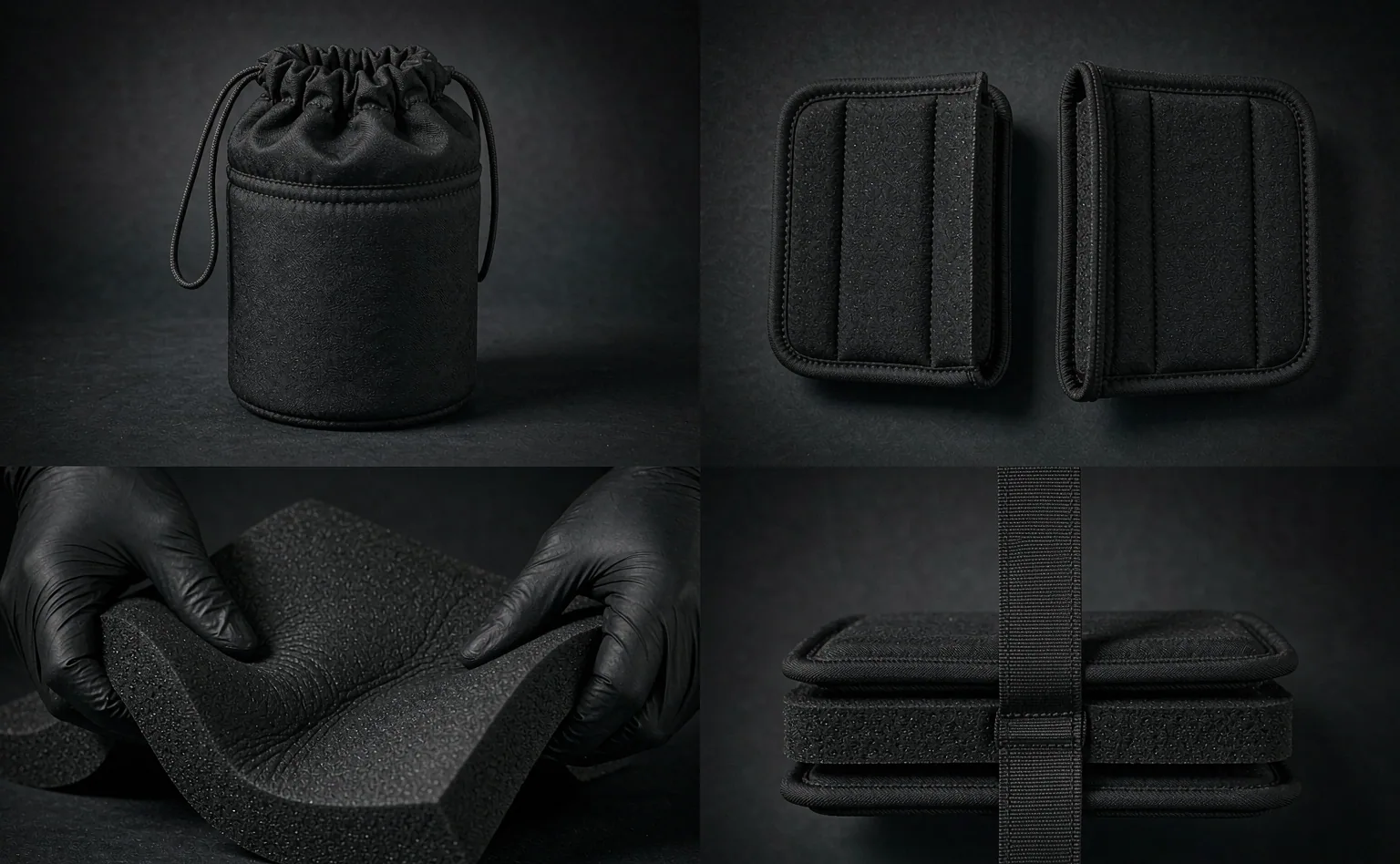
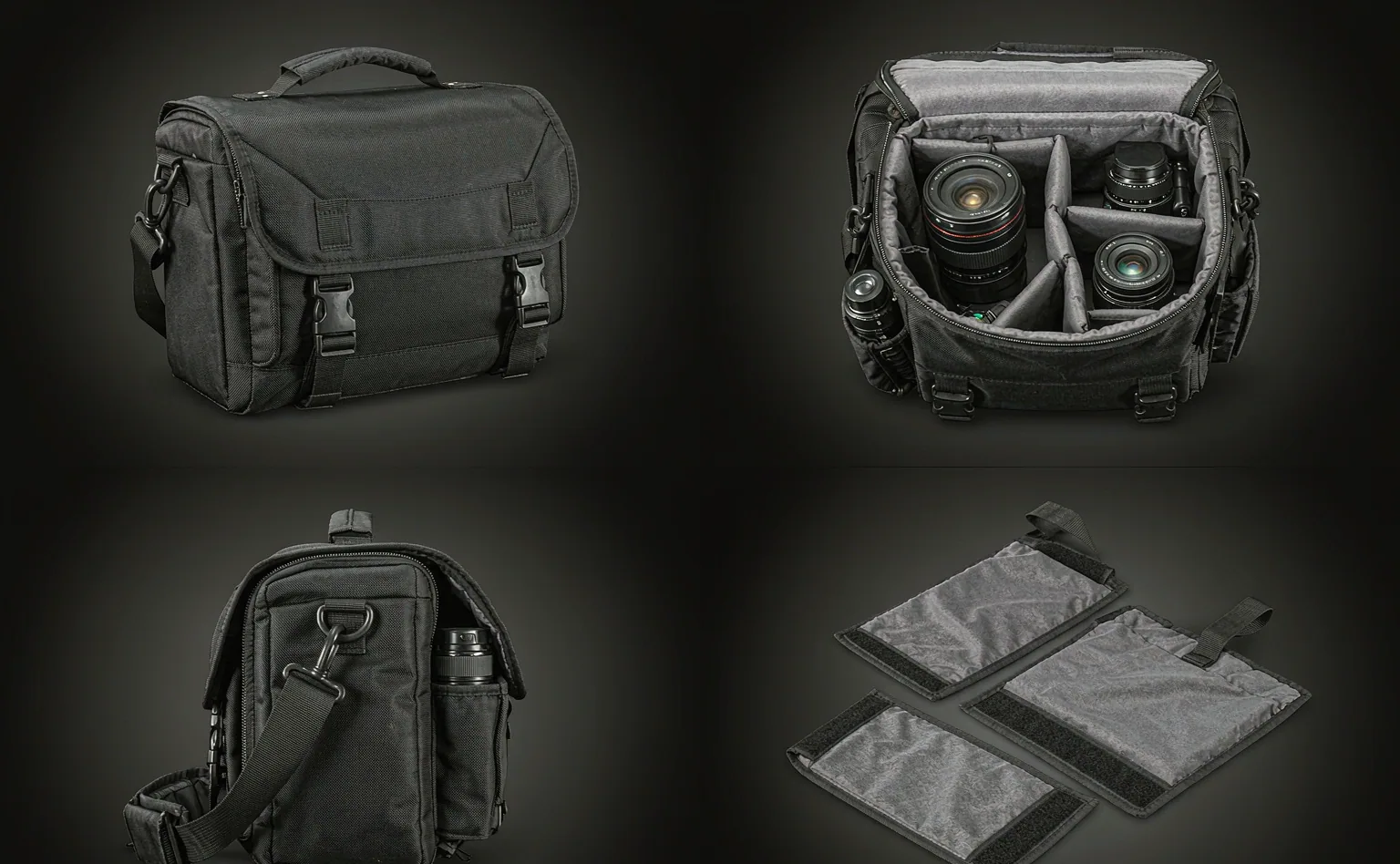
The construction side matters too, because the carton and the material decide the freight line. A cooler bag with foam panels ships erected and is charged on volume; a drawstring bag packs flat and is not. Two programmes with the same unit price can therefore land at materially different figures, which is exactly what the panel is here to show.
Where Does the Calculation Stop and a Written Quotation Start?
At the point where the answer depends on a specific bag. The panel can add six lines and divide them by a quantity; it cannot say what the carton will weigh before the packing specification is settled, or what subheading a lined construction will be entered under. Those are answered by a tech pack, a packing specification and a broker, in that order, and they are confirmed in writing before payment terms of T/T 30/70 come into play.
Compute the landed figure, then send it with the specification
Run the panel on your own figures, attach the landed cost per piece and the sampling plan to the specification, and send them together. The quotation that comes back can then be checked line by line against MOQ 500 pcs per style, a 6-10 working day sampling window and a 35-50 day bulk schedule, FOB Xiamen.
Frequently Asked Questions
What is landed cost in plain terms?
Landed cost is the total of every charge between the unit price on a quotation and the money that leaves the buyer's account, divided by the quantity. It adds the value of the goods, the freight, the insurance, the duty at the confirmed rate and the destination charges, and the result is the cost per piece at the delivery address.
Why is FOB Xiamen the reference point here?
FOB Xiamen is quoted because it fixes a clean dividing line between the parties. Under Incoterms 2020 the seller delivers when the goods are on board at the named port, and cost and risk pass at that point. Everything before it is inside the unit price and everything after it is not.
Which lines does the calculator actually add up?
The goods value, freight, insurance at the entered rate, duty at the entered rate applied to the customs entry value, and destination handling plus other charges. It then prints the landed total, the landed cost per piece, and each line as a share of the goods value so the dominant ones are visible.
Does the calculator include a duty rate for bags?
No. Duty is set by the tariff of the destination, attaches to the HS subheading of the bag and is revised over time. The field is left for the buyer to fill from the official tariff or from a licensed broker, because a rate printed by a supplier would be wrong for some readers.
What value does customs assess duty on?
Most destinations assess on the transaction value of the goods, and many add freight and insurance to reach a CIF-type value before applying the rate. Which basis applies is set by the destination. The panel prints the customs entry value as a separate row so the buyer can see what the rate multiplies.
How does choosing CIF change the result?
Under CIF the seller pays the freight and the insurance for the main carriage, so both fields are disabled and treated as already inside the price. Duty, customs entry and destination charges stay with the buyer, so those fields remain live and continue into the landed total.
How does choosing DDP change the result?
Under DDP the seller carries freight, insurance, duty and destination delivery, so all four fields are disabled and the landed total is the price paid for the goods. The trade-off is visibility: the buyer no longer sees the freight note or the duty paid on the declared value.
Why does the tool print indicative rather than a fixed figure?
Because freight rates move with the lane and the season, duty is set by the destination and is revised, and insurance is priced against the value declared on the day. What the tool commits to is the structure of the stack and the sensitivity of each line, not the market on the day of booking.
What is the difference between freight and destination charges?
Freight is the cost of the main carriage, charged on the greater of weight and volume and set by the forwarder on the lane. Destination charges are raised at the other end by the agent and the terminal, and they are close to fixed per shipment rather than per piece, so they fall per piece as quantity rises.
Does the carton count change the landed figure?
Indirectly. The carton count sets pieces per carton, and the carton dimensions and weight set the chargeable weight or volume that freight is billed on. A bag that ships erected fills a container long before it reaches the weight limit, which is the single most common reason a landed figure comes back high.
People Also Ask
How do I calculate landed cost per piece?
Add the value of the goods, freight, insurance, duty on the customs entry value and the destination charges, then divide by the quantity. The panel does exactly that and prints each line as a share of the goods value, so the two lines that dominate the total are visible rather than hidden inside it.
Is FOB or DDP better for a first bag order?
FOB Xiamen suits a buyer who has a forwarder and wants visibility over the main carriage and the duty paid. DDP suits a buyer without customs capability at destination, at the cost of a freight margin and no sight of the entry. The panel runs both from the same inputs.
What value does customs use to assess duty?
Most destinations start from the transaction value on the commercial invoice and many add freight and insurance to reach a CIF-type assessed value. The basis is set by the destination, so confirm it with a licensed broker and check it against the official tariff before the entry is filed.
Why is insurance calculated on more than the goods value?
Marine cargo cover is written on the insured value, which normally includes the freight, because a total loss costs the buyer the freight as well as the goods. The panel therefore applies the entered rate to the goods value plus freight, and shows the result as its own line.
Which landed cost line moves the most between orders?
Freight, because it is charged on the greater of weight and volume and moves with the lane, the season and the mode. Duty moves with the declared value and the subheading. Destination charges are close to fixed per shipment, so they matter most on small runs and least on large ones.
Sources and further reading
Every figure on this page is either our own programme data or attributed below. Open the originals before you write them into a specification.
- Incoterms 2020 rulesInternational Chamber of Commerce
- Customs valuation and the Harmonized SystemWorld Customs Organization
- ISO 2859-1 sampling procedures for inspection by attributesInternational Organization for Standardization