Which Wine Bag Divider Actually Survives Transit: Board, Foam or EVA?
A divider in a transit wine bag is a structural member, not a separator. It holds the cells square under a stack, keeps glass off glass when the bag is tilted, absorbs part of the impact at the drop, and has to keep doing all three after a season of condensation.
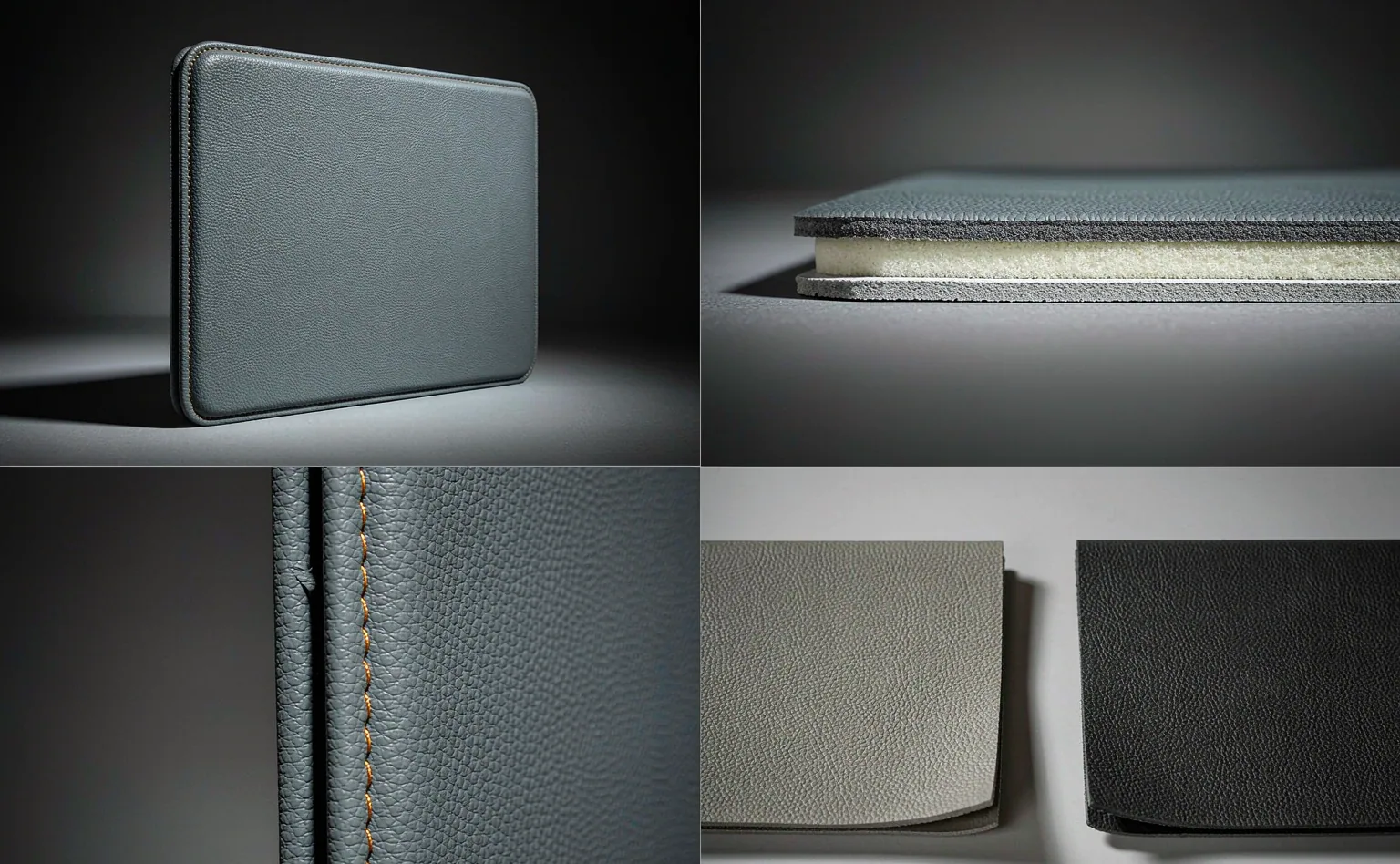
A divider in a transit wine bag is a structural member, not a separator. It has to hold the cells square under a stacked load, keep glass off glass when the bag is tilted, absorb part of the impact at the drop, and keep doing all three after a season of condensation. Laminated paperboard does the first two and fails the last; EVA and PE foam survive water but need a board or a shell to be rigid against.
The divider is the part of a wine bag that is specified last and blamed first. It is drawn as a separator, quoted as a material, and then asked to behave as a beam, a spacer and a cushion at the same time. In a presentation bag carried once across a room that is roughly fair. In a bag that goes through a parcel network it is not, and the gap between the two is where the returns come from.
This piece follows on from the divider material table in the wine bag programme hub and takes the transit case specifically: what the divider has to survive, how much of the drop it actually absorbs, why water is the whole decision, and how to write the assembly down so the second run matches the first.
What Does a Divider Actually Have to Do in Transit?
Four jobs, and they pull in different directions. It has to hold the cells square while the bag is stacked under other cartons, which wants rigidity. It has to keep two bottles apart when the bag is tilted to 45 degrees and set down, which wants full height and a tight cell. It has to absorb part of the impact when the bag lands on a corner, which wants compressibility. And it has to do all three when it is damp, which wants a material that does not care about water.
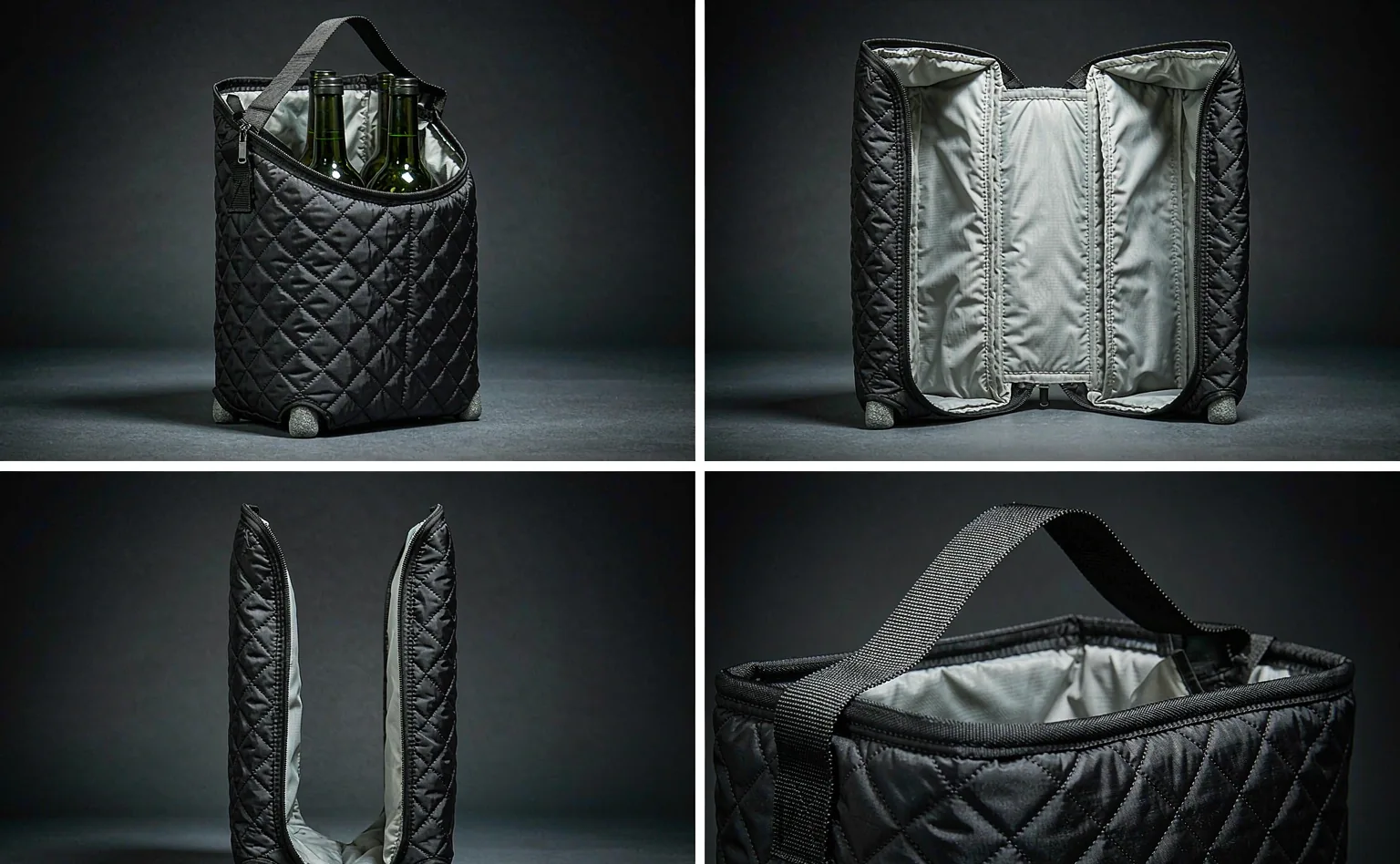
Rigidity and compressibility are in tension, and that is the real reason the category splits the way it does. A laminated paperboard divider is rigid and barely cushions anything; an EPE foam divider cushions well and is not rigid on its own. The working answer in a transit bag is almost always a combination — a foam or EVA cell inside a structure that supplies the rigidity — rather than one material trying to do four jobs.
| Job | What failure shows | Property that prevents it | Material that has the property |
|---|---|---|---|
| Hold the cells square under a stack | Bottles touch at the shoulder | Compressive rigidity across the span | Laminated paperboard, corrugated board, a boarded base |
| Keep glass off glass when tilted | A rattle, then a chip | Full height and a tight cell | Any divider that is full height and fixed at the base |
| Absorb part of the impact | A broken bottle on the corner drop | Compressibility with recovery | EPE or PE foam, EVA sheet |
| Survive condensation | A soft, bowed sheet in month three | Closed-cell, non-hygroscopic | EVA, EPE and PE foam; not paperboard |
| Stay where it was put | The assembly leans inside the shell | Fixing to the base board at more than one point | A slotted grid rather than a floating insert |
How Much Impact Energy Reaches the Divider in a Parcel Network?
Enough that the choice is not academic. A two-bottle bag at about 2.8 kg dropped from 460 mm arrives with roughly 12 joules of kinetic energy at the moment of contact, and a six-bottle carrier at 8.1 kg from the same height arrives with about 36 joules. Some of that goes into the shell and the base, some into the bottles themselves and some into whatever the bag lands on; the share that reaches the divider is the share that decides whether glass touches glass.
The useful way to think about it is contact time rather than energy. Glass breaks on a short, hard impact and survives a longer, softer one, so anything that extends the deceleration reduces the peak force. A 3 mm paperboard divider extends it almost not at all; a 6 mm EPE cell extends it substantially. That is the whole argument for foam in a transit bag and it has nothing to do with comfort.
The second half of the argument is recovery. A foam that compresses and stays compressed has bought one drop and not a second one. Specify closed-cell foam with a density figure and a compression-recovery requirement, and test a divider that has been through the actual carton rather than a fresh sheet from the store.
Does Divider Thickness Follow the Span or the Bottle Weight?
The span, and the bottle weight is a poor proxy for it. Two millimetres of laminated paperboard is the working figure in a two-bottle carrier and it bows in a six-bottle one, not because the bottles are heavier in themselves but because the unsupported span across the row is three times longer. The rule is that thickness follows the span, and the span is the cell width multiplied by the number of cells.
There is a second span nobody measures: the height of the divider above its fixing point. A divider that is full height and slotted into a base board is supported at the bottom and free at the top, and the free length is the lever arm when the bag is tilted. A divider 30 mm short of the rim looks identical on a drawing and it lets the bottles tilt until glass meets glass, which is precisely the damage the divider existed to prevent.
Which Divider Material Holds Its Shape After a Wet Season?
Water is the decision and everything else is secondary. A chilled bottle in a warm room produces condensation, a wet case wicks into whatever it touches, and a cold warehouse floor is damp. Laminated paperboard is rigid, printable and it loses its shape when it is wet; greyboard is worse; corrugated board softens along the flute. EVA, EPE and PE foam are unaffected by water. A transit bag that will meet any of those conditions wants a closed-cell material, and a presentation bag carried once and dry can have paperboard.
The second material question is creep, which is the slow one. Under a constant compressive load a foam divider will lose thickness over weeks, and a bag packed and stacked for a season arrives with a slightly looser cell than it left with. That is a density question: a low-density foam creeps more, and a density figure on the tech pack is the control. Ask for the density in kilograms per cubic metre and a compression set figure, and the second run can be held to the first.
| Material | Thickness range | Rigidity alone | Behaviour when wet | Cushioning | Creep risk | Transit verdict |
|---|---|---|---|---|---|---|
| Laminated paperboard | 1.5-2.5 mm | high | softens | low | low | dry presentation only |
| Corrugated board, B-flute | 2.5-3.0 mm | high along the flute | softens | moderate | low | single-use shipper, dry lane |
| EVA sheet | 2.0-4.0 mm | moderate, flexible | unaffected | moderate | low | reusable transit with a boarded base |
| EPE / PE foam | 3.0-8.0 mm | low alone | unaffected | high | moderate at low density | transit shipper with a carrier |
| Moulded pulp | 2.0-3.0 mm | moderate | absorbs and softens | moderate | low | single-use, shaped cell, dry lane |
| EVA laminated to board | 4.0-6.0 mm | high | face is unaffected | moderate | low | the combination transit answer |
Slotted, Glued or Moulded: Which Assembly Survives Transit?
Slotted and interlocked, fitted into a base board, is the construction that survives. The load path runs from the bottle into the divider, down into the board and out into the shell at the fixings, and every step is a mechanical one. A folded divider glued into the shell and held by the lining puts the same load through adhesive and through a seam, and a seam is the weakest thing in the bag.
Moulded pulp has a place and it is worth naming it precisely: a single-use shipper on a dry lane where the cell is shaped to the bottle and the volume justifies the tool. It gives a genuinely good cell, it cushions moderately and it is a single material at end of life. It absorbs water, so it does not belong in a reusable carrier or a chilled lane, and the tooling only pays for itself at volume.
The assembly question that is asked least and matters most is whether the divider is attached to the base. A floating divider converts every handling event into a shearing load on the joint between the divider and the shell, and that joint is a seam. Slot it into the base board, fix the board to the shell at more than one point, and the load goes into the structure where it belongs.
How Tight Should the Cell Tolerance Be Around the Glass?
Eight millimetres over the widest bottle in the range is the working figure and it is a floor rather than a target. Below it a bottle will not drop in when the label is wet, and a label is wet more often than a specification assumes. Above about 12 mm the bottle has room to accelerate inside the cell before it meets the divider, and the drop test starts failing at the corner for a reason that has nothing to do with the divider material.
Write the tolerance, not the dimension. A cell of 84 mm with a tolerance of plus or minus 2 mm is a specification; a cell of 84 mm is a hope. On a six-cell row the tolerance accumulates, and four millimetres of drift per cell is a rattle across the row. That is the defect that shows up at goods-in and it is a major defect on a transit bag.
The same tolerance belongs on the divider thickness, and it is the drift nobody measures. A 2 mm sheet substituted for a 3 mm one holds the cells the same on day one and differently in month three, and it is invisible in a photograph of the sample.
Writing a divider specification that survives transit
- Name the material and the thickness, and add the density where it is a foam.
- Say full height, slotted, fixed to the base board — an unattached divider is a seam failure waiting to happen.
- Give the cell as a dimension and a tolerance, measured against the widest bottle in the range.
- Decide on water first: condensation anywhere in the chain rules paperboard out.
- Test a divider that has been through the carton, not a fresh sheet from the store.
What Happens When a Paperboard Divider Meets Condensation?
It softens, and the failure is progressive rather than sudden, which is what makes it expensive. The first damp trip produces a slight bow; the bow lets the cell widen; the wider cell lets the bottle move; the movement loads the divider further along the row. By the third trip the bag rattles, and by the time the customer notices, the lot has already been accepted at inspection because the sample on the bench was dry.
Two mitigations work if paperboard has to be used on a lane that might be damp. A laminated face — a poly-coated or film-laminated board — slows the uptake substantially and is the usual answer for a presentation bag that will sit in a cold room overnight. And a boarded base under the divider keeps the bottom of the sheet out of any water that collects in the base of the bag, which is where it collects. Neither makes paperboard a wet-duty material; both buy a margin.
Where the lane is genuinely chilled — a wine bag going out with a cold bottle, or a delivery programme with a gel pack — the answer is not a mitigation, it is a different material. EVA or EPE, with a boarded base to supply the rigidity the foam does not have on its own.
How Is a Divider Tested Before the Bulk Order?
Three tests, and none of them needs a laboratory. The first is the pack-out: bottles in the bag, tipped to 45 degrees, carried across the room and set down. Cells that are too wide let the bottles roll and touch; a divider that is short lets them tilt; handles that are too long drag the rim. It takes a minute and it finds all three.
The second is the drop, and it is the one that decides: ASTM D5276, free fall of the filled bag, base then the weakest bottom corner then a flat side then the handle, one fresh sample per orientation. The pass criterion is the bottle — no breakage, no opened seam, no glass exposed. A bag that lands with the base seam opened and the bottle intact has still failed, because the next event releases the bottle.
The third is the one programmes skip: a compression or stack test on the divider assembly on its own. Load the cells with the bottle weight, let it sit for the dwell the carton will see, and measure the cell before and after. It costs a day, and it is the only test that catches creep before the season does.
- Material
- Named by polymer or board grade, not by trade description
- Thickness
- A figure and a tolerance, set from the span
- Density
- Kilograms per cubic metre for any foam; the control on creep
- Height
- Full height, stated, with the rim distance stated
- Assembly
- Slotted and interlocked, or moulded; never glued and floating
- Fixing
- Slotted into the base board, board fixed to the shell at more than one point
- Cell
- Dimension and tolerance against the widest bottle in the range
- Wet duty
- Stated: condensation present or absent, and the material chosen for it
- Test
- Pack-out, drop to ASTM D5276, and a stack or creep check
- Reference
- One sealed sample and one packed with the actual bottles
Which Divider Decisions Move the Unit Cost Most?
The assembly rather than the material, and it is labour rather than kilograms. A six-cell divider is cut, slotted, assembled and fitted, and each of those is paid for in minutes; on a six-bottle carrier the divider assembly is usually the largest single block in the bill of materials, ahead of the shell and ahead of the print. A quotation that prices the divider as a material has not read the operation.
The number of pieces is the lever inside that. A divider that slots together from three pieces costs less to assemble than one that slots from eight, and a moulded pulp cell is one piece and a tool. Where volume justifies it, the tool is the answer; where it does not, the assembly is, and the assembly is the line to negotiate.
The third lever is the die. A cutting die for the divider is paid once, on the first invoice, and never again. Insist on it as a separate line: a quotation that has absorbed it into the unit price is a number that will not survive a reorder at a different quantity, and the reorder is exactly where that becomes visible.
Specify the divider before the shell
Send the bottle shapes, the count, the lane and whether the chain is ever chilled. You get a divider material, thickness and assembly with the test behind it, within one business day.
Frequently Asked Questions
What is the best divider material for a wine bag?
It depends on water. Laminated paperboard is rigid and printable and softens when wet; EVA and PE foam are unaffected by water and are not rigid alone. A transit bag that meets condensation wants a closed cell.
How thick should a wine bag divider be?
Two millimetres of laminated paperboard in a two-bottle carrier and 3 mm, or 2 mm with a mid-span support, at six. Thickness follows the span, and the span is the cell width times the number of cells.
Why does my wine bag divider bow in the middle?
Because the span is longer than the sheet was specified for, or because the sheet took up water. Both are specification problems and neither is visible on a fresh sample.
Does a divider have to be full height?
Yes. A divider 30 mm short of the rim looks the same on a drawing and lets the bottles tilt until glass meets glass, which is the damage it existed to prevent.
Should the divider be glued in or slotted?
Slotted and interlocked into a base board. A glued divider held by the lining puts the load through adhesive and through a seam, and a seam is the weakest thing in the bag.
Can a paperboard divider be used in a chilled chain?
Not reliably. A laminated face and a boarded base buy a margin, but a chilled bottle produces condensation and paperboard loses its shape. Use EVA or EPE with a boarded base.
What density of foam should a wine bag divider use?
Specify it in kilograms per cubic metre rather than by feel, and ask for a compression set figure. Low-density foam creeps under a stacked load and the cell loosens over a season.
How much space does a bottle need in its cell?
Eight millimetres over the widest bottle in the range is the floor; above about 12 mm the bottle accelerates inside the cell and the corner drop starts failing.
Which drop test applies to a wine bag divider?
ASTM D5276, the free-fall drop of loaded containers, because it fixes the orientations and the sequence rather than only a height. Test the filled bag, one fresh sample per orientation.
What counts as a pass on a wine bag drop test?
No bottle breakage, no opening of a seam or a closure, and no glass exposed through the shell. A bag that lands with its base seam opened and the bottle intact has still failed.
Why does the divider cost more than the fabric?
Because it is labour. A six-cell divider is cut, slotted, assembled and fitted, and each step is paid for in minutes — usually the largest single block in the bill of materials.
Is moulded pulp worth the tooling?
At volume, on a dry lane, for a single-use shipper, yes. It gives a shaped cell and a single material at end of life, and it absorbs water, so it is not a reusable or chilled answer.
How do I stop the divider drifting on a reorder?
Name the material, the thickness, the density and the height in the tech pack, keep a sealed reference sample, and put the cell dimension with a tolerance on the drawing.
What is the MOQ for a custom wine bag divider?
MOQ is 500 pcs per style and colourway, and the divider die is a one-off tooling line on the first order. On a repeat 300 pcs can be discussed.
People Also Ask
What should a wine bag divider be made of?
Laminated paperboard for a dry presentation bag; EVA or PE foam with a boarded base for anything that meets condensation, a wet case or a cold floor.
How thick should a wine bag divider be?
Two millimetres at two bottles and 3 mm, or 2 mm with a mid-span support, at six — thickness follows the span, not the bottle weight.
Why do wine bottles touch inside the bag?
The divider is short of the rim, the cell is more than about 12 mm over the bottle, or the sheet has bowed from water or from creep.
Can a cardboard divider get wet?
It can survive one damp trip and it will not survive a season. A laminated face and a boarded base buy a margin; a closed-cell foam removes the problem.
How do you test a wine bag before ordering in bulk?
A pack-out tip test, a free-fall drop to ASTM D5276 on the filled bag in four orientations, and a stack or creep check on the divider assembly.
Sources and further reading
Every figure on this page is either our own programme data or attributed below. Open the originals before you write them into a specification.
- ASTM D5276 — drop test of loaded containers by free fallASTM International
- ISTA 3 Series — packaged-product performance test proceduresInternational Safe Transit Association
- CETIE — international technical centre for bottling: bottle finish and dimension data sheetsCETIE (Centre International Technique de l'Embouteillage)