Custom Insulated Tote Bags for Grocery Delivery: Sizing and Insulation Guide
Size to the crate rather than to the order: 30 litres for a full crate of mixed chilled items, 45 litres where the load needs two temperature zones. Six millimetres of closed-cell foam holds a route under 90 minutes; eight where the vehicle is unrefrigerated.
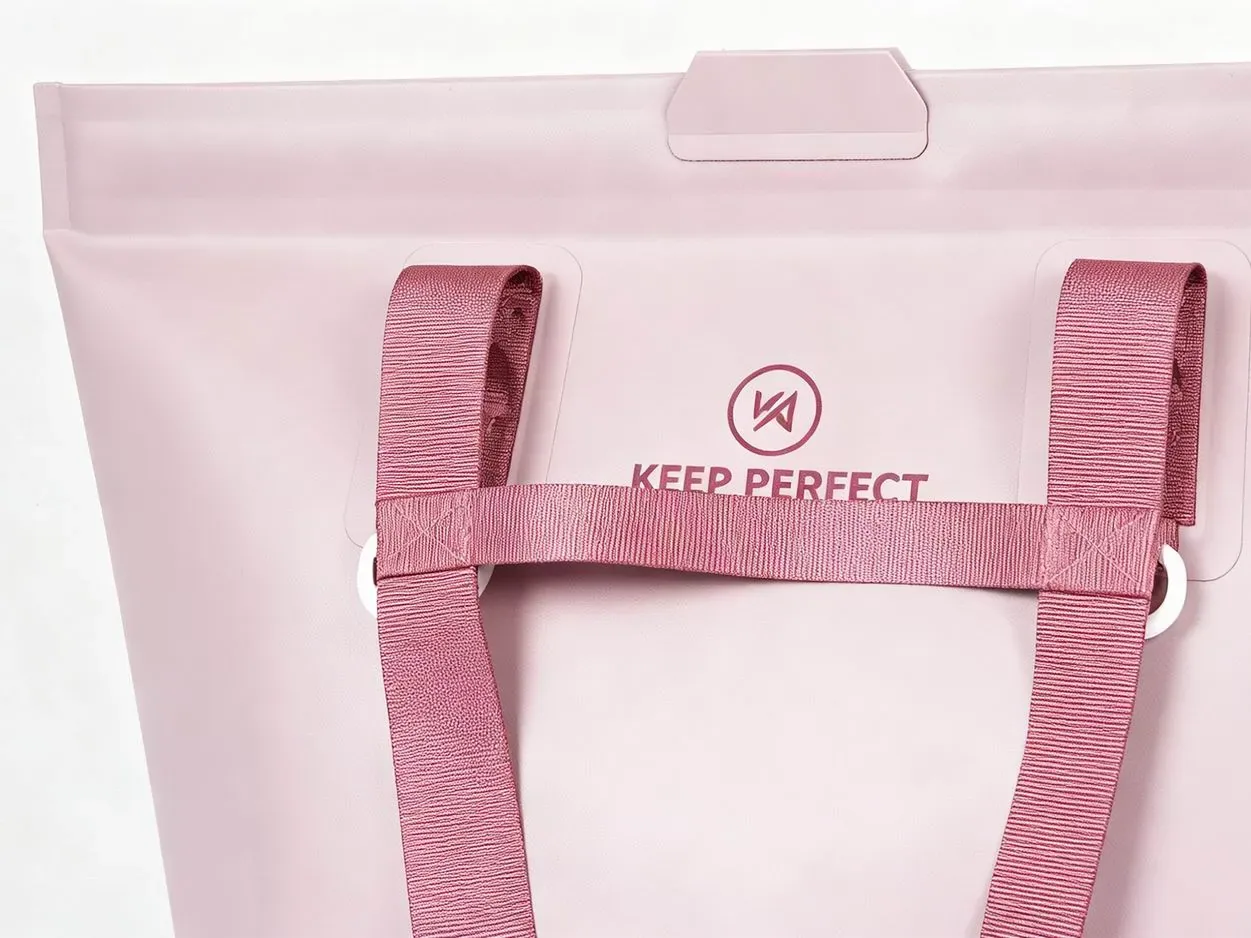
An insulated grocery delivery bag is sized to the crate, not to the shopper. The working formats are 30 litres for a single crate footprint, 40 litres for a mixed chilled and frozen drop, and 20 litres for a two-bag split where the order has to be separated by temperature zone. Insulation is 6-8 mm closed-cell foam with a welded liner, and the specification is driven by the crate dimensions and the route length.
Grocery delivery is the hardest duty an insulated bag is asked to do, because the load is unknown until the picker fills it. A bag that works for a six-item order is the wrong bag for a forty-item one, and a fleet that owns one size ends up with drivers double-carrying or leaving orders unseparated. This piece sets out how to size a grocery bag against the crate and the order profile, what insulation the route actually needs, and which structural details decide whether the bag survives a quarter of daily use.
Should a Grocery Bag Be Sized to the Crate or to the Order?
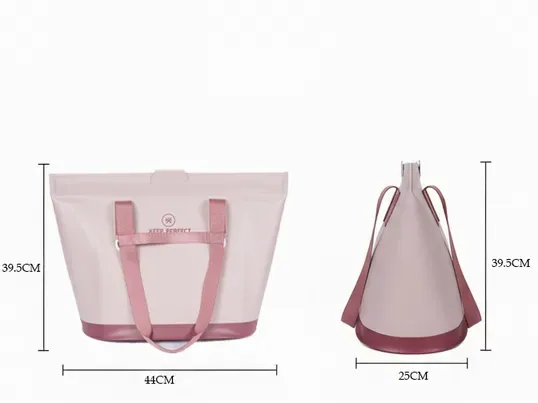
To the crate, because the crate is the fixed part of the system. A grocery operation picks into a standard tote or crate, and the bag has to accept that crate or its contents without repacking at the kerb. Measure the crate footprint, add the wall build-up twice, add a working gap of 15 to 20 mm on each horizontal dimension, and the internal dimensions follow. Sizing to an average order instead produces a bag that fits most orders and fails the ones that matter most.
Then check the order profile against the volume you have derived. A 30-litre internal volume holds roughly a full crate of mixed chilled items with a small frozen section; a 40-litre bag holds a crate plus a separate frozen block. Where the profile is bimodal — many small orders and a tail of large ones — the answer is two bag sizes in the fleet rather than one compromise.
| Format | Internal dimensions, mm | Usable volume | Order profile it serves | Filled weight |
|---|---|---|---|---|
| Small | 300 x 240 x 280 | 20 L | Six to twelve items, one temperature zone | 5-7 kg |
| Standard | 360 x 300 x 330 | 30 L | A full crate, mixed chilled with a frozen pocket | 8-11 kg |
| Large | 420 x 340 x 380 | 45 L | Two temperature zones or a bulk order | 12-16 kg |
| Frozen insert | 240 x 200 x 220 | 10 L | Frozen items separated inside a larger bag | 3-5 kg |
| Collapsible | 360 x 300 x 330 | 30 L | Return logistics where the bag comes back | 8-11 kg |
How Much Insulation Does a Grocery Route Actually Need?
Most grocery routes are short: pick to doorstep in 30 to 90 minutes, with the chilled load starting at 2 to 5 °C and the ambient somewhere between 5 and 32 °C depending on the market and the season. Six millimetres of closed-cell foam holds a chilled load in that window comfortably; eight millimetres is worth specifying where the route exceeds 90 minutes, where the vehicle is not refrigerated, or where the ambient regularly exceeds 30 °C.
Frozen items are the constraint, not chilled ones. A frozen load has to stay below about -12 °C to arrive hard, and that requires either a separate frozen zone with its own refrigerant or a much heavier build. The economical answer is separation: a frozen insert inside a chilled bag, with a eutectic pack in the frozen compartment, rather than trying to make one large bag do both.
Does the Bag Need Temperature Zones?
Where an order contains frozen, chilled and ambient items, yes, and the zones are the specification rather than an accessory. Three patterns are used: a separate frozen insert that lifts out, a fixed divider down the middle of the bag with independent foam on both sides, and two bags carried together. The insert wins on flexibility and on cleaning; the fixed divider wins on packing speed; two bags win where the order profile is predictable.
Each has a different failure mode. Inserts get left behind at the doorstep and then the fleet is short of them. Fixed dividers halve the usable width and drivers pack around them. Two bags get separated in the vehicle and one arrives late. Decide on the operational evidence, not on the bag drawing, and where possible ask the operations team which failure they can absorb.
What Structural Details Decide Service Life?
Four, and they are all about the filled weight. Handles: a 12 kg load carried by a 25 mm webbing loop requires a box-stitch and a bar-tack into a reinforced panel, and the load path has to reach the base panel rather than the side wall. Base: a grocery bag is set down hard, repeatedly, on wet ground, so the base panel wants a moulded or reinforced structure and a liner that will not split at the corner. Closure: a single zipper across a wide mouth flexes constantly and should be specified with a cycle rating. And the mouth: a wide mouth is faster to pack and leaks more, so it wants a foam-filled flap.
Stitch and seam specification follows from those four. ASTM D6193 covers stitch types and density, and ISO 13934-1 the tensile behaviour of the fabric; both should appear in the tech pack with a stitch count and a seam allowance. A grocery bag that fails in service almost always fails at a strap attachment or a base corner, and both are stitch problems rather than material problems.
How Does the Bag Fit the Vehicle and the Return Flow?
Two dimensions matter beyond the bag itself: how many fit across a vehicle shelf, and how the empty bag travels. Square footprints pack better than tapered ones, and a bag that is 20 mm narrower may allow an extra column in a van shelf, which is worth more to the operation than a small gain in insulation. Where the bag is returned to the depot, a collapsible build is worth the hinge cost because an empty rigid bag travels at full cube.
Ask the operations team for the vehicle shelf dimensions and for the return flow before the drawing is fixed. A bag designed in isolation and then found to fit four-across instead of five is a redesign, and a redesign at that stage costs a sampling cycle out of the launch window.
What Does the Cleaning Regime Do to the Specification?
Grocery bags are wiped down between drops and deep-cleaned at the depot, and the regime decides the liner more than the marketing does. A welded film liner wipes clean and survives a dilute detergent; a sewn and taped liner holds residue at the tape edge and lifts. Seams should be welded where they can be, and corners should have a radius large enough to wipe rather than a tight mitre.
Ask for the cleaning agent list, because the wrong agent crazes a film and voids the food-contact position at the same time. A dilute neutral detergent and a quaternary ammonium sanitiser at the supplier-recommended dilution are normal; solvents and high-temperature wash are not. Where the depot uses a hot wash, TPU is the film to specify rather than PEVA.
| Component | Specification for daily service | Why it is specified this way |
|---|---|---|
| Liner film | Welded PEVA at 0.15 mm, or TPU for hot wash | Wipes clean; no tape edge to hold residue |
| Seams | Welded where geometry allows, taped corners with a wipe radius | Cleanability and leak-tightness |
| Base | Reinforced or moulded panel, liner not split at the corner | The bag is set down hard on wet ground |
| Handles | 25 mm webbing, box-stitch and bar-tack into the base panel | A 12 kg load path has to reach the base |
| Closure | Coil zipper with a stated cycle rating, foam-filled flap | Opened and closed dozens of times a day |
| Identification | A printed or labelled panel for fleet numbering | Fleet control and loss tracking |
How Should the Thermal Claim Be Tested for Grocery?
As a route simulation rather than a static test. The bag is loaded with a standard grocery pack-out, held for a representative dwell, moved through a stated number of door openings, and logged to an endpoint of 5 °C for chilled and -12 °C for frozen. A static chamber test at 25 °C tells a grocery operator very little, because the dominant loss on a grocery route is the opening, not the conduction through the wall.
Where an operation runs both chilled and frozen, run two protocols and report two numbers. A single blended figure hides the frozen performance, and the frozen compartment is the one that generates the customer complaint.
Sizing and specifying for grocery delivery
- Size the internal volume to the crate, then check it against the order profile.
- Six millimetres for a sub-90-minute route; eight where the vehicle is unrefrigerated.
- Separate the frozen zone rather than over-building the whole bag.
- Specify handles and base for the filled weight, not the empty weight.
- Write the cleaning agent into the specification, because it decides the film.
What Are the Commercial Numbers for a Grocery Fleet Order?
A fleet order is a programme, not a purchase: MOQ 500 pcs per style and colourway, sampling 6-10 working days from a signed-off tech pack, bulk production 35-50 days from sample approval, inspection at AQL 2.5 under ISO 2859-1 General Inspection Level II, T/T 30/70, FOB Xiamen. Fleet programmes usually add two line items to that frame: a fleet numbering or identification method, and a reorder addendum, because a fleet is replaced in tranches and each tranche has to match the first.
Where the fleet is large, plan the tranches. A 5,000-unit fleet shipped as ten lots of 500 gives ten inspection events and ten opportunities for drift, against one lot of 5,000 with a single inspection at code letter L and a sample of 200 units. The bigger lot is more efficient on inspection cost and more consistent on product, and it is usually worth the warehousing.
How Does a Grocery Bag Differ From a Beverage Cooler Bag?
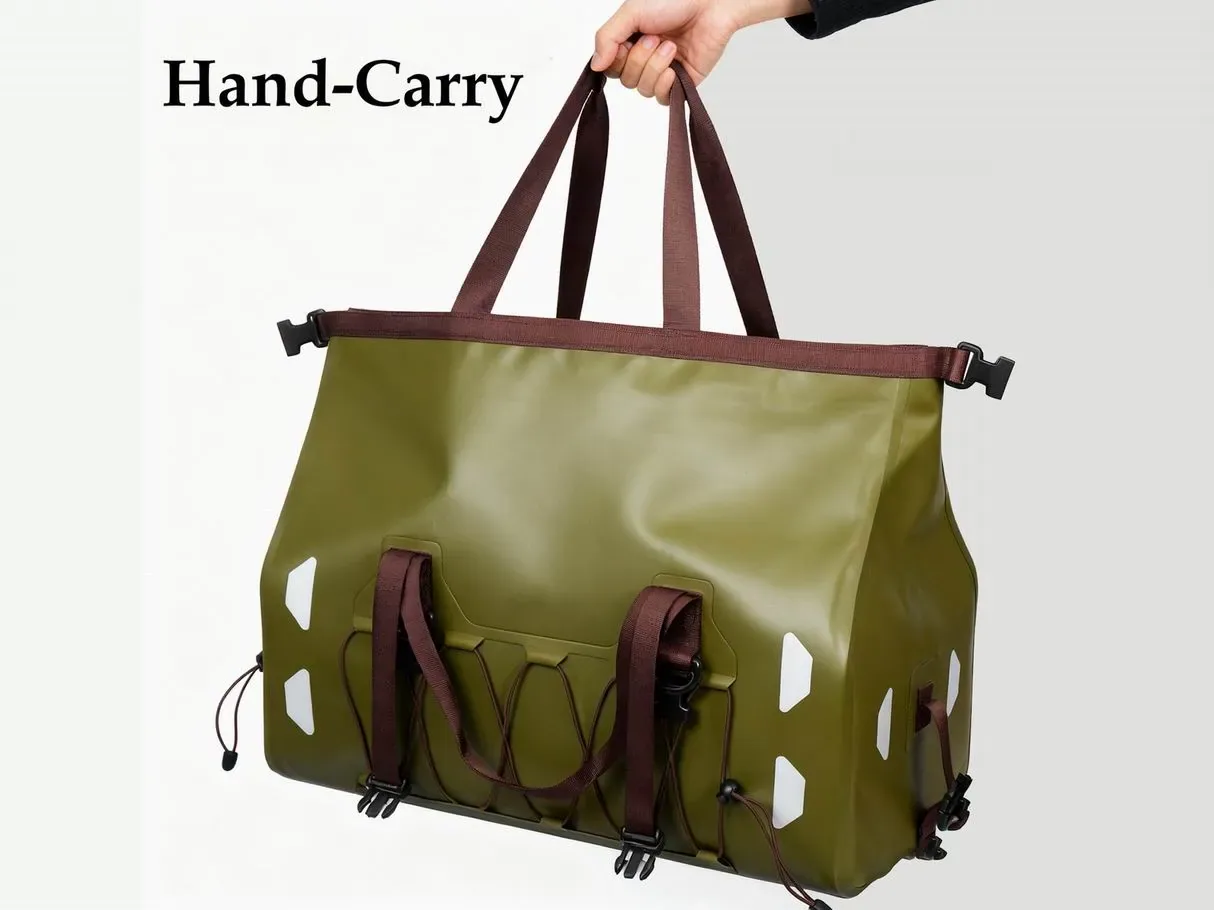
In three ways that decide the build. A grocery bag is wide and shallow, because it takes a crate footprint and has to be packed from above by a picker; a beverage cooler is deep and narrow, because it takes cans in rows. The wide mouth of a grocery bag leaks more per opening, so it needs a foam-filled flap and a closure the operator will actually close. And the grocery bag carries an unknown load, so the specification is written for the worst case rather than for the nominal one.
The second difference is the refrigerant. A beverage cooler is sold with a gel pack and used with ice; a grocery bag is used daily by an operator who will not manage a freezer inventory of packs. Where a grocery programme needs hours rather than minutes, the answer is a built-in phase-change panel in the base or lid, frozen overnight at the depot with the bags, rather than loose packs that get left behind.
The third is the service life expectation. A beverage cooler is a consumer product with a season or two of weekend use; a grocery bag is a fleet asset in daily service with a cleaning regime and an asset tag. That difference is why grocery bags are specified with a cycle rating on the closure, a reinforced base and an identification panel, none of which appear on a consumer specification.
What Should Be Agreed Before the First Tranche?
Three documents. A retained reference sample from the approved run, held by both sides with the date and the film lot on it, against which the next tranche is compared. A recorded parameter set for the weld and the lamination, so the second tranche is made the way the first was. And a defect class list for the inspection, written for grocery duty: what counts as critical, what as major, and what the buyer will accept.
The class list is where most of the value sits. A grocery bag with a scuffed panel is fine; the same bag with a lifted corner tape is a leak waiting for its first frozen order. Write that distinction down and the inspection stops being a matter of opinion.
One more operational field belongs on the drawing: the stack height of the loaded bag in the vehicle and in the depot. A bag that stacks three high empty may only stack two high loaded, and the difference is a vehicle capacity question rather than a bag question. Give the operations team the loaded stack height and the loaded footprint before the fleet size is committed, and ask them to confirm both against the vehicle they actually run.
Where the operation also runs an ambient zone — dry goods, household items, anything with no temperature requirement — decide whether those items travel in the insulated bag at all. Carrying ambient goods in a cooled bag wastes cooled volume and displaces chilled items, and the separated ambient drop is usually the lower-cost operational answer once the packing instruction is written and the pick sequence is set.
Size the bag to the crate and the route
Send the crate dimensions, the order profile, the route length and the quantity. You get a format and build recommendation within one business day.
Frequently Asked Questions
What size insulated bag is right for grocery delivery?
Size to the crate: 30 litres for a full crate of mixed chilled items, 45 litres where the order needs two temperature zones, and 20 litres for small orders.
How much insulation does a grocery delivery bag need?
Six millimetres of closed-cell foam for a route under 90 minutes from a chilled start; eight millimetres where the vehicle is unrefrigerated or the ambient exceeds 30 °C.
Should frozen and chilled items share one bag?
Only with separation. A frozen insert with its own eutectic pack inside a chilled bag is more economical than over-building the whole bag to hold frozen temperatures.
What is the filled weight of a grocery delivery bag?
Eight to eleven kilograms for a 30-litre standard bag, and twelve to sixteen for a 45-litre one. Handles and base have to be specified for that number.
How are grocery bags cleaned?
Wiped with a dilute neutral detergent between drops and sanitised at the depot. A welded liner survives that; a taped seam holds residue and lifts.
Does the cleaning agent affect the liner choice?
Yes. Solvents craze a film and can void the food-contact position; where the depot uses a hot wash, specify TPU rather than PEVA.
Why do grocery bags fail at the handles?
Because the load path is stitched into a side wall instead of the base panel. A box-stitch and bar-tack into a reinforced base is the fix.
How should the thermal claim be tested?
As a route simulation with a stated number of openings, an endpoint of 5 °C chilled and -12 °C frozen, and two separate protocols where both zones are carried.
Should a fleet be one size or two?
Two, where the order profile is bimodal. One compromise size ends up wrong for both the small and the large tail.
Does a collapsible design make sense?
Where the bag returns to the depot, yes: an empty rigid bag travels at full cube, which costs more than the hinge.
What is the MOQ for a grocery fleet order?
500 pcs per style and colourway, with repeat tranches open to discussion at 300 pcs.
Should a large fleet ship as one lot or several?
As few lots as the warehousing allows: one 5,000-unit lot means one inspection at code letter L with 200 units sampled, against ten inspections of 50 units each.
What inspection level applies?
AQL 2.5 for major defects and 4.0 for minor, to ISO 2859-1 at General Inspection Level II, with zero acceptance for critical defects.
What should be agreed before the first tranche?
A retained reference sample, a recorded weld and lamination parameter set, and a written defect class list.
People Also Ask
What size insulated bag do I need for grocery delivery?
Thirty litres for a full crate of mixed chilled items, derived from the crate footprint plus the wall build-up and a working gap.
How long do grocery delivery bags keep food cold?
A 6 mm build holds a chilled load through a 30 to 90 minute route comfortably; frozen needs a separated zone with its own refrigerant.
Do grocery bags need separate frozen compartments?
Yes where the order carries frozen items: a removable insert with a eutectic pack is the economical answer.
What makes a grocery delivery bag durable?
Handles stitched into a reinforced base panel, a moulded or reinforced base, and a closure specified with a cycle rating.
Can grocery delivery bags be washed?
They can be wiped and sanitised; a hot wash requires a TPU liner rather than PEVA, and the cleaning agent should be written into the specification.
Sources and further reading
Every figure on this page is either our own programme data or attributed below. Open the originals before you write them into a specification.
- ISO 2859-1:1999 Sampling procedures for inspection by attributesInternational Organization for Standardization
- ASTM D6193 — Standard Practice for Stitches and SeamsASTM International
- Regulation (EC) No 1935/2004 on food-contact materialsEuropean Union