How Do Insulated Bags Perform in the Food Delivery Industry?
A 6 mm bag with a covered closure holds a chilled load at or below 5 °C for 90 to 120 minutes at 25 °C ambient, but eight to twelve door openings an hour cost more cold than any wall thickness can recover. Specify for the route and the opening count.
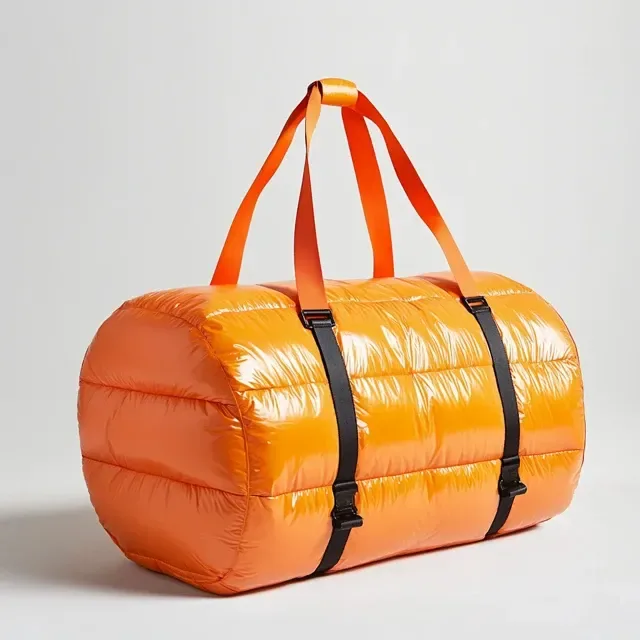
Insulated bags in food delivery are judged on a route, not in a chamber. A 45-minute urban route with 8 to 12 door openings loses more cold than any wall conduction does, so the specification that matters is the closure, the flap and the pack-out discipline. Six to eight millimetres of foam, a welded liner and a covered closure hold a chilled load at or below 5 °C across a typical shift.
The food delivery sector buys more insulated bags than any other buyer, and it is the sector where a laboratory result diverges furthest from the field. The reason is the opening cycle: a rider opens the bag eight to twelve times an hour, each opening exchanges the air inside with ambient air, and no wall thickness recovers that. This piece sets out how delivery duty differs from every other duty, what the field data actually shows, and how to specify a bag for a route rather than for a datasheet.
Why Does a Delivery Bag Behave Differently From a Cooler Bag?
Because the dominant loss is convection during opening, not conduction through the wall. A cooler bag sitting closed in a chamber loses heat through its panels; a delivery bag loses most of its cold in the ten or fifteen seconds it is open at a door. Doubling the foam does almost nothing about that, while a foam-filled flap, a narrower mouth and a closure the rider actually closes do a great deal. The specification has to follow the loss.
There is a second difference: the bag is hot as well as cold. A delivery fleet usually carries hot food at 60 °C or above and chilled items at 5 °C or below, sometimes in the same vehicle and occasionally in the same bag. A bag optimised for cold — thick foam, reflective facing, sealed liner — is a bag that holds hot food too well in a way that produces condensation and soggy packaging. Hot and cold are different specifications.
What Do Field Measurements Actually Show?
Across a typical urban shift, a chilled load in a 6 mm bag with a covered closure and disciplined packing holds 5 °C for about 90 to 120 minutes at a 25 °C ambient, and for 60 to 90 minutes at 32 °C. The same bag left open for thirty seconds at each of ten drops loses two to three hours of that margin. The variation between two riders on the same route with the same bag is frequently larger than the variation between two bags, which is why fleet specifications should include a packing instruction and not only a product.
Hot food behaves differently again: a hot load in a 6 mm bag with a sealed liner falls from 65 °C to about 50 °C over 40 minutes, and most of that loss is at the opening and through the steam condensing on the liner. Where a hot-food programme has a temperature target — commonly 60 °C or above at handover — the bag needs a vapour-managed liner and a short route, not more foam.
| Duty | Load start | Target at handover | Typical result, 6 mm, 25 °C | What dominates the loss |
|---|---|---|---|---|
| Chilled meal kit | 2-4 °C | At or below 5 °C | 90-120 minutes | Door openings and pack-out discipline |
| Chilled grocery | 2-5 °C | At or below 5 °C | 60-90 minutes, route dependent | Opening count and ambient |
| Frozen drop | -18 °C | At or below -12 °C | Only with a eutectic pack | Refrigerant mass |
| Hot meal | 65 °C | At or above 60 °C | 35-45 minutes | Steam management and opening count |
| Mixed hot and chilled | Both | Both targets | Requires two zones | Cross-contamination of the zones |
How Many Openings Can a Route Carry?
This is the number buyers never ask for and the one that decides the specification. Each full opening of a loaded bag exchanges most of the air inside and costs roughly the same cooling as twenty to thirty minutes of closed conduction. A route with twelve drops in an hour is therefore spending most of its cooling margin on openings, and a thicker wall cannot buy that back. The operational answers are a smaller bag so there is less air to exchange, a divider so only part of the bag opens, and a pack-out order so the rider is not searching.
Where the route is fixed, simulate it. Load the bag, open it the way a rider would, at the intervals a rider would, and log the result. A route simulation takes a morning and produces a number the operations team can act on, where a chamber test produces a number nobody can use. Specify the simulation in the tech pack: opening count, dwell per opening, and ambient.
Does Hot Food Need a Different Bag From Cold Food?
It needs a different liner more than a different wall. A hot load produces steam, and steam that condenses inside a sealed film liner makes packaging soggy and transfers heat out of the load quickly. The answers are a liner that manages vapour rather than merely blocking water, a vent that is closed for cold duty and open for hot, and a pack-out that separates the hot item from anything crisp. None of those come from adding foam.
Where one fleet carries both, the economical answer is two bag types with one shell specification and one colourway, rather than one compromise bag. The shared shell keeps the hardware and the weld parameters common, and the two liners are then a small cost difference against a large field-performance difference.
What Does the Bag Owe the Rider?
A delivery bag is carried for a whole shift, on a back or across a body, in the rain, and it is the rider who decides whether it gets used properly. If the closure is hard to work with one hand, it will be left open. If the bag is heavy empty, it will be left in the vehicle. If the shoulder strap slips on a jacket, it will be carried by the top handle and the seam will fail. Those are specification failures, not rider failures.
Write the ergonomics into the brief: empty weight, strap width and grip, whether the closure can be worked with one hand, and whether the bag stands up when it is set down. Ask the riders before the drawing is fixed, because a bag the fleet rejects is a bag the fleet does not use, and the thermal performance of an unused bag is zero.
How Does Cleaning and Hygiene Work at Fleet Scale?
Delivery bags are wiped between shifts and deep-cleaned on a cycle, and the regime is a food-safety control rather than a housekeeping task. A welded liner with a wipe radius at the corners, a liner that tolerates the sanitiser the operator actually uses, and a documented cleaning instruction are the three things that matter. Where the operator runs a hot wash, the film has to be specified for the temperature.
Food safety management systems — ISO 22000, or a HACCP-based system built on the same principles — treat the bag as a control point, and the bag then needs a documented cleaning frequency and a documented check. Ask the operator what their system requires before specifying the bag, because a bag that cannot be cleaned to the required standard will be rejected by the food safety team whatever its thermal performance.
| Control | What the bag specification has to provide | Evidence the operator will ask for |
|---|---|---|
| Wipe-down between shifts | A welded liner with a corner radius, no tape edges | A cleaning instruction with the agent named |
| Deep clean on a cycle | A film that tolerates the stated sanitiser and temperature | A material compatibility statement |
| Temperature at handover | A bag that meets the target on the stated route | A route simulation report |
| Cross-contamination | Separation of hot, chilled and allergen-bearing loads | A pack-out instruction and a zone design |
| Fleet tracking | A durable identification panel | A numbering method agreed with the operator |
How Should a Delivery Programme Be Inspected?
At AQL 2.5 under ISO 2859-1 General Inspection Level II for major defects, with a class list written for delivery duty. The critical class should include anything that makes the bag unsafe or unlawful: a broken needle fragment, a sharp burr on hardware, a liner with no food-contact declaration. Major should include the failures that stop the bag working: a closure that will not close, an opened seam, a strap attachment that pulls out. Minor covers the cosmetic class.
Add one test the standard does not cover: a loaded drop test. Fill a production unit to its rated weight, drop it from a stated height onto a stated surface, and check the base, the handles and the seams. A delivery bag is dropped; the standard sampling plan does not drop it, so the drop test has to be specified separately.
Specifying for delivery duty
- The opening cycle dominates: specify the closure and the flap before the wall.
- Simulate the route — opening count, dwell and ambient — rather than testing statically.
- Hot and chilled are different liners, not different wall thicknesses.
- Write the ergonomics in, because an unused bag has no thermal performance.
- Add a loaded drop test, which the sampling plan does not cover.
What Are the Commercial Numbers for a Delivery Fleet?
Unchanged by the duty: MOQ 500 pcs per style and colourway, sampling 6-10 working days from a signed-off tech pack, bulk production 35-50 days from sample approval, T/T 30/70, FOB Xiamen. What delivery programmes add is a fleet-identity line and a reorder plan, because a delivery fleet is replaced continuously: a fleet of 2,000 bags in weekly service may need a tranche every quarter, and each tranche has to match the last.
Plan the tranche size against the inspection economy. A 500-piece tranche draws code letter H and 50 units; a 3,200-piece tranche draws code letter K and 125 units, which is better inspection value per unit and fewer opportunities for drift. Where the warehouse allows it, buy fewer, larger tranches.
How Does Ambient Season Change a Delivery Specification?
Delivery runs in every season and the ambient swings more than any other variable in the specification. A fleet specified against a 25 °C summer trial in a temperate market can find itself running at 35 °C in a heatwave, where the same bag and the same pack-out lose roughly a third of the window. The specification answer is to test at the worst seasonal ambient the fleet will meet, not at the average, and to state that ambient on the product instruction.
There is a second seasonal effect that is easier to miss: the vehicle. A bag in an unrefrigerated vehicle in summer sits at an ambient well above the outside temperature, and a bag in a refrigerated vehicle in winter is helped by the vehicle. Where the fleet mixes refrigerated and unrefrigerated vehicles, the specification has to be written for the unrefrigerated case, and the temperature target has to be checked on the worst vehicle in the fleet.
Finally, the pack-out changes with the season and with the menu. A salad-heavy summer menu has a different thermal mass and a different risk profile from a hot-meal winter one, and a target that holds in January can miss in July on the same bag. Ask the operations team for the seasonal menu split before the protocol is written, and run the simulation on the worst combination rather than the average one.
What Is the Most Common Specification Mistake in Delivery?
Buying one bag for all duties. A fleet that carries hot meals, chilled groceries and frozen ice cream in the same bag will fail at least one of the three, and usually the frozen one first. The second most common is specifying foam thickness in the absence of a route simulation, which produces a bag that is heavier than it needs to be and still misses the target.
A fourth mistake is specifying the bag without the packing instruction. A bag issued with a one-page pack-out guide outperforms the same bag issued without one, because the difference between a well-packed and a badly-packed load is larger than the difference between a good and a mediocre bag. Write the instruction, print it inside the lid, and include it in the fleet induction, where it costs a minute and saves the returns desk an hour a week.
A fifth, and the quietest, is buying on unit price and then discovering the handling cost, which is where the money actually goes on a fleet of this size. A bag that nests badly costs depot space, a bag that does not stand up costs packing time, and a bag that cannot be wiped in under a minute costs a minute per drop. Those costs dwarf a small difference in unit price on the first 500 pcs by the end of a quarter, and they are visible to the operations team before the first order is placed.
The third is buying on the sample and forgetting the second tranche. Delivery fleets reorder more often than any other buyer, and the specification that has no retained reference sample and no recorded parameter set is a specification that will drift. Those two documents cost nothing at the first order and save the argument at the fourth.
Specify for the route, not the datasheet
Send the route profile, the opening count, the load mix and the quantity. You get a duty-specific build recommendation within one business day.
Frequently Asked Questions
How long do insulated bags keep food cold in delivery?
Roughly 90 to 120 minutes for a chilled load in a 6 mm bag with a covered closure at 25 °C ambient, and 60 to 90 minutes at 32 °C, with eight to twelve openings per hour.
Why does a delivery bag lose cold faster than a cooler bag?
Because the dominant loss is the opening, not the wall. Each full opening costs roughly twenty to thirty minutes of closed conduction.
Does more foam help a delivery bag?
Less than buyers expect. The closure, a foam-filled flap, a narrower mouth and a pack-out discipline all buy more than the second 2 mm of wall foam.
Can one bag carry hot and chilled food?
Only with separated zones and a vapour-managed liner for the hot side. One compartment for both duties fails the crispness of one and the temperature of the other.
What temperature should hot food arrive at?
A common target is 60 °C or above at handover. Most loss is at the opening and through steam condensing on the liner.
How should a delivery bag be cleaned?
Wiped between shifts and deep-cleaned on a cycle, with the sanitiser and temperature written into the specification. A hot wash requires a film rated for it.
Does ISO 22000 or HACCP apply to delivery bags?
The bag is a control point in the operator system either way, so it needs a documented cleaning frequency, a check and a temperature target.
What inspection applies to a delivery fleet order?
AQL 2.5 for major defects to ISO 2859-1 at General Inspection Level II, with a class list written for delivery duty and zero acceptance for critical defects.
Should a loaded drop test be specified?
Yes. The sampling plan does not drop the bag, and a delivery bag is dropped as a matter of course.
What is the MOQ for a delivery fleet bag?
500 pcs per style and colourway, with repeat tranches open to discussion at 300 pcs.
Should a fleet buy one large tranche or several small ones?
Fewer and larger where warehousing allows: 3,200 pieces draws 125 units sampled against 50 for a 500-piece lot, at better inspection value per unit.
Why do two riders get different results from the same bag?
Pack-out discipline and opening count. The variation between riders is frequently larger than the variation between bags.
What ergonomics matter most?
Empty weight, strap grip on a jacket, one-handed closure operation, and whether the bag stands up when set down.
How do I stop the reorder drifting?
Retain a reference sample from the approved run and record the weld and lamination parameters with it.
People Also Ask
How long do insulated delivery bags hold temperature?
Ninety to 120 minutes chilled in a 6 mm bag at 25 °C, and 35 to 45 minutes for a hot load to its target.
Why does my delivery bag lose cold so fast?
The opening cycle. Each full opening costs about twenty to thirty minutes of closed conduction.
Do delivery bags need ice packs?
For chilled loads on short routes, not always; for frozen loads, yes, and a eutectic pack sized to the load.
Can the same bag be used for hot and cold?
Only with separated zones; the hot side needs a vapour-managed liner rather than a sealed film.
How often should delivery bags be cleaned?
Wiped between shifts and deep-cleaned on a documented cycle, with the agent and temperature named.
Sources and further reading
Every figure on this page is either our own programme data or attributed below. Open the originals before you write them into a specification.
- ISO 22000 — Food safety management systemsInternational Organization for Standardization
- ISO 2859-1:1999 Sampling procedures for inspection by attributesInternational Organization for Standardization
- FDA Food Code — food safety in retail and food serviceUS Food and Drug Administration