Why Do Cooler Bag Zippers Fail and How to Specify YKK Water-Resistant Ones?
Cooler bag zippers fail in five ways: chain separation under lateral load, slider wear, tape delamination at the weld, corrosion in wet service, and grit. Specifying against all five means naming brand, gauge, tape, finish and cycle rating, plus a covered flap.
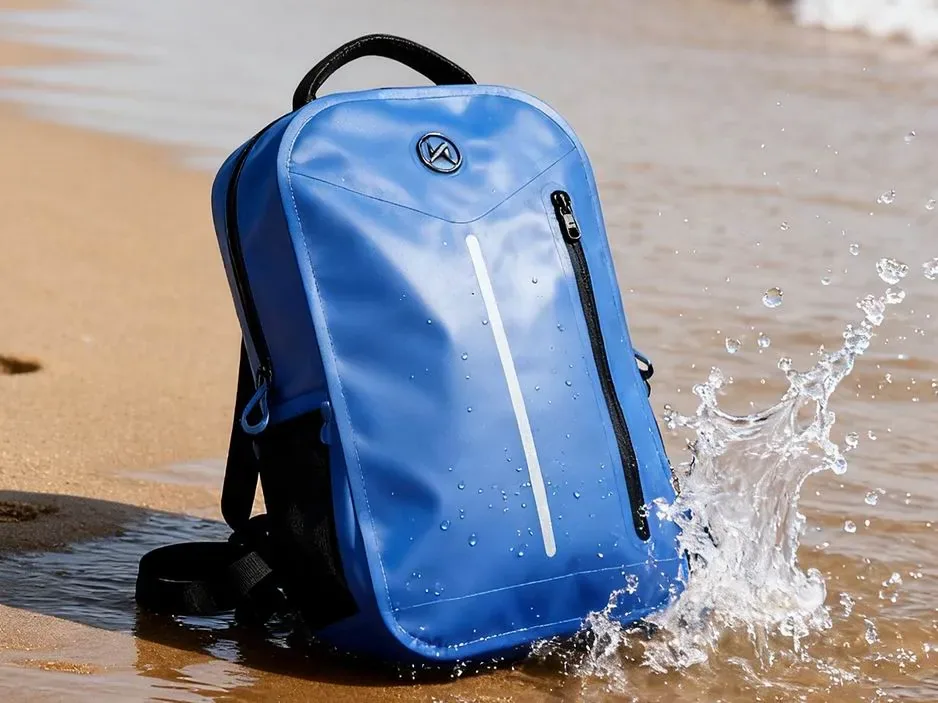
Cooler bag zippers fail in five ways: chain separation under load, slider wear, tape delamination at the weld, corrosion in a wet salt or ice environment, and grit in the chain. Specifying against those five means naming brand, type, gauge, tape, finish and cycle rating, and adding a water-resistant coil with a covered storm flap where the bag meets rain, washdown or meltwater.
The zipper is the most returned component on an insulated bag and the least specified. A quotation says "heavy-duty zipper" and the buyer approves a sample in which the slider happens to run smoothly. Bulk arrives, a hundred units jam in the first month, and the failure is blamed on the hardware when it is usually the specification. This piece sets out how a zipper fails on a cooler bag, what each failure mode demands in the specification, and how to write the hardware line so the reorder matches.
What Are the Parts of a Zipper and Which Ones Fail?
Five: the tape, the chain, the slider, the puller and the stops. The tape is the woven strip the chain is sewn or welded to, and it is what attaches the zipper to the bag. The chain is the interlocking elements, coil or moulded tooth. The slider is the cam that opens and closes them. The puller is what the user holds. The stops are the end pieces that keep the slider on the chain. Each has its own failure, and a specification that names only the gauge covers one of the five.
The ordering of failures on cooler bags is fairly stable. Slider wear and chain separation lead, followed by tape problems at the weld line, then corrosion, then grit. That ordering is useful because it says where the money should go: the slider and the chain are worth specifying in detail, and the finish is worth specifying wherever the bag meets water.
Why Does Chain Separation Happen on a Loaded Bag?
Because a cooler bag is packed to its limit and the zipper is then asked to hold a load that pulls the two tapes apart laterally. A coil chain under lateral tension can zip open behind the slider, and once it has started it usually continues to the stop. The failure is worse on a separating zipper than on a closed-end one, worse on a bag with a wide mouth, and worse at low temperature where a coil stiffens.
The specification answers are a closed-end chain where the geometry allows it, a heavier gauge than the panel thickness suggests, and a storm flap that carries part of the lateral load so the chain does not have to. A #8 coil under a covered flap on a 20-can bag is a materially different proposition from an exposed #5, and the difference is visible in the returns rate rather than in the sample.
| Failure mode | What it looks like | Why it happens on a cooler bag | Specification answer |
|---|---|---|---|
| Chain separation | The bag opens behind the slider | Lateral load from an over-packed bag | Closed-end chain, heavier gauge, a load-bearing storm flap |
| Slider wear | The slider will not hold, or slips open | Cycles and grit; the cam wears | A locking slider and a stated cycle rating |
| Tape delamination | The tape lifts from the liner at the weld | The tape polymer does not weld to the liner film | Match the tape coating to the liner, or specify a sewn attachment |
| Corrosion | Stiff action, rust staining | Salt, meltwater, washdown | A corrosion-resistant finish and a stated salt-spray result |
| Grit in the chain | Rough action, jamming | Sand and sugar in the field | A covered flap and a chain design that sheds debris |
What Does the Gauge Number Actually Mean?
The gauge, written #3, #5, #8 or #10, is the approximate width of the closed chain in millimetres. It correlates with strength, and it is the single most quoted number on a zipper specification, which is unfortunate because it says nothing about the slider, the tape or the finish. A #8 chain with a light slider and a nylon tape on a bag that gets washed is a weaker specification than a #5 with a metal slider and a coated tape.
The working rule on cooler bags is #5 for a lunch format and light duty, #8 for a mainstream cooler and a delivery bag, and #10 for a base load, a fleet bag or a wide mouth. Where the bag carries a heavy load in a wide cavity, go up a gauge rather than up a fabric weight, because the closure is where the load ends up.
How Do You Specify a Water-Resistant Zipper?
Three elements make a zipper water-resistant: a chain with a coating or a laminated tape, a tape that resists wetting out, and a flap over the top. A coated coil with a polyurethane face sheds water at the chain; a laminated tape stops water passing through the fabric strip; and the flap does the rest, because no zipper is genuinely sealed against pressure. Where a specification says "water-resistant zipper", confirm which of the three is being supplied.
The test is worth naming. A spray test tells you the face sheds water; a hydrostatic or a shower test tells you whether the assembly does. On an insulated bag the assembly is what matters, so test the bag rather than the chain, with a stated spray rate and duration and a stated maximum wetting on the inside.
Does the Tape Have to Match the Liner?
If the zipper is welded to the liner, yes, and this is the most common cause of a zipper "falling off" in service. A tape coated for radio-frequency welding in one polymer will not weld to a film in another; it will appear to weld and then lift after flexing. Where the liner is PEVA and the tape is coated for PVC, the joint is the weak point, and the failure looks like a zipper problem when it is a materials-compatibility problem.
There are two safe answers. Either specify the tape coating to match the liner polymer and weld both together, or accept a sewn attachment with the tape stitched to the shell and the liner welded separately. The second is more common and more forgiving; the first is neater and requires the compatibility to be established at sampling rather than assumed.
What Should Be Asked of the Hardware Brand?
Name the brand and the product family, and ask for three documents: a cycle rating, a restricted-substance declaration and, where the bag meets water, a corrosion or salt-spray result. The major hardware houses publish cycle figures for their ranges and can supply declarations against the REACH candidate list and California Proposition 65; asking for them costs an email and closes the most common gap in a compliance file.
Then ask what the puller is made of and how it is attached. A metal puller on a bag that is washed is a corrosion and a safety question, and a puller that is clipped rather than crimped comes off in service. Where the bag is for children, the puller is in scope for CPSIA and for EN 71-3 testing on accessible components.
One failure mode deserves separate treatment because it is specific to insulated bags: the frozen zipper. A bag used with loose ice or with a eutectic pack can have meltwater refreeze in the chain, and a zipper that has frozen shut is a bag that cannot be opened at the drop. A covered flap reduces it, a coil chain sheds ice better than a moulded tooth, and a silicone-free lubricant applied at assembly helps for the first season. State the expectation in the specification where the duty involves ice.
A related and quieter failure is the slider that works on the sample and jams on the production line, because the production tape has been welded or stitched under slightly different tension. It shows as a stiff action in the first hundred units and as a return in the first thousand. Ask for the closure to be cycled on a production unit rather than on a sample, and the difference is caught where it costs nothing.
How Are Zippers Tested, and What Is a Reasonable Acceptance Figure?
Strength testing of zippers is covered by ASTM D2061, which sets out methods for the strength of the chain, the slider and the stop. A buyer acceptance figure is usually written as a lateral strength figure for the chain, a pull-off figure for the stop, and a cycle count with no failure at the end. State all three with the sample size, and require the test on a production bag rather than on a chain specimen, because the attachment is what fails.
Then add the two tests the standard does not include: a wet-cycle test, which runs the closure wet for a stated number of cycles and re-checks the action, and a cold-cycle test, which does the same at a low temperature where coatings stiffen. A cooler bag closure spends its life wet and cold, and neither condition appears in a room-temperature cycle test.
Specifying a zipper that survives
- Name brand, type, gauge, tape, finish, slider and puller — the gauge alone covers one of five.
- Go up a gauge on a wide mouth or a heavy load, and add a load-bearing storm flap.
- Match the tape coating to the liner polymer, or attach the zipper by sewing.
- Water resistance is a coated chain plus a laminated tape plus a flap; test the assembly.
- Add wet and cold cycle tests, which the room-temperature standard does not include.
| Specification field | Light duty | Mainstream cooler | Fleet or delivery |
|---|---|---|---|
| Gauge | #5 coil | #8 coil | #10 coil or moulded tooth |
| End type | Closed end | Closed end | Closed end with a reinforced box |
| Slider | Standard | Locking | Locking, with a seal point where custody applies |
| Tape | Polyester, matched to the liner | Coated polyester, matched to the liner | Laminated tape with a water-resistant face |
| Finish | Standard | Corrosion-resistant | Corrosion-resistant with a stated salt-spray result |
| Cycle rating | 2,000 cycles | 5,000 cycles | 10,000 cycles or more |
| Test | ASTM D2061 strength | ASTM D2061 plus a wet cycle | ASTM D2061 plus wet and cold cycles |
How Does the Closure Affect the Thermal Result?
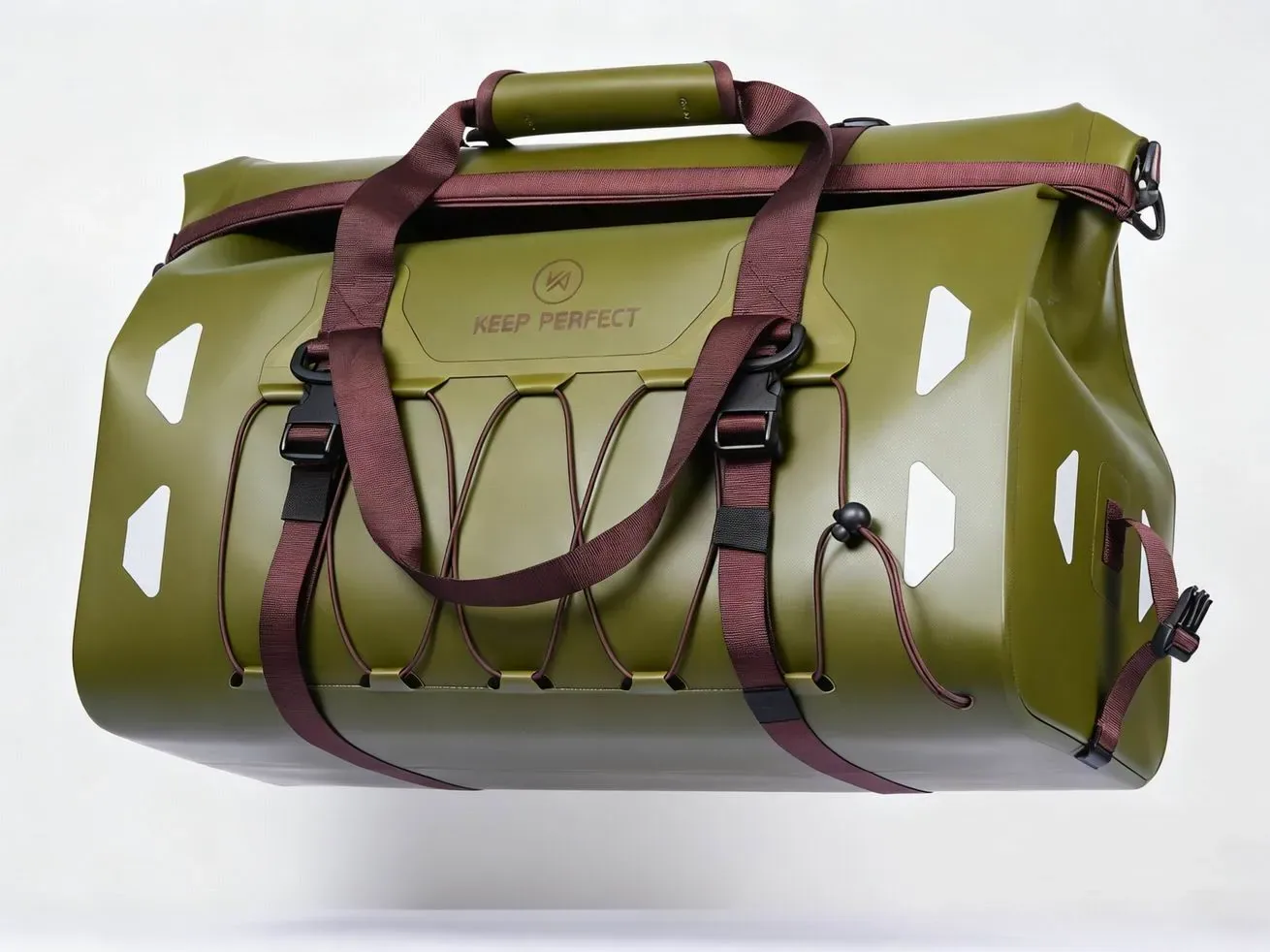
Directly, and more than buyers expect. The zipper line is a continuous gap in the insulation and a conductive path through the tape and the chain, and on an 8 mm bag it can account for 20-30% of the total heat gain. A covered flap with foam in it is the most efficient thermal upgrade on most bags, and it costs less than the millimetre of wall foam it outperforms.
Where the closure has to be opened often, the flap matters more, because an open zipper is a hole and a closed zipper under a flap is nearly a wall. On a delivery bag that is opened a hundred times a shift, the flap is the thermal component and the zipper is only the fastener.
Where the bag is sold with a warranty, the cycle rating and the field-serviceability belong in the warranty wording as well as in the specification, because a closure that cannot be repaired in the field is a closure that generates a whole-bag return. Agreeing that at specification changes both the closure design and the spare-parts decision.
A fourth detail is the length tolerance. A chain cut long can be shortened; a chain cut short cannot be lengthened, and the failure appears at final assembly when the panel has already been cut. Specify the chain length with a tolerance on the drawing and check it on the first production unit rather than on the sample.
Two practical details belong on the drawing and are usually left to the line. The first is the garage: the pocket or flap at the closed end that hides the slider when the bag is shut, which keeps the puller from catching on other goods and reduces the lateral load on the stop. The second is the direction of pull and the handedness, because a left-hand and a right-hand chain are different parts and a bag assembled with the wrong one cannot be corrected after the fact.
The third detail is the spare. Fleet operators ask for a replacement puller or a repair kit, and a closure design that allows the slider to be replaced without unpicking the seam turns a scrapped bag into a five-minute repair. Where the duty is fleet service, specify whether the closure is field-serviceable and what the spare part is.
Where Do the Programme Numbers Sit?
The same frame as always: MOQ 500 pcs per style and colourway, sampling 6-10 working days from a signed-off tech pack, bulk production 35-50 days from sample approval, inspection at AQL 2.5 under ISO 2859-1 General Inspection Level II, T/T 30/70, FOB Xiamen. Hardware is the one line that can move the sampling window on its own, because a non-stock puller or a branded slider is a sourced component with its own lead time; that is the usual reason a build moves to 12-15 working days.
It is also the line most worth putting under change control. A hardware substitution made for supply reasons is invisible on the drawing and visible in the field, and a closure that behaves differently from the approved sample is a closure that changes the thermal result and the warranty cost at the same time. Require written notice and a re-test.
Specify the closure in seven lines
Send the duty, the mouth width, the cycle expectation and the quantity. You get a closure specification with the acceptance tests behind it, within one business day.
Frequently Asked Questions
Why do cooler bag zippers fail?
Five ways: chain separation under lateral load, slider wear, tape delamination at the weld, corrosion in wet service, and grit in the chain. Each has a different specification answer.
What zipper gauge should a cooler bag use?
#5 for a lunch format, #8 for a mainstream cooler or delivery bag, and #10 for a wide mouth, a heavy load or fleet service.
What does the gauge number mean?
The approximate width of the closed chain in millimetres. It correlates with strength and says nothing about the slider, the tape or the finish.
Are water-resistant zippers genuinely sealed?
No. A coated chain and a laminated tape shed water, and a covered flap does the rest. Test the assembled bag rather than the chain.
Does the zipper tape have to match the liner?
If the zipper is welded to the liner, yes. A tape coated for one polymer will not weld reliably to a film in another, and the joint lifts after flexing.
Which standard covers zipper strength?
ASTM D2061, for the strength of the chain, the slider and the stop. Write a buyer acceptance figure with a sample size and run it on a production bag.
What cycle rating should be specified?
Roughly 2,000 cycles for light duty, 5,000 for a mainstream cooler and 10,000 or more for fleet service, with the test including wet and cold cycles.
Does the zipper affect ice retention?
Yes. The zipper line is a continuous gap in the insulation and can account for 20-30% of the heat gain on an 8 mm bag.
Is a metal or a coil chain better?
Coil is the default on soft bags: it is quieter, it flexes and it is available in water-resistant forms. Moulded tooth appears on heavy fleet bags.
What documents should the hardware supplier provide?
A cycle rating, a restricted-substance declaration against the REACH candidate list and Proposition 65, and a corrosion result where the bag meets water.
What is the MOQ for a bag with branded hardware?
500 pcs per style and colourway, with repeat programmes open to discussion at 300 pcs.
Can hardware change the sampling window?
Yes. A non-stock puller or a branded slider is a sourced component with its own lead time, which moves the build toward 12-15 working days.
Should a hardware substitution be re-tested?
Yes. A substitution changes the closure behaviour and the thermal result at the same time, and neither is visible on the drawing.
What inspection applies to the closure?
AQL 2.5 for major defects to ISO 2859-1 at General Inspection Level II, with a closure that will not close counted as major.
People Also Ask
Why do cooler bag zippers break?
Chain separation under lateral load, slider wear, tape delamination, corrosion and grit, in that order of frequency.
What size zipper should a cooler bag use?
#8 coil for a mainstream cooler, #5 for a lunch format and #10 for fleet or wide-mouth builds.
Are YKK zippers worth specifying?
Naming the brand and the product family gives a published cycle rating and a restricted-substance declaration, which an unbranded chain does not.
Can a zipper be waterproof?
Not by itself. A coated chain plus a laminated tape plus a covered flap gives water resistance, and the assembled bag is what gets tested.
How many cycles should a cooler bag zipper last?
Five thousand for a mainstream cooler and ten thousand or more for fleet service, tested wet and cold as well as at room temperature.
Sources and further reading
Every figure on this page is either our own programme data or attributed below. Open the originals before you write them into a specification.
- ASTM D2061 — Strength tests for zippersASTM International
- ISO 2859-1:1999 Sampling procedures for inspection by attributesInternational Organization for Standardization
- REACH — Registration, Evaluation, Authorisation and Restriction of ChemicalsEuropean Chemicals Agency