Recycled Nylon vs Recycled Polyester: Which One Fits a Bag Programme?
Recycled polyester draws on bottle feedstock and costs less; recycled polyamide draws on fishing gear and industrial waste and buys abrasion resistance. Name the polymer in the specification, specify denier, construction and finish at the same time, and test the recycled option against the incumbent fabric.
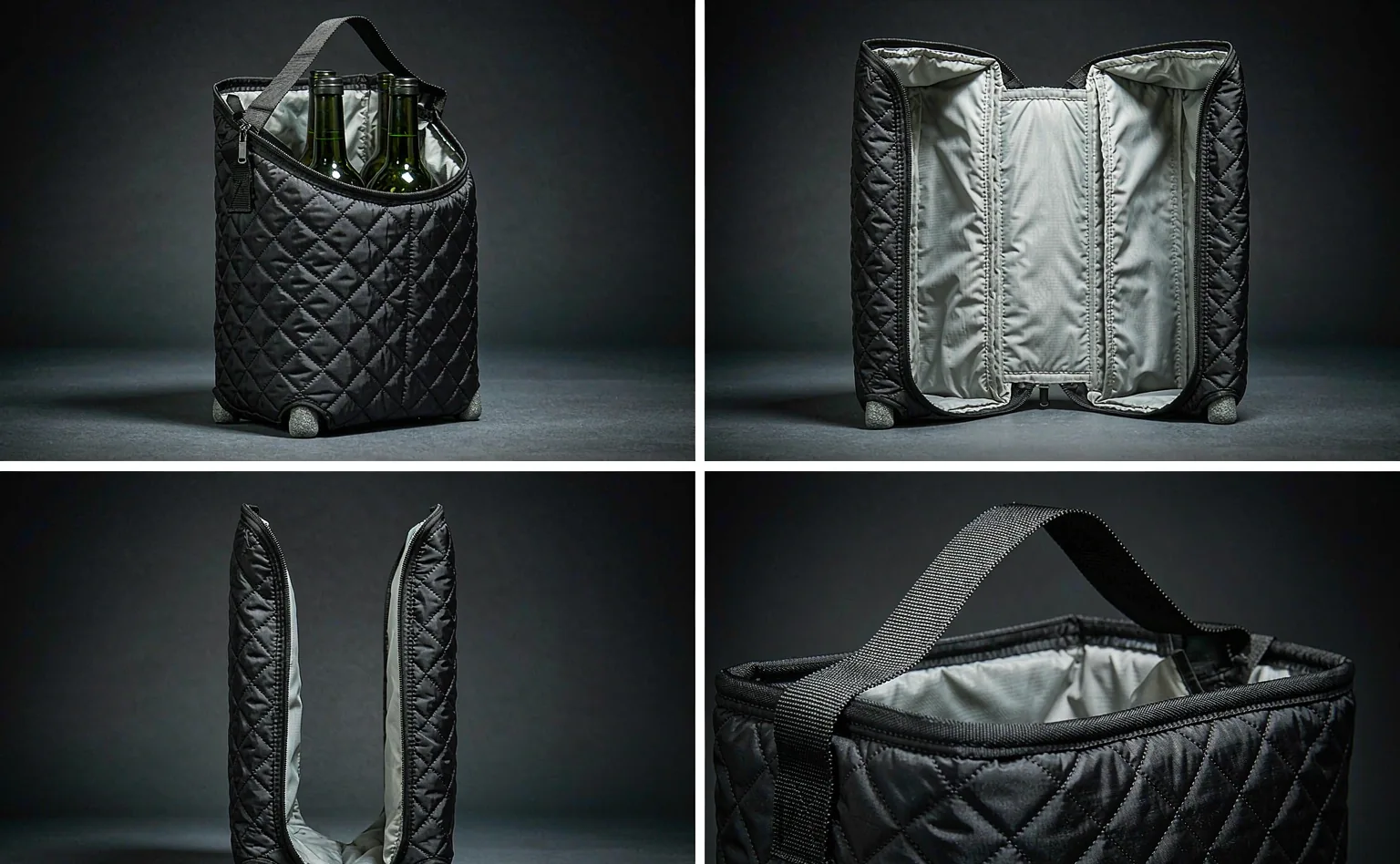
Recycled nylon and recycled polyester solve different problems. Polyester draws on a large, well-organised bottle feedstock, certifies through a mature route, and costs less. Nylon draws on a smaller and harder feedstock — fishing net, carpet and industrial waste — costs more, and buys abrasion resistance and a hand the polyester cannot match. Choose on abrasion and on feedstock story, not on price.
The two recycled materials are treated as interchangeable in most buying conversations, and they are not. They come from different polymer families, they draw on different waste streams, they certify through overlapping but not identical routes, and they behave differently in the two properties a bag is actually judged on: abrasion and tear. A specification that says "recycled" without naming which polymer is a specification that will be quoted two ways.
This page is a decision table. It sets out where each feedstock comes from, how each is certified, how each behaves on the properties that matter for a bag, what each costs and why, and how to write the choice into a specification so that a reorder does not silently switch polymer.
What Are the Two Materials Chemically?
Polyester, in bag fabrics almost always polyethylene terephthalate, is a condensation polymer of a diacid and a diol, and it is the single most recycled polymer in the textile chain by volume. Nylon, usually polyamide 6 or polyamide 6.6, is a polyamide, and it recycles through a different route — depolymerisation back to monomer, or mechanical re-melting of clean industrial waste. The chemistries are not interchangeable and neither are the recycling technologies.
The practical consequence is that recycled nylon is a scarcer, more variable and more expensive input than recycled polyester, and the gap is structural rather than temporary. Where a programme needs a recycled polyamide, it is buying into a smaller market with fewer qualified sources, and the sourcing plan has to reflect that.
Which Feedstock Does Each One Draw On?
Recycled polyester draws overwhelmingly on post-consumer beverage bottles, with a smaller share from post-industrial fibre waste. The stream is large, sorted and geographically widespread, which is why supply is stable and the certification route is mature. Recycled nylon draws on fishing net and gear, carpet face fibre, and industrial waste from the polyamide chain. Those streams are smaller, more variable in polymer grade, and more expensive to collect and clean.
The feedstock story is a real commercial asset where it is true, and a real risk where it is embellished. A fishing-net narrative attached to a fabric whose certificate describes industrial waste is exactly the claim that fails review. Ask which feedstock the certificate describes, and use that word in the copy.
| Attribute | Recycled polyester | Recycled nylon |
|---|---|---|
| Polymer | Polyethylene terephthalate | Polyamide 6 or 6.6 |
| Main feedstock | Post-consumer beverage bottle | Fishing gear, carpet, industrial polyamide waste |
| Feedstock volume | Large and widespread | Smaller and concentrated |
| Recycling route | Mechanical re-melt, and increasingly chemical | Mechanical re-melt and depolymerisation |
| Certification maturity | Mature, many qualified sources | Fewer qualified sources |
| Price relative to virgin | A premium, and the smaller of the two | A larger premium |
| Abrasion behaviour | Good, and construction-dependent | Better for the same construction |
| Hand and drape | Firmer, crisper | Softer, quieter in the hand |
| Moisture behaviour | Low moisture uptake | Higher uptake, dimensional movement with humidity |
How Do the Certification Routes Differ?
Both can be certified under recycled input standards with a transaction certificate per lot, and the mechanics are the same: a scope certificate at each certified site, a transaction certificate at each sale, and reconciliation at each step. What differs is the availability of certified sources and the granularity of the product description. Certified recycled polyamide is offered by fewer sources, and the transaction certificate descriptions tend to be tighter about polymer grade, because the grade matters more to the next step.
There is a second difference in practice: blended or co-polymer inputs. A recycled polyamide yarn may carry a stated fraction of recycled content with the balance virgin, more often than a recycled polyester yarn does. Where a certificate states a fraction below 100 percent, the printed claim has to carry that fraction through the whole calculation, including the component masses.
How Do the Mechanical Properties Compare for Bag Use?
For the same denier and construction, polyamide is generally the tougher of the two in abrasion and in resistance to repeated flexing, and it is the reason polyamide has historically been specified for the parts of a bag that rub: the base, the strap contact points, the corners. Polyester is entirely adequate for most shells and better than polyamide on one axis — it takes less water, so it moves less with humidity and holds dimension better in a wet service.
Both statements are qualified by construction. A high-tenacity polyester in a tight weave can outperform a lower-grade polyamide in a loose one, and the specification has to be written at the level of denier, weave and finish rather than at the level of polymer family. Where a programme is replacing a virgin polyamide with a recycled one, the comparison to run is against the virgin grade actually in use, not against a generic material.
What Does Each Do to Abrasion and Tear Behaviour?
Abrasion is where polyamide earns its premium, and it is measured on a Martindale or a comparable abrasion method with a stated end point, not judged by hand. Tear behaviour is more construction-dependent: a ripstop grid changes the tear result of either polymer substantially, and the grid is doing more work than the polymer. Where abrasion is the failure the programme is trying to solve, the fix is usually the polymer or a coating; where tear is the failure, the fix is usually the construction.
Specify both properties with a method and an end point, and test the recycled option against the incumbent rather than against a data sheet. The comparison that matters is between the fabric you are buying and the fabric you are replacing, on the same method, with production goods.
- Polymer
- Polyester or polyamide, stated by name and grade
- Denier and construction
- Denier, weave, thread count, and any ripstop grid
- Finish
- Coating or lamination, stated with its add-on mass
- Recycled fraction
- The certified fraction, and the feedstock it describes
- Abrasion
- Method, end point, and the result required
- Tear and tensile
- Method to ISO or ASTM, and the result required
- Colour fastness
- Method and the grade required, including to rubbing
- Certificate
- Transaction certificate per lot, tied to the invoice
How Do Dyeing and Colour Consistency Differ?
Polyamide dyes more readily and takes deeper shades with less energy, and it also takes up more dye unevenly where the input varies, which makes shade consistency the recurring problem on a recycled polyamide. Polyester requires disperse dyeing at temperature, holds a shade consistently once matched, and shows base-colour drift between recycled lots as a small shift in a light or a bright shade.
The control is the same for both and it is not negotiable: a signed-off shade standard, a retained reference sample from run one, and one physical test per lot. Where a programme runs a deep or a bright shade on recycled polyamide, allow additional time for the shade approval, because that is where the schedule goes.
What Does Each Cost, and Why Does Nylon Sit Higher?
Recycled polyamide sits above recycled polyester for three reasons that are structural: the feedstock is scarcer and costs more to collect and clean, the recycling technology is more capital-intensive per tonne, and there are fewer qualified sources competing. The premium over virgin polyamide is also generally wider than the polyester premium over virgin polyester, so a programme switching from virgin polyamide to recycled polyamide sees a larger step than the equivalent polyester switch.
Where the cost allowance is fixed, the usual answer is a hybrid specification: a recycled polyester shell with polyamide, recycled or otherwise, at the abrasion points. That concentrates the expensive material where it does work and keeps the shell claim clean, provided the component breakdown is done once and the claim names the shell.
Which Applications Suit Which Material?
Recycled polyester suits shells, linings, webbing and the general body of a bag, and it is the default for cooler bags, drawstring bags, wine carriers and team kit bags where abrasion is moderate and cost control matters. Recycled polyamide suits camera and equipment protective bags where the interior and the base see repeated contact, constructions where neoprene would otherwise be used and hand matters, and any product where the fishing-gear feedstock is part of the story the brand tells.
Where a programme is genuinely undecided, run both through one sampling cycle and decide on the abrasion result. Sampling is 6-10 working days from a signed-off tech pack, and two fabrics in the same cycle cost less in calendar time than one fabric sampled twice.
| Programme type | Usual choice | Why | Watch for |
|---|---|---|---|
| Cooler and insulated bags | Recycled polyester | Abrasion demand is moderate, cost control matters | Coating mass in the whole-product calculation |
| Camera and equipment protective | Recycled polyamide at contact points | Repeated abrasion at the base and interior | Shade consistency on deep shades |
| Team kit bags | Recycled polyester | Volume, colour range, cost stability | Colour matching across a wide shade range |
| Wine and bottle carriers | Recycled polyester | Structure and print quality dominate | Print adhesion on a recycled base |
| Drawstring bags | Recycled polyester | Light weight, high volume | Weight per unit in the claim calculation |
| Neoprene constructions | Either, by hand requirement | Hand and flex behaviour decide it | Dimensional movement with humidity |
How Do Coatings and Laminations Change the Comparison?
They narrow it. Most bag fabrics carry a coating, a laminated film or a finish, and that layer is usually conventional rather than recycled. Once the coating mass is counted, the difference between two recycled base fabrics is diluted at the whole-product level, and the polymer choice matters less to the printed number than it did to the fabric number. This is the reason the component breakdown belongs in the specification rather than in the marketing file.
There is a second effect that runs the other way. Coating and lamination improve abrasion resistance substantially, so a coated recycled polyester can match an uncoated recycled polyamide on the property that was driving the choice. Where the polyamide premium is hard to justify, the route with the lower figure is often a polyester of the same construction with a better finish, tested on the same method, rather than a change of polymer.
What Are the Availability and Lead-Time Differences?
Recycled polyester is broadly available in stock shades and in the common constructions, so it behaves close to a conventional fabric on the schedule. Recycled polyamide, particularly in a specific denier and a specific recycled fraction, is more often made to order, and the fabric booking sits on the critical path. Bulk production is 35-50 days from written sample approval on either material; the difference is at the front end, before the clock starts.
The practical rule: book the polyamide at sample approval rather than at order confirmation, and write the booking date into the schedule as a milestone. Where a programme has a fixed launch date and a recycled polyamide specification, the honest plan puts the fabric booking ahead of everything else in the critical path.
What Happens to the Polymer Choice at Reorder?
The polymer decision is made once and then tested repeatedly, and the failure at reorder is almost always a substitution made for reasons that seemed operational at the time: the nominated fabric was out of stock at the mill, a second fabric was offered at the same denier, or the recycled fraction available in the booking window was lower than the one written into the specification. Each of those is a change to the specification, and each one changes the calculation standing behind the claim.
The control is a retained reference sample plus a re-test trigger. Keep a physical sample from the first production run, and write into the purchase order that any change of polymer, grade, denier, construction or source requires written notice and a repeat of the abrasion test on the replacement fabric, run on the same method as the original approval. The clause costs nothing to add, and it is the only mechanism that catches a substitution before the goods ship rather than after the claim has been printed.
One further check belongs at reorder and is the one most often missed: the transaction certificate has to be re-requested for the new lot, in the new lot quantity, carrying the new invoice reference. A certificate issued for run one describes run one. Reusing it for run four is the most common way a recycled claim loses its evidence while the paperwork still looks complete.
- Polymer, grade and denier unchanged from the approved sample.
- Recycled fraction at or above the fraction stated in the specification.
- A transaction certificate issued for this lot, in this lot quantity, tied to this invoice.
- Abrasion re-tested where the mill or the source has changed, on the original method.
- The retained reference sample from run one still on file and still matching production.
How Should the Choice Be Written Into a Specification?
Name the polymer, the grade, the denier, the construction, the recycled fraction and the feedstock the certificate describes. "Recycled fabric" is not a specification and will be quoted two ways. Where a hybrid is used, name the polymer at each component and keep the component breakdown in the tech pack, because the claim depends on it.
Add one clause that prevents the most common reorder failure: no substitution of polymer, grade or source without written notice and a re-test. A recycled polyester shell replaced with a recycled polyamide shell at reorder is an improvement in one sense and a compliance event in another, because the claim, the calculation and the certificates behind it all change.
Choosing between recycled nylon and recycled polyester
- Name the polymer in the specification; "recycled" alone will be quoted two ways.
- Polyamide buys abrasion and hand, and costs more because the feedstock is scarcer.
- Polyester buys availability, colour stability and a smaller premium.
- Test the recycled option against the incumbent fabric on the same method, with production goods.
- Add a no-substitution clause covering polymer, grade and source, with written notice and a re-test.
Confirm the current wording against the official text in force in your destination market before you publish.

Send the specification you are replacing
Send the incumbent fabric and the property that is failing. You get a two-material comparison and a sampling plan within one business day.
Frequently Asked Questions
What is the difference between recycled nylon and recycled polyester?
They are different polymers from different waste streams. Polyester comes mostly from beverage bottles; nylon comes from fishing gear, carpet and industrial polyamide waste.
Which is stronger for a bag?
For the same denier and construction, polyamide generally resists abrasion and repeated flexing better. Polyester holds dimension better in wet service.
Why is recycled nylon more expensive?
The feedstock is scarcer and more costly to collect and clean, the recycling technology is more capital-intensive, and fewer sources compete.
Can both be certified the same way?
Yes, through recycled input standards with a scope certificate at each site and a transaction certificate per lot. Certified polyamide has fewer qualified sources.
Does recycled nylon absorb more water?
Polyamide takes up more moisture than polyester, so it moves more with humidity. That matters where dimensional stability is critical.
Which takes dye better?
Polyamide dyes more readily and to deeper shades, but shows shade variation where the input varies. Polyester holds a shade consistently once matched.
Can I mix the two in one bag?
Yes, and it is often the right answer: a recycled polyester shell with polyamide at abrasion points. Do the component breakdown once and name the shell in the claim.
Does the choice change the MOQ?
No. MOQ stays at 500 pcs per style and colourway. What changes is the fabric booking date, particularly for made-to-order polyamide.
Does it change bulk production time?
No. Bulk production is 35-50 days from written sample approval on either material. The difference is at the front end, before the clock starts.
How do I stop a reorder switching material?
Add a clause: no substitution of polymer, grade or source without written notice and a re-test, plus a retained reference sample from run one.
Which suits a camera or equipment bag?
Recycled polyamide at the contact points, because abrasion and repeated handling decide the service life there.
Should I sample both materials?
Where the decision is close, yes. Two fabrics in one sampling cycle cost less in calendar time than one fabric sampled twice.
What recycled fraction should I specify?
The fraction the certificate actually states. Where it is below 100 percent, carry it through the whole-product calculation.
Is the fishing-net story safe to use in copy?
Only where the certificate describes that feedstock. Match the word in the copy to the word on the certificate.
Does a coating change the comparison between the two polymers?
It narrows it. Coating mass is usually conventional, so it dilutes the difference at whole-product level, and it lifts abrasion enough that a coated polyester can match an uncoated polyamide.
People Also Ask
Is recycled nylon better than recycled polyester?
It resists abrasion better for the same construction and costs more. Neither is better in the abstract; the application decides.
Why does recycled nylon cost more?
Scarcer feedstock, more capital-intensive recycling and fewer competing sources.
Can I use both in one bag?
Yes. A recycled polyester shell with polyamide at abrasion points is a common and sensible hybrid.
Does the polymer change lead time?
Not bulk production, which stays at 35-50 days. Made-to-order polyamide moves the fabric booking onto the critical path.
How do I stop a reorder switching polymer?
Write a no-substitution clause with written notice and a re-test, and keep a reference sample from run one.
Sources and further reading
Every figure on this page is either our own programme data or attributed below. Open the originals before you write them into a specification.
- Global Recycled Standard and the recycled-input standard familyTextile Exchange
- ISO 14040 and ISO 14044 — life cycle assessment principlesInternational Organization for Standardization
- ISO 2859-1:1999 — sampling procedures for inspection by attributesInternational Organization for Standardization