How Do You Manage Inspection on a Remote Production Programme?
A remote programme runs on evidence and cadence rather than on visits. Four gates carry it: a pre-production meeting against the signed-off revision, a first-piece check, an in-process inspection while there is calendar to correct in, and a pre-shipment inspection at AQL 2.5.
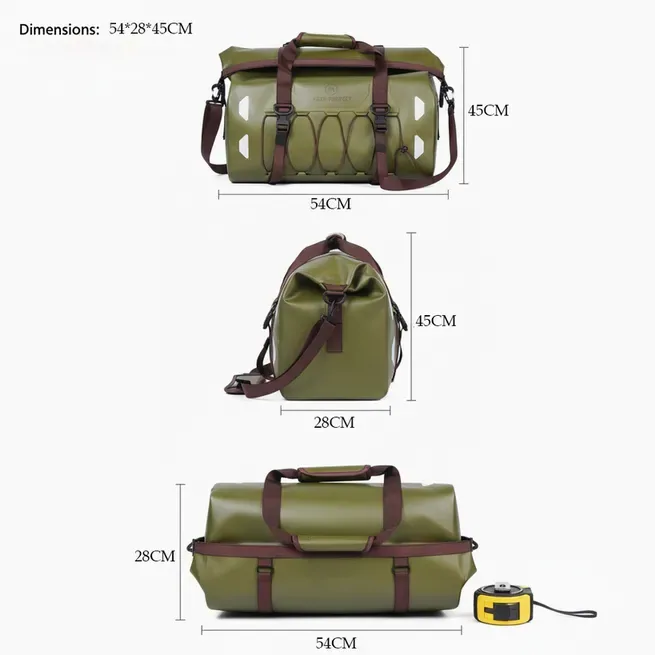
A remote production programme is managed on evidence and cadence rather than on visits. Four gates carry it: a pre-production meeting with the signed-off revision, a first-piece check when the first units come off the line, an in-process inspection at the point the early units are finished, and a pre-shipment inspection to ISO 2859-1 at AQL 2.5. Between the gates, a weekly report with four fields and photographs taken to a standard.
The instinct when production is far away is to compensate with travel, and travel is the least efficient instrument available. A visit sees one day of one run. A cadence sees every week of every run. What makes a remote programme predictable is not physical presence but the same three things that make a co-located one predictable: a known specification, a known schedule and a report that arrives whether or not anything has gone wrong.
The second instinct is to compensate with messaging, which is worse, because messages produce activity without producing records. A programme run on messages has no artefact to compare a reorder against and no evidence when something is disputed. A programme run on a weekly report with photographs has both, and it costs less time than the messaging does.
This piece sets out the four gates, the report, the photographs, and the escalation path, with the failure modes marked. It is written for a buyer who cannot be on the line and does not need to be, which is the normal condition of a programme rather than a compromise.
What Are the Four Gates and What Happens at Each?
| Gate | When it happens | What is checked | What it produces |
|---|---|---|---|
| Pre-production meeting | Before cutting starts | The revision, the materials, the schedule and the class list | A written confirmation and a production date |
| First-piece check | When the first units come off the line | Dimensions, construction, artwork placement, colour | A go or no-go before the run continues |
| In-process inspection | When the early units are finished | The defect pattern, the parameter record, the rate | A correction while there is calendar to correct in |
| Pre-shipment inspection | When the lot is packed | A random sample to ISO 2859-1 at the agreed AQL | A pass or reject decision with a defect count |
Why Is the First-Piece Check Worth More Than the Final One?
Because it is the only gate at which a problem can still be corrected inside the window. A pre-shipment inspection can accept or reject and nothing else; a first-piece check can change the run. On a 500-piece order the first-piece check happens when a handful of units exist, which is the moment a pattern problem, a placement problem or a colour problem is still inexpensive to fix.
The check has to be against the reference rather than against a description. Dimensions against the tech pack, artwork placement against the marked drawing, colour against the retained swatch, construction against the named stitch and seam method. A first-piece check against a conversation produces a first-piece approval that means nothing by unit 400.
What Does an In-Process Inspection Find That a Final One Does Not?
The defect pattern rather than the defect count. A pre-shipment sample says that three units in fifty have a fault; an in-process visit says that the fault appears on units made on the second shift, or after a material change, or when a particular operator is on the station. The second statement is actionable and the first is not.
- Date and run reference
- So the report can be matched to a lot later
- Units produced and units checked
- A rate, not just a count
- Defects by class
- Critical, major and minor, each counted
- Photographs
- Taken to a stated standard, with a scale
- Parameter record
- The weld, stitch or press setting in use
- Material lot
- Which fabric and trim lots are on the line
- Deviation from schedule
- Units against plan, in units and in days
- Corrective action
- What was changed, by whom, and when
- Re-check result
- Whether the correction worked
- Open items
- What is still unresolved, with a date
Two of those carry most of the value. The parameter record is what makes a reorder consistent: if the setting that produced an acceptable run is written down, the next run can be made to it rather than rediscovered. The material lot is what makes a compliance file defensible: a declaration attached to a lot rather than to a material.
What Should the Weekly Report Contain?
Four fields, one page, every week
- Where the run is against plan, in units and in days.
- What was checked this week and what the result was.
- What is blocked, by whom, and what unblocks it.
- What decision is needed from the buyer, with a date.
The fourth field is the one that makes the report useful rather than decorative. A status update that does not ask for anything produces no decisions, and a remote programme dies of undecided questions rather than of poor workmanship. Every report should end with the decisions it needs, and every decision should have a date by which a silence becomes an approval or a rejection.
How Should Photographic Evidence Be Taken?
To a standard, because photographs are the substitute for being there and a bad photograph is worse than none. Four rules: a consistent distance and angle for the standard views, a scale in the frame for anything dimensional, a colour reference in the frame for anything about colour, and a caption that says what the photograph is of and when it was taken.
The colour reference deserves a note. A photograph of a bag on a bench tells a buyer nothing reliable about the shade, because the camera adjusts. A photograph with a retained swatch or a grey card in the frame tells the buyer something. Where colour is the acceptance criterion, it should be judged against a physical dip sent by courier rather than against an image.
How Is a Reference Sample Used Day to Day?
As the physical answer to every ambiguous question. A drawing can be read two ways and a sample cannot, so the reference settles the questions that drawings generate: how stiff the interlining feels, how the panel sits, how the print looks at the stated size. Both sides hold one, both are dated, and both are the same unit rather than two units from the same run.
The second use is the reorder, and it is the reason the sample is worth the courier cost. A second run compared against a retained physical unit is a comparison; a second run compared against a description is an argument. Programmes that hold the sample have short reorder conversations, and programmes that do not have long ones about whether anything actually changed.
How Does Escalation Work Across Distance?
| Trigger | First response | Escalation | What must never happen |
|---|---|---|---|
| A gate missed once | A revised date with a cause | Note it on the weekly report | Silence until the next gate |
| A gate missed twice | A named owner and a recovery plan | Escalate to a decision-maker | A third miss |
| A defect pattern found | Corrective action with a re-check | Stop the line if it is critical | Continue and sort at the end |
| A material substitution | Written notice before it happens | Re-test and re-decide | Discover it at inspection |
| A schedule conflict | A stated priority | Re-plan the run in writing | An implicit assumption |
What Does the Time Difference Do to the Cadence?
It turns a question into a day, which is the central fact of a remote programme. A question asked at the wrong hour waits a full day for an answer, and a run that needs three answers loses three days. The mitigation is not working odd hours; it is asking all the questions at once, in one message, at the start of the working day at the production end.
The second mitigation, and the one that removes the most latency over a programme, is the standing decision. Where a class of question recurs — a thread shade, a stitch density, a minor placement tolerance — agree the answer once, in writing, and let the line proceed without asking. A programme that converts recurring questions into standing decisions removes most of the latency that distance creates.
How Much Does a Visit Actually Help?
Less than expected on an established programme and more than expected on a new one. A visit to a line that is already running a known construction confirms what the reports say and adds little. A visit before the first run of a new construction is genuinely useful, because it is the only way to see whether the equipment, the material handling and the skill exist for that article.
The efficient pattern is therefore a visit at the start of a relationship and at the start of each new construction, with the routine runs managed on gates and reports. That concentrates travel where it changes decisions and removes it where it only reassures, which is the honest description of most visits to a line that is doing what it was told.
What Does the Reporting Cost in Time?
| Cadence item | Frequency | Who prepares it | Cost per cycle |
|---|---|---|---|
| Weekly status | Weekly | The programme desk | Under an hour |
| First-piece record | Once per run | The line, checked by the agent | An hour |
| In-process inspection | Once or twice per run | An inspector | Half a day on site |
| Pre-shipment inspection | Once per run | An inspector to ISO 2859-1 | A day on site |
| Photograph set | With each gate | The inspector | Included |
What Should the Buyer Hold on Their Side?
Four artefacts: the signed-off tech pack at a revision number, the retained reference sample, the inspection reports with their defect counts, and the parameter and material-lot records. Those four let a buyer answer a customer question, settle a dispute and run a reorder without asking anyone for anything.
The fifth artefact is a calendar with the real durations in it, updated after each run rather than carried forward from the plan. Programmes improve mainly by learning what their own windows actually are, and that knowledge lives in a document rather than in a memory. The development calendar from tech pack to bulk note covers the calendar view of the same sequence.
One more field belongs in the buyer file, because it is the one that turns a programme into an asset rather than a series of orders: a costed bill of materials at the revision that was built. Knowing what the article is made of, from whom and at what cost, is what makes the next negotiation short and the next substitution visible. Without it every reorder starts from a quotation rather than from a known position, and a buyer cannot tell whether a price move is a market move or a material one.
How Does This Change for a Reorder?
It gets shorter and it should not get looser. The gates stay, but the first-piece check is against the retained reference sample rather than against the drawing, and the in-process inspection can be lighter where the defect history is clean. What should never be dropped is the pre-shipment inspection, because a reorder is exactly where drift appears and the sample is where it is caught.
The third discipline is the defect history. Keep the counts by class, run by run, and the pattern becomes visible: a station that produces the same defect, a lot that produces a shade drift, a setting that produces a weak seam. That history is what turns inspection from a gate into a control, and it is the artefact a buyer most regrets not having kept.
The second reorder discipline is the parameter and lot record. A second run made to the recorded settings, from an approved lot, is a repeat of a known result. A second run made to a remembered setting, from a fresh lot, is a new experiment dressed as a repeat, and it is where most reorder disappointment comes from.
A further element deserves a place in the file because it is rarely written down and frequently decisive: the decision rights of the inspector. An inspector who can stop a run has a different effect from one who can only report, and the difference should be explicit in the inspection brief. Where a critical defect class has been agreed at zero acceptance, the authority to stop follows from it; where it has not, the run continues and the problem is counted later.
What Is the Failure Mode of a Remote Programme?
Not distance and not workmanship: undecided questions. A remote programme accumulates small open items — a trim shade, a label position, a tolerance interpretation — and each one waits for a day, and the run continues past the point at which it could have been corrected. By pre-shipment inspection the accumulation is a lot that fails, and the failure looks sudden.
The remedy for this failure mode is the same one that governs the rest of the programme: a dated decision on every open item, with a default. An open item with no answer by its date is answered by the standing decision, or the run stops and says so. Either is better than the drift that produces a rejected lot three weeks after the question was asked, and neither requires anyone to work outside their own hours.
Run the programme on gates and a weekly report
Send the specification and the quantity. You get a quotation, a gate plan with an inspection schedule, and a production calendar within one business day.
Frequently Asked Questions
How do you manage production you cannot visit?
With four gates and a cadence: a pre-production meeting, a first-piece check, an in-process inspection and a pre-shipment inspection, plus a weekly report that ends with the decisions it needs.
What is a first-piece check?
A check of the first units off the line against the reference: dimensions, construction, artwork placement and colour. It is the only gate where a problem can still be corrected inside the window.
Why inspect during production rather than at the end?
Because an in-process inspection finds the defect pattern — which shift, which lot, which setting — and a final one only finds the count. The pattern is actionable.
What should a weekly report contain?
Four fields: progress against plan, what was checked and the result, what is blocked and by whom, and which decisions are needed from the buyer with a date.
How should photographs be taken?
To a standard: consistent angle and distance, a scale for anything dimensional, a colour reference for anything about colour, and a caption with the date.
Can colour be approved from a photograph?
No. A camera adjusts; judge colour against a physical dip sent by courier, with a retained swatch on both sides.
How does the time difference affect a programme?
It turns a question into a day. Ask everything at once at the start of the working day at the production end, and convert recurring questions into standing decisions.
What is a standing decision?
An answer agreed once, in writing, for a question that recurs — a thread shade, a stitch density, a minor tolerance — so the line can proceed without asking each time, and the buyer is not woken for it.
What should the buyer hold on their side?
The signed-off tech pack at a revision, the retained reference sample, the inspection reports with their counts, and the parameter and material-lot records.
What AQL applies at pre-shipment?
AQL 2.5 for major defects and 4.0 for minor, to ISO 2859-1 at General Inspection Level II, with critical defects at zero acceptance and the class list agreed before the run starts.
Does a site visit pay for itself on an established programme?
Rarely. Visits pay for themselves at the start of a relationship and at the start of each new construction; routine runs are better managed on gates and reports.
Does a reorder need the same gates?
The gates stay and can be lighter where the defect history is clean. The pre-shipment inspection should never be dropped, because a reorder is where drift appears.
How is a reference sample used during a run?
As the physical answer to ambiguous questions: how stiff a panel feels, how a print sits at size, how a shade reads. Both sides hold one and both are the same unit.
What is the MOQ for a managed programme?
500 pcs per style and colourway, with repeat programmes open to discussion at 300 pcs.
People Also Ask
How do I manage bag production remotely?
With four gates — pre-production, first-piece, in-process and pre-shipment — and a weekly report that asks for the decisions it needs.
What is the most useful inspection on a remote run?
The in-process one, because it finds the defect pattern while there is still calendar to correct it.
Why do remote programmes fail?
Usually through undecided questions that accumulate, rather than through distance or workmanship.
What records should I keep from a run?
The tech pack revision, the reference sample, the inspection reports with counts, and the parameter and material-lot records.
Can I approve colour from photos?
No. Approve against a physical dip with a retained swatch; a camera adjusts and a photograph cannot be relied on for shade.
Sources and further reading
Every figure on this page is either our own programme data or attributed below. Open the originals before you write them into a specification.
- ISO 2859-1:1999 — sampling procedures for inspection by attributesInternational Organization for Standardization
- ISO 9001 — quality management systemsInternational Organization for Standardization
- ISTA — packaged-product performance test proceduresInternational Safe Transit Association