Bag Development Calendar: From Tech Pack to Bulk in 6 Steps
Six gates separate a finished pack from a released shipment: the pack is complete, materials are confirmed, the sample is approved, the specification is frozen, bulk is booked, and inspection passes. Each gate has an owner, an input and a delay that is predictable.
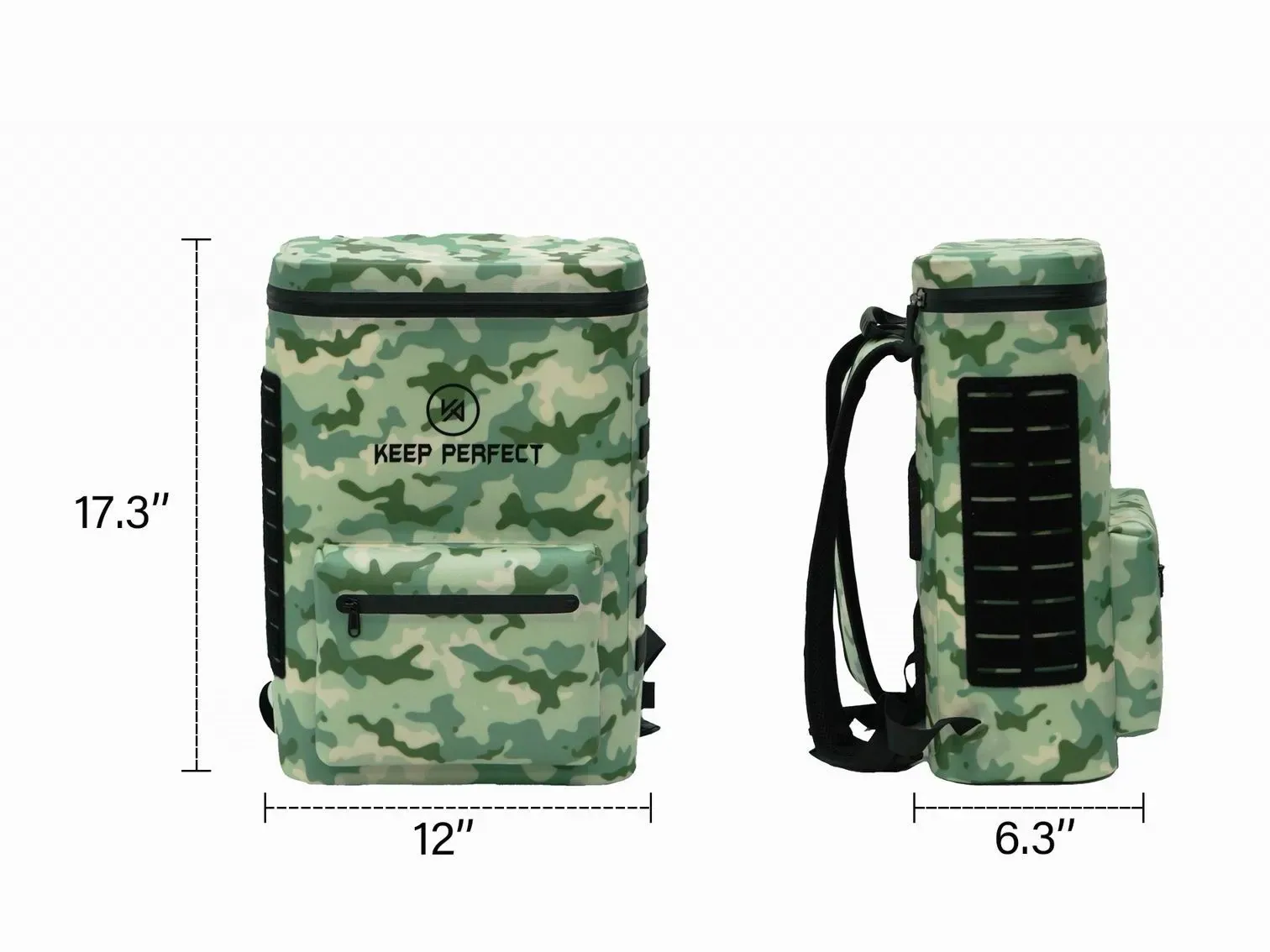
Six gates from pack to bulk. Each one has an input, an owner, an output and a delay that recurs often enough to plan for. The calendar is not the sum of the durations, because two gates can overlap; it is the sum of the gates that cannot, plus the materials that have to be ordered before the sample is approved.
Most development calendars are written as a single line: sampling takes this long and bulk takes this long. That is accurate and it is useless, because it does not say what has to happen between the two and it does not say which of the six steps is the one that will slip.
Six gates is the useful granularity. Fewer and the calendar cannot tell a buyer where the delay is; more and it becomes a project plan that nobody maintains. Six is what a buyer can hold in a head and check against a date.
The point of writing them down is that four of the six are inside the buyers control and two are not, and a delay in the first four is a delay the buyer can remove. That is the whole value of the exercise.
What Are the Six Steps and How Long Does Each Take?
Pack completion, material confirmation, sample approval, specification freeze, bulk booking and inspection release. The first three sit inside the sampling window of 6-10 working days. The fourth is a document step measured in hours. The fifth opens bulk, which runs 35-50 days. The sixth is a visit.
The two that are not inside the sampling window are material confirmation and bulk booking, and both are the ones a supplier controls. Material confirmation depends on a component supplier answering; bulk booking depends on a production slot being free.
The calendar is therefore not additive. Sampling and material confirmation can run at the same time, and where they do the total is shorter than the sum. What cannot overlap is sample approval and bulk, because bulk starts from the approval.
What Is Gate One: The Pack Is Complete?
A pack is complete when every component line carries a reference or a figure, the artwork carries a process and a position, and the packing is stated. It is the gate most buyers believe they have passed and most often have not, because a pack can look finished with half its lines open.
The test is the same one used to audit a return: for each line, could this be checked at inspection? Where the answer is no on more than a couple of lines, the pack is not complete and gate one has not passed.
The delay that recurs here is artwork. A pack waiting on a vector file, a colour reference or a print area is a pack that cannot start, and the wait is usually on the buyer side rather than the supplier side. Supplying the artwork with the pack rather than after it removes the most common delay in the whole calendar.
| Gate | Input | Owner | Output | Recurring delay |
|---|---|---|---|---|
| 1. Pack complete | A drawing, a materials list and artwork | The buyer | A pack with no open lines | Artwork supplied after the pack rather than with it |
| 2. Materials confirmed | A reference per line | The supplier | A return sheet with references | A dyed or non-stock component with its own minimum |
| 3. Sample approved | A physical sample and a checklist | The buyer | A written approval with a date | An approval sent as a message with no date |
| 4. Specification frozen | The pack plus the approved sample | Both sides | A revision number and a freeze date | A revision issued after approval without a re-sample |
| 5. Bulk booked | A frozen specification and a slot | The supplier | A production date and a completion date | A long-lead component not ordered before approval |
| 6. Inspection release | A finished shipment and the approved sample | The inspector | A report and a release | No approved sample sent to the inspector in advance |
What Is Gate Two: Materials Are Confirmed?
Every component line on the pack has been answered with a reference and the reference is available in the quantity and the colour the run needs. It is the gate that most often decides whether the sampling window holds, because a component that has to be sourced or dyed starts its own clock.
The delay here is a minimum rather than a lead time. A dyed-to-match webbing in a team colour, a non-stock foam density and a branded zipper each carry a production minimum, and where the order does not consume the minimum the surplus has to be either held or paid for. Deciding that early is what keeps the gate short.
The second delay is a certificate. Where a component carries a recycled claim or a restricted-substance declaration, the certificate is issued per shipment and it has to be declared before the part is made rather than after. A certificate cannot be issued retroactively against a part that was never declared.
What Is Gate Three: The Sample Is Approved?
A physical sample has been confirmed against a checklist and approved in writing, with a date. The written part is what matters: bulk runs 35-50 days from written sample approval, and an approval given in a message with no date leaves the start of that window arguable.
The delay that recurs is a second round. Where the first sample is close but not right, the correction and re-sample adds most of a sampling window again. The checklist is what keeps the first round the only round, and it is worth the hour it takes.
The third delay is a decision rather than a task. Where two people on the buyer side have to agree, the sample can sit for a week without anybody deciding it is waiting. Naming one approver per programme removes that entirely.
Six things that hold the calendar to its dates
- Artwork supplied with the pack rather than after it.
- Every component line carrying a reference before the pack goes out.
- One named approver on the buyer side, with a deputy.
- A written approval carrying a date, not a message.
- Any long-lead component ordered before approval, knowingly.
- The approved sample sent to the inspector before the visit.
What Is Gate Four: The Specification Is Frozen?
The pack, the BOM and the approved sample all carry the same revision number, and any change after this point is a change to the schedule rather than to the document. The freeze is a half-hour of work and it is the gate most often skipped entirely.
The reason to do it is that a change during bulk is expensive in a way a change before bulk is not. A material changed in week one is a purchase order; the same change in week four is a partial shipment, a re-work or a delay.
The discipline that makes it work is a revision note. Where a change is unavoidable, it is issued as a new revision with a note, and anything measurable in it is re-sampled. A revision issued without that is where a bulk run stops matching its own specification.
What Is Gate Five: Bulk Is Booked?
A production slot is held, the long-lead components are ordered, and there is a completion date. Bulk runs 35-50 days from written sample approval, and the width of that band is mostly about material availability and about where the order falls in the line.
The delay here is the long-lead component that was not ordered before approval. A tooled hardware part, a moulded patch and a dyed webbing all have lead times of their own, and if they are only ordered after approval their lead time sits inside the bulk window rather than alongside it.
That is a decision a buyer should make knowingly rather than by default: order the long-lead part before approval and carry the risk of a change, or order it after and carry the delay. Both are defensible and only one of them is usually considered.
What Is Gate Six: Inspection and Release?
A finished shipment, an approved sample and an inspection carried out against both. The sample size is drawn from ISO 2859-1 at General Inspection Level II with an AQL of 2.5, and the result is a report with an accept or reject number.
The delay that recurs is the absence of the approved sample. Where an inspector arrives without a reference, appearance defects are judged on personal judgement and the report is contestable in both directions. Sending the sample in advance is a one-parcel task.
The second delay is at the rejection end. Where a shipment fails, the options are re-work, a re-inspection or a rejection, and each has a cost and a date attached. Knowing which one the programme would choose before the inspection is what turns a failed result into a decision rather than a week of messages.
What Delays Each Step and By How Much?
Five delays account for most of it. Artwork arriving after the pack: a week or more, entirely on the buyer side. A component with a minimum: one to two weeks while the surplus question is settled. An approval sent without a date: a week of ambiguity about when bulk started.
The fourth is a second sample round: most of a sampling window again, 6-10 working days, and it is the single largest delay available. The fifth is a long-lead component ordered after approval: its own lead time, added inside the bulk window rather than alongside it.
What is worth noting is that four of those five are decided by the buyer rather than by the supplier. A calendar that slips is usually a calendar that was never fully in the suppliers hands to begin with, and that is worth knowing before a date is promised to a customer.
| Delay | Typical cost in days | Whose side | How it is removed |
|---|---|---|---|
| Artwork after the pack | 5 to 10 | Buyer | Supply the file with the pack |
| A component with a minimum | 7 to 14 | Shared | Decide on the surplus before the order |
| A certificate not declared | 7 to 21 | Buyer | Declare the claim before the part is made |
| A second sample round | 6 to 10 | Shared | Confirm twenty points on the first sample |
| An approval with no date | 5 to 7 | Buyer | A written approval carrying a date |
| A long-lead part ordered late | 10 to 25 | Shared | Order it before approval, knowingly |
| No approved sample at inspection | 3 to 7 | Buyer | Send the sample in advance of the visit |
How Is the Calendar Written and Who Owns It?
As one page with six rows: the gate, the date it is expected, the date it happened, and the owner. Four columns, six rows, and it is readable at a glance by anybody who picks it up. A calendar in a project tool that nobody opens is not a calendar.
Ownership is one person per gate, and the buyer owns four of the six. Where a gate has two owners it has none, and the gate that slips is always the one with two names on it.
The third column, the date it happened, is the one that makes the next calendar better. A programme that records six actual dates across two styles can predict the third one within a few days, and that prediction is what turns a delivery promise into a date a customer can plan around.
How Does the Calendar Change on a Repeat Order?
Four gates drop out. The pack exists, the materials are confirmed, the specification is frozen and the approved sample is held, so a repeat starts at bulk booking rather than at pack completion. What remains is a check that every reference is still available and every certificate still current, which is the seasonal review rather than a development step.
The repeat can therefore run shorter than the first order, and it usually does. Where a programme reorders the same style against the same specification revision, the 35-50 day bulk window is the whole calendar rather than the back half of one, and the date is correspondingly easier to promise.
The caution is silent drift. A repeat placed a year later against the same revision can still come back different, because a component was discontinued, a mill changed a finish, or a plating supplier changed a bath. Checking the component list before booking is what keeps a repeat identical, and it is a short check against a list rather than a re-development.
| Gate | First order | Repeat order | What still has to be checked |
|---|---|---|---|
| 1. Pack complete | Written from a template or from scratch | Already exists at a revision | That the revision is the latest |
| 2. Materials confirmed | Sourced and answered per line | Already referenced | That every reference is still available |
| 3. Sample approved | A physical sample and a checklist | Held on the shelf | That the held sample has not degraded |
| 4. Specification frozen | A revision number and a freeze date | Already frozen | That no revision was issued since |
| 5. Bulk booked | A slot and long-lead orders | The same, faster | That the slot is free |
| 6. Inspection release | Against the approved sample | Against the same sample | That the inspector has the current one |
What Is the Short Rule for the Development Calendar?
Write six gates with an owner each, and record the actual date as well as the expected one. Four of the six are on the buyer side, and those are the ones a calendar can actually shorten.
Then publish the window honestly. Sampling 6-10 working days and bulk 35-50 days are two bands rather than two numbers, and the programme that says so up front is the one whose date survives contact with the order.
Get a dated calendar for your next six styles
Send the pack and the target date. You get six gates with an owner each and a date you can calculate rather than hope for.
Frequently Asked Questions
How long does bag development take from pack to bulk?
Sampling runs 6-10 working days from a signed pack and bulk runs 35-50 days from written sample approval. The two do not simply add, because some gates overlap.
What are the six gates?
Pack complete, materials confirmed, sample approved, specification frozen, bulk booked, and inspection release.
Which gates does the buyer control?
Four of the six: the pack, the approval, the freeze and the approved sample at inspection.
What is the largest single delay in bag development?
A second sample round, which costs most of a sampling window again. A twenty-point checklist on the first sample is what avoids it.
When does bulk production start?
From written sample approval. An approval without a date leaves the start of the window arguable.
Should a long-lead component be ordered before approval?
It is a real choice: order before and carry the risk of a change, or after and carry the delay. Both are defensible and only one is usually considered.
How long does sampling take on a complex bag?
12-15 working days for a welded wall, a moulded part or a tooled hardware item, because those steps cannot be compressed.
What inspection applies at the end?
ISO 2859-1 at General Inspection Level II with an AQL of 2.5, read against the approved sample.
Why does the approved sample have to reach the inspector?
Because without a reference, appearance defects are judged on personal judgement and the report is contestable in both directions.
What does a certificate do to the calendar?
A certificate is issued per shipment and has to be declared before the part is made. It cannot be issued retroactively against an undeclared part.
How should the calendar be recorded?
One page, six rows, four columns: the gate, the expected date, the actual date and the owner.
What are the standard programme windows?
Sampling 6-10 working days from a signed pack, bulk 35-50 days from written sample approval, inspection at AQL 2.5 under ISO 2859-1.
People Also Ask
How long does it take to develop a custom bag?
Sampling 6-10 working days from a signed pack, then bulk 35-50 days from written sample approval.
What are the stages of bag development?
Six gates: pack complete, materials confirmed, sample approved, specification frozen, bulk booked and inspection release.
What delays bag sampling the most?
A second sample round. Confirm twenty points on the first sample and it usually does not happen.
When does bulk production start?
From written sample approval carrying a date, not from a message.
Should I order long-lead components before sample approval?
It is a real trade: order early and carry change risk, or wait and carry the delay inside the bulk window.
Sources and further reading
Every figure on this page is either our own programme data or attributed below. Open the originals before you write them into a specification.
- ISO 2859-1:1999 — Sampling procedures for inspection by attributesInternational Organization for Standardization
- ANSI/ASQ Z1.4 — Sampling procedures and tables for inspection by attributesAmerican Society for Quality
- ISTA test procedures — packaged-product performance testingInternational Safe Transit Association