Custom Lunch Cooler Bags for Brands: MOQ, Sampling and Lead Time
The four numbers are MOQ 500 pcs per style and colourway, sampling 6-10 working days from a signed-off tech pack, bulk production 35-50 days from written sample approval, and inspection at AQL 2.5. The one that catches buyers out is the colourway rule.
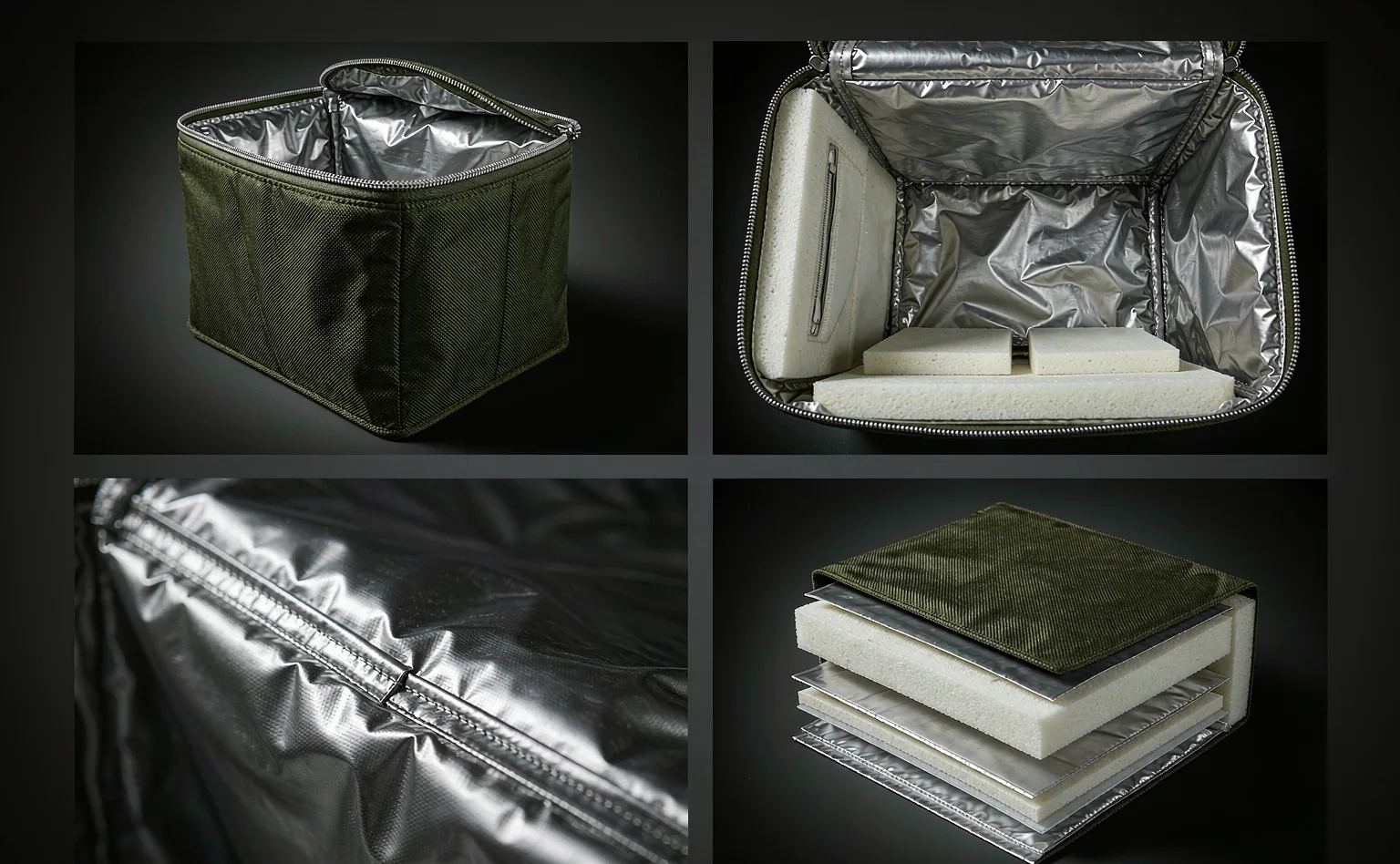
A branded lunch cooler programme runs on four numbers: MOQ 500 pcs per style and colourway, sampling 6-10 working days from a signed-off tech pack, bulk production 35-50 days from written sample approval, and inspection at AQL 2.5 under ISO 2859-1. The number that catches buyers out is the third: the clock starts at approval, not at deposit, and a colourway counts as a style.
Small insulated formats are where brands start, and they are where schedules go wrong, because a 500-piece first order is treated as a small job and planned with a large-job mentality. It is not: the tooling, the sampling and the documentation are close to the same as for a 5,000-piece order, and the unit price carries more fixed cost. This piece sets out what the four numbers mean, why each is what it is, and how to plan backwards from a launch date without gambling the window.
Why Is the MOQ 500 Pieces per Style and Colourway?
Because of what has to happen before the first unit is made. A style needs a pattern, a cutting die or a marker, a weld electrode or a seam setup, a print screen or a heat-transfer film, and a first-article approval. Those are fixed costs in time and money, and they do not scale down. Below roughly 500 units the fixed cost per unit rises steeply and the line changeover time becomes a larger share of the run than the run itself.
The second reason is material buying. Fabric, foam and film are bought in rolls and lots, and a colour is dyed or printed to a minimum quantity. A 200-unit order in a brand-specific Pantone shade can consume a dye lot many times larger than the order needs, and the surplus is waste that has to be paid for somewhere. That is the arithmetic behind the figure, and it is the reason a repeat order can be discussed at 300 pcs: the lot, the pattern and the reference sample already exist.
Does a Colourway Count as a Separate Style?
It does under this MOQ, and it is the single most common misunderstanding in a first enquiry. Two identical bags in navy and in stone are two styles for minimum-quantity purposes, because each needs its own fabric lot, its own shade approval and its own production run. A 500-piece order split into four colourways is not a 500-piece order; it is four 125-piece orders, and it will be quoted accordingly or declined.
There are three ways to work within that. Consolidate to one or two colourways for the first run and add shades on the reorder. Use a neutral shell with the brand colour carried in the print or the trim, which keeps the fabric lot common. Or accept a shade band rather than a Pantone match, which allows the fabric to be bought from a stock shade range rather than dyed to order.
| Programme decision | Effect on the MOQ | Effect on the schedule | When it is the right choice |
|---|---|---|---|
| One style, one colourway | 500 pcs total | Shortest; one fabric lot | First run, unproven demand |
| One style, two colourways | 1,000 pcs total | Adds a shade approval per colourway | Proven demand, two clear segments |
| Neutral shell, colour in print | 500 pcs total | One fabric lot, one print setup per colour | Where the brand colour is not woven in |
| Stock shade instead of dyed to order | 500 pcs total | Removes the dye-lot lead time | Where a close shade band is acceptable |
| Repeat order of the same style | 300 pcs open to discussion | No new tooling or approval | After the first run is approved |
What Actually Happens During the 6-10 Working Day Sampling Window?
Six things, in order. The tech pack is reviewed and the build-up is confirmed; the pattern and the marker are made; the fabric, foam and film are issued; the panels are cut and the liner is welded; the bag is assembled with the specified hardware; and the sample is checked against the drawing and photographed. Each step has a queue behind it, and the queue is why the window is measured in working days rather than in hours.
What extends it is usually not the assembly, and the distinction matters when a buyer is trying to recover a day. Assembly itself is measured in hours; the window is working days because of the queues behind each step and because a buyer change resets the sequence. The most effective way to shorten the window is to freeze the specification, not to ask the line to run faster.
What extends it is usually not the assembly. It is a sourced component with its own lead time — a shaped weld electrode, a branded zipper puller, a dyed-to-order fabric, a moulded base — or a change to the specification after cutting has started. A complex build with those elements takes 12-15 working days, and the honest way to plan is to assume the longer window until the tech pack is frozen.
What Starts the 35-50 Day Bulk Clock?
Written sample approval, and that is worth repeating because it is where most schedule disputes begin. The clock does not start when the sample is dispatched, when the deposit is paid, or when the purchase order is issued. It starts when the buyer confirms in writing that the sample is approved for production, and every day spent reviewing the sample after dispatch is a day added to the delivery date.
Inside the window, four things take the time: material procurement against the approved lots, cutting and welding, assembly and finishing, and inspection with any re-work. Where a fabric is dyed to order or a hardware item is branded, procurement can be the longest of the four. Ask which of the four is critical on your order and the window becomes planable rather than opaque.
How Do You Plan Backwards From a Launch Date?
Start from the date the goods have to be at the destination port or warehouse, and subtract in order: the transit and customs entry time for the chosen Incoterm; the inspection and any re-work; the 35-50 day bulk window; the 6-10 working day sampling window; and the time you need to review the sample. What remains is the date the tech pack has to be signed off, and that date is usually earlier than buyers expect.
Then add the buffer where it belongs, which is at the front rather than the back. A week spent on the tech pack saves two weeks of re-sampling; a week added to the end of the schedule only becomes visible when it is already critical. Where a launch is fixed and immovable, the response is to freeze the specification earlier, not to compress the production window.
| Milestone | Window | Starts from | What can delay it |
|---|---|---|---|
| Tech pack sign-off | Buyer-controlled | Enquiry | Unresolved thermal endpoint or hardware choice |
| Sampling | 6-10 working days, 12-15 complex | Signed-off tech pack | Sourced components, or a change after cutting |
| Sample review | Buyer-controlled | Sample dispatch | Slow review; the bulk clock has not started |
| Bulk production | 35-50 days | Written sample approval | Dyed-to-order fabric, branded hardware, public holidays |
| Inspection | Inside or after the bulk window | Production completion | A failed first inspection and the re-work cycle |
| Shipment | Transit-dependent | Inspection release | Booking, customs entry, carrier schedule |
What Does a Branded Lunch Format Actually Need From the Brand?
Four inputs, and the schedule waits on all of them. The artwork, in vector form with the colour references stated and the print position dimensioned on the drawing. The brand colour standard, ideally a physical swatch or a Pantone reference with an agreed tolerance, because a screen proof is not a colour standard. The logo application method, which decides whether the print is a heat transfer, a screen print or an embroidered patch, and each has a different setup and a different lead time. And the labelling, which has to carry the market requirements.
The most expensive of the four to get wrong is the colour. A Pantone match on a coated woven fabric is a dye-lot exercise with an approval cycle, and a rejection at the shade-approval stage puts the fabric back to the start of the queue. Where the schedule is tight, a stock shade with a printed brand colour is the safer route, and it also keeps the fabric lot common across colourways.
The second most expensive is the artwork position. A print placed by eye on a sample and approved that way will be placed differently in bulk, because bulk uses a jig or a screen and the sample was placed by hand. Give a dimensioned position on the drawing — distance from the top edge, from the side seam, and the print area — and the approval is reproducible.
What Are the Payment and Delivery Terms?
Payment is T/T 30/70: thirty percent to start the order and seventy percent before shipment. The seventy percent is the number to pin down, because it can be tied either to a passed inspection or to a bill of lading, and the two are different commercial positions. State which one in the purchase order. Delivery is quoted FOB Xiamen, with CIF and DDP available where the buyer wants the freight and the destination handled.
The Incoterm choice changes what the buyer controls. On FOB terms the buyer books the vessel and carries the risk from the rail of the ship; on CIF the seller arranges and pays the freight to the destination port while risk still transfers at shipment; on DDP the seller carries the goods and the customs entry to the destination. A buyer without a freight forwarder in China usually finds CIF simpler than FOB, and the landed cost is comparable.
The four numbers, and what each one really means
- MOQ 500 pcs per style and colourway, because the fixed setup does not scale down.
- A colourway is a style: 500 spread over four shades is four sub-minimum runs.
- Sampling 6-10 working days from a signed-off pack, 12-15 where components are sourced.
- Bulk 35-50 days from written sample approval, not from dispatch or deposit.
- T/T 30/70, FOB Xiamen, with CIF and DDP where the buyer wants them.
What Should a Brand Order First Time Around?
One style in one colourway at 500 pcs, with the brand identity carried in the print or the trim rather than in a dyed fabric. That keeps the fabric lot common, keeps the sampling window short, and leaves the second order free to add colourways at the discussed 300-piece level without a new approval cycle. It also produces the artefact a brand needs most: a production reference sample that the next run is measured against.
Where demand is uncertain, the second-order plan matters more than the first-order price. Ask what the reorder lead time will be, what the MOQ will be, and what will be controlled across runs. A partner who answers those three in writing is offering a programme; one who answers only the unit price is offering a transaction, and the difference shows up twelve months later.
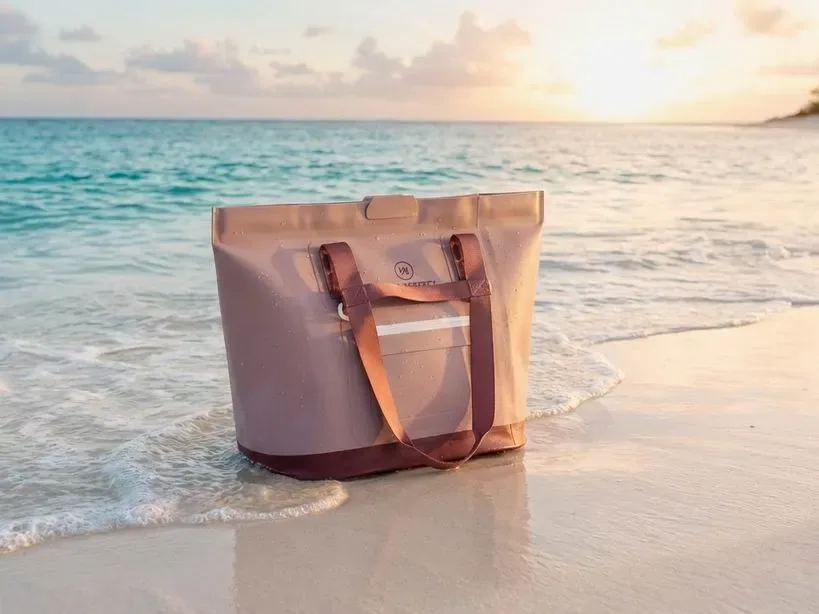
Where the brand is launching into more than one market, allow a documentation window alongside the production window. A food-contact declaration, a restricted-substance declaration and, where the product is for children, a CPSIA position with EN 71-3 data are each sourced from a supplier rather than written, and each has a queue. Asking for them at sample approval is late; asking at tech pack sign-off is right.
How Does Inspection Fit the Schedule?
Inspection is at AQL 2.5 under ISO 2859-1 General Inspection Level II, with 4.0 for minor defects and zero acceptance for critical. A 500-piece order draws code letter H and a sample of 50 units, which is a same-day inspection in most cases; what costs time is a failed first inspection, because the re-work cycle plus a full re-inspection is added to the window. The way to protect the date is to agree the defect class list before production, so the inspection is a measurement rather than a discussion.
Where the date is fixed and the defect is detectable by sorting, agree the sort and partial release option in advance. Screening the lot 100% and shipping the passing units keeps the date at the cost of a screening operation, and the cost of that operation should be allocated in the purchase order rather than negotiated on the day.
What Does a Repeat Order Look Like?
Shorter and more predictable, because the pattern, the tooling, the reference sample and the parameter set all exist. The MOQ can be discussed down to 300 pcs, the sampling step collapses to a confirmation sample rather than a development one, and the bulk window is unchanged at 35-50 days from approval. The risk on a repeat is not the schedule, it is drift: a foam lot with a different density, a film from another supplier, a weld parameter that has been re-tuned.
A repeat is also the moment to reconsider the colourway plan. The first run proves demand in one shade; the second can add shades against an approved pattern and an existing reference sample, at the discussed 300-piece level per colourway, without a new approval cycle. That is usually a more efficient use of a reorder than repeating the same shade.
The control is documentation. Hold a reference sample from the first run, record the weld and lamination parameters with it, and require written notice before any material substitution. Those three cost nothing at the first order and they are what makes the second order a repeat rather than a renegotiation.
Plan the first run backwards from the launch
Send the format, the colourway plan, the quantity and the launch date. You get a milestone schedule within one business day.
Frequently Asked Questions
What is the MOQ for custom lunch cooler bags?
500 pcs per style and colourway. On a repeat programme the figure can be discussed down to 300 pcs, because the pattern, the tooling and the reference sample already exist.
Does each colourway count separately toward the MOQ?
Yes. Each colourway needs its own fabric lot, shade approval and production run, so 500 pcs across four shades is four sub-minimum runs.
How long does sampling take?
6-10 working days from a signed-off tech pack for a standard build, and 12-15 working days for a complex one with sourced components such as a shaped electrode or a branded puller.
When does the bulk production clock start?
At written sample approval. Not at sample dispatch, not at deposit, and not at purchase-order issue.
How long is bulk production?
35-50 days from written sample approval, covering material procurement, cutting and welding, assembly, and inspection with any re-work.
What payment terms apply?
T/T 30/70: thirty percent to start and seventy percent before shipment. State in the purchase order whether the seventy is against a passed inspection or a bill of lading.
What delivery terms are quoted?
FOB Xiamen as standard, with CIF and DDP available. A buyer without a forwarder in China usually finds CIF simpler, at a comparable landed cost.
Can the schedule be compressed?
Only by freezing the specification earlier. Compressing production risks quality; the efficient lever is deciding the hardware and the thermal endpoint before the tech pack is signed off.
What inspection applies?
AQL 2.5 for major defects and 4.0 for minor, to ISO 2859-1 at General Inspection Level II, with zero acceptance for critical defects.
How many units are inspected on a 500-piece order?
Code letter H: 50 units sampled, with accept 3 and reject 4 at AQL 2.5 for major defects.
What is the best way to plan a first run?
One style in one colourway at 500 pcs, with the brand identity in the print or trim rather than in a dyed fabric, and a retained reference sample from the run.
What happens on a repeat order?
The MOQ can be discussed at 300 pcs, sampling collapses to a confirmation sample, and the bulk window stays at 35-50 days. The risk becomes drift, controlled by the reference sample and the recorded parameters.
Can I add colourways on the reorder?
Yes, and it is usually the right sequence: prove the demand in one shade, then add shades against an approved pattern and an existing reference sample.
What if the lot fails inspection and the date is fixed?
Agree the remedy in advance: re-work and resubmission, a buyer-signed waiver, rejection, or sort and partial release with the screening cost allocated in the purchase order.
People Also Ask
What is the MOQ for custom cooler bags?
500 pcs per style and colourway, with repeat programmes open to discussion at 300 pcs.
How long does it take to produce custom cooler bags?
Sampling 6-10 working days, then bulk production 35-50 days from written sample approval.
Does a colourway count toward the MOQ?
Yes, each colourway is a separate style for minimum-quantity purposes.
What are the payment terms?
T/T 30/70, with delivery quoted FOB Xiamen and CIF or DDP available.
How do I plan a cooler bag launch date?
Work backwards from the delivery date through transit, inspection, 35-50 days of bulk and 6-10 working days of sampling to the tech pack sign-off date.
Sources and further reading
Every figure on this page is either our own programme data or attributed below. Open the originals before you write them into a specification.
- ISO 2859-1:1999 Sampling procedures for inspection by attributesInternational Organization for Standardization
- ISO 9001 — Quality management systemsInternational Organization for Standardization
- Incoterms rules — trade terms for delivery and riskInternational Chamber of Commerce