What Is the AQL Sampling Size for a 500-Piece Cooler Bag Order?
Fifty units. A lot of 281 to 500 pieces at General Inspection Level II is code letter H, which is a sample of 50, and at AQL 2.5 that gives accept 3 and reject 4 for major defects. The AQL does not change the sample size; only the inspection level and the lot size do.
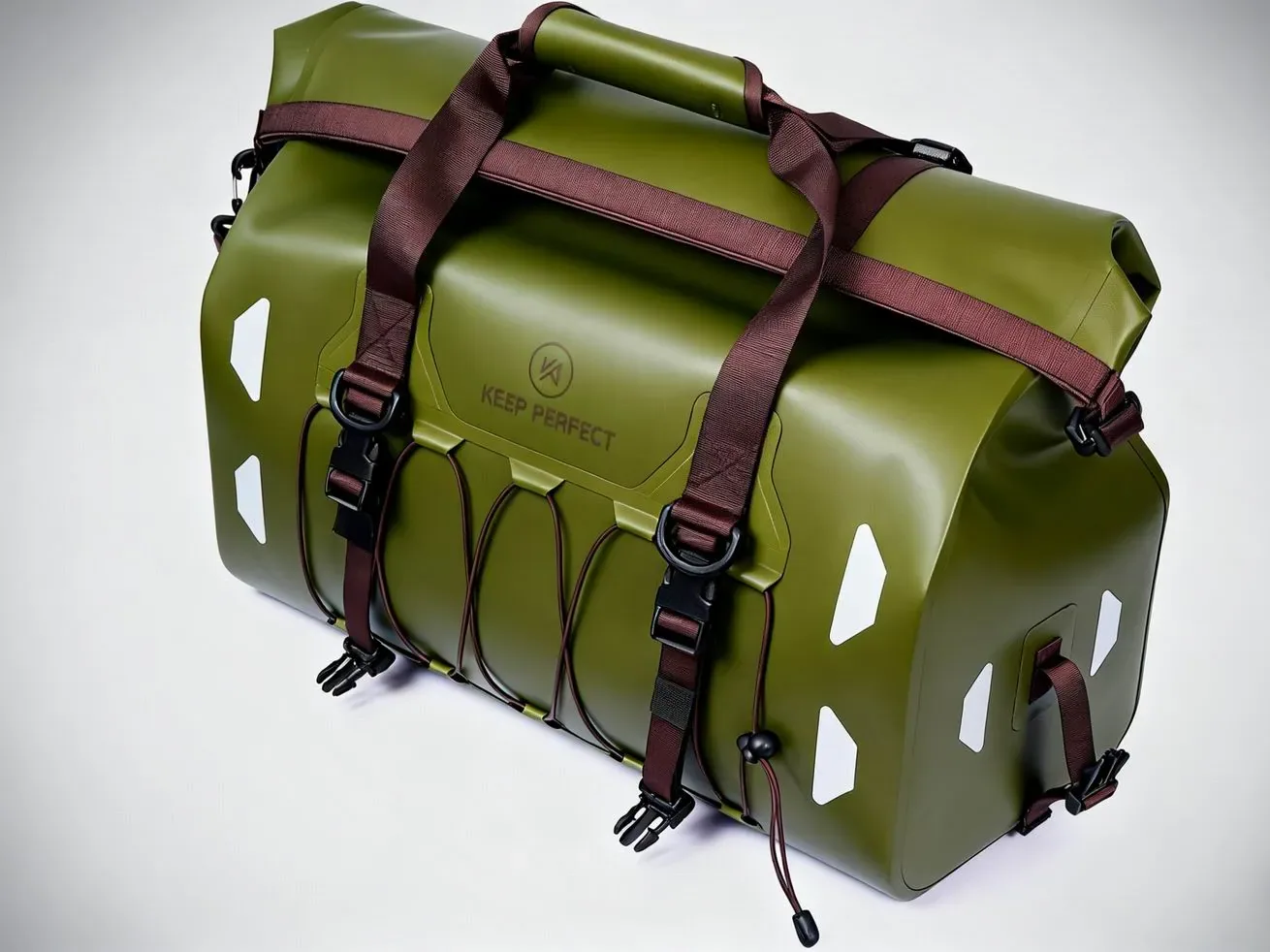
A 500-piece cooler bag order at General Inspection Level II draws code letter H: 50 units sampled, accept 3 and reject 4 at AQL 2.5 for major defects, and 5 and 6 at AQL 4.0 for minor. The sample size is fixed by the lot size and the inspection level; the AQL only moves the accept and reject pair. Critical defects are zero-acceptance at any sample size.
The question "how many will you inspect" has an exact answer once three things are fixed: the lot size, the inspection level and the standard. Most buyers know the AQL and not the sample size, and the difference matters, because the AQL is a quality position and the sample size is what determines how much evidence stands behind it. This piece sets out the table, explains what each column means, and shows what the sampling plan does not cover on an insulated bag.
How Is the Sample Size Determined?
By the lot size and the inspection level, before the AQL enters the calculation. Under ISO 2859-1, or ANSI Z1.4 as the equivalent, the lot size gives a code letter at the chosen inspection level; the code letter gives the sample size. At General Inspection Level II, a lot of 281 to 500 pieces is code letter H, and code letter H is a sample of 50 units. The AQL is then applied to that sample to produce the accept and reject numbers.
That ordering is worth stating because it is often inverted. A buyer who asks for "a smaller AQL to be safer" is asking for a stricter accept number on the same 50 units, which is a real tightening but a small one. A buyer who wants more evidence asks for a different inspection level, which changes the sample size, and that is a much larger change in what the inspection actually establishes.
| Lot size (pcs) | Code letter, Level II | Sample size | AQL 1.5 Ac / Re | AQL 2.5 Ac / Re | AQL 4.0 Ac / Re |
|---|---|---|---|---|---|
| 151 to 280 | G | 32 | 1 / 2 | 2 / 3 | 3 / 4 |
| 281 to 500 | H | 50 | 2 / 3 | 3 / 4 | 5 / 6 |
| 501 to 1,200 | J | 80 | 3 / 4 | 5 / 6 | 7 / 8 |
| 1,201 to 3,200 | K | 125 | 5 / 6 | 7 / 8 | 10 / 11 |
| 3,201 to 10,000 | L | 200 | 7 / 8 | 10 / 11 | 14 / 15 |
| 10,001 to 35,000 | M | 315 | 10 / 11 | 14 / 15 | 21 / 22 |
What Do Accept and Reject Mean on a 500-Piece Order?
At code letter H with a sample of 50 and AQL 2.5 for major defects, three or fewer major defects in the sample and the lot is accepted; four or more and it is rejected. That is the whole decision, and it is worth being comfortable with what it does and does not say. It does not say the lot has three defects; it says that a sample of 50 drawn at random contained three or fewer, which is evidence about the lot and not a census of it.
The same sample of 50 is used for the minor class at its own AQL, usually 4.0, giving accept 5 and reject 6. And the critical class is not sampled to an AQL at all: any critical defect fails the lot, at any sample size, because a critical defect is one that makes the product unsafe or unlawful.
What Counts as Critical, Major and Minor on a Cooler Bag?
The standard does not write the class list, and that is the buyer job. On an insulated bag the critical class normally includes a broken needle fragment left inside the bag, a sharp burr on metal hardware, a substance above a restricted limit, and a strap or handle failure under a stated load. Major includes what a customer would return the bag for: a closure that does not close, an opened seam, a leaking liner, a print outside the approved colour band, a missing component. Minor includes what a customer would notice and not return: an untrimmed thread end, a small mark inside the lining, light creasing from packing.
The classification has to be written for the duty. A lifted corner tape is minor on a lunch bag that carries a wrapped sandwich and major on a bag that carries frozen food, because the consequence differs. Writing the list before production is what turns inspection into measurement rather than opinion.
Does AQL 2.5 Cover Thermal Performance?
No, and this is the gap that catches insulated programmes. The sampling plan counts defects; it does not measure performance. A lot of 500 bags can pass at AQL 2.5 and every unit in it can hold ice for six hours instead of twelve, because the foam is a grade lighter than specified and no inspector can see that without cutting a bag open. Thermal performance is a separate test on separate samples, under the protocol, and it belongs in the acceptance criteria as its own clause.
The bridge between the two is the cut-build check: one unit per inspection lot opened up and measured for foam thickness and density, liner gauge and build-up. It is not part of ISO 2859-1 and it does not change the accept or reject numbers, but it is what catches the substitution that the sampling plan is blind to.
One further point on the tables: they assume a single sampling plan under normal inspection. Double and multiple sampling plans exist in the standard and they can reduce the average number of units inspected on a clean run, at the cost of a more complicated procedure on the line. For a 500-piece order the saving is small and the simplicity is worth more; for a 10,000-piece programme the arithmetic changes and a double plan can be worth agreeing.
What Are the Switching Rules, and Why Do They Matter?
ISO 2859-1 is a system of states rather than a single test. Normal is the default. Tightened follows two of five or fewer consecutive lots being rejected, and it keeps the sample size while making the accept and reject pair stricter. Reduced follows a sustained clean run and cuts the sample to roughly 40% of normal. Discontinued stops acceptance after a stated run of tightened lots without acceptance.
The practical consequence is that a single lot verdict means less than buyers think, and two inspection reports are only comparable if they were drawn in the same state. Ask which state the programme is in before comparing reports, and ask what moves it back to normal, because a programme that has drifted into tightened and stayed there is a programme with an unresolved cause.
| State | When it applies | Effect on the sample | How it changes |
|---|---|---|---|
| Normal | The default, and after a return from either other state | Sample from the code letter; Ac/Re from the AQL | Two of five or fewer consecutive lots rejected moves to tightened |
| Tightened | After that trigger | Same sample size, a stricter Ac/Re pair | Five consecutive accepted lots returns to normal |
| Reduced | After a sustained clean run under normal | About 40% of the normal sample | One rejected lot returns to normal |
| Discontinued | After a stated run of tightened lots without acceptance | No sampling | Requires the cause to be found and corrected |
Two further questions come up on every first programme, and both have short answers. The first is whether the inspection is done before or after packing. It should be after packing and on packed cartons, because packing damage is real damage and a carton check catches the short count and the wrong marking at the same visit. The second is whether the sample can be drawn from the finished cartons rather than from the line: it can, and it should be, drawn at random across the whole lot rather than from the first or last cartons.
A third question is what happens to the units that were opened for inspection. They are usually repacked and shipped, unless the inspection is destructive — and a cut-build check is destructive. Say in the plan which units will be destroyed and how they will be replaced, because a disagreement about fifty units at the end of a lot is a poor way to end a programme.
Is AQL 1.5 Stricter Than 2.5, and Is It Available?
It is stricter on the same sample: at code letter H, 50 units, AQL 1.5 gives accept 2 and reject 3 against 3 and 4 at AQL 2.5. It is available in the tables — ISO 2859-1 publishes a 1.5 column — but it is not one of the commonly used preferred values in the way 2.5 and 4.0 are, and that matters for two reasons. First, it does not change the sample size, so the extra strictness is one unit of tolerance on 50, which is a smaller change than the language suggests. Second, it costs more in rejected lots, and the re-inspection cycle is what actually delays a programme.
The stronger move, where a buyer genuinely wants more assurance, is to write a real critical class and to add the checks the standard does not contain: the cut-build check, the leak test on a stated number of units, the strap pull test and the thermal protocol. Those catch the failures that actually generate returns; a one-unit tightening on the major count does not.
What the sampling plan does and does not do
- The sample size comes from the lot size and the level; the AQL only moves Ac/Re.
- 500 pcs at Level II is code letter H: 50 units, accept 3 and reject 4 at AQL 2.5.
- Critical defects are zero-acceptance at any sample size, and the class list is buyer work.
- Thermal performance is not in the sampling plan; test it separately and add a cut-build check.
- Ask which switching state the programme is in before comparing two inspection reports.
One more field deserves a place on the plan: the inspection checklist itself. A sampling plan says how many units to draw and what to do with the result; a checklist says what to look at on each unit, in what order. Writing it once, panel by panel from the closure outward, makes two inspectors produce comparable results across two runs and makes the first inspection of a reorder comparable with the inspection of the run that was approved.
Where the plan is written into a contract, name the standard edition or the set of tables being used, because the accept and reject pairs are read from tables and a different edition can produce a different pair for the same code letter and AQL.
A final practical point: the inspection report should record the defect count by class and not only the verdict. A pass with two major defects and a pass with none are both passes, and over five lots the trend is what tells you whether the programme is stable or drifting. Ask for the counts on every report and keep them, because the switching rules need them and so does the next specification review, which is where the trend becomes a decision.
What Happens When the Lot Fails?
Four outcomes, and they should be agreed before the inspection rather than after it. Re-work and resubmission: the cause is corrected, the affected units are repaired or replaced, and a fresh sample is drawn and inspected. A buyer-signed waiver: the lot ships as it is, with the defect count and class recorded. Rejection: the lot is not shipped and the order is re-made. Sort and partial release: the lot is screened 100% and only passing units ship.
Each has a schedule cost and each has a cost in money, and the two do not fall on the same party. Re-work costs the vendor time and money; a waiver costs the buyer the field risk; a rejection costs everybody the window; a sort costs money but often saves the date. One clause each in the purchase order, and the failure stops being a crisis.
One further consideration on the defect class list: write it with the returns desk rather than with the drawing. The person who knows which defect generates a return is the person who has been handling them for a year, and their list is usually shorter and sharper than the one written at a specification meeting. A class list of eight lines that everybody understands outperforms a list of thirty that nobody reads.
How Does Inspection Fit the Programme Calendar?
At the end of the bulk window and before shipment: MOQ 500 pcs per style and colourway, sampling 6-10 working days, bulk production 35-50 days from sample approval, T/T 30/70, FOB Xiamen. Inspecting 50 units is a same-day job in most cases; what costs time is a failed first inspection, because the re-work cycle plus a full re-inspection is added to the window.
Where the date is fixed, agree the sort and partial release route in advance, with the screening cost allocated in the purchase order. And where the programme will repeat, watch the switching state: a run of clean lots earns reduced inspection, which cuts the inspection cost per unit across the year.
Write the inspection plan with the order
Send the quantity, the duty and the market. You get a sampling plan with a defect class list within one business day.
Frequently Asked Questions
What is the AQL sample size for a 500-piece order?
Code letter H at General Inspection Level II: 50 units drawn, accept 3 and reject 4 at AQL 2.5 for major defects, and accept 5 and reject 6 at AQL 4.0 for minor.
Does the AQL change the sample size?
No. The sample size comes from the lot size and the inspection level. The AQL moves only the accept and reject pair.
What AQL should be used for cooler bags?
AQL 2.5 for major defects and 4.0 for minor, to ISO 2859-1 at General Inspection Level II, with zero acceptance for critical defects.
What counts as a critical defect on a cooler bag?
A broken needle fragment inside the bag, a sharp burr on hardware, a substance above a restricted limit, or a strap failure under a stated load.
What counts as a major defect?
What a customer would return the bag for: a closure that does not close, an opened seam, a leaking liner, a print outside the approved colour band, a missing component.
Is AQL 1.5 stricter than 2.5?
Yes on the same sample: at 50 units, accept 2 and reject 3 against 3 and 4. The sample size is unchanged, so the tightening is one unit of tolerance.
Does AQL 2.5 cover thermal performance?
No. The sampling plan counts visible defects. Thermal performance needs a separate protocol, plus a cut-build check for foam thickness and density.
What is a cut-build check?
One unit per inspection lot opened and measured for build-up: foam thickness and density, liner gauge and panel allocation. It is not part of the standard and it catches substitutions.
What are the switching rules?
Normal is the default; two of five or fewer consecutive rejected lots moves to tightened; a sustained clean run can earn reduced at about 40% of the normal sample.
What happens if the lot fails?
One of four outcomes: re-work and resubmission, a buyer-signed waiver, rejection, or sort and partial release. Agree which, and who pays, before the inspection.
How many units are sampled on a 1,000-piece order?
Code letter J: 80 units, with accept 5 and reject 6 at AQL 2.5 for major defects.
Is ANSI Z1.4 the same as ISO 2859-1?
They are equivalent for practical purposes in single sampling by attributes, and either can be named. Name one, so the accept and reject pair is not argued about.
How long does an inspection take?
Sampling 50 units is usually a same-day job. A failed first inspection adds the re-work cycle plus a full re-inspection to the window.
What is the MOQ and the bulk window?
MOQ 500 pcs per style and colourway, sampling 6-10 working days, bulk production 35-50 days from sample approval, FOB Xiamen.
People Also Ask
How many units are inspected in a 500-piece order?
Fifty: code letter H at General Inspection Level II, with accept 3 and reject 4 at AQL 2.5.
What does AQL 2.5 mean?
An accept and reject pair applied to the sample: at 50 units, three or fewer major defects pass and four or more fail the lot.
Does a lower AQL mean more units inspected?
No. The sample size comes from the lot size and the inspection level; the AQL only tightens the accept number.
What is a critical defect on a cooler bag?
One that makes the product unsafe or unlawful: a needle fragment, a sharp burr, a substance above a limit, a strap failure.
Is AQL 1.5 worth specifying?
It is one unit stricter on the same 50. A written critical class and a cut-build check buy more assurance.
Sources and further reading
Every figure on this page is either our own programme data or attributed below. Open the originals before you write them into a specification.
- ISO 2859-1:1999 Sampling procedures for inspection by attributesInternational Organization for Standardization
- ANSI/ASQ Z1.4 — Sampling procedures and tables for inspection by attributesAmerican Society for Quality
- ASTM D6193 — Standard Practice for Stitches and SeamsASTM International