What MOQ and Sampling Window Should a Camera Bag Programme Expect?
MOQ is 500 pcs per style and colourway because a colourway is a dye lot at the mill. Sampling runs 6-10 working days from a signed-off tech pack, and the bulk clock of 35-50 days starts on written sample approval rather than on the day the sample is dispatched.
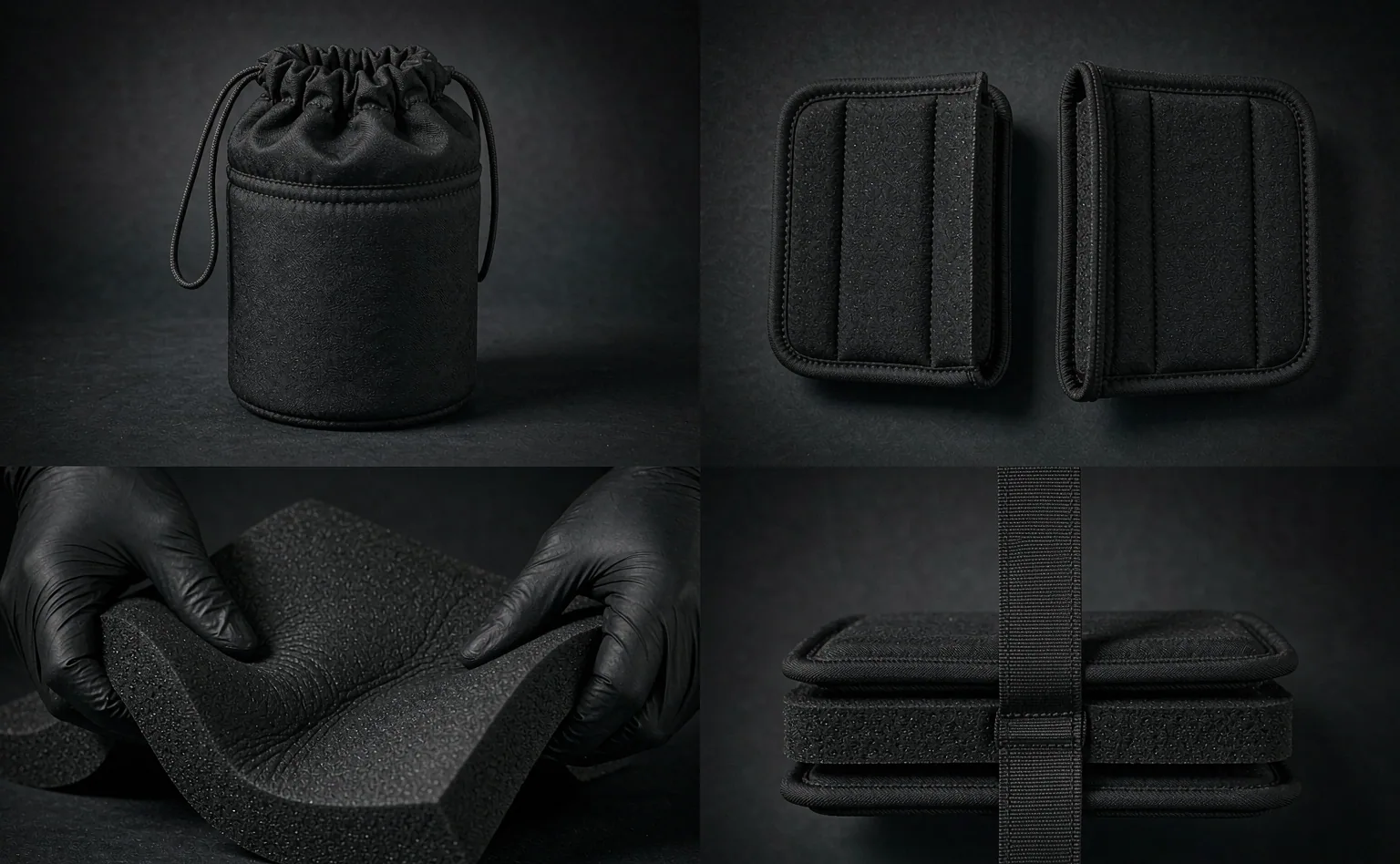
MOQ is 500 pcs per style and colourway, and 300 pcs is open to discussion on a repeat. Sampling takes 6-10 working days from a signed-off tech pack, and 12-15 for a complex build. Bulk production is 35-50 days from written sample approval. Those three windows are the schedule, and almost every slip in a first programme comes from one of them not being understood rather than from any of them being missed.
A first camera bag programme fails on the schedule far more often than it fails on the product, and the schedule failure almost always has the same shape: the buyer believes the clock starts when the enquiry is sent and the production side believes it starts when the tech pack is signed off. The gap between those two moments is where the weeks go, and it is entirely under the buyer control.
This guide sets out what each of the three windows means, what has to be true before each one starts, and which decisions are the ones that actually move the date. It is written to be used before the enquiry rather than after the first slip, because by then the only remaining lever is paying for air freight.
What Does MOQ Mean Per Style and Colourway?
MOQ is 500 pcs per style and colourway, which means 500 pieces of one design in one colour. A first order of two styles in one colourway is 1,000 pcs, and one style in three colourways is 1,500 pcs. The unit is not the order and it is not the product; it is the combination of a design and a colour, and that is because the colour is what drives the material minimum.
The reason is that fabric and webbing are dyed to order in lots. A colourway is a dye lot, and a dye lot has a minimum at the mill that is independent of how many bags are being made. Asking for 500 pcs split across three colours means three dye lots at a third of the volume each, which is why the minimum is set per colourway rather than per order.
| Order shape | Pieces | How it is counted | Note |
|---|---|---|---|
| One style, one colourway | 500 | One unit | The minimum order |
| One style, two colourways | 1,000 | Two units | Two dye lots |
| Two styles, one colourway | 1,000 | Two units | Two patterns, one dye lot |
| Two styles, two colourways | 2,000 | Four units | The usual shape of a launch range |
| A repeat of one style, one colourway | 300 | Open to discussion | Where a repeat programme can be discussed |
| A first order of 300 pcs | Not the standard shape | Outside the standard programme | Discuss the shape of the programme rather than the number |
Why Is the MOQ Set Where It Is?
Three costs sit behind the number, and all three are set-up rather than material. The first is the cutting and the sewing set-up: a production line has to be laid out, the patterns loaded, the machines threaded and the operators briefed, and that work is the same whether the run is 300 or 5,000. The second is the material minimum at the mill, described above. The third is the inspection and the documentation, which is a fixed cost per lot.
The consequence for a buyer is that the unit price at 500 and at 2,000 differ far less than the ratio suggests, because the set-up is a larger share of the cost at the lower volume. That is the honest answer to a question about volume pricing, and it is why a programme is usually better served by one order at a workable volume than by two orders each trying to be as small as possible.
Can a First Order Be Split Across Colourways?
It can, and it is usually the wrong first move. Splitting 500 pcs across two colourways means 250 of each, which means two dye lots below their economic volume, two sets of trim to match, and two inspection lots. The unit price rises and the colour-matching risk doubles on the order where the buyer has the least experience of how the fabric behaves.
The better shape for a launch is one colourway at the full quantity and a second colourway on the repeat, once the shade has been approved against a retained sample. Where a range genuinely needs two colours at launch, the second one should be a trim colour rather than a shell colour, because a trim change does not carry a dye-lot minimum of the same size.
What Happens in a Sampling Round?
A sampling round is 6-10 working days from a signed-off tech pack and it covers five steps. The pattern is cut and the components are gathered. A first sample is made, usually in a substitute fabric if the specified fabric has not arrived. The sample is reviewed internally against the tech pack. Any corrections are made and a second sample is built where the first was wrong. The sample is then sent for approval.
What the round does not cover is the fabric arrival, the hardware arrival, or the buyer review time, and those three are the difference between a ten-day round and a six-week one. The working-day figure is honest about the work and says nothing about the inputs, which is why the next question matters more than this one.
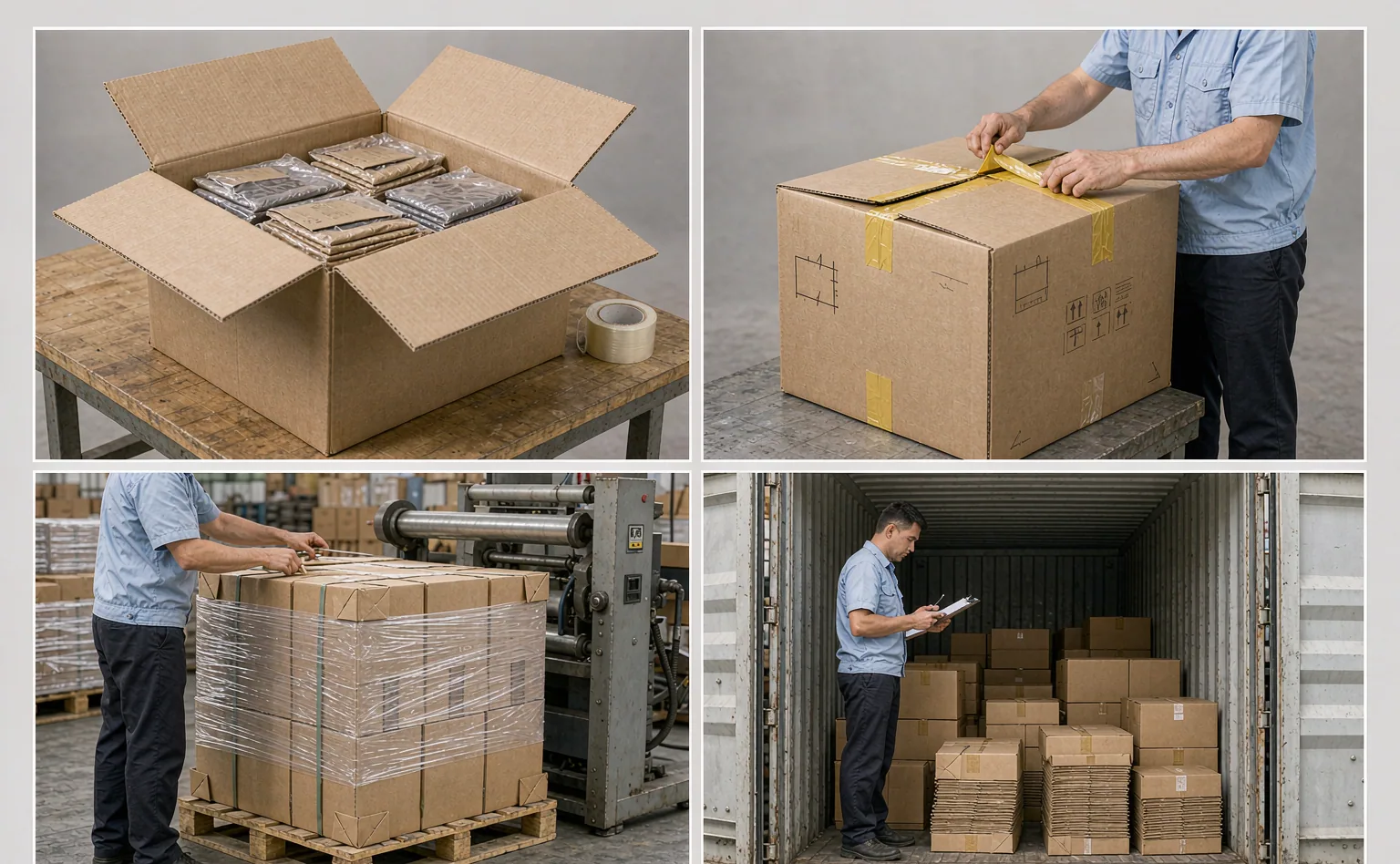
What Counts as a Complex Build?
A complex build takes 12-15 working days of sampling rather than 6-10, and four features put a bag in that band. A moulded or a thermoformed panel, which needs a tool before a sample can be made. A welded seam or a welded liner, which needs a parameter trial on the actual substrate. A harness with a load-bearing geometry, which needs a fit round. And a hardware assembly that has to be jigged.
A camera bag with 10 mm walls, a divider set and a covered zipper is a standard build and sits in the shorter window. A bag with a moulded base, a welded liner and a structured harness is a complex build and sits in the longer one. Deciding which band a design is in before quoting is the difference between an honest sampling date and a slipped one.
What Actually Delays a Sampling Round?
Four things, in the order they occur. The first is an incomplete tech pack: a missing divider coordinate, an unstated foam density, or a dimension that is an exterior rather than an interior. The second is hardware that has to be ordered in, which is the most common single cause and the easiest to avoid by deciding the hardware first.
The third is fabric that has to be sourced rather than taken from stock, which applies to most branded fabrics. The fourth is a change after the sample has been cut, which is the most expensive of the four because it restarts the round rather than extending it. Three of those four are decided before the enquiry, and the fourth is the one to plan for.
| Delay | Typical added time | Who controls it | How to avoid it |
|---|---|---|---|
| Incomplete tech pack | Days to weeks | The buyer | Use a field list; every field has a value before the enquiry |
| Hardware to be ordered in | One to three weeks | Shared | Name the hardware before the tech pack is final |
| Branded fabric to be sourced | Two to four weeks | Shared | Approve a stock fabric or start the fabric order early |
| Change after the sample is cut | Restarts the round | The buyer | Freeze the layout before cutting and accept one correction round |
| Buyer review time | Whatever it takes | The buyer | Agree a review deadline with the sample dispatch |
| A second or third sample round | One round each | Shared | Write the acceptance rule before the first sample is built |
What Is a Golden Sample and Who Keeps It?
A golden sample is the approved unit that the bulk run has to match, signed off in writing and retained as the reference. There are usually two: one held by the buyer and one held by the production side, and both are marked, dated and stored away from light, because a fabric fades in a window and a golden sample that has faded is worse than none.
What matters is that the approval is written. A verbal approval on a video call, or an email that says the sample looks good, does not tell an inspector what to compare against. The approval note should list what was checked: the interior dimensions, the divider coordinates, the foam thickness and density, the hardware, the colour against the reference, and the function of every closure. That list becomes the inspection plan.
When Does the Bulk Clock Start?
Bulk production is 35-50 days from written sample approval, and the clock starts on the written approval, not on the sample dispatch and not on a verbal go-ahead. That is the single most useful sentence in this guide, because the gap between a sample arriving and a written approval being sent is frequently longer than the sampling window itself.
The 35-50 day band is a range rather than a number for an honest reason: it depends on where the material lead times land and on where the order sits in the production schedule. A bag using stock fabric and stock hardware at a quiet point in the schedule lands at the short end; a bag waiting on a branded fabric at a busy point lands at the long end. Ask for the specific date for the specific order rather than for the band.
- Order shape
- Styles and colourways, each counted separately at 500 pcs
- Tech pack
- Complete, with interior dimensions, foam, hardware and trim named
- Hardware
- Named by brand and part number where a rating matters, decided first
- Fabric
- Stock or sourced, with the sourcing time stated if sourced
- Build complexity
- Standard, 6-10 working days of sampling, or complex, 12-15
- Sample rounds
- How many are included, and what a correction round costs in time
- Approval
- Written, with the checked attributes listed, before the bulk clock starts
- Bulk window
- 35-50 days from written approval, with a specific date requested
- Inspection
- AQL 2.5 under ISO 2859-1, with the defect class list agreed first
- Terms
- T/T 30/70, quoted FOB Xiamen; CIF and DDP available
What Do Samples Cost and Are They Credited?
A sample is charged, and the charge is usually credited against the bulk order when the order is placed. The amount depends on the build: a standard camera bag sample is a few hundred units of currency and a complex build with a moulded panel or a welded liner costs more, because of the tooling or the parameter trial. Ask for the figure and for the credit terms in writing before the sample is made.
Shipping the sample is a separate line and it is worth paying for a courier rather than for post, because the review time is the largest uncontrolled item in the schedule. A sample that takes three weeks to arrive has added three weeks to the programme for the sake of a small difference in freight, and that is the most common false economy in a first order.
How Should a First Programme Be Scheduled?
Work backwards from the date the goods have to be on the water. Take the bulk window, add the sampling window, add the review and approval time, add the fabric and hardware lead times where they apply, and add a contingency. A programme that needs goods shipped in a given month should have started the tech pack two to three months earlier, and the contingency is not padding, it is the review time.
Then decide the three things that move the date, in this order: the hardware, the fabric, and the completeness of the tech pack. Everything else in the schedule is a consequence of those three. A buyer who has named the hardware, approved a stock fabric and completed the pack has done most of what can be done to protect the date.
What decides MOQ and sampling on a camera bag
- MOQ is 500 pcs per style and colourway, because a colourway is a dye lot with its own minimum.
- Sampling is 6-10 working days of work from a signed-off pack, and 12-15 for a complex build.
- The bulk clock starts on written sample approval, not on sample dispatch.
- Hardware ordered in is the most common cause of a slipped sampling round, so decide it first.
- A golden sample is written, dated and retained, and its approval note becomes the inspection plan.
- Three of the six delays are decided before the enquiry, and none of them is a production problem.
What Changes on a Repeat Order?
Two things. The quantity can be discussed at 300 pcs per style and colourway, because the patterns, the tooling and the material specifications already exist and the set-up cost has been absorbed once. And the sampling round largely disappears, because a repeat is built against a retained golden sample and a standing specification rather than against a new pack.
What does not change is the discipline. A repeat is where programmes drift, because the specification is assumed rather than checked and the fabric lot is new. Keep the retained reference sample, compare the new lot against it before cutting, and inspect the repeat at the same AQL 2.5 under ISO 2859-1 with the same defect class list. A fifth order inspected loosely is where a five-year programme ends.
The commercial windows are unchanged: MOQ 500 pcs per style and colourway, sampling 6-10 working days, bulk production 35-50 days from written sample approval, inspection at AQL 2.5 under ISO 2859-1 General Inspection Level II, payment T/T 30/70, quoted FOB Xiamen. A repeat buys a smaller quantity and a shorter sampling step; it does not buy a shorter bulk window.
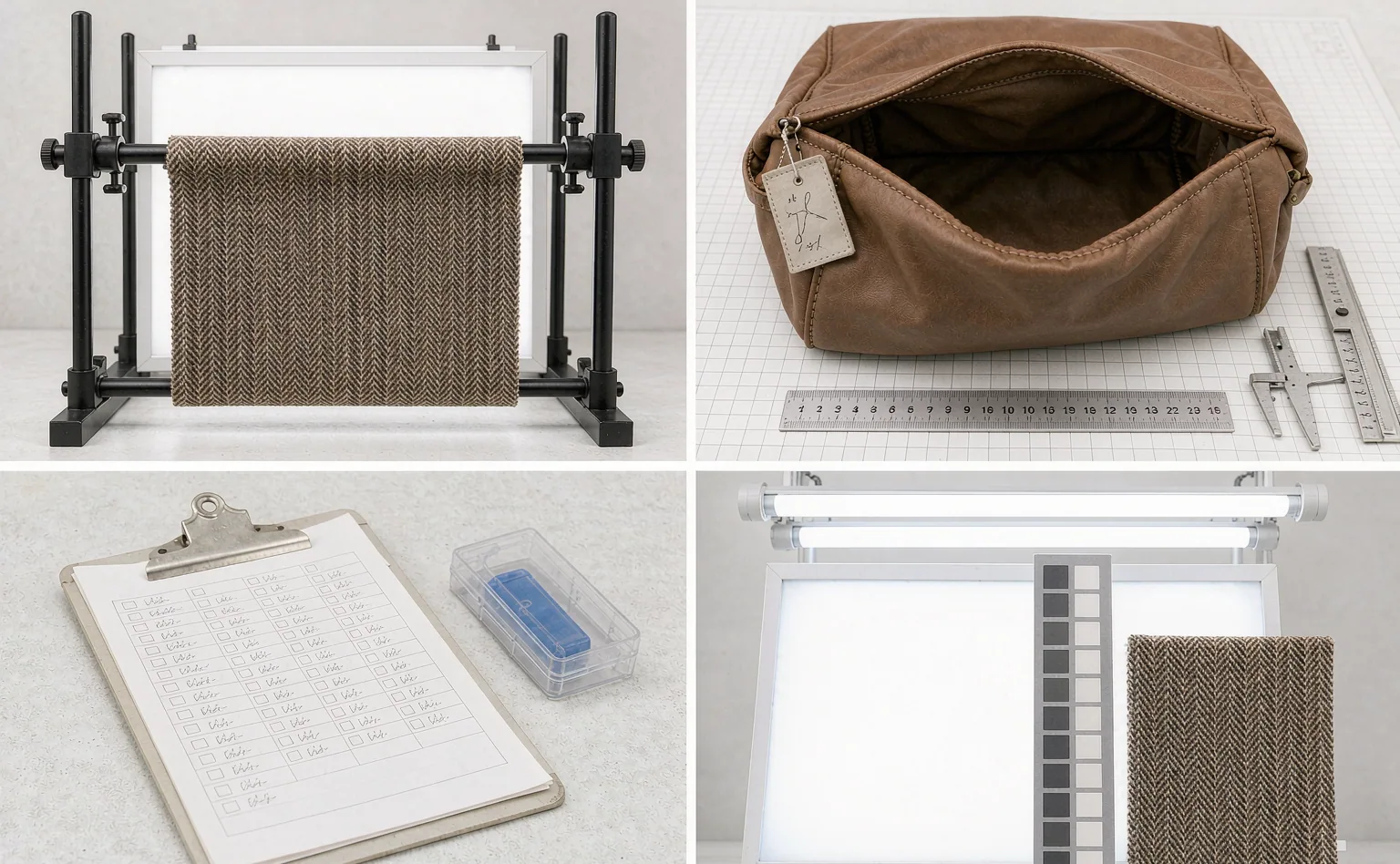
Send the order shape with the enquiry
Send the styles, the colourways, the target quantity and the date the goods have to ship. You get a schedule, indicative pricing and a sampling window within one business day.
Frequently Asked Questions
What is the MOQ for a custom camera bag?
MOQ 500 pcs per style and colourway. One style in two colourways is 1,000 pcs, and two styles in one colourway is also 1,000 pcs.
Why is the MOQ per colourway rather than per order?
Because a colourway is a dye lot and a dye lot has its own minimum at the mill. Splitting 500 pcs across three colours means three dye lots at a third of the volume each.
Can I order 300 pcs on a first order?
The standard programme is 500 pcs per style and colourway. Three hundred pcs per style and colourway is open to discussion on a repeat, where the patterns and the specifications already exist.
How long does sampling take?
Six to ten working days from a signed-off tech pack for a standard build, and 12-15 for a complex build with a moulded panel, a welded seam, a fitted harness or a jigged hardware assembly.
When does the bulk production clock start?
On written sample approval. Bulk production is 35-50 days from that moment, not from the sample dispatch and not from a verbal go-ahead.
What delays a sampling round?
Hardware that has to be ordered in is the most common single cause, followed by an incomplete tech pack, a branded fabric that has to be sourced, and a change after the sample has been cut.
What is a golden sample?
The approved unit the bulk run has to match, signed off in writing, dated, and retained by both sides away from light. Its approval note lists what was checked and becomes the inspection plan.
How much do samples cost?
A standard camera bag sample is a few hundred units of currency and a complex build costs more. The charge is usually credited against the bulk order, and the terms should be in writing before the sample is made.
Is the 35-50 day window a promise or a range?
It is a range, and the honest figure for an order is the specific date for that order. Stock fabric and hardware at a quiet point in the schedule land at the short end; a branded fabric at a busy point lands at the long end.
Should a first order be split across colourways?
Usually not. Two colourways at 250 each means two dye lots below their economic volume, two trim sets and two inspection lots, and it doubles the colour-matching risk on the order where there is the least experience.
How should I schedule a first programme?
Work backwards from the ship date: bulk window, sampling window, review and approval time, material lead times, and a contingency for the review. A tech pack should start two to three months before the goods have to be on the water.
Does a repeat order change the lead time?
It shortens the sampling step, because a repeat is built against a retained golden sample. The bulk window stays at 35-50 days from written approval.
People Also Ask
What is the MOQ for custom camera bags?
MOQ 500 pcs per style and colourway, with 300 pcs per style and colourway open to discussion on a repeat.
How long does camera bag sampling take?
Six to ten working days from a signed-off tech pack, and 12-15 working days for a complex build.
When does bulk production start?
On written sample approval. Bulk production then runs 35-50 days to completion, inspected at AQL 2.5 before shipment.
Can I split my first order across colours?
It is possible and usually unwise at 500 pcs, because each colourway is a separate dye lot with its own minimum and its own colour-matching risk.
What is the fastest way to slip a first programme?
Leaving the hardware undecided. A branded slider or buckle has to be ordered in, and it is the most common single cause of a slipped sampling round.
Sources and further reading
Every figure on this page is either our own programme data or attributed below. Open the originals before you write them into a specification.
- ISO 2859-1:1999 — sampling procedures for inspection by attributesInternational Organization for Standardization
- ISO 9001 — quality management systems: requirementsInternational Organization for Standardization
- ASTM D6193 — standard practice for stitches and seamsASTM International