What Fields Does a Camera Bag Tech Pack Need?
Eleven groups: identification, interior and exterior dimensions, panel build-up, foam, divider layout, materials, hardware, branding, test and acceptance, and packing. The pack has to specify components rather than describe an approved sample, because a sample cannot be matched on the fifth order.
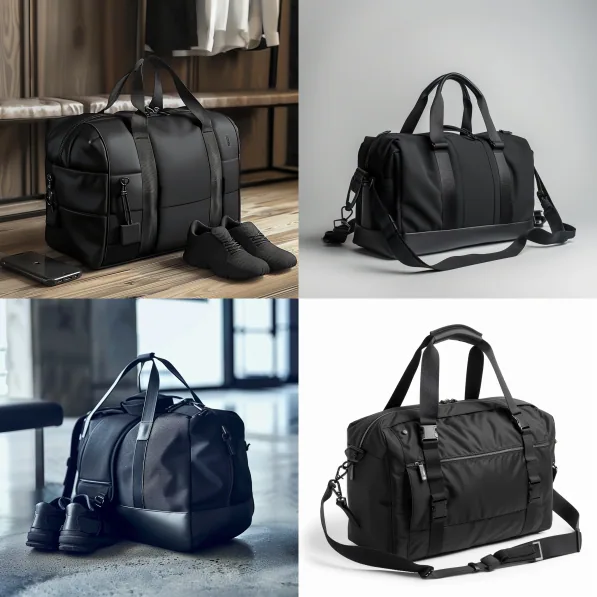
A camera bag tech pack has eleven groups of fields: identification, interior dimensions, exterior dimensions, the panel build-up, the foam, the divider layout, the shell and lining materials, the hardware and trim, the branding, the test and acceptance requirements, and the packing. A pack with fewer than those eleven will be quoted on assumptions, and every assumption becomes a decision made on price rather than on performance.
A tech pack is the document the sample is built from and the document the inspector checks against, and it is the only artefact in a programme that both sides read. It is also the document most often replaced by a photograph and a dimension list, and that substitution is the reason so many first samples are close but wrong. A photograph shows the appearance of a thing and a tech pack states what it has to be.
This guide sets out the eleven groups of fields, which three of them decide performance, and what a complete pack contains for a camera bag. It is written as a checklist a buyer can run before sending an enquiry, because a complete pack is the single biggest thing a buyer can do to protect the sampling date.
What Is a Tech Pack For, and Who Reads It?
Four readers, four uses. The pattern room uses it to cut the pattern and to set the build sequence. The purchasing desk uses it to buy the fabric, the foam and the hardware. The production line uses it to set tolerances and to brief the operators. And the inspector uses it as the specification against which the lot is measured. A pack that answers one of those and not the others produces a sample that is right in one respect.
It is also the commercial reference. When a buyer and a production side disagree about whether a delivered bag matches an approved one, the tech pack is the document that settles it, and a pack that does not carry a field cannot settle an argument about that field. That is the practical test for whether a field belongs: could it settle a disagreement?
| Group | What it carries | What happens without it |
|---|---|---|
| Identification | The style code, the revision, the date and the author | Nobody knows which version was approved |
| Interior dimensions | Length, width and height at the foam surface, per bay | The kit does not fit and nobody can prove it |
| Exterior dimensions | Length, width and height, plus the strap and handle | The carton pack-out cannot be calculated |
| Panel build-up | Material and thickness per panel: base, walls, lid, dividers | Every panel is filled with whatever is in stock |
| Foam | Family, density, compression force deflection, compression set | A softer material arrives and the bag feels different |
| Divider layout | A plan drawing with coordinates, plus the stiffener and hook-and-loop | The layout drifts on every order |
| Materials | Shell, base, lining, webbing and binding, each by construction | The shade and the abrasion behaviour change |
| Hardware and trim | Every part by brand and part number where a rating matters | An unrated part replaces a rated one |
| Branding | Method, artwork, size, position as a coordinate, colours | The mark moves and the shade drifts |
| Test and acceptance | The protocol, the limit, the sample count and the rule | A result becomes an argument |
| Packing | Pack-out, carton, marking and labelling | The freight and the compliance text are wrong |
How Are Interior Dimensions Written?
At the foam surface, per bay, in millimetres, with a tolerance of 3 mm, and with the item each bay is designed to hold named next to it. That last field is the one usually missing and it is the one an inspector needs, because a bay dimension is meaningless without knowing what goes in it. A plan drawing with the bays numbered and a list beside it is the clearest form.
The exterior is written separately and derived rather than chosen. Interior plus the build-up plus the shell gives the exterior, and writing the exterior first is how a bag ends up 20 mm short inside. Where a programme has an exterior constraint, such as a carry-on limit, that constraint is written as a note and the interior is still derived.
What Does the Panel Build-Up Carry?
One line per panel: the base, each of the four walls, the lid, and each divider. Each line carries the material family, the thickness in millimetres, the measurement points and the tolerance. A pack that says 10 mm foam and stops there has specified one panel out of seven, and the base is the one that will be short.
The build-up also carries the sequence, which is the order the layers go together: shell, foam, stiffener, lining. That is what the sample room follows and it is what determines whether a seam grins or sits flat. A drawing showing one section through the base and one through a wall is enough to make the sequence unambiguous.
What Does the Foam Line Carry?
Five fields rather than one: the cell structure, the family, the density in kilograms per cubic metre with a tolerance, the thickness at stated measurement points with a tolerance, and the compression force deflection in kilopascals at a stated indentation. The first four are the ones usually written; the fifth is the one that catches a substitution.
The reason is that density is a band and compression force deflection is a curve. Two foams at the same nominal density can behave differently under a lens barrel, and only the force deflection tells the buyer which one arrived. The methods are in the ASTM D3574 family, and the specification route for sponge and expanded cellular materials is ASTM D1056.
How Is the Divider Layout Written?
As a plan drawing with coordinates, not as a photograph and not as a written description. Each divider gets a position measured from a stated datum corner, in millimetres, with a tolerance of 3 mm, and each bay gets a dimension and the item it holds. The pack also carries the divider construction: the foam thickness, the stiffener, the covering and the hook-and-loop width.
Then the hook-and-loop specification, which is the part most often reduced to a colour. It carries the width of engagement, the number of engagement points, which side carries the hook and which the loop, and the retained shear and peel force after a stated number of cycles under ASTM D5169 and the related peel method. Without those, the divider attachment is an unspecified component.
What Does the Materials Group Carry?
One line per material and each line carries seven fields: the polymer, the denier, the weave, the mass per square metre with a tolerance, the coating with its add-on, and the two or three test results that matter for the application. For a shell those are abrasion under ISO 12947, tear under the ISO 13934 family, and the hydrolysis result under the coated-fabric ageing method.
The shade is a separate line and it carries three things rather than one: the Pantone reference, a retained fabric swatch, and a tolerance in delta E. A Pantone reference alone is a target on a screen; a swatch is a physical reference; a tolerance is what makes a rejection defensible. All three belong in the pack.
What Does the Hardware and Trim Group Carry?
Every part, named, with the finish and the quantity per bag, and with a brand and a part number wherever a load rating or a corrosion grade matters. A bag has more parts than buyers expect: a slider, a puller, two D-rings, two ladderlocks, a buckle, a cord lock, four feet and a hook-and-loop pair is a typical shoulder bag list.
The rating is the field that prevents the substitution. A slider and a buckle carry a load; a metal part carries a corrosion grade, tested by salt spray under ASTM B117; a zipper carries a strength figure under the zipper methods. Where a pack names a size and not a rating, the replacement will be the same size with no rating.
What Does the Test and Acceptance Group Carry?
The protocol, the limit, the sample count and the rule. For a drop test that is the height, the surface, the orientation, the ballast, the instrument, the acceptance limit, three production units and two passing. For a fit test it is the named kit and the five checks. For a weather test it is the duration and the acceptance limit the programme wrote itself.
It also carries who runs each test and what happens on a failure, because those are the two fields that turn a protocol into a decision. A protocol without a consequence is a test somebody runs and then negotiates about, and the negotiation always ends with the schedule.
| Field | A complete entry | An incomplete entry | What the difference costs |
|---|---|---|---|
| Interior bay | Bay 1: 220 x 110 x 110 mm, holds a 70-200 mm f/2.8, hood reversed | "Lens compartment" | The lens does not fit and nobody can prove it |
| Panel build-up | Base 10 mm EVA at 100 kg per cubic metre; upper walls 8 mm XLPE at 40 | "10 mm foam" | The base is filled with whatever is in stock |
| Foam | Closed cell, XLPE, 40 kg per cubic metre, 8 mm, 55 kPa at 25% | "8 mm foam" | A softer material arrives and the kit sits loose |
| Divider | At 110 mm from datum corner, 6 mm foam over a 2 mm board, 25 mm hook | "Four padded dividers" | The layout moves and a lens stops fitting |
| Shell | Nylon 6.6, 1000D plain weave, 300 gsm, PU coated, 30,000 Martindale cycles | "1000D nylon" | The abrasion behaviour and the shade both change |
| Zipper | #8 coated reverse coil, 25 mm flap, garage, 600 N lateral | "#8 zipper" | An uncoated line is used and the bag leaks |
| Shade | Pantone reference, retained swatch, delta E of 1.5 or less | "Black" | The fifth order is a different black |
- Identification
- Style code, revision, date and author present
- Interior dimensions
- Per bay, at the foam surface, with a tolerance and the item named
- Exterior dimensions
- Derived from the interior, with the strap and handle
- Panel build-up
- One line per panel, plus a section drawing
- Foam
- Cell structure, family, density, thickness and force deflection
- Divider layout
- Coordinates with a tolerance, plus the hook-and-loop specification
- Materials
- Seven fields per material, plus the shade reference, swatch and tolerance
- Hardware
- Every part named, with a rating or a corrosion grade where it matters
- Branding
- Method, artwork, size, position coordinate and colours
- Test and acceptance
- Protocol, limit, sample count, rule, who runs it, consequence
- Packing
- Pack-out, carton strength, marking and labelling
What Does a Complete Pack Do to the Quotation?
It makes the quotation accurate and it makes it slower. A vendor quoting from a complete pack can price the fabric, the foam and the hardware against named items rather than against assumptions, and the price that comes back is one that will hold. A vendor quoting from a photograph has to assume, and the assumption is resolved later, in the buyer direction.
That is the trade to understand: a complete pack costs a few days at the front of a programme and it removes a re-quote and a re-sample at the back. Most first programmes spend the time anyway, they just spend it after the sample arrives and does not fit. The pack is the best schedule insurance available.
How Is the Pack Version-Controlled?
With a revision letter and a date on every page, and with a change log at the front recording what changed and when. That sounds bureaucratic and it is the single field that prevents the most expensive failure in a programme, which is a production line building to revision B while the buyer approved revision C.
The second control is that the approved revision is the one physically signed. A date and a signature on the page that carries the dimensions, alongside the golden sample, means there is one document and one object that define the product. Everything else is correspondence.
What decides a camera bag tech pack
- Eleven groups of fields, and any field that could settle a disagreement belongs in it.
- Interior dimensions at the foam surface, per bay, with the item each bay holds named.
- The exterior is derived from the interior, never chosen first.
- Foam carries five fields, and compression force deflection is the one that catches a substitution.
- The divider layout is coordinates on a drawing, not a photograph.
- A protocol without a stated consequence is a test somebody negotiates about afterwards.
How Do You Write Pack That Survives a Reorder?
By specifying components rather than samples. A pack that describes the approved sample is a pack that cannot be matched, because a sample is the product of a fabric lot, a foam lot and a hardware batch, and none of those will be identical next time. A pack that names the construction, the density, the rating and the shade tolerance can be matched.
That is the reason the pack is the reorder document rather than the sample. Fifth orders drift because the pack described an object rather than a specification, and the drift is undetectable until a customer compares two bags side by side. A complete pack makes the fifth order boring, which is the goal.
Programme arithmetic: MOQ 500 pcs per style and colourway, sampling 6-10 working days from a signed-off tech pack, bulk production 35-50 days from written sample approval, inspection at AQL 2.5 under ISO 2859-1 General Inspection Level II, payment T/T 30/70, quoted FOB Xiamen. The sampling clock starts on the signed-off pack, so a complete pack is also the fastest route to a sample.
Send the pack you have with the enquiry
Send what you have, complete or not, and the target quantity. You get a completeness review, indicative pricing and a sampling window within one business day.
Frequently Asked Questions
What should a camera bag tech pack include?
Eleven groups: identification, interior and exterior dimensions, panel build-up, foam, divider layout, materials, hardware and trim, branding, test and acceptance, and packing.
Which fields decide how protective the bag is?
The interior dimensions, the panel build-up and the foam. Those three decide what the kit sits in and what happens in a drop.
Should interior or exterior dimensions be written first?
Interior, at the foam surface. The exterior is derived by adding the build-up and the shell. Writing the exterior first is how a bag ends up short inside.
How many fields does a foam line need?
Five: the cell structure, the family, the density with a tolerance, the thickness at stated points, and the compression force deflection in kilopascals.
How is a divider layout specified?
As a plan drawing with coordinates from a stated datum, in millimetres with a tolerance of 3 mm, plus the divider construction and the hook-and-loop specification.
Does a tech pack need test requirements?
Yes: the protocol, the limit, the sample count, the rule, who runs the test and what happens on a failure. Without the last two, a result becomes a negotiation.
Why does a complete pack slow the quotation down?
Because the vendor prices named items rather than assumptions. It costs a few days at the front and removes a re-quote and a re-sample at the back.
How is a tech pack version-controlled?
A revision letter and a date on every page, a change log at the front, and a signature on the approved revision alongside the golden sample.
Why does the fifth order not match the first?
Because the pack described an approved sample rather than a specification. A sample is the product of a fabric lot, a foam lot and a hardware batch, and none of those repeats exactly.
Should the Pantone reference alone define the colour?
No. It needs a retained fabric swatch and a tolerance in delta E as well, or a shade argument cannot be settled on evidence.
How many hardware parts are on a typical shoulder bag?
More than buyers expect: a slider, a puller, two D-rings, two ladderlocks, a buckle, a cord lock, four feet and a hook-and-loop pair is typical.
Does a complete pack change the MOQ?
No. MOQ stays at 500 pcs per style and colourway. What it changes is the sampling start, because the clock runs from the signed-off pack.
People Also Ask
What is a tech pack for a bag?
The document the sample is built from and the inspector checks against, carrying eleven groups of fields from dimensions to packing.
How detailed does a bag tech pack need to be?
Detailed enough that any field could settle a disagreement. A pack that describes an approved sample instead of a specification cannot be matched on a reorder.
Should bag dimensions be interior or exterior?
Interior at the foam surface, per bay, with the item each bay holds named. The exterior is derived from them.
What is the most commonly missing field?
The item each bay is designed to hold. A bay dimension is meaningless without it, and it is what an inspector needs.
Does a tech pack need a revision number?
Yes. Without one, a factory can build to revision B while the buyer approved revision C, which is the most expensive failure in a programme.
Sources and further reading
Every figure on this page is either our own programme data or attributed below. Open the originals before you write them into a specification.
- ASTM D3574 — standard test methods for flexible cellular materialsASTM International
- ASTM D5169 — shear strength of hook and loop touch fastenersASTM International
- ISO 12947 — abrasion resistance of fabrics by the Martindale methodInternational Organization for Standardization