Which Logo Method Should a Camera Bag Use?
Six methods carry a mark on a camera bag and each has its own setup cost, its own minimum and its own durability. The shell fabric rules some of them out, so the fabric decision has to come before the branding decision.
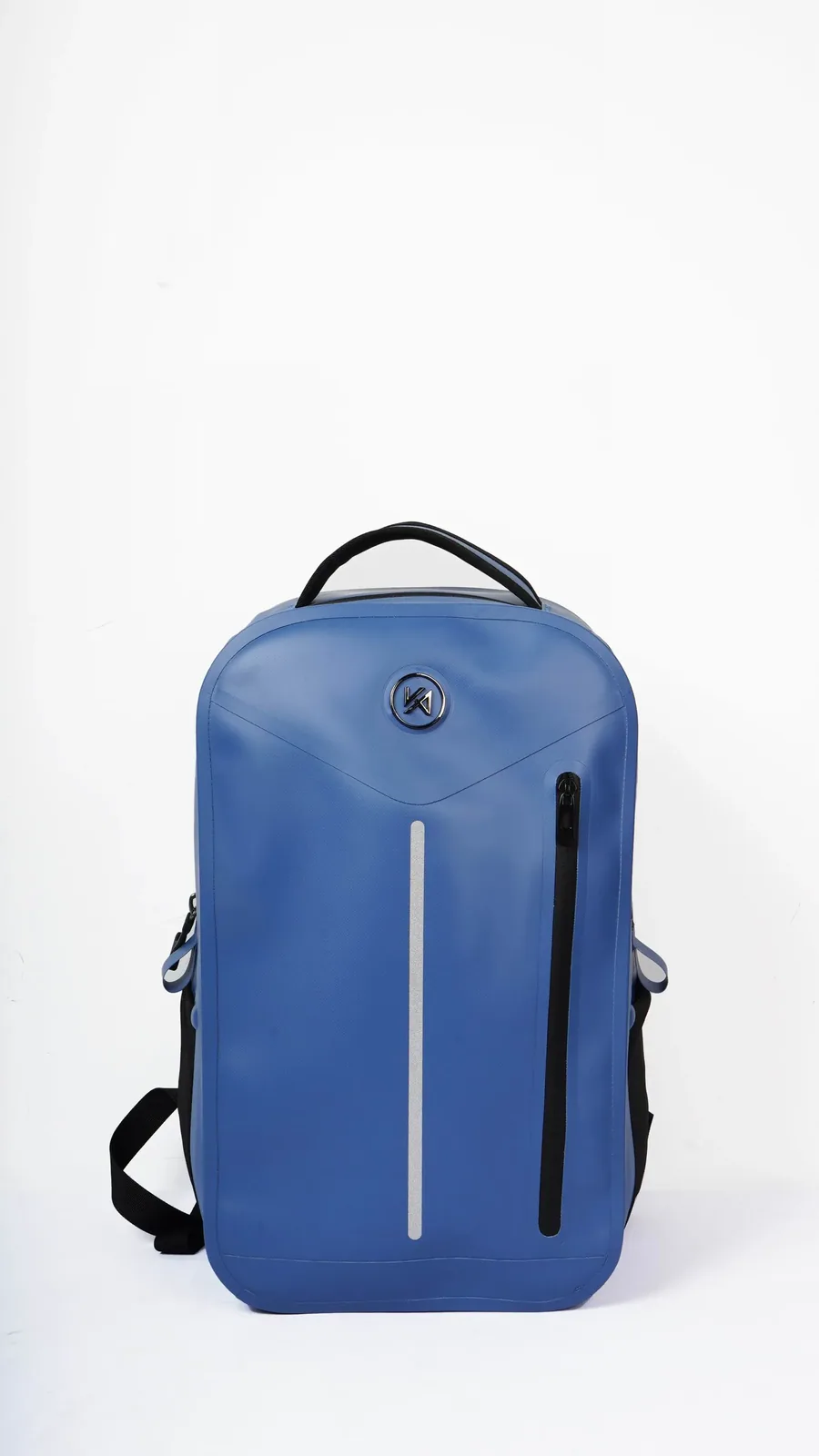
Six methods carry a logo on a camera bag: embroidery, a woven label, a silicone or rubber patch, heat transfer, screen print and a metal or leather plate. Each has a setup cost, a per-unit cost, a minimum quantity of its own and a durability profile, and the choice is driven by the shell fabric and by where the mark sits. A logo specified without a method, a size and a position is not a specification.
Branding is the part of a camera bag specification most often left to the end and the part most often wrong on the first delivery. The reason is that a logo is not a single decision: it is a method, a position, a size, a colour, a durability requirement and a compliance requirement, and each of those has a cost and a lead time of its own. A buyer who sends a vector file and a target price has made one of six decisions.
The commercial consequence is larger than it looks. A logo method chosen late can add a tooling step that sits in front of the sampling clock, and a logo applied to a fabric that will not take it produces a first sample that cannot be approved. Decide the method at the same time as the shell fabric, because the two constrain each other.
Which Logo Methods Are Available on a Camera Bag?
Six are in general use. Embroidery stitches the mark directly into the shell or into an applied patch. A woven label is a narrow fabric label sewn on, usually at an edge or a seam. A silicone or rubber patch is a moulded badge bonded or sewn on. Heat transfer applies a printed film under heat and pressure. Screen print puts ink directly on the fabric. A metal or leather plate is a rigid badge fixed with rivets or stitching.
Each has a territory set by three things: the fabric it can be applied to, the durability it delivers, and its cost structure. Embroidery needs a fabric that takes a needle without puckering and a coating that does not crack at the stitch holes. Heat transfer needs a flat, coated face and a fabric that tolerates the press temperature. A moulded patch works on almost anything but needs a mould.
| Method | Setup cost | Per-unit cost | Durability | Best position |
|---|---|---|---|---|
| Embroidery | A digitising charge, low | Medium, scales with stitch count | High; thread can abrade | Front panel, lid, strap pad |
| Woven label | A loom setup, low | Lowest of the six | High; edges can fray | Seam, edge, webbing loop |
| Silicone or rubber patch | A mould, the highest of the six | Medium | Very high | Front panel, base corner |
| Heat transfer | A film and a screen, low | Low | Moderate; can peel | Flat panels only |
| Screen print | A screen per colour, low | Low | Moderate; can crack | Flat panels and linings |
| Metal or leather plate | A die and a plate, medium | Highest of the six | Very high | Front panel, premium ranges |
What Does Embroidery Cost and Where Does It Fail?
Embroidery carries a digitising charge and then a per-unit cost that scales with stitch count, so a large mark costs materially more than a small one and a mark with fine detail costs more than a bold one. It is the most flexible of the six on position, because it can go on a curved panel, on a strap pad or on a lid without a flat face, and it is the usual answer for a camera bag.
It fails in two ways. The first is puckering: a coated or a tightly woven shell does not absorb the stitch tension and the panel distorts around the mark, which on a structured bag is visible from across a room. The second is thread abrasion, where the stitch sits on a high-wear face and the thread breaks before the fabric does. Both are avoided by a stitch count limit, a backing, and a position away from the base and the strap contact.
When Is a Woven Label the Better Answer?
A woven label is the lowest-cost method and the most durable per unit of cost, and it is the right answer wherever the mark can sit at an edge or a seam rather than in the middle of a panel. It is also the only method that carries a care or a compliance text legibly at a small size, which is why it appears on almost every bag even when the brand mark is embroidered or moulded.
The limitation is position and presence. A woven label at a seam is discreet, which is either the point or the problem, and a label sewn onto the middle of a panel reads as a label rather than as a brand. The usual structure is a woven label at a side seam for the compliance text and an embroidered or moulded mark on the front panel for the brand, which is two methods and two line items.
What Does a Silicone or Rubber Patch Buy You?
A moulded patch buys three things: a raised three-dimensional mark, a durability that outlasts the shell, and a consistent colour that does not depend on a dye lot. It is the usual answer at the upper end of a range and on bags sold into a market where the mark is the reason for the purchase. The cost is a mould, which is the largest setup of the six and the one that sits in front of the sampling clock.
Two cautions. The patch has to be attached by more than adhesive, because a bonded patch on a flexible panel lifts at the edges after a season; sewing it, or bonding it and then stitching the border, is the durable answer. And the material has to be specified for compliance: a soft PVC patch carries plasticiser questions and a silicone patch does not, which is why most programmes have moved to silicone.
Where Does Heat Transfer Work and Where Does It Peel?
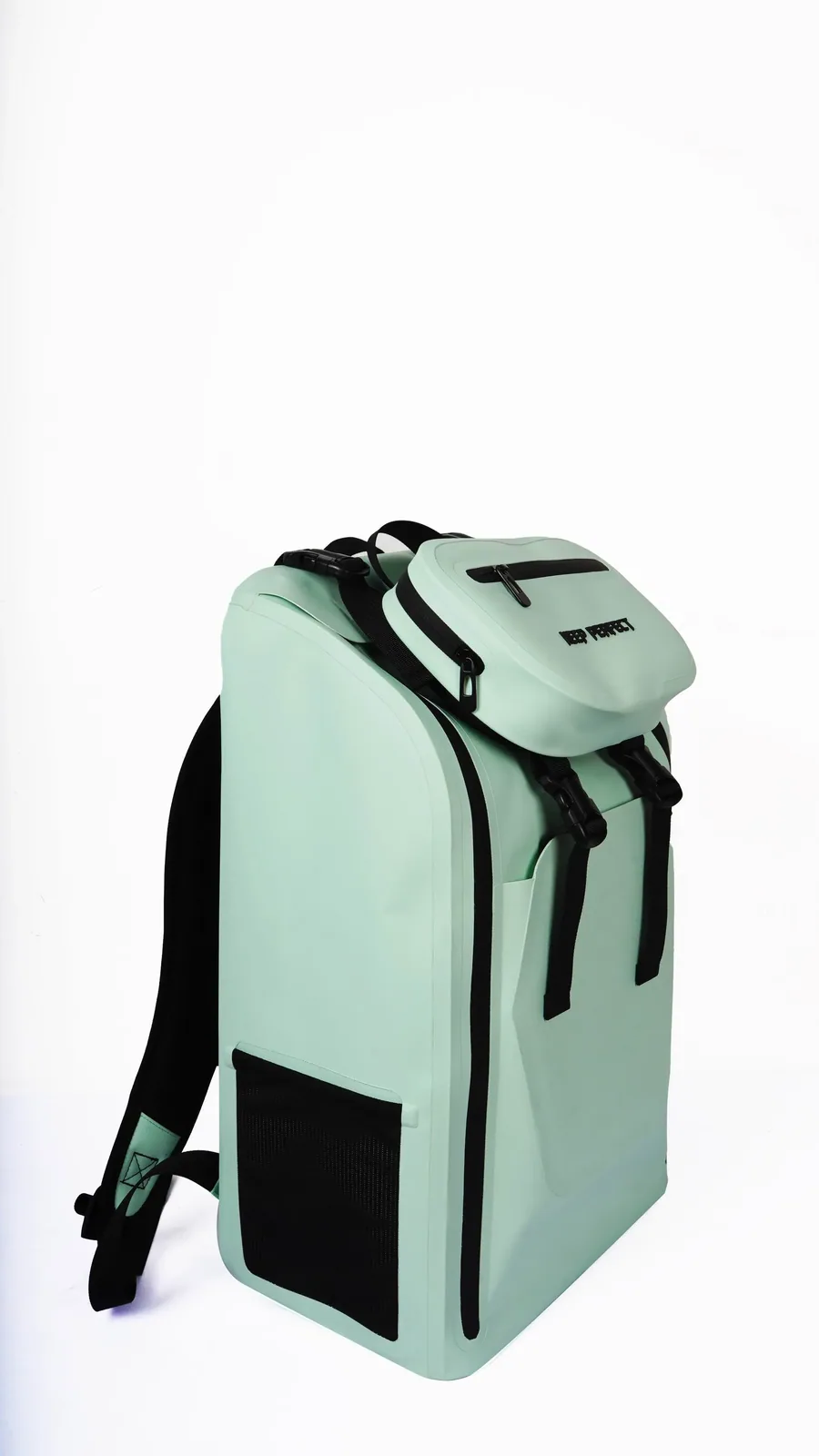
Heat transfer applies a printed film to a coated face under heat and pressure, and it works well on a flat, stable panel with a compatible coating. It gives photographic detail and a full-colour mark that embroidery cannot, and it has a low setup cost, which is why it dominates short runs and multi-colour artwork. It is the method to choose when the mark is complex rather than simple.
It peels for two reasons. The first is a coating that does not bond with the film adhesive, which is a matching problem between the fabric finish and the film and is worth a trial before the run. The second is flexing: a film on a panel that folds or that sits against the body will crack along the fold. Specify a flat position, run a wash and an abrasion trial, and require a stated number of cycles without lifting.
How Is a Logo Applied to Hardware?
Two ways, and both are worth doing because a mark on a slider or a puller is seen every time the bag is opened. The first is a moulded or laser-etched mark on the puller, which is a tooling item on the hardware rather than on the bag and is usually a small charge on a large zipper order. The second is a marked webbing or a marked binding, which is a weave item and carries a loom minimum.
Hardware branding carries a compliance obligation that fabric branding does not. A metal puller or plate in contact with skin sits in the scope of nickel release restrictions under REACH, and a painted or plated part carries the same question about its coating. Ask for the compliance declaration on the hardware separately from the one on the fabric, because they are different documents from different suppliers.
Does the Shell Fabric Limit the Method?
It does, and this is why the two decisions belong together. A heavy ballistic nylon will take embroidery but has a surface too coarse for fine heat transfer detail. A tightly coated polyester takes a heat transfer well but puckers under dense embroidery. A canvas takes a print and an embroidery but has a nap that makes fine detail disappear. A silicone patch works on all three and is the fallback when the fabric rules the other methods out.
The practical sequence is to choose the fabric first, then ask which methods it will take, then choose the method, then set the position. Buyers who choose the method first and the fabric second discover at sampling that the mark they approved cannot be applied to the shell they chose, and the choice at that point is between changing the fabric and changing the mark.
How Is Logo Durability Tested?
Three tests cover the mark. Abrasion is the Martindale method under ISO 12947, run on the marked panel and reported in cycles to a stated change in the mark. Colour fastness to rubbing is in the ISO 105 series and at AATCC, reported as a grey scale rating, and it is the test that catches a mark that transfers onto a garment. Adhesion of a film or a patch is a peel or a wash test with a stated number of cycles and a stated acceptance limit.
There is no published limit for a logo, so the programme sets its own and writes it into the specification. A reasonable floor for a camera bag is no visible change to the mark after a stated number of Martindale cycles, and no more than a stated grey scale rating loss on rubbing. Those two numbers are what make a faded-logo complaint either in or out of specification.
- Method
- Embroidery, woven label, silicone patch, heat transfer, print or plate
- Artwork
- Vector file, plus a raster proof at the production size
- Size
- Millimetres, width and height, at the production position
- Position
- A coordinate on the panel drawing, not a description
- Colours
- Thread or ink references, and a tolerance on the shade
- Fabric interaction
- Backing, stitch count limit, or press temperature and dwell
- Durability
- Martindale cycles to a stated change, ISO 12947
- Colour fastness
- Grey scale rating for rubbing, ISO 105
- Compliance
- Declaration for the ink or the film, and for any metal part
- Reference
- A signed-off marked panel retained with the lot record
What Does Branding Cost in Setup and Per Unit?
The two costs move in opposite directions and the crossover depends on volume. Embroidery and heat transfer have low setup and a medium per-unit cost, so they are the answer at lower volumes and for artwork that changes. A silicone patch and a metal plate have a high setup and a low per-unit cost, so they are the answer at higher volumes and for artwork that will not change. A woven label is low on both.
For a camera bag programme at 500 pcs per style and colourway, the usual outcome is that a moulded patch is harder to justify and an embroidery or a heat transfer is the right answer. At a repeat, where the artwork is fixed and the volume accumulates, the mould becomes easier to justify and the per-unit saving starts to repay it. That is the arithmetic to do before choosing the method.
| Order shape | Best method | Why | Note |
|---|---|---|---|
| First order at 500 pcs, artwork may change | Embroidery or heat transfer | Low setup, flexible artwork | The artwork can be revised without a mould |
| First order at 500 pcs, fabric is coated | Heat transfer or a silicone patch | Embroidery puckers a coated shell | Run an adhesion trial before the run |
| Repeat, artwork fixed, volume accumulating | Silicone patch | The mould repays itself over orders | Specify the attachment method, not only the badge |
| Compliance text and a small mark | Woven label | Legible at a small size, lowest cost | Usually at a side seam |
| Premium range | Metal or leather plate | The highest presence | Needs a compliance declaration for any metal |
How Does Branding Affect MOQ and Lead Time?
Each method carries its own minimum and its own lead time, and they do not all match the bag minimum. A woven label has a loom minimum that is usually well below 500 pieces and rarely a problem. A moulded patch has a mould rather than a minimum, and the mould has a lead time that sits in front of the sampling clock. A marked zipper puller has a hardware minimum that can be several thousand pieces.
The practical rule is to ask for the minimum and the lead time of each branding component separately, at the same time as the bag quotation, because two of the three do not match the order quantity. A marked puller is the usual surprise: the hardware minimum is larger than the order, and the choice is between paying for the minimum or taking a plain puller with a marked webbing loop instead.
What decides a camera bag logo method
- A logo is six decisions: method, position, size, colour, durability and compliance.
- Choose the shell fabric first, because it rules some methods out entirely.
- Setup cost and per-unit cost pull in opposite directions; volume decides the crossover.
- A bonded patch lifts at the edges; bond it and stitch the border, or sew it outright.
- Hardware branding carries a nickel and coating compliance question that fabric does not.
- Ask for the minimum and the lead time of each branding component separately.
How Do You Write the Branding Specification?
The branding line on a tech pack carries the method, the artwork reference, the size in millimetres, the position as a coordinate on the panel drawing, the colour references with a tolerance, and the two durability requirements. A line that carries the method and the artwork alone leaves the position, the size and the durability to the pattern room, and those three are where the disagreements happen.
It also carries the approval route. A marked panel from the first sample should be signed off and retained, because a logo is a colour and a position and both drift. A retained marked panel settles the argument at inspection in a way that a vector file cannot, and it is the same discipline as the retained fabric swatch and the retained golden sample.
Programme arithmetic: MOQ 500 pcs per style and colourway, sampling 6-10 working days from a signed-off tech pack, bulk production 35-50 days from written sample approval, inspection at AQL 2.5 under ISO 2859-1 General Inspection Level II, payment T/T 30/70, quoted FOB Xiamen. A moulded badge adds its tooling lead time in front of the sampling window, and that is the schedule item to watch.
Send the artwork and the method target
Send the artwork, where the mark has to sit and the target quantity. You get a method recommendation, indicative pricing and a sampling window within one business day.
Frequently Asked Questions
What is the best way to put a logo on a camera bag?
Embroidery for flexibility of position and low setup, a woven label for the lowest cost, and a silicone patch for durability at volume. The shell fabric rules some methods out.
How much does a logo add to a camera bag?
It depends on the method. Embroidery and heat transfer have low setup and a medium per-unit cost; a silicone patch has a mould and a low per-unit cost, so volume decides which is lower overall.
Can any logo go on any fabric?
No. A heavy ballistic weave takes embroidery but not fine heat transfer detail; a tightly coated polyester takes a transfer but puckers under dense embroidery. Choose the fabric first.
Why does a heat transfer logo peel?
Either the coating does not bond with the film adhesive, or the panel flexes and the film cracks along the fold. Specify a flat position and run an adhesion trial before the run.
How is logo durability tested?
Abrasion by the Martindale method under ISO 12947 to a stated change in the mark, and colour fastness to rubbing in the ISO 105 series as a grey scale rating. The programme sets its own limits.
Does a logo need a compliance declaration?
The ink or film does, and any metal part does separately. A metal puller or plate in skin contact sits in the scope of nickel release restrictions under REACH.
What is the minimum for a branded zipper puller?
Usually larger than the bag order, because it is a hardware minimum rather than a bag minimum. Ask for it separately at quotation time.
Where should a logo go on a camera bag?
On the front panel for the brand, at a side seam for a woven compliance label, and on the puller for a mark seen every time the bag is opened.
Does branding change the MOQ?
The bag MOQ stays at 500 pcs per style and colourway. Each branding component carries its own minimum, and a marked puller is the one that usually exceeds the order.
Why does embroidery pucker a camera bag panel?
A coated or tightly woven shell does not absorb the stitch tension, so the panel distorts around the mark. The fix is a stitch count limit and a backing.
Should a silicone patch be bonded or sewn?
Both. A bonded patch on a flexible panel lifts at the edges after a season; bonding and then stitching the border is the durable answer.
Can the artwork be changed after sampling?
With embroidery or heat transfer, yes, at the cost of a revision. With a moulded patch, no, because the mark is in the tool.
People Also Ask
What are the options for branding a camera bag?
Embroidery, a woven label, a silicone or rubber patch, heat transfer, screen print and a metal or leather plate.
Which logo method lasts longest on a bag?
A silicone patch or a metal plate, followed by embroidery. Heat transfer and print are the shortest lived and depend on the position not flexing.
How much does a custom logo cost on a bag order?
Setup and per-unit cost move in opposite directions: embroidery is low setup and medium per unit, a moulded patch is high setup and low per unit, so volume decides.
Can I put a logo on the zipper puller?
Yes, moulded or laser-etched, but the hardware minimum is usually larger than the bag order, so ask for it separately.
Why does my bag logo fade or peel?
Usually abrasion on a high-wear position, or a film on a panel that flexes, or an adhesive that does not match the fabric coating.
Sources and further reading
Every figure on this page is either our own programme data or attributed below. Open the originals before you write them into a specification.
- ISO 12947 — abrasion resistance of fabrics by the Martindale methodInternational Organization for Standardization
- ISO 105 series — colour fastness of textilesInternational Organization for Standardization
- REACH — Regulation (EC) No 1907/2006 on chemicals and their safe useEuropean Chemicals Agency