Cold Chain Bag Regulations: FDA, EU 1935/2004 and Food Contact Rules
Compliance on an insulated bag is a file, not a certificate: a declaration per layer, a migration test where the layer is plastic, and a restricted-substance screen across the bill of materials, with the test conditions stated alongside every result.
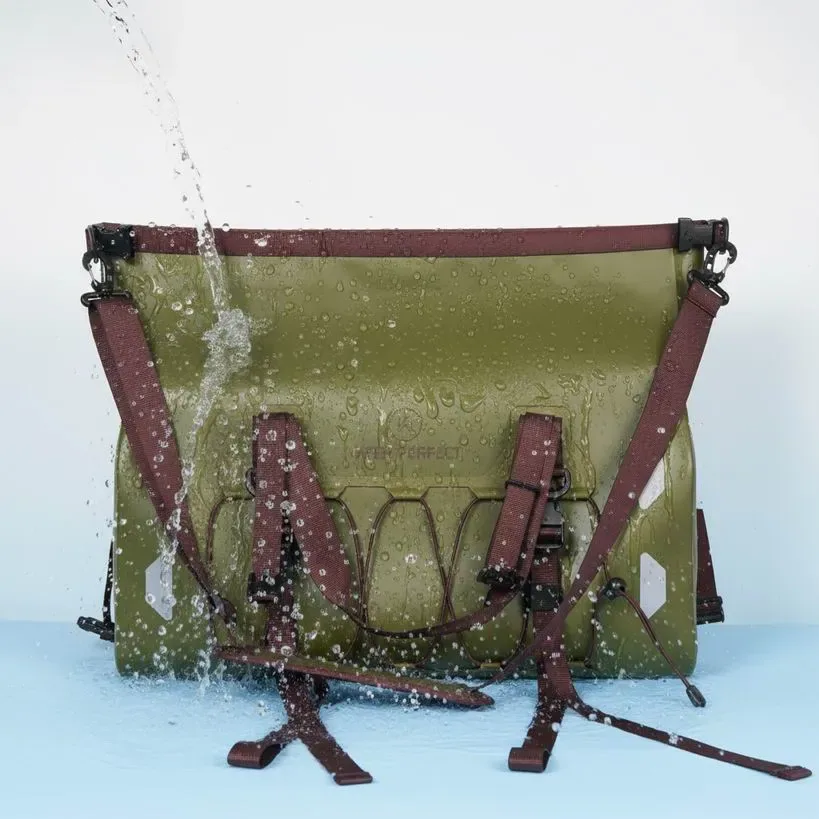
A cold chain bag is not approved by a regulator; it is evidenced by a file. In the European Union the framework is Regulation 1935/2004, with Regulation (EU) 10/2011 covering the plastic layers and REACH covering substances of very high concern. In the United States the FDA position turns on the polymer and the intended use. What a buyer needs is a declaration per layer, a migration test where the layer is plastic, and a restricted-substance file.
Compliance questions on insulated bags usually arrive late, in the week before a launch, and they are usually asked as though there were a certificate that settles them. There is not. There is a framework regulation, a set of material-specific measures under it, and a body of evidence that has to be assembled per layer of the bag. This piece sets out what applies on both sides of the Atlantic, which tests actually prove a position, and what should be in a file before a cold chain programme ships.
What Does Food Contact Actually Mean for a Bag?
It means the surface that food, or a food package, touches. On an insulated bag that is usually the liner film, and it matters even where the load is sealed, because a sealed drink can or a vacuum-packed tray still contacts the surface and because condensation inside the bag carries whatever the film gives up onto the outside of the pack. Anything that can transfer to food in a measurable quantity is in scope; the shell fabric, the foam and the hardware generally are not, unless they can reach the food-contact surface.
The practical consequence is that the compliance file is per layer, not per bag. A PEVA liner has one position, a TPU liner another, a printed mark inside the food-contact zone a third, and the adhesive in a seam a fourth. A supplier that can name the material in each of those positions and produce a declaration for each is most of the way to an answer; a supplier that offers one certificate for the whole bag has not understood the question.
What Does EU Regulation 1935/2004 Require?
It is the framework regulation for all food contact materials in the European Union, and its central requirement is short: materials and articles must not transfer constituents to food in quantities that could endanger human health or bring about an unacceptable change in the composition of the food. It applies to every layer and every stage, it requires that materials be traceable through the supply chain, and it requires a written declaration of compliance for materials that are not yet in contact with food at the point of sale.
Two parts of that are easy to miss. Traceability runs through the whole chain, so the film converter, the laminator and the bag maker each hold a piece, and a gap in the middle is a gap in the file. And the declaration has to be specific: it names the material, the intended use, the conditions of contact — temperature and duration — and the substances with a restriction that apply to it. A generic statement that a film is food safe, without those fields, does not meet the requirement.
What Does Regulation (EU) 10/2011 Add for Plastic Layers?
Where a layer is plastic — PEVA, TPU, PP, PE — the framework regulation is supplemented by Regulation (EU) 10/2011, which sets an overall migration limit and specific migration limits for listed substances, and which specifies the simulants and the test conditions. Overall migration is 10 mg per square decimetre, or 60 mg per kilogram of food simulant. The test conditions are set by contact time and temperature, which for a cold chain bag are usually short and cold, and that is worth stating, because it is the single biggest determinant of whether a film passes.
The declaration has to record the conditions the test was run under: simulant, temperature, duration and the surface-to-volume ratio used. Where a bag is intended for a chilled load held for four hours, a test run at 40 °C for ten days is a stricter condition than the duty needs and may fail a film that is perfectly adequate in service. Ask for the conditions with the result — a pass without its conditions tells you very little.
What Is the FDA Position on a Bag Liner?
In the United States the position is substance-based rather than article-based: the polymers used in food contact are regulated through the food additive regulations, and a material is compliant where each substance in it is either listed for the intended conditions of use, covered by a prior sanction or a food contact notification, or generally recognised as safe. There is no approval of the finished bag, and there is no certificate that a regulator issues for one.
What a buyer can ask for is a food contact statement from the material supplier naming the regulation each substance relies on, plus the conditions of use — temperature, food type and contact duration — that the statement covers. Where the bag is used cold and short, the conditions are the easy end of the range, and most common liner films sit inside them. Where a bag is used hot, or for a fatty food held for hours, the conditions move and the statement has to be read rather than filed.
Does REACH Apply, and Where Does It Fit?
REACH, Regulation (EC) 1907/2006, applies to articles placed on the European Union market, and it bites on an insulated bag in two places: substances of very high concern on the candidate list, where an article containing more than 0.1% by weight has to be declared, and the restricted substances in Annex XVII, which cover specific uses of things like certain phthalates, azo dyes and nickel release. Neither is a food contact rule; both apply to the article as a whole.
What that means in practice is a restricted-substance declaration covering the whole bill of materials — film, foam, fabric, coating, ink, adhesive and hardware — rather than a food contact declaration covering the liner. The two files are different and both are needed. A supplier that conflates them is telling you that neither has been assembled properly, which is worth knowing before the order rather than after the shipment.
What About California Proposition 65?
Proposition 65 is a warning requirement rather than a substance ban: where a listed substance is present above a safe-harbour level and exposure is foreseeable, a warning is required unless the business can show the exposure is below the level. For an insulated bag the substances that come up are usually plasticisers in a PVC film, lead in a coating or a print, and, less often, formaldehyde in a textile or in a foam. The exposure question is what makes it arguable, and the test data is what makes it defensible.
The position to take is boring and effective: ask for a Proposition 65 statement for the finished article, ask which substances were tested and to which limits, and require written notice before any material substitution. Where a brand sells into California, the decision is usually to test rather than to warn, because a warning on a food-related product reads as a defect to the customer even where the law is satisfied.
Which Tests Actually Prove the Position?
Four, and each returns something different. Overall migration measures how much a material gives up in total, under a stated simulant, temperature and time. Specific migration measures a named substance — a plasticiser, a metal, an amine — against its limit. A restricted-substance screen covers REACH Annex XVII and the Proposition 65 list by substance. And a sensory test, sometimes called odour or taint, catches the failure that passes every chemical limit and still makes the food taste of the bag.
| Test | Standard or basis | What it returns | When it is needed |
|---|---|---|---|
| Overall migration | Regulation (EU) 10/2011 | mg per dm2 or mg per kg, against a limit of 10 or 60 | Any plastic layer in the food-contact zone |
| Specific migration | Regulation (EU) 10/2011 | A value per named substance | Where the substance has a specific limit |
| Restricted-substance screen | REACH Annex XVII, Proposition 65 | Pass or fail per substance | The whole article, every layer and trim |
| Sensory or taint | Odour and taint assessment | A panel verdict | Where the load is unpackaged or strongly absorbent |
| Overall migration under the duty | The same, at the service temperature | A value under the real condition | Where the framework test condition is far from the duty |
Where the load is unpackaged — a bakery item, a prepared salad, a cut fruit — sensory testing stops being optional. A film can sit inside every migration limit and still carry a residual odour from extrusion, lamination or printing, and cold, fatty or absorbent foods pick it up. A panel assessment against an untreated control takes a day and it is a low-cost defence against the complaint that no chemical result will explain.
What Should the Compliance File Contain?
A file per layer, a declaration per material, and a test report per claim, tied together by the bill of materials. That is the structure a retailer or a marketplace will want to see, and it is the structure that survives a substitution, because each piece can be replaced without rebuilding the whole thing. The file is not large — a dozen documents at most — and it is much easier to assemble before the first shipment than after a request.
| Document | Who issues it | What it covers |
|---|---|---|
| Declaration of compliance, liner | The film producer or converter | The polymer, the use conditions, the restricted substances |
| Migration test report | A testing laboratory | Overall and specific migration, with the test conditions |
| Restricted-substance declaration | The bag maker, from the supply chain | REACH Annex XVII and the Proposition 65 list |
| Bill of materials | The bag maker | Every layer, coating, ink, adhesive and trim, with its supplier |
| Declaration for the print or label | The ink or label supplier | Where the mark sits inside the food-contact zone |
| Children product evidence, where relevant | A testing laboratory | CPSIA or EN 71-3 where the bag is a children product |
Where Do Temperature Rules Meet the Bag?
Cold chain temperature requirements — chilled foods held at or below 5 °C in the European Union, and the equivalent food-code position in the United States — apply to the food and to the process, not to the bag. No regulator certifies an insulated bag to a temperature. What the rules do is set the performance target that the bag has to support: a defined load, at a defined starting temperature, held below a defined limit for a defined number of hours in a defined ambient.
That target is a test protocol rather than a certificate, and it is the bridge between the compliance file and the thermal file. State the load, the starting temperature, the ambient, the duration and the endpoint — ice still present, or 50% of the ice mass remaining, or the load core below 5 °C — and the whole question becomes measurable. A bag that meets its protocol can be defended; a bag described as keeping food cold cannot.
What About Children Products and CPSIA?
Where an insulated bag is designed or marketed for children — a lunch bag with a character print, a small format with a cord or a magnet — it becomes a children product in the United States under CPSIA, with limits on lead and phthalates in accessible components and a tracking label requirement. In the European Union the equivalent is EN 71, and EN 71-3 migration covers accessible components as well as the fabric.
The scope question is decided by marketing as much as by design, and it catches programmes by surprise. A small cooler bag sold in the children aisle, or with a print that appeals to children, is usually in scope even where an adult could use it. Ask which components were tested — film, coating, print, hardware, cord — rather than assuming the fabric declaration covers the assembly, because it does not.
How Does Compliance Evidence Travel With a Reorder?
It travels only if it is re-issued. A declaration is issued against a material lot and a production period, and a test report is valid for the material that was tested. Where the film comes from a different lot or a different converter on the repeat, the file has to be rebuilt for that layer, and the honest answer from a supplier is a new declaration rather than a copy of the old one.
This is the argument for writing compliance into the change-control clause: written notice before any material substitution, with the revised declaration attached. It costs nothing on the first order and it is the difference between a reorder that ships and a reorder that sits at a port because the file no longer matches the goods. Where a programme runs for years, the file is part of the product.
The compliance file, in six lines
- A declaration of compliance for the liner, naming the polymer, the use conditions and the restrictions.
- A migration test report under Regulation (EU) 10/2011, with the simulant, temperature and duration stated.
- A restricted-substance declaration covering REACH Annex XVII and the Proposition 65 list.
- A bill of materials naming every layer, coating, ink, adhesive and trim with its supplier.
- A thermal protocol with the load, the start temperature, the ambient, the duration and the endpoint.
- A change-control clause requiring written notice and a revised declaration before any substitution.
None of that is difficult and all of it costs little next to the cost of discovering it late. The two questions that separate a supplier who has done this from one who has not are simple: which layer is the food-contact surface, and can I see the declaration for it. A supplier who answers both in a day has a file; a supplier who answers neither has a folder of certificates.
Assemble the file before the shipment, not after the request
Send the market, the load and the liner material. You get the compliance checklist and the declarations that apply to your build within one business day.

Frequently Asked Questions
Do cold chain bags need FDA approval?
No regulator approves the finished bag. In the United States the position is substance-based: each substance in the food-contact layer has to be listed, notified or otherwise covered for the intended conditions.
What does EU Regulation 1935/2004 require?
That no constituent transfers to food in a quantity that endangers health or changes the food unacceptably, that materials are traceable, and that a declaration of compliance accompanies the material.
What is the overall migration limit?
Regulation (EU) 10/2011 sets 10 mg per square decimetre, or 60 mg per kilogram of food simulant, measured under stated conditions.
Does REACH apply to an insulated bag?
Yes, as an article: substances of very high concern above 0.1% by weight must be declared, and Annex XVII restrictions apply across the bill of materials.
What is California Proposition 65?
A warning requirement rather than a ban: where a listed substance is present above a safe-harbour level, a warning is due unless exposure is shown to be below it.
Which layer of the bag is the food-contact surface?
Usually the liner film. The shell, the foam and the hardware are outside the food-contact zone unless they can reach it.
Does a printed mark inside the bag need compliance evidence?
Yes. Where the mark sits in the food-contact zone it needs a low-migration ink system and a position in the file; silence is read as inside.
Is a sensory or taint test necessary?
Where the load is unpackaged, fatty or absorbent, yes: a film can pass every migration limit and still carry an odour the food picks up.
Do cold chain temperature rules certify the bag?
No. The rules apply to the food and the process. The bag supports a protocol: a load, a start temperature, an ambient, a duration and an endpoint.
What is CPSIA and when does it apply?
The United States children product rule: lead and phthalate limits, a tracking label, and testing of accessible components. It applies where the bag is designed or marketed for children.
How does compliance evidence travel with a reorder?
It has to be re-issued. A declaration is issued against a material lot and period, so a new lot or converter means a new declaration for that layer.
What should be in the bill of materials?
Every layer, coating, ink, adhesive and trim, with its supplier. It is the document that makes the declarations checkable.
What are the programme terms?
MOQ 500 pcs per style and colourway, sampling 6-10 working days, bulk 35-50 days from written approval, AQL 2.5, T/T 30/70, FOB Xiamen.
Can one certificate cover the whole bag?
No. The file is per layer: liner, coating, print, adhesive and trim each carry their own position.
People Also Ask
Do insulated bags need food contact certification?
There is no certificate for the bag. There is a declaration per layer, a migration test for plastic layers and a restricted-substance file.
What is EU 1935/2004?
The European Union framework regulation for all food contact materials: no harmful transfer, traceability, and a written declaration.
What is the migration limit for plastic food contact?
Overall migration of 10 mg per square decimetre, or 60 mg per kilogram of simulant, under Regulation (EU) 10/2011.
Does FDA approve cooler bag liners?
No. Compliance is substance-based: each substance in the layer must be listed or otherwise covered for the intended conditions of use.
What documents should a cold chain bag supplier provide?
A liner declaration, a migration test report with conditions, a restricted-substance declaration, a bill of materials and a thermal protocol.
Sources and further reading
Every figure on this page is either our own programme data or attributed below. Open the originals before you write them into a specification.
- Food contact substancesUS Food and Drug Administration
- Regulation (EC) No 1935/2004 on food contact materialsEuropean Union
- REACH — Registration, Evaluation, Authorisation and Restriction of ChemicalsEuropean Chemicals Agency