Which Weather-Sealed Zipper Size Does a Camera Bag Need?
A main opening takes a #8 coated reverse coil under a storm flap with a garage at the top end. The size sets the strength and the flap width, and the tape coating and the flap do the weather work. Neither replaces the other.
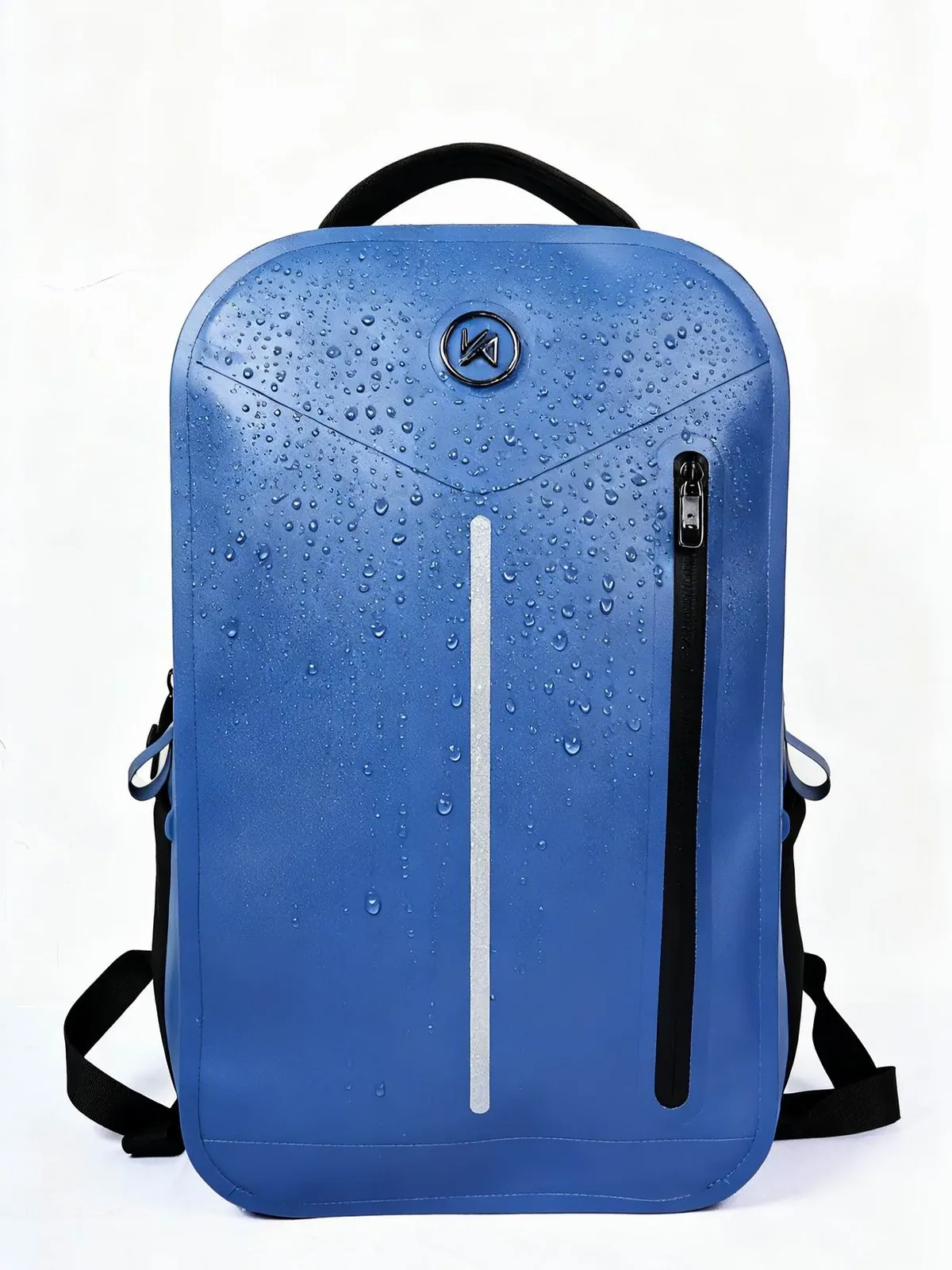
A camera bag main opening takes a #8 coated reverse coil zipper under a storm flap of at least 25 mm with a garage at the top end. Accessory pockets take a #5, and a long or heavily loaded opening takes a #10. The size sets the strength and how well a flap sits over the line; the tape coating and the flap do the weather work, and neither is a substitute for the other.
The zipper is the most specified component on a camera bag and the least understood. Buyers name a brand and a size and assume the rest follows, and the rest does not follow: the tape, the coil orientation, the flap, the garage and the puller each make a difference and each is a separate line on a bill of materials. A bag with a good zipper and no flap leaks; a bag with a flap and an uncoated tape wets through along the tape.
This guide sets out what the size numbers mean, which type belongs on which opening, what actually keeps water out, and how to specify the whole assembly so that the fifth order opens the same way the first did. It is written for a buyer choosing trim rather than for a designer choosing a look.
What Are the Parts of a Zipper and Which Ones Leak?
Six parts, and three of them leak. The tape is the woven strip on each side, and an uncoated tape wicks water along its length into the bag. The coil or the teeth are the closing elements, and a coil facing outwards holds water in its turns. The slider and the puller do the work and contribute almost nothing to weather behaviour. The top and bottom stops end the line. The garage, if there is one, covers the top stop.
The leak paths in order of frequency are the tape, then the coil, then the top stop where the slider parks. A coated tape and a reverse coil remove the first two; a garage removes the third. That leaves the seam where the tape is sewn into the panel, which is a sewing decision rather than a zipper decision and is why a taped or a covered seam behind the tape belongs in the specification.
| Part | What it does | Weather role | What goes wrong |
|---|---|---|---|
| Tape | Carries the elements and is sewn into the panel | An uncoated tape wicks water along its length | Water enters at the seam behind the tape |
| Coil or teeth | Close the line | A coil facing outwards holds water in its turns | Water sits in the coil and runs along the line |
| Slider | Opens and closes | None | Wears, and a worn slider splits the line |
| Puller | Gives the finger something to hold | None | Too small to find by feel; a metal puller corrodes |
| Top and bottom stop | End the line | The top stop is where the slider parks and leaks | Water enters at the parked slider |
| Garage | Covers the parked slider | Removes the top-stop leak path | Omitted to save a component |
What Does Zipper Size Mean and Which Size for Which Opening?
The number is the approximate width of the closed elements in millimetres, so a #5 has elements about 5 mm across and a #10 about 10 mm. It sets three things: the strength of the line, the width of tape that has to be sewn in, and how much cover a flap needs. A bigger number is stronger and needs a wider flap, and it is heavier and stiffer.
For a camera bag the working map is a #5 for accessory pockets and small pouches, a #8 for the main opening on a shoulder bag and for a lid, and a #10 for a long main opening, an opening under load from the contents, or a rear panel opening on a hybrid pack. A #3 is a lining and pocket zipper and nothing more, and using one on an external pocket is the most common specification error in this category.
Coil, Reverse Coil, Moulded Tooth or Metal?
Four types. A standard coil has the coil on the outside of the tape and is the volume answer for linings and internal pockets. A reverse coil has the coil on the inside, so the outside face is smooth and sheds water, and it is the weather answer. A moulded tooth zipper has discrete plastic teeth, runs well through a curve and is strong, but holds water in the teeth. A metal zipper is strong and is chosen for appearance.
For a camera bag the default is a reverse coil with a coated tape on every external opening, a standard coil inside, a moulded tooth where the line has to run through a curve, and metal only where the appearance is the point. Where a separating zipper is needed, so a lid comes off completely, the bottom stop is the weak point and it needs a covered box.
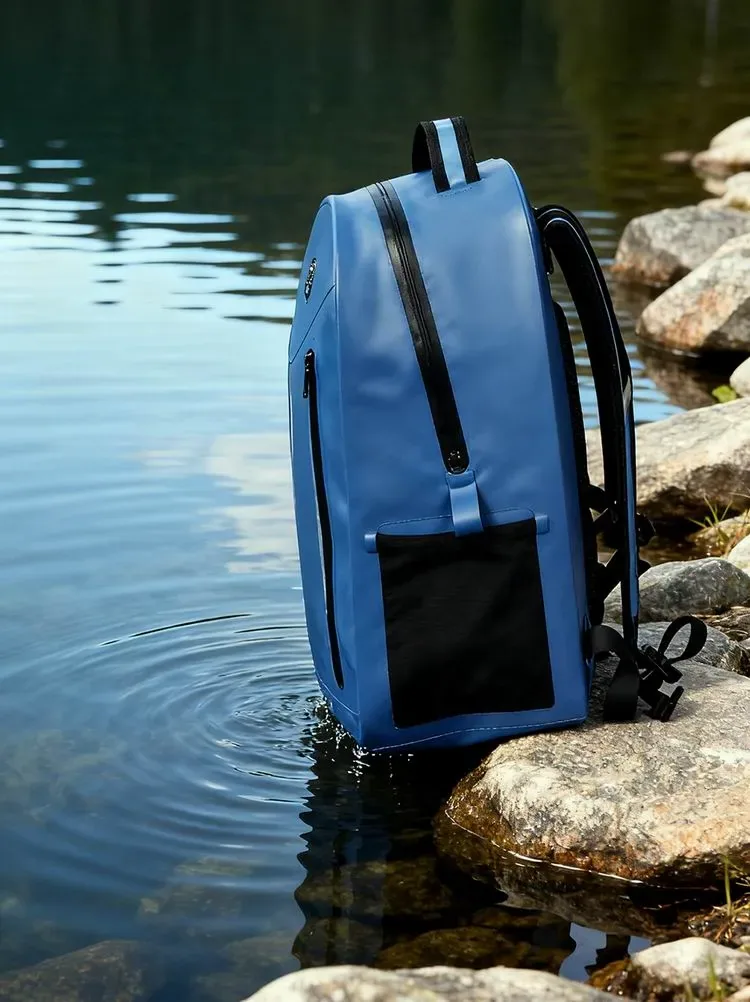
What Makes a Zipper Tape Resist Water?
A coating or a laminate on the tape. A polyurethane-coated tape does not wet out and it is the usual answer; a laminated film tape goes further and is used where the line is exposed to driving rain. Both add cost and both add stiffness, and a stiff tape is harder to sew into a curved panel without puckering, which is why a coated tape needs a flatter run than an uncoated one.
The coating has a life and it should be specified with one. A polyurethane coating on a tape hydrolyses in heat and humidity in the same way a coating on a fabric does, and a tape whose coating has gone tacky will pick up dirt and jam. Where a bag is sold into a humid market, ask for the accelerated ageing result on the zipper tape as well as on the shell.
Does the Zipper Need a Flap to Work?
Yes, in practice. A coated reverse coil on its own sheds water and reduces what reaches the line, but it is not a seal, and the seam behind the tape and the parked slider are still open. A storm flap over the line is what turns a water-resistant zipper into a weather-resistant closure, and it is the lowest-cost single component in the assembly.
The flap has to be wide enough and it has to be held down. Twenty-five millimetres of cover is the working minimum, more on a long vertical run, and the ends need either hook-and-loop or a magnetic closure or the flap lifts in wind and water runs down behind it. A flap that is sewn flat at both ends and nowhere in between is the common defect.
| Opening | Zipper | Flap | Garage | Note |
|---|---|---|---|---|
| Main opening, shoulder bag | #8 coated reverse coil | 25 mm cover, hooked at both ends | Yes | The default build for a camera bag |
| Long main opening or a loaded opening | #10 coated coil | 30 mm cover | Yes | Heavier pull; the tape needs a wider seam allowance |
| Rear panel opening on a hybrid pack | #10 coated coil | A covered run following the panel | Yes | The longest run in the category and the one that jams |
| Accessory pocket | #5 coated coil | 15 mm cover or a welt | Optional | A #3 is a lining zipper and should not be used externally |
| Separating lid zipper | #8 separating coil | A covered run | Yes, and a covered bottom box | The bottom stop is the leak path |
| Internal pocket | #5 standard coil | None | No | No weather requirement inside the bag |
How Strong Does a Zipper Have to Be?
Strength is measured on the finished zipper rather than on the tape, and the relevant properties are the lateral strength of the closed elements, the strength of the top and bottom stops, and the pull strength of the slider. Those are covered by the zipper strength methods, of which ASTM D2061 is the one usually quoted, and they are reported as a force in newtons.
What matters for a camera bag is lateral strength, because the failure mode is the line splitting under the pressure of an overfilled bag rather than the tape tearing. A line that splits cannot be repaired and it is the single most common reason a camera bag is returned as faulty. Specify the lateral strength with the size, not the size alone.
How Is Zipper Durability Tested?
Two tests. The first is a cycle test, in which the zipper is opened and closed a stated number of times under a stated load and is then inspected for element wear, tape wear and slider function. There is no published limit, so the programme sets its own; a working floor for a camera bag main opening is a few thousand cycles without a change in function.
The second is a strength test on the finished line, described above. Both should be run on the zipper as fitted to the bag rather than on a loose chain, because the sewing and the flap change how the line behaves. A zipper that passes as a chain and jams once it is sewn into a curved panel is a common and avoidable failure.
What Does a Slider and a Puller Contribute?
More than their cost suggests. The slider is the wearing part: a slider that has lost its grip splits the line under load, and a slider with a lock keeps a loaded bag from opening itself. A locking slider is worth specifying on any opening under load. The puller is the interface: it has to be large enough to find by feel with gloves on, and it is the most visible branding position on the product.
A puller is also a failure point that is easy to miss. A puller on a thin cord breaks; a puller on a moulded or a webbing loop lasts. A metal puller corrodes, and a corroded puller marks the shell and jams the slider. Where a bag is sold into a marine market, either specify a non-metallic puller or require a corrosion result on the metal one.
What Does Hardware Corrosion Do to a Zipper?
It jams it. A slider and a puller are small parts with close tolerances, and a corrosion film on a slider is enough to stop it running. Salt spray testing under ASTM B117 is the standard accelerated method and it is reported as hours to a stated appearance change, and it is the test to ask for on any metal trim on a bag sold into a coastal market.
The second effect is cosmetic and it is the one that produces returns: a corroded puller or a corroded stop marks the shell fabric with a rust stain that cannot be washed out. Specifying a corrosion grade on the metal trim, or specifying a coated or a plastic component instead, removes both problems for less than the cost of the returns.
- Size
- #5, #8 or #10, chosen per opening rather than once for the bag
- Type
- Coil, reverse coil, moulded tooth or metal
- Tape
- Coated or laminated, with the ageing result stated
- Orientation
- Reverse coil on every external opening
- Flap
- Cover width in millimetres and the closure at each end
- Garage
- Present at the top stop, and a covered box on a separating line
- Strength
- Lateral strength of the closed line, per ASTM D2061
- Cycle test
- Stated number of cycles without a change in function
- Puller
- Size, material, and a corrosion result for any metal part
- Slider
- Locking where the opening is under load
What Does a Sealed Zipper Cost?
The step from a standard #8 coil to a coated reverse coil roughly doubles the cost of the line, and the flap adds fabric, a closure at each end and two more sewing operations. Set against the total cost of a camera bag that is a small step, and it is the best value in the weather specification: the shell finish costs less and does less, and a rain cover costs less still and only works when it is deployed.
The #10 step costs more again and it is the one to question, because a larger zipper needs a wider tape, a wider flap and more seam allowance, and it makes the line stiffer and harder to run. Where a #10 is specified for strength, check whether a #8 with a reinforced seam behind the tape would do, because it usually would.
How Do You Write the Zipper Into a Tech Pack?
One line per opening, with the size, the type, the tape, the orientation, the flap, the garage, the strength and the cycle requirement. A single line that says a brand and a size for the whole bag leaves seven decisions to the pattern room, and they will be made on price. That is how a bag ends up with a #3 on the pocket that gets used most.
Then specify the brand or the generic route deliberately. A branded zipper brings a consistency across orders that a generic does not, and it brings a lead time that a stock generic does not. Where the programme will be reordered, the branded line is usually the right answer and the lead time is the price of it.
What decides a weather-sealed zipper
- Size sets strength and how wide a flap has to be: #5 for pockets, #8 for a main opening, #10 for a long one.
- A reverse coil puts the smooth face outwards, which is why it sheds water where a standard coil holds it.
- A coated tape stops wicking; a flap stops the rest. Neither replaces the other.
- A garage at the top stop removes the leak path where the slider parks.
- Lateral strength matters more than tape strength, because the failure is the line splitting under an overfilled bag.
- Specify one line per opening, or the pattern room will choose the rest on price.
How Does the Zipper Affect the Reorder?
Zipper is the third source of drift after fabric and foam, and it drifts in a way that is hard to see: a slider from a different batch runs slightly differently, and a tape from a different lot has a slightly different stiffness, so the line feels different to open. That is a complaint rather than a defect and it is difficult to reject on evidence.
The control is to specify the brand and the part number, keep a retained golden sample, and require the zipper to be checked for function at pre-shipment inspection rather than only for appearance. A single line in the inspection plan that says every zipper is opened and closed twice catches the difference before it reaches a customer.
Programme arithmetic: MOQ 500 pcs per style and colourway, sampling 6-10 working days from a signed-off tech pack, bulk production 35-50 days from written sample approval, inspection at AQL 2.5 under ISO 2859-1 General Inspection Level II, payment T/T 30/70, quoted FOB Xiamen. A branded zipper is a trim item that has to be ordered in, so it is the hardware decision to make first.
Send the opening list with the enquiry
Send how many openings the bag has, what each one carries and the target quantity. You get a zipper schedule, indicative pricing and a sampling window within one business day.
Frequently Asked Questions
What zipper size should a camera bag use?
A #8 for the main opening, a #5 for accessory pockets and a #10 for a long or heavily loaded opening. A #3 is a lining zipper.
What is a reverse coil zipper?
One where the coil sits on the inside of the tape, so the outside face is smooth and sheds water. A standard coil holds water in its turns.
Does a coated zipper need a storm flap?
Yes. A coated tape and a reverse coil reduce what reaches the line, but the seam behind the tape and the parked slider are still open. A flap of at least 25 mm is what closes them.
What is a zipper garage?
A small covered pocket at the top end of the line that the slider parks inside. It removes the leak path at the top stop and it is the lowest-cost of the three weather fixes.
How strong does a camera bag zipper need to be?
Measured as the lateral strength of the closed line under the zipper strength methods, ASTM D2061 among them. Lateral strength matters most, because the failure is the line splitting under an overfilled bag.
How long should a camera bag zipper last?
It is measured in cycles rather than years. Set a floor of a few thousand open and close cycles without a change in function, and test the zipper as fitted rather than as a loose chain.
Why does my bag zipper split open?
Lateral failure under the pressure of an overfilled bag, often through a worn slider. Specify the lateral strength and a locking slider on any opening under load.
Should a camera bag use a metal zipper?
Only where appearance is the point. Metal holds no advantage on strength for this product, it corrodes, and a corroded slider jams and stains the shell.
How is zipper corrosion tested?
By salt spray under ASTM B117, reported as hours to a stated appearance change. Ask for it on any metal trim on a bag sold into a coastal market.
How much does a sealed zipper add to the cost?
Moving from a standard coil to a coated reverse coil roughly doubles the cost of the line, and the flap adds fabric and two sewing operations. It is the best value in the weather specification.
Can one zipper size be used across a whole bag?
It can and it should not. A #8 on a small pocket is stiff and hard to run, and a #5 on a loaded main opening is under strength. One line per opening.
Does the zipper affect the lead time?
A branded zipper has to be ordered in, so it is the hardware decision to make first. It does not change the bulk window of 35-50 days.
People Also Ask
What size zipper do camera bags use?
A #8 on the main opening, a #5 on accessory pockets and a #10 on a long or loaded opening.
What makes a zipper weather-resistant?
A coated or laminated tape, a reverse coil with the smooth face outwards, a storm flap of at least 25 mm, and a garage at the top stop.
Are coated zippers sealed?
No. A coated tape sheds water and a flap covers the line, but a coil zipper is not a submersible seal. Standing water needs a welded liner and a roll closure.
Why does a bag zipper jam?
Corrosion on a metal slider, dirt on a tape whose coating has hydrolysed, or a line that runs through a curve the tape was too stiff for.
Should I use a locking slider on a camera bag?
Yes on any opening under load. A locking slider stops a loaded bag opening itself and it costs almost nothing.
Sources and further reading
Every figure on this page is either our own programme data or attributed below. Open the originals before you write them into a specification.
- YKK fastening products — zipper specifications, sizes and careYKK Corporation
- ASTM D2061 — standard test methods for strength tests for zippersASTM International
- ASTM B117 — standard practice for operating salt spray apparatusASTM International