Custom Beach Cooler Tote: Insulation vs Drainage Design Trade-Offs
A beach format has to hold ice and let meltwater out, and those are opposing requirements. The build that reconciles them is 6-8 mm closed-cell foam with a reflective facing, a welded liner with a recessed closable drain, and hardware specified for salt.
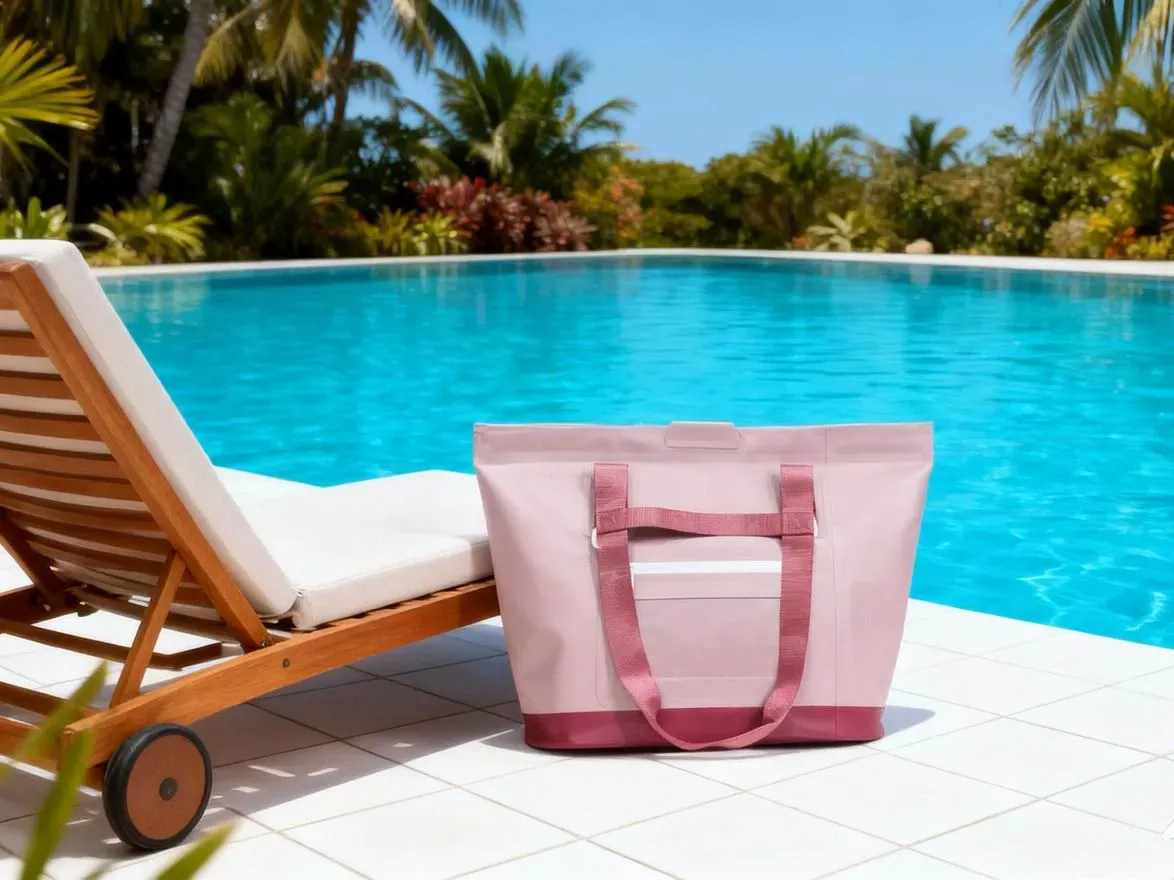
A beach cooler tote has to hold ice and let meltwater out, and those are opposing requirements. The build that reconciles them is 6-8 mm closed-cell foam, a welded liner with a sealed drain grommet at the lowest corner, a hard base ring that keeps the drain off the sand, and hardware specified for salt exposure. Sealed with no drain means a bag that sloshes; drained with no seal means a bag that wets the car.
Every insulated bag has to decide what happens to meltwater, and most decide by omission. A beach format makes the decision unavoidable, because the load is loose ice, the ambient is high, the surface is sand, and the bag is carried through salt air and set down in it. This piece sets out the drainage and insulation trade-off, the three drain constructions and where each fails, and the material and hardware choices that decide whether the bag survives a season at the coast.
Why Is Drainage in Conflict With Insulation?
Because insulation wants a sealed envelope and drainage wants a hole in it. A hole at the lowest point of the liner lets water out and lets air in, and the air path costs hours of ice retention on a hot day. A sealed liner holds the cold and holds the water, and after four hours the load is sitting in a bath, which is worse for food than the warmth would have been. Neither extreme is right, and the resolution is a hole that can be closed.
The second half of the conflict is structural. A drain is a penetration through the liner, the foam and the shell, and a penetration is where a leak starts. The drain grommet has to be sealed to the liner at the weld, it has to be supported so that the weight of the water does not lever it open, and it has to be reachable without unpacking the bag. Those three requirements rule out the simple grommets that work on a rigid cooler.
What Are the Three Drain Constructions?
A screw plug in a welded boss, a push-fit bung in a grommet, and a fold-down spout. The screw plug seals best and is the slowest to operate; it suits a bag that is drained at the end of the day. The push-fit bung is fast and is the one most likely to be found half-open in the boot of a car. The fold-down spout seals well when it is folded and clipped, and it is the most robust of the three in sand, because the sealing faces are protected when it is stowed.
All three need the same three supports: a welded boss rather than a punched hole, a backing plate behind the liner so the plug cannot pull through, and a recessed location so the fitting does not take the load when the bag is set down. A drain that protrudes below the base is a drain that gets knocked off in the first week.
| Construction | Seal quality | Speed to operate | Behaviour in sand | Where it suits |
|---|---|---|---|---|
| Screw plug in a welded boss | Best | Slow | Good if recessed; threads need rinsing | A bag drained at the end of the day |
| Push-fit bung in a grommet | Fair | Fast | Grit in the seat defeats the seal | Light duty, short season |
| Fold-down spout with a clip | Good when clipped | Fast | Protected sealing faces when stowed | The usual answer for beach duty |
| No drain, sealed liner | Perfect | Not applicable | Not applicable | Beverage and food delivery, not loose ice |
| Open mesh base panel | No seal | Continuous | Clogs with sand | A wet-gear bag rather than a cooler |
How Much Insulation Does a Beach Format Need?
Six to eight millimetres of closed-cell foam, and the answer is driven by the ambient rather than by the window. A beach day runs at 30 to 38 °C in the shade and higher in the sun, and the bag is often in the sun. Eight millimetres with a reflective facing is the working build; a facing is worth more here than anywhere else in the category, because radiant gain is the dominant term for a bag sitting in the open.
A light-coloured shell is the other half of the same decision. A dark shell in full sun can run 15 °C above the air temperature, which roughly doubles the leak, and on a beach day that is the difference between ice at four hours and water at two. Where the brand colour is dark, put it on a panel that is shaded by the body of the bag and keep the top and the sun-facing side light.
What Does Salt and Sand Do to the Bag?
Two things each. Salt corrodes metal hardware and crystallises in moving parts, so a zipper that works in a garden fails at the coast within a season; the answers are a corrosion-resistant finish with a stated salt-spray result, a covered flap that keeps salt spray off the chain, and a rinsing instruction on the product. Sand abrades coatings and packs into every mechanism and every seam, so a drain that seals against a flat face fails when grit sits in the seat and a zipper jams when sand reaches the coil.
The design response to sand is to keep the mechanisms off the ground and under cover. A base ring or a moulded foot raises the drain and the base seam clear of the surface; a storm flap covers the zipper; and a lid that overhangs stops sand falling into the mouth when the bag is opened. Those three are worth more than any material upgrade on this format.
Which Materials Survive Sun and Salt?
A solution-dyed or UV-stabilised polyester shell with a PU or TPU coating, specified with a colourfastness grade under AATCC 16, and hardware with a corrosion-resistant finish. Solution-dyed fibre carries the pigment inside the filament rather than on its surface and holds colour far better under ultraviolet exposure; where the brand colour matters, it is worth the premium. A reflective facing behind the shell adds nothing to colour stability and a great deal to thermal performance.
The liner film has to tolerate both temperatures and cleaning. PEVA is adequate for a chilled load and it is the volume choice; TPU is the answer where the bag is hosed down hot or left in the sun closed, because it resists hydrolysis and holds its flexibility at temperature. Where the bag is rinsed with fresh water after each use, as it should be, either film lasts; where it is not rinsed, neither does.
How Should the Base Be Built for Sand?
With a ring or a set of feet that lifts the base panel off the surface, and with the drain recessed inside that ring. Sand is abrasive and wet sand is worse, because it holds salt against the coating and grinds it. A bag that sits directly on wet sand abrades through a PU coating at the base corners in a season, and once the coating is gone the fabric wicks water into the foam.
The second base requirement is stability. A beach bag is set down on an uneven, sloping surface while loaded, and a bag with a narrow tapered base falls over and empties. A wide, flat base with a slight outward taper and a ring that spreads the load costs a little internal volume and prevents the most annoying failure this format has.
| Component | Beach specification | Why it differs from a delivery bag |
|---|---|---|
| Shell | Solution-dyed or UV-stabilised polyester, light colour on the sun face | Ultraviolet exposure is continuous, not occasional |
| Facing | Reflective facing laminated to the foam | Radiant gain dominates outdoors |
| Liner | Welded PEVA, or TPU where the bag is hosed hot | Rinsing and sun-closed storage |
| Closure | Coil zipper under a covered flap, corrosion-resistant finish | Salt spray and grit in the chain |
| Drain | Weld-bossed, recessed, fold-down spout with a clip | Loose ice produces water; sand fouls the seat |
| Base | Ring or feet lifting the panel clear of sand | Wet sand abrades and holds salt |
| Hardware | Corrosion-resistant, with a stated salt-spray result | Salt air, every day of the season |
Does the Drain Have to Be Leak-Tested?
Yes, and on the finished bag rather than on the fitting. Fill the bag to a stated level with water, stand it on a stated surface, and hold it for a stated time; then repeat with the bag tilted, because a drain that seals upright can weep on its side in a car. A drain test on the assembled bag is a ten-minute job and it is the only test that finds the failure that produces a wet boot.
Then test the drain after abuse: cycle the plug or the spout a stated number of times, wet, with a little grit in the seat, and re-test the seal. A drain that seals twenty times and weeps on the twenty-first is a drain with the wrong seat material, and that is found in a test rather than in a showroom.
Reconciling insulation and drainage
- Sealed and drained are opposing requirements; the answer is a closable drain.
- A weld-bossed, recessed spout with protected faces is the beach answer.
- A reflective facing and a light shell buy more than wall thickness outdoors.
- Specify hardware for salt: a corrosion-resistant finish and a stated salt-spray result.
- Leak-test the drain on the finished bag, upright and tilted, after cycling it.
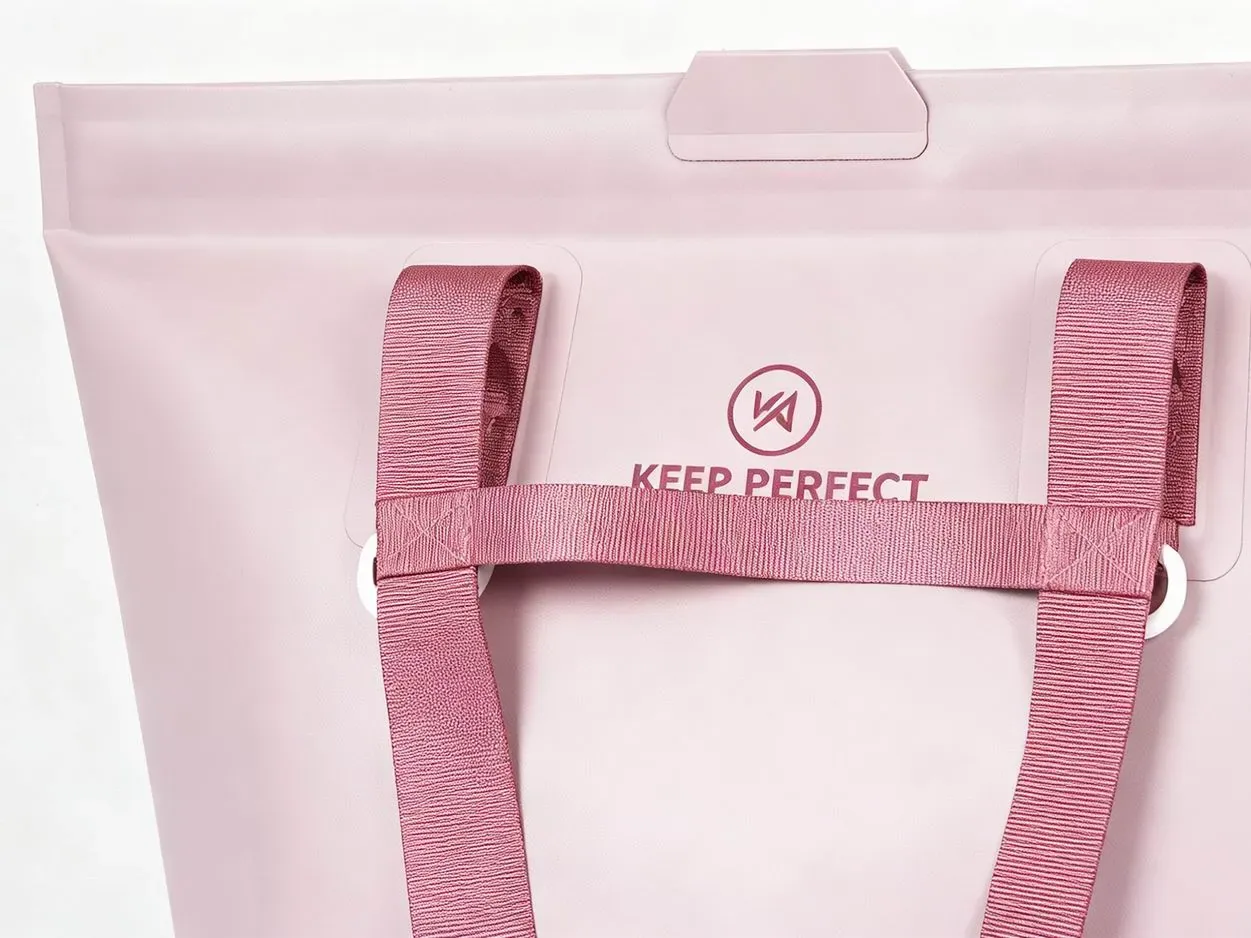
A third design question is the carry. A beach load is heavy and the walk is longer than the customer expects, so the handle has to be specified for the filled weight: a 25 mm webbing loop is the minimum for a 20-can load, 38 mm with a pad where the bag will be carried further than a few hundred metres, and the anchorage has to reach the base panel. A handle that tears out on the walk back is the most memorable failure this format has.
Where the format is a tote, the drop of the handle matters more than its width. A long drop lets the bag swing against the leg; a short drop makes a wide bag awkward to carry against the body. Thirty to fifty millimetres of headroom above the loaded mouth is the working range, and it should be stated on the drawing rather than left to the sample room.
How Should the Bag Be Labelled and Instructed?
With a rinsing instruction, which is the single most effective thing a brand can do for the service life of this product. Rinse with fresh water after use, drain and dry open, and do not store closed and wet. That instruction costs a printed card and it prevents the two failures that generate most returns: a corroded zipper and a liner that has gone mouldy inside.
One further decision belongs on the beach format and nowhere else: whether the bag tolerates being hosed out. A bag that can be hosed at the end of the day gets used again; one that has to be wiped gets stored damp and goes mouldy. That means a drain that opens wide, a liner that tolerates water pressure, and a shell that dries, which is a specification decision rather than a marketing one.
Then label the drain. A fitting that the user does not recognise as a drain is a fitting that stays closed, and the bag fills with water. A small printed or moulded marker beside the spout, plus one line on the card, closes that gap.
A fourth question is what the bag does when it is empty and wet, which is how it spends most of its life. A wet bag stored closed goes mouldy inside the liner within days, and the smell is the reason the bag is thrown away rather than the leak. Design for drying: a mouth that stays open, a liner that does not trap water at the corners, and an instruction that says to store it open and dry.
A fifth is the second use. A beach cooler is also used for wet gear, for shopping and for the drive home, and a bag designed only for ice is a bag that gets used once. A removable divider or a liner that tolerates being used without ice extends the product life and the brand exposure, and it costs a single component.
Where Do the Programme Numbers Sit?
MOQ 500 pcs per style and colourway, sampling 6-10 working days from a signed-off tech pack, bulk production 35-50 days from sample approval, inspection at AQL 2.5 under ISO 2859-1 General Inspection Level II, T/T 30/70, FOB Xiamen. A beach build with a moulded base ring or a tooling-based spout moves toward the 12-15 working day sampling end, because the fitting and the ring are sourced or tooled items.
Where the programme is seasonal, plan the reorder against the season rather than against the sale. A beach product reordered after the season has passed arrives for the following year, and the specification decisions — reference sample, recorded weld parameters, a named film supplier — are what make that second-year bag the same as the first.
A second seasonal point: a beach programme is usually sold with a drain, a rinsing card and often a set of accessories, and each is a sourced component with its own lead time and minimum. Where those are packed with the bag, the packing specification becomes a second bill of materials and the carton has to be specified for the whole set. Plan the packing at the same time as the bag, not after it.
One more planning point is worth stating because it catches seasonal programmes out: a beach launch has a hard date. Working backwards from it through 35-50 days of production, 6-10 working days of sampling and the tooling lead time for a spout or a ring puts the tech pack sign-off earlier in the year than most brands plan for, and the specification has to be frozen at that point.
Design the water path before the colour
Send the duty, the season, the quantity and the launch date. You get a build recommendation within one business day.
Frequently Asked Questions
Should a beach cooler bag have a drain?
Where the load is loose ice, yes. The answer is a closable drain rather than an open hole: a weld-bossed, recessed spout that seals when it is stowed.
Does a drain reduce ice retention?
A closable drain costs very little when it is shut. An open hole costs hours, because it is an air path as well as a water path.
Which drain construction is best?
A fold-down spout with a clip, weld-bossed and recessed. It seals well when stowed and its faces are protected from grit.
How much insulation does a beach bag need?
Six to eight millimetres with a reflective facing. Radiant gain dominates outdoors, so the facing and a light shell buy more than extra wall foam.
Why does the shell colour matter?
A dark shell in full sun can run 15 °C above the air temperature, which roughly doubles the leak. Keep the sun-facing panels light.
What does salt do to a cooler bag?
It corrodes metal hardware and crystallises in moving parts. Specify a corrosion-resistant finish with a stated salt-spray result and cover the chain with a flap.
What does sand do?
It abrades coatings and packs into mechanisms. Grit in a drain seat defeats the seal and grit in a zipper jams the chain.
How should the base be built?
With a ring or feet that lift the panel clear of the surface, and with the drain recessed inside that ring. Wet sand abrades and holds salt against the coating.
Should the liner be PEVA or TPU?
PEVA is adequate for a chilled load; TPU is the answer where the bag is hosed hot or stored closed in the sun, because it resists hydrolysis.
How is the drain tested?
Fill the bag to a stated level, hold it on a stated surface, then repeat tilted; then cycle the fitting wet with grit in the seat and re-test.
What is the MOQ for a beach cooler tote?
500 pcs per style and colourway, with repeat programmes open to discussion at 300 pcs.
How long does sampling take?
6-10 working days, moving toward 12-15 where a moulded ring or a spout has to be tooled.
What colour standard applies to the shell?
A colourfastness grade under AATCC 16, with a solution-dyed fibre where the brand colour has to survive continuous ultraviolet exposure.
What inspection applies?
AQL 2.5 for major defects to ISO 2859-1 at General Inspection Level II, with a weeping drain counted as major.
People Also Ask
Should a cooler bag have a drain plug?
Where you use loose ice, yes: a closable drain, weld-bossed and recessed, not an open hole.
How much insulation does a beach cooler need?
Six to eight millimetres with a reflective facing and a light-coloured shell, because radiant gain dominates.
Why does my beach cooler bag leak?
Usually the drain: a punched hole rather than a welded boss, or grit in the seat of the fitting.
How do I stop salt ruining the zipper?
Cover the chain with a storm flap, specify a corrosion-resistant finish, and rinse with fresh water after use.
What is the MOQ for a beach cooler tote?
500 pcs per style and colourway, with repeat programmes open to discussion at 300 pcs.
Sources and further reading
Every figure on this page is either our own programme data or attributed below. Open the originals before you write them into a specification.
- AATCC 16 — Colorfastness to LightAmerican Association of Textile Chemists and Colorists
- ASTM D6193 — Standard Practice for Stitches and SeamsASTM International
- ISO 2859-1:1999 Sampling procedures for inspection by attributesInternational Organization for Standardization