AQL 1.5 vs 2.5 vs 4.0: Which Level Should You Specify?
All three columns are read on the same sample. On a 500-piece lot at General Inspection Level II that is 50 units, and the three levels accept 2, 3 and 5 defects respectively. Choosing a level therefore buys one or two units of tolerance, not tighter coverage.
On a 50-unit sample the three levels accept 2, 3 and 5 defects. The sample does not change. If you want more evidence rather than a stricter boundary, change the inspection level — that is the lever that moves the number of units opened.
The choice of AQL column is presented in quotations as though it were the main quality decision in the order. It is not. Once the lot size and inspection level are fixed, the entire difference between the tightest and loosest of these three columns is two units of tolerance on fifty. Picking one takes a minute; writing a defect classification that makes the column mean something takes an afternoon, and only one of those has much effect on what arrives.
What Actually Differs Between the Three Columns?
Only the accept and reject pair, and nothing else. The plan takes its sample size from the lot size and the inspection level, then reads one column to get the pair. Column 1.5 gives a lower accept number, column 4.0 a higher one, and the sample sitting underneath them is identical in every case.
Stated numerically, on the standard export lot sizes: 500 pieces draws 50 units, accepting 2 defects at 1.5, 3 at 2.5 and 5 at 4.0. At 2,000 pieces the sample is 125 and the accept numbers are 5, 7 and 10. At 10,000 pieces the sample is 200 and the numbers are 7, 10 and 14. The proportion of tolerance hardly moves as lots grow.
| Lot size (pcs) | Sample size | AQL 1.5 Ac / Re | AQL 2.5 Ac / Re | AQL 4.0 Ac / Re |
|---|---|---|---|---|
| 2 to 8 | 2 | 0 / 1 | 0 / 1 | 0 / 1 |
| 9 to 15 | 3 | 0 / 1 | 0 / 1 | 0 / 1 |
| 16 to 25 | 5 | 0 / 1 | 0 / 1 | 0 / 1 |
| 26 to 50 | 8 | 0 / 1 | 0 / 1 | 0 / 1 |
| 51 to 90 | 13 | 0 / 1 | 0 / 1 | 1 / 2 |
| 91 to 150 | 20 | 0 / 1 | 1 / 2 | 1 / 2 |
| 151 to 280 | 32 | 1 / 2 | 2 / 3 | 3 / 4 |
| 281 to 500 | 50 | 2 / 3 | 3 / 4 | 5 / 6 |
| 501 to 1,200 | 80 | 3 / 4 | 5 / 6 | 7 / 8 |
| 1,201 to 3,200 | 125 | 5 / 6 | 7 / 8 | 10 / 11 |
| 3,201 to 10,000 | 200 | 7 / 8 | 10 / 11 | 14 / 15 |
| 10,001 to 35,000 | 315 | 10 / 11 | 14 / 15 | 21 / 22 |
| 35,001 to 150,000 | 500 | 14 / 15 | 21 / 22 | 21 / 22 |
What Does Choosing AQL 1.5 Buy You?
One or two units of tolerance, and a considerably higher probability that a borderline lot fails. That is genuinely worth having when the cost of letting a defective unit through is much larger than the cost of failing a passable lot: high unit value, a retail chargeback regime, a safety-adjacent feature, or a defect that only surfaces once the product is in use.
What it does not buy is more inspection. This is the misunderstanding that drives most of the argument, in both directions. Buyers ask for 1.5 expecting more units to be opened; vendors quote it knowing the sample will not change. If more evidence is what you want, General Inspection Level III is the instruction that delivers it — at additional cost, which is why nobody offers it for free.
What Does Choosing AQL 1.5 Cost You?
Three things, all predictable. More lots fail on counts that would previously have passed, each failure costs a re-work cycle plus a full second inspection, and the programme finds it harder to reach reduced inspection. For a programme shipping monthly, those second visits and re-work cycles are recurring costs rather than one-off events.
There is a subtler cost on the switching rules. Tightened inspection is triggered by rejected lots, and a tighter accept number makes rejection more likely on the same underlying quality. A programme can therefore spend most of its life in tightened inspection, where the effective number is no longer the one written in the purchase order — an outcome nobody chose.
When Is AQL 4.0 the Right Answer?
For minor defects, on almost every general merchandise programme. That is the conventional pairing with major at 2.5, and it reflects what the class actually contains: faults a customer can see and would not return the product for. Demanding 2.5 on that class means failing lots over untrimmed thread ends, which trains everybody to stop recording them.
There are cases for 4.0 on the major column too, and they are honest trade-offs rather than shortcuts: promotional product where units are given away rather than sold, a first exploratory order where the priority is learning rather than perfection, or a product whose defects are immediately visible to the buyer at receipt and can be sorted at destination.
How Do the Three Levels Apply Within One Inspection?
Simultaneously, on the same sample, one column per class. Standard practice on bag programmes is zero acceptance for critical defects, 2.5 for major defects and 4.0 for minor defects. Each class is counted separately and each can fail the lot independently, so the plan is three verdicts rather than one.
| Class | Definition | Examples on a bag programme | Usual level |
|---|---|---|---|
| Critical | Makes the product unsafe or unlawful, or creates a regulatory exposure | A needle fragment inside the bag, a sharp burr on hardware, a drawstring that fails the children product length rule, a substance over the restricted limit | Zero acceptance |
| Major | A customer notices it and returns the product, or function is materially reduced | A zipper that will not close, an opened seam, a strap that pulls out, an illegible print, a shell colour outside the approved shade band, a missing component | AQL 2.5 |
| Minor | A departure from specification a customer might see and would not return for | An untrimmed thread end, a stitch count one per inch out, a small mark inside the lining, a care label out of position, light creasing from packing | AQL 4.0 |
This three-column arrangement is why "we inspect to AQL 2.5" is an incomplete answer to any question. Two vendors writing the same sentence can be running quite different plans: one might hold minors at 4.0 and the other at 2.5, or apply 2.5 to every class including critical. The complete answer names all three.
Does the Product Category Change the Answer?
It changes it more than most buyers expect, because the same column buys different assurance on different products. Duty is the deciding variable. A bag opened several hundred times a day has far more opportunities for a functional fault to surface than one opened twice a year, and a product whose purpose is protection cannot tolerate the faults a decorative product can.
| Programme | Typical duty | Practical setting | Reasoning |
|---|---|---|---|
| Insulated delivery bag | Opened hundreds of times per route | Critical 0, major 2.5, minor 4.0 | Closure failure stops the route; appearance faults do not |
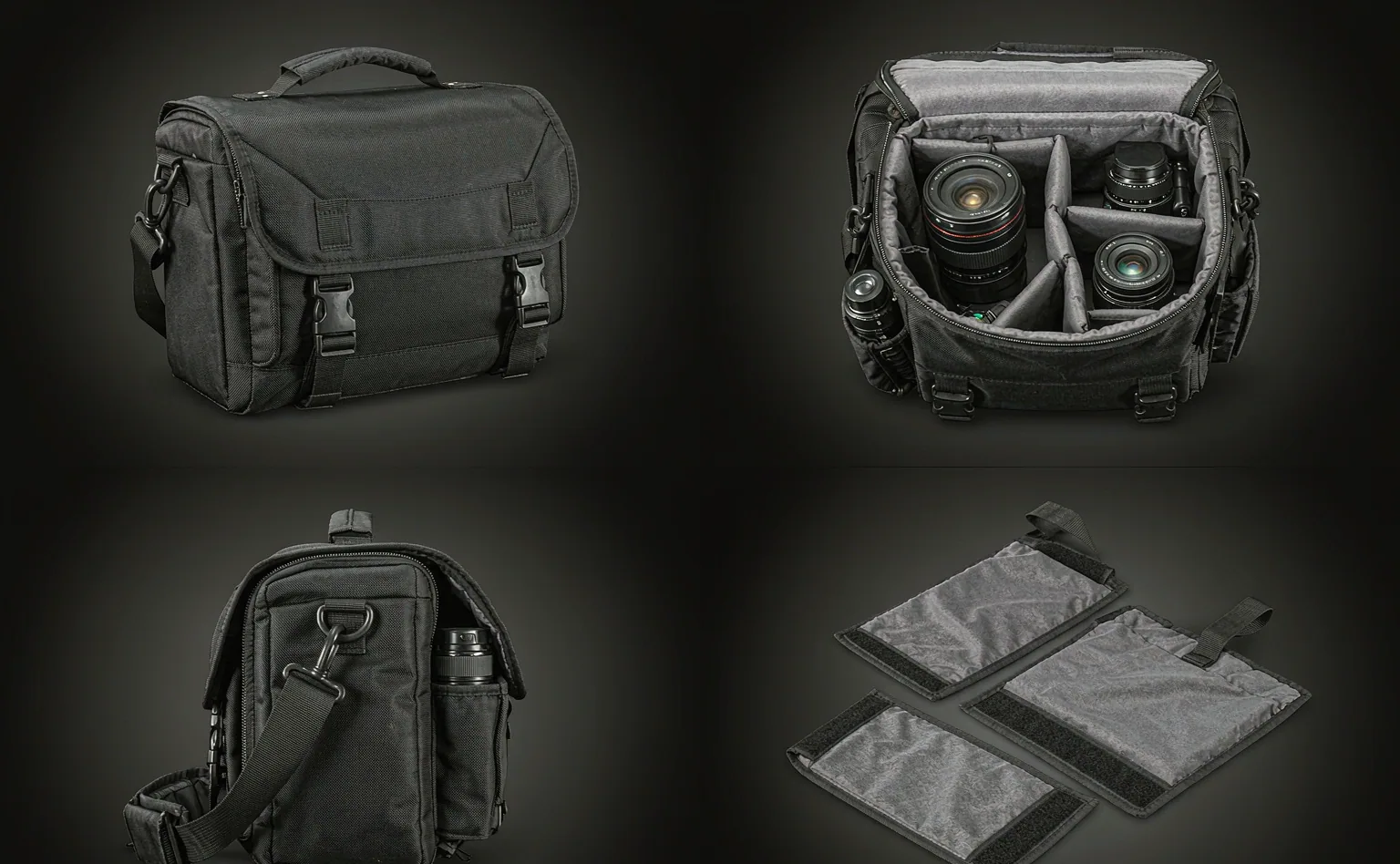
| Camera or equipment bag | Protective, sold alongside other units | Critical 0, major 2.5, minor 4.0 with a dimension check added | Fit and padding function come under the major list |
| Promotional drawstring bag | Given away, occasional use | Critical 0, major 4.0, minor 4.0 | Lower consequence per unit; speed matters more |
| Children-adjacent product | Regulated features present | Critical 0, major 2.5, with the regulated feature checked separately | Compliance exposure is not an attribute to be sampled |
What Role Does Unit Value Play?
A large one, and it cuts in surprising directions. High unit value argues for a tighter column, because the cost of a returned unit is high relative to the cost of a failed lot. But it also argues for more units examined, because a 50-unit sample tolerances of three defects says nothing precise about a 2,000-piece lot of expensive product.
Where both objections are live, the answer is usually not a single column but a layered plan: 2.5 for major defects, a named critical list covering the features whose failure carries the cost, and either a higher inspection level or a supplementary full check on the costly feature. Column choice alone cannot carry that responsibility.
How Does the Level Interact With the Switching Rules?
Directly, because the switching rules key on rejections. A tighter column produces more rejections at identical quality, so the programme reaches tightened inspection sooner and returns to normal later. Once tightened, the accept pair drops again — from an already tight starting point.
The practical consequence is that 1.5 should not be specified casually. If it is specified, agree at the same time which state the programme starts in and how often the state is reviewed, and require it on every report. Otherwise the number in the contract and the number in use quietly diverge.
| State | When it applies | Effect on the sample | How the state changes |
|---|---|---|---|
| Normal | The default at the start of a programme and after a return from either other state | Sample size from the code letter; Ac / Re from the AQL column | Two of five or fewer consecutive lots rejected moves the programme to tightened |
| Tightened | After the trigger above | Same sample size, a stricter accept and reject pair | Five consecutive lots accepted returns the programme to normal |
| Reduced | After a sustained clean run under normal with steady output and the responsible party agreeing | Roughly 40% of the normal sample size | One rejected lot or irregular output returns the programme to normal |
| Discontinued | When tightened inspection has run for a stated number of consecutive lots without acceptance | No sampling; acceptance stops | Requires the defect cause to be found and corrected before inspection resumes |
How Do You Compare Two Suppliers Quoting Different Levels?
Normalise them first, then compare what is left. Ask each for the sample size at your standard lot quantity, the column applied to each class, and the switching state they expect the programme to sit in. Those three answers rebuild the plan and make two quotations comparable; the AQL number alone does not.
Then look past the plan to what actually decides outcomes: the defect classification, who wrote it, and whether re-work after a failure is quoted with dates. A programme with a well-written classification at 2.5 delivers better cartons than one offering 1.5 with a list written by the party whose margin depends on shipping today.
One further consideration settles most borderline cases. Ask what the tighter column would change if the same faults occurred: if the plan would still have accepted the lot, the level is not your problem and the classification is. If it would have failed one or two lots a year that then went on to generate complaints, the tighter column has just paid for itself. That arithmetic is more useful than any argument about numbers.
What Should You Write in the Specification?
Five lines, and the column decision is only one of them. Written once and repeated on every purchase order, they remove the arguments that otherwise consume the afternoon of every inspection.
The specification that survives contact with a failed lot
- The standard and edition: ISO 2859-1, or ANSI/ASQ Z1.4 where the programme runs on the American reference.
- General Inspection Level II, named, because that is what sets the sample size.
- Single sampling, stated, so nobody reaches for the double sampling table by habit.
- The AQL per class: zero for critical, and your chosen level for major and minor.
- The defect classification annexed, with the starting switching state and the failure consequence.
Where the column choice is still open, it is worth reading the reasoning in full rather than deciding from the table alone: AQL 1.5 vs 2.5 vs 4.0 sets out what each level does and does not buy, and the sampling table lets any combination be checked against your real lot quantity.
Two closing points save the most trouble. First, decide the level before the first lot and then leave it alone for at least three shipments: changing mid-programme makes trend data useless and invites an argument about which lots the change applies to. Second, record it as part of the order rather than as a preference — an instruction nobody disputes later is worth more than a column that is one unit stricter.
Have the level set for your programme
Send the quantity, duty and destination market. The recommended level per class comes back with the classification draft.
Frequently Asked Questions
Is AQL 1.5 stricter than AQL 2.5?
Yes, by one unit of tolerance on the standard export lot sizes. On a 50-unit sample, 1.5 accepts 2 defects and rejects at 3, while 2.5 accepts 3 and rejects at 4. The sample examined is identical.
Does AQL 1.5 mean more units are inspected?
No. Sample size comes from the lot size and the inspection level, never from the AQL. If you want more units opened, specify General Inspection Level III.
What AQL should I use for minor defects?
AQL 4.0 is conventional for general merchandise. Demanding 2.5 on that class fails lots over faults customers would not return a product for, and trains everybody to stop recording them.
When is AQL 1.5 worth specifying?
When a defective unit carries a cost far above the cost of failing a passable lot: high unit value, a retail chargeback regime, a safety-adjacent feature, or a defect only visible in use.
Does specifying AQL 1.5 cost anything?
Yes. More lots fail on counts that previously passed, each failure costs a re-work cycle plus a second inspection, and the programme reaches reduced inspection less often.
What does AQL 4.0 accept on a 50-unit sample?
Five defects accepted, six rejected. Read alongside 3 and 4 for major defects at AQL 2.5 and zero acceptance for critical defects on the same fifty units.
Can I use one AQL level for every class?
You can, but it is not usual and it is rarely sensible. Critical defects carry zero acceptance regardless, and minors normally sit at 4.0. Applying one number to everything usually means either failing over cosmetics or loosening the compliant list.
Why do some vendors advertise AQL 1.5?
Because it sounds stricter while costing them almost nothing, since the sample size does not change. What it really does is make borderline lots fail, which is why the classification and the failure route matter as much as the number.
How does the level affect the switching rules?
Tighter columns produce more rejections at unchanged quality, so the programme reaches tightened inspection sooner and returns to normal later, applying a stricter pair than the one in the contract.
Should new programmes start at 2.5?
That is the sensible default: zero for critical, 2.5 for major, 4.0 for minor, with the classes written specifically for the product. Move off the default once you have real defect data from two or three lots.
How do I compare suppliers quoting different levels?
Ask each for the sample size at your lot quantity, the level applied per class, and the expected switching state. Those rebuild the plan; the AQL number alone does not.
Is ANSI Z1.4 the same as ISO 2859-1 for these levels?
Effectively yes for the values used on general merchandise: the same code letters, sample sizes and accept-reject pairs. Name one edition in the purchase order to settle the question.
People Also Ask
Which AQL level is best for bags?
Zero acceptance for critical defects, 2.5 for major defects and 4.0 for minor defects is the working standard for general merchandise bag programmes, with the level moved only where the product duty justifies it.
Is a lower AQL always better?
No. A lower number means a stricter accept boundary on the same sample, and the costs are more failed lots, more second inspections and later access to reduced inspection.
What is the difference between AQL 2.5 and AQL 4.0?
Two units of tolerance on the same sample. At 50 units, 2.5 accepts 3 and rejects at 4; 4.0 accepts 5 and rejects at 6.
Do I need a different level for each defect class?
Standard practice says yes: zero for critical, a tighter column for major and a looser one for minor, each counted separately and each able to fail the lot independently.
Can the AQL be changed after the order starts?
It can, by agreement, and it should be recorded. Changing it mid-programme without a note makes later lots incomparable and complicates any dispute about a trend.
Sources and further reading
Every figure on this page is either our own programme data or attributed below. Open the originals before you write them into a specification.
- ISO 2859-1:1999 Sampling procedures for inspection by attributesInternational Organization for Standardization
- ANSI/ASQ Z1.4 — Sampling procedures and tables for inspection by attributesAmerican Society for Quality
- Acceptance sampling — quality resource indexAmerican Society for Quality