What Is TPU Fabric and How Does It Resist Water?
TPU appears in bag making as a film, a coating and a laminate, and each form behaves differently under welding, folding and cold. This page separates the three, then shows how a water-resistance claim is evidenced so the number survives an argument with the shipment rather than merely reading well.
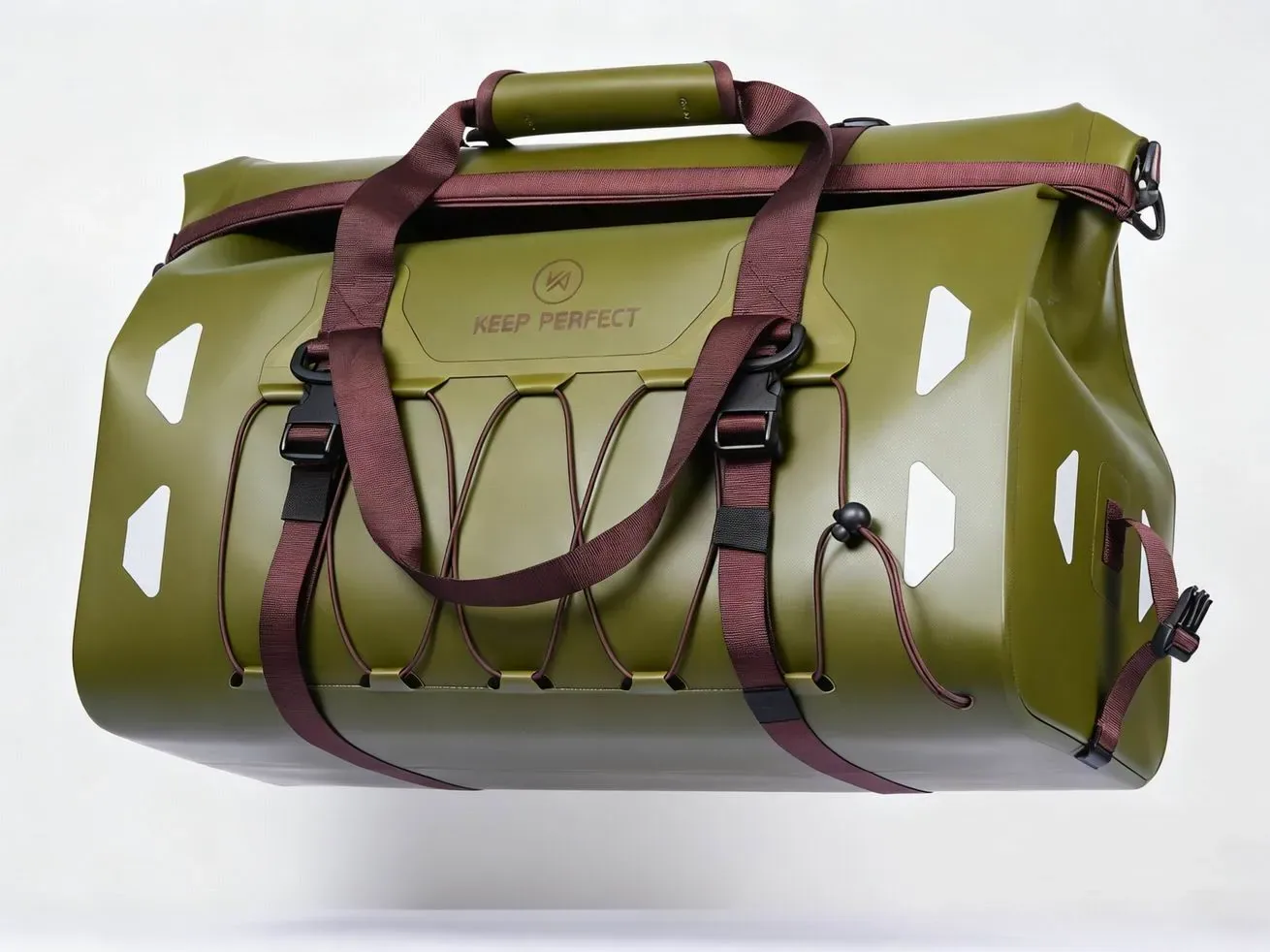
Write the form, the thickness, the base cloth and the two evidenced tests. "TPU" on its own names a polymer family, not a construction, and it leaves every variable that decides performance open to interpretation at quoting stage.
What Does TPU Mean in a Bag Specification?
TPU is a thermoplastic polyurethane elastomer, and in this industry it turns up in three distinct forms that get called by the same name. It can be a film bonded to cloth, a coating spread onto cloth, or a hot-melt layer used to join two surfaces. Those three behave differently when you weld them, when you fold them, and when the temperature drops, which is why a specification that says only "TPU" tends to produce quotes nobody can compare.
| Form | How it is applied | Thickness typically quoted | Where it appears on a bag |
|---|---|---|---|
| TPU film lamination | Heat and pressure bond a film face to woven cloth | Measured in tenths of a millimetre | Roll-top closures, welded seams, structure panels |
| TPU coating | Spread or extrusion coated directly onto the cloth | Measured as mass per unit area | Water-resistant shells, straps, base panels |
| TPU hot-melt layer | Film placed between two surfaces and melted | Very thin, used as an adhesive | Badge bonding, seam sealing, tape application |
| TPU sheet or slab | Extruded as a unsupported sheet | Substantially thicker | Clear windows, stiff inserts, protective panels |
| TPU-coated webbing | Coating applied to a woven tape | Thin face layer on the tape | Straps that must shed water |
| Printed TPU face | Film laminated then decorated | Same as the base film | Panel faces carrying artwork |
How Does the Water Actually Stay Out?
Water is stopped by two separate mechanisms, and specifications often mix them up. The first is physical: a continuous film or a dense coating leaves no path through the fabric for water to follow. The second is chemical: a fluorocarbon-free durable water-repellent finish lowers the surface energy so water beads and runs off instead of wetting out. The first resists pressure, the second resists a shower. Together they produce the behaviour buyers describe as water resistant, and separately each of them fails in a different, predictable way.
| Claim | What it means in use | How it is evidenced | Typical threshold buyers set |
|---|---|---|---|
| Water-repellent surface | Water beads and runs off the face | AATCC 22 spray test rating | A stated spray rating before and after washing |
| Resistance to water penetration | Holds out water under pressure | ISO 811 hydrostatic head in millimetres | A minimum head stated for the finished cloth |
| Surface wetting resistance | Another spray method used in some markets | ISO 4920 spray test | A rating comparable to the AATCC result |
| Seam sealing present | Stitch holes no longer leak | Visual check plus hydrostatic test across the seam | Sealed seams named on the drawing |
| Closure shedding water | Water does not track through the closure | Witnessed spray simulation on a finished bag | Pass or fail against a written protocol |
| Durable finish claimed | The finish survives laundering | Re-test after the stated wash cycle | Rating after washes stated on the order |
What Does a Water-Resistant Claim Mean, Precisely?
In practice, water-resistant means the construction resists wetting under the conditions named in the test, and no more than that. It does not mean the bag can be submerged, and it does not mean the stitch holes are sealed. Several sellers use the word because there is no regulation behind it in most markets, so the only defence available to a buyer is a named standard, a numeric threshold and a test report drawn from the shipped lot.
A water claim without a number cannot be disputed later. Write the method and the minimum result next to the panel note, so everyone quoting against your drawing is answering the same question rather than the same adjective.
How Does TPU Compare on Stiffness, Hand and Cold Behaviour?
TPU stays flexible at lower temperatures than PVC does, which is why it appears in cold-chain and outdoor applications despite costing more. It also keeps its hand after folding, so a roll-top closure made with a TPU-faced cloth will continue to fold cleanly after months in service. The trade-off is tack: some grades are grippy against themselves, and that changes how a panel behaves in the needle feed and how easily it releases from a press plate.
Five lines for a TPU clause
- Form: film lamination, coating or hot-melt layer, stated explicitly.
- Thickness or coating mass, with tolerance, evidenced to the relevant standard.
- Base cloth underneath: polymer, construction and mass per unit area.
- Hydrostatic head to ISO 811 or spray rating to AATCC 22, with the threshold written in.
- Low-temperature behaviour checked to ASTM D2136 where the programme ships into cold markets.
Where Does TPU Meet Beyond the Shell Fabric?
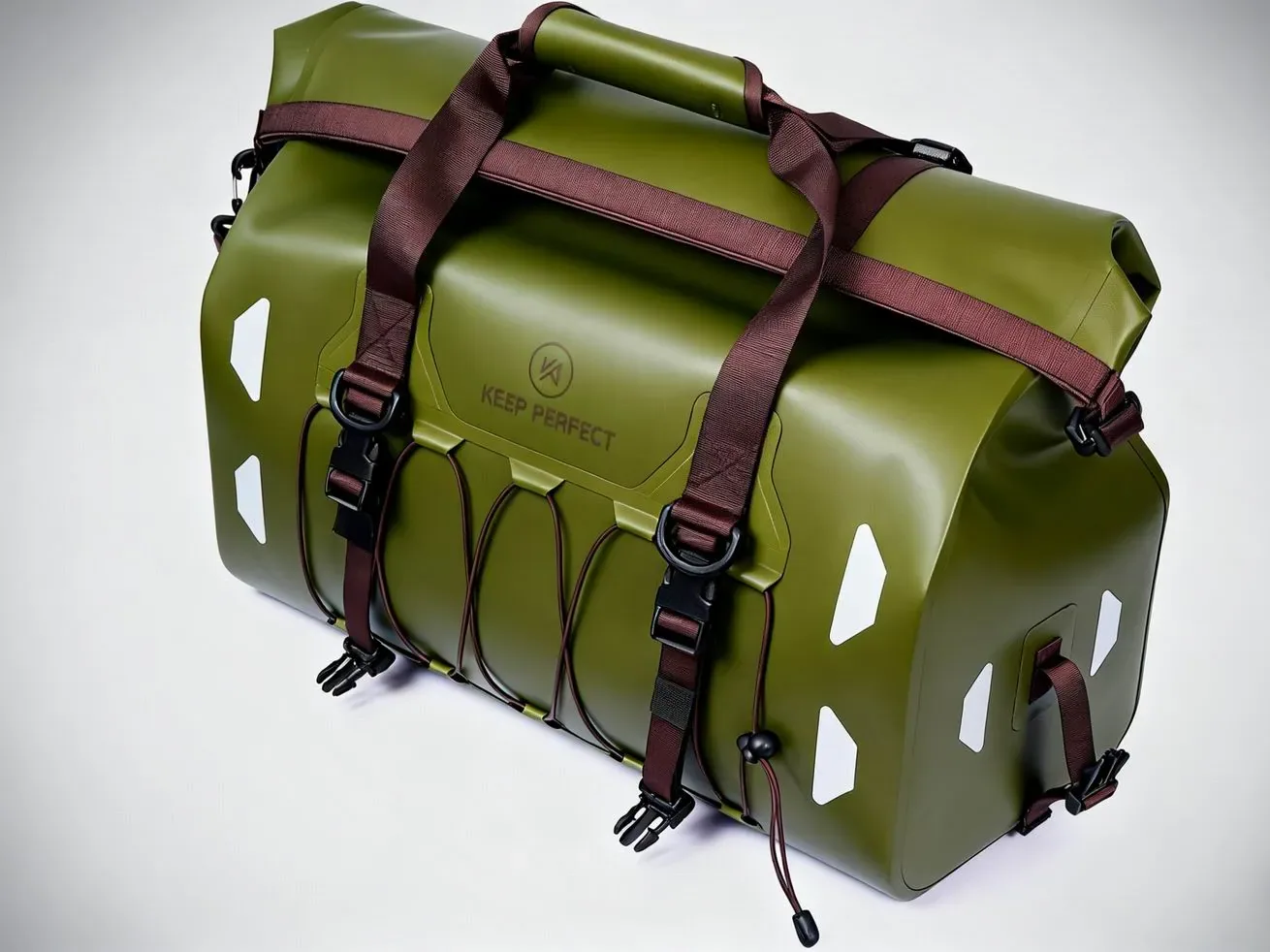
The same polymer appears in several secondary places that quietly decide whether a bag performs. Seam tapes rely on it to bond over stitch holes. Windows in panels use unsupported sheet. Printed badges use a thin film to carry artwork onto cloth. Each of those is a separate line item in the technical file, with its own adhesion requirement, and none of them is covered by a claim made about the shell.
| Where TPU appears | What can go wrong | The evidence that catches it | Line to write on the drawing |
|---|---|---|---|
| Seam sealing tape | Tape lifts after washing or in cold | Wash-cycle adhesion check at the stated temperature | Tape width, application temperature and wash test |
| Panel window | Crazing or clouding after flexing | Flex test followed by visual grading | Sheet thickness and flex cycles stated |
| Printed badge | Edge lift at the corners | Adhesion after repeated washing | Badge film thickness and wash-cycle figure |
| Welded seam | Seam opens under peel load | Peel or burst evidence on the welded joint | Weld time, temperature and peel minimum |
| Coated webbing | Coating cracks at the hardware edge | Bend test over a mandrel after conditioning | Coating type and minimum bend performance |
| Laminated panel face | Delamination after creasing | Coating adhesion to ISO 2411 | Adhesion minimum and crease test method |
What Limits TPU in Production?
Three practical limits shape its use. It costs more than PVC on a per-metre basis, which pushes it toward applications where cold flexibility or weld performance justify the premium. It can mark under high press heat, so decoration windows are narrower and need to be proven rather than assumed. And because it is a thermoplastic surface, anything that melts it also seals it, which is a benefit at a weld station and a hazard at a print station.
- Prove every decoration route on a coupon pressed at production temperature, not on a hand iron.
- Ask whether the grade offered is polyester-based or polyether-based, because hydrolysis behaviour differs.
- Confirm the film face is compatible with the seam tape already specified elsewhere on the bag.
- Test how the face releases from the press plate before committing a large decorated panel.
- Check whether the grade is stated as resistant to hydrolysis where the bag will be stored damp.
- Record press time, temperature and pressure on the tech pack so welding can be repeated.
How Should TPU Be Specified and Tested?
Write it as a construction rather than as a material name: film-laminated polyester with the film thickness stated in tenths of a millimetre, the base cloth identified by construction code and mass, hydrostatic head evidenced to ISO 811 at a stated minimum, and low-temperature behaviour checked to ASTM D2136 for cold programmes. Add the weld parameters if any joint is welded. Every one of those lines can be reproduced by an independent laboratory, which is the point.
Where Does TPU Pay for Itself?
TPU earns its premium in three situations. Cold environments, where PVC would stiffen and crack. Welded construction, where a clean, consistent melt matters more than the fabric underneath. And repeated folding, where a roll-top or a lid must survive thousands of cycles without the face crazing. Outside those three, a well-coated woven construction will usually do the job for less.
When Should You Choose Something Else?
Choose a coated woven cloth instead when the bag never meets extreme cold, when the design is sewn rather than welded, and when the material cost is the governing constraint. Choose a film face rather than a coating where a seam has to be welded, because the consistent film thickness gives the weld station something stable to work with. Neither answer is universal, and the reliable way to choose is to run the same water evidence on both and compare numbers.
A hydrostatic result is only comparable when the method, the rate of pressure increase and the end point are identical. Ask for the method reference alongside the number, because a head figure without it tells you almost nothing.
What Does a Defensible Specification Line Say?
It names the form, the thickness or mass, the base cloth, the two tests and their thresholds, and any secondary treatment such as seam taping. A defensible line reads: film-laminated polyester, film thickness stated, base cloth identified, hydrostatic head to ISO 811 at or above the stated millimetres, spray rating to AATCC 22 at or above the stated value after the stated wash cycle, and low-temperature bend to ASTM D2136 for cold-market shipments.
How Does a Faced Cloth Age in Storage and Service?
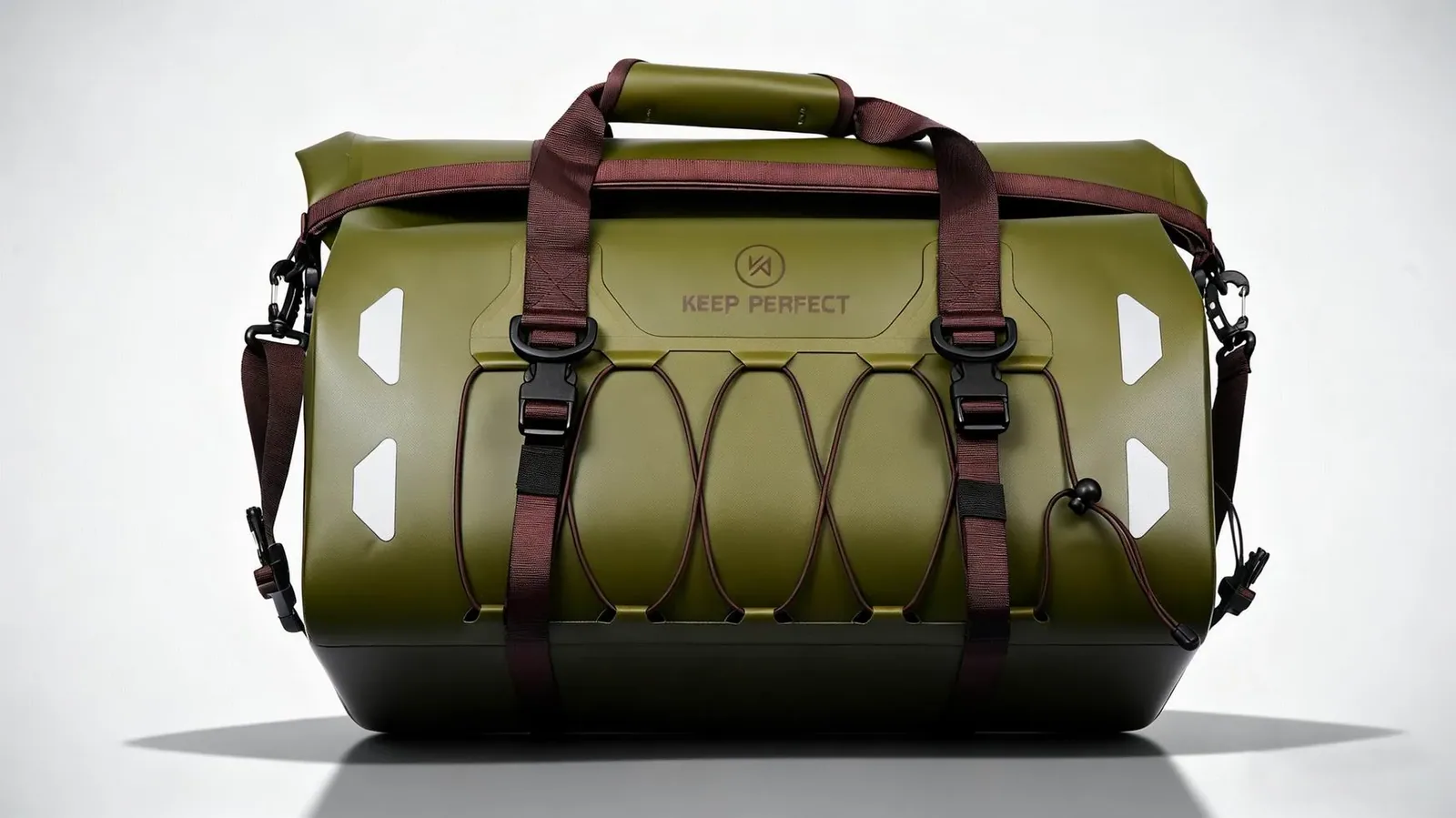
Faced cloth changes in three visible ways over time: the face loses gloss, creases stop recovering fully, and pale colours shift where the formulation is not stabilised against ultraviolet light. Each of those develops slowly and appears months after delivery, which is precisely why a retained coupon stored dark and dry matters so much. Comparing a returned unit against that coupon settles an ageing question quickly, while comparing it against a written description settles nothing at all.
What Should You Ask About the Grade Before Approving It?
Four questions deserve answers before any facing is approved. Is the grade stated as resistant to hydrolysis, and under what conditions? Does the face carry an ultraviolet stabiliser? Is the coating applied by extrusion or by transfer, since the two leave different adhesion behaviour? And across what temperature range is the grade warranted? None of these is answered by the polymer name on its own, and together they describe most of what happens after six months.
| Question for the mill | Why it matters | What a good answer contains | What to do if it cannot be answered |
|---|---|---|---|
| Annual hydrolysis behaviour | Damp storage destroys some grades | A stated programme intent plus a test result | Choose another grade rather than accept silence |
| Stabiliser presence | Discolouration (watch) after months of daylight | Named stabiliser package and grade | Require a light-exposure result to the relevant standard |
| Application method | Changes how the face adheres to the cloth | Extrusion or transfer stated clearly | Test adhesion to the relevant organization standard |
| Warranted temperature range | Decides where the bag can be sold | A stated range with supporting data | State your own range and require evidence |
| Handling and storage note | Blocking and crease retention are handling issues | Written conditioning guidance | Write your own handling note into the file |
| Grade continuity commitment | Stops silent substitution mid-programme | Written intent to keep the grade stable | Refresh retained coupons every season |
Does the Base Chemistry Change Anything?
It does. Within one polymer family, grades built on a polyether base generally resist hydrolysis better and survive damp storage longer, while grades built on a polyester base tend to give better abrasion and oil resistance. Neither is better in the abstract, and the correct choice follows the failure you are protecting against. Name the base on the specification, because it is one of the few lines that actually distinguishes two grades selling under the same name.
What Does a Sensible Handling Note Cover?
Most facing complaints originate in handling rather than in manufacture. A short note covering storage temperature, avoidance of prolonged pressure between faces, protection from direct sunlight before packing, and a reasonable conditioning period after printing removes a large share of them. It costs nothing to write and prevents arguments about whose fault a marked panel was.
The single most useful object in a facing programme is a signed, dated piece of the approved cloth kept away from light. Every later question about colour shift, gloss loss or stiffness can be answered against it far faster than against a specification.
What Does It Mean for Repair and Spare Parts?
A welded construction repairs differently from a sewn one, so planning decisions made here follow the product into service. Welded faces can often be re-welded by a competent repair station, while delaminated ones cannot be rescued at all. If your programme supports repair, name the repair method on the technical file so the people doing it later know what they are working with.
How Is the Claim Verified on Arrival?
Draw from the shipment at AQL 2.5 under ISO 2859-1 General Inspection Level II and test the two properties that govern the design, normally hydrostatic head and spray rating. Compare against the retained coupon from approval, because a result that passed at sample stage and fails on the shipment points at either substitution or a coating change, and those two have different remedies. Record the method with the result, and keep both.
Put the water claim into numbers
Send the panel role, the expected weather and the decoration route — a construction line with the two test thresholds comes back, quoted inside the 6-10 working day sampling window.
Frequently Asked Questions
Is TPU the same thing as PU?
Not quite. PU usually refers to a polyurethane coating applied to cloth, while TPU describes a thermoplastic elastomer that can be extruded as film or sheet. The behaviours differ enough that both should be named by form in a specification.
Does TPU make a bag waterproof?
It makes the face impermeable, which is different. Water still enters through stitch holes, closures and seam edges unless those are sealed or taped, so the whole construction has to be considered rather than one layer.
Which test should I ask for on a water claim?
Ask for hydrostatic head to ISO 811 where pressure matters, and for spray rating to AATCC 22 where surface shedding matters. Both are published methods with defined end points.
How thick should a TPU film be?
Thickness follows the job: thin films suit roll-top closures and light panels, thicker ones suit structure and welded seams. Ask your mill for its standard offering and then test the result.
Can every printer decorate a TPU face?
No. Some faces resist ink adhesion and some mark under press heat. Prove the route on a coupon at production temperature before committing the artwork to a colourway.
Does TPU yellow over time?
Some grades discolour under ultraviolet exposure, and the effect varies by formulation. Where appearance matters, request evidence and keep a retained coupon stored away from daylight.
Is TPU accepted for food-contact liners?
Some formulations are supplied with compliance documentation for food contact, but the document travels with the specific grade. Ask for the declaration rather than assuming the polymer carries it.
What makes a welded TPU seam fail?
Usually a mismatch between film thickness, press temperature and dwell time. Those three are recordable variables, so a failed weld can be traced and corrected rather than argued about.
Does cold really change the performance?
Yes, although TPU retains flexibility far better than PVC does. Where winter conditions are expected, add a low-temperature bend check to the coating clause.
How do I record the result usefully?
Record the method reference, the numeric result, the lot it was drawn from and the date. Those four fields turn a number into evidence that can be compared next season.
People Also Ask
What is TPU fabric?
It is woven cloth carrying a thermoplastic polyurethane layer, applied as a lamination or as a coating. The polymer supplies the water hold-out and the cloth supplies the strength.
Is TPU waterproof?
The face is impermeable, but a bag is only as resistant as its seams, closures and edges. Those need their own treatments before the bag can claim anything.
Does TPU crack in cold weather?
It performs better than PVC at low temperature, which is why cold-chain programmes specify it. Prove it with a bend check rather than trusting the name.
Can TPU be welded?
Yes, and that is one of its main advantages. Consistent film thickness gives the weld station a stable surface to work against.
Is TPU more expensive than PVC?
Generally yes, per metre. The premium buys cold flexibility, weld consistency and better folding life, which only matters where those are the governing risks.
Sources and further reading
Every figure on this page is either our own programme data or attributed below. Open the originals before you write them into a specification.
- ISO 811 — Resistance to water penetration (hydrostatic pressure test)International Organization for Standardization
- AATCC 22 — Water Repellency: Spray TestAmerican Association of Textile Chemists and Colorists
- ASTM D2136 — Coated Fabrics: Low-Temperature Bend TestASTM International