What Is PEVA and How Does It Compare to PVC?
PEVA is a polyethylene-based copolymer film used as a liner because it carries no chlorine and avoids the plasticiser questions that follow PVC. Here is what is inside it, how it behaves at seams and in the cold, and how to write it into a clause a laboratory can verify.
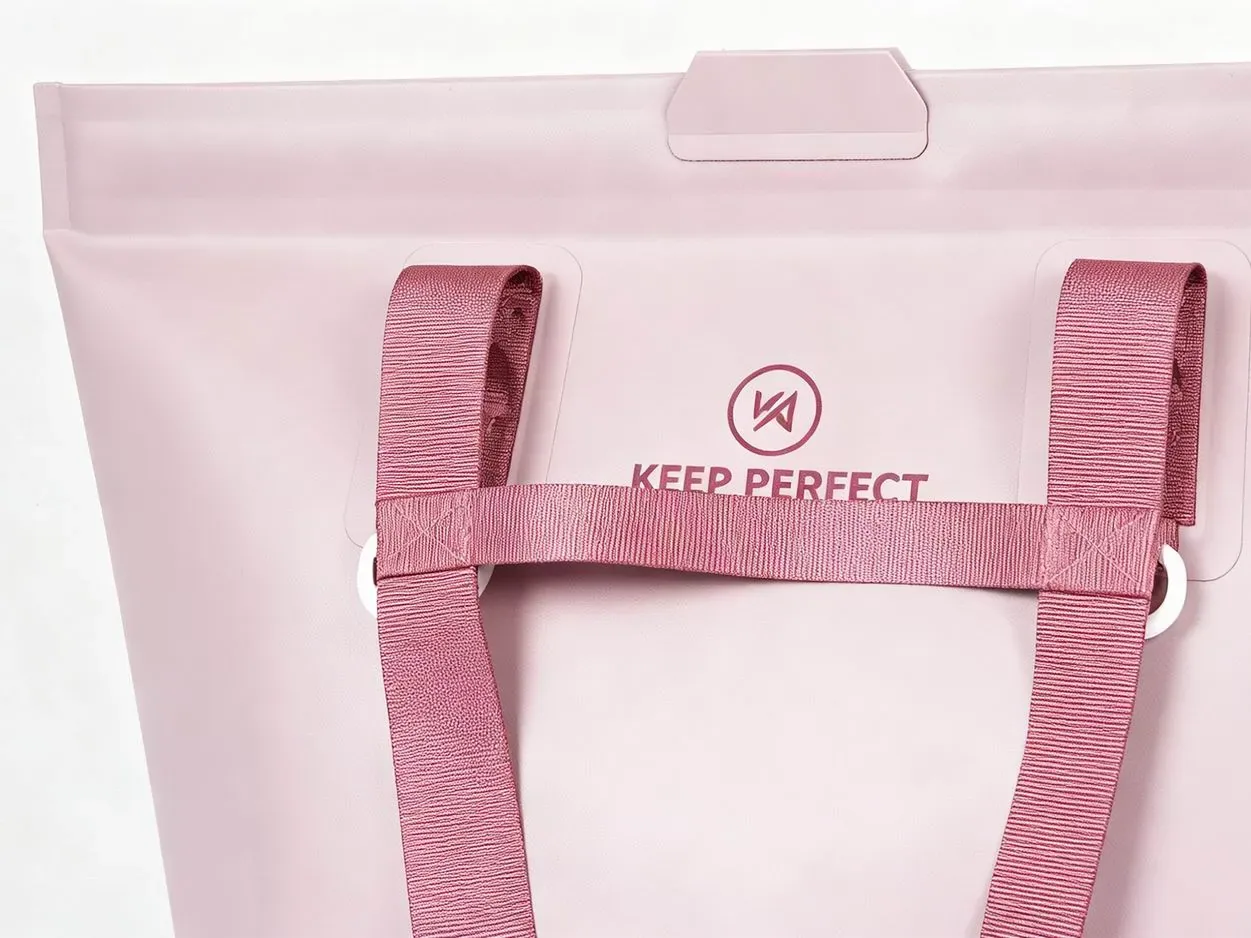
Three lines decide a liner film: the polymer, the thickness, and the joint method used to hold it in place. Almost every complaint traceable to a liner originates in one of those three rather than in anything described on a datasheet.
What Is PEVA Made Of?
The name describes a copolymer: a polyethylene backbone carrying vinyl acetate, blended in a proportion that decides how flexible and how rubbery the film becomes. Higher vinyl acetate content gives a softer, more elastic film; lower content gives something closer to polyethylene sheet. Because neither half of that copolymer carries chlorine, the material avoids the restricted-substance questions that follow PVC through most compliance programmes instead.
| Material | What it is | Cost band | Where it earns its keep | When not to use it |
|---|---|---|---|---|
| PEVA film liner | Polyethylene and vinyl acetate copolymer | Low to mid | Wipe-clean liners and wetted compartments | Where a welded seam must be radio-frequency welded |
| PVC film liner | Vinyl polymer carrying plasticisers | Low | Liners needing high clarity and easy welding | Where a chlorine-free declaration is required |
| Thermoplastic polyurethane film | Elastomer without chlorine | Upper mid | Cold routes and welded constructions | Where a low-cost liner is sufficient |
| Coated woven liner | Textile cloth carrying a polymer face | Mid | Liners needing to resist tearing at the seam | Where the liner must stay very light |
| Woven film sandwich | Reinforced film with textile between layers | Mid | Liners taking repeated point loading | Where simplicity matters more |
| Uncoated woven liner | Textile with no polymer face | Low | Dry compartments needing air movement | Anywhere spills are expected |
How Does It Behave Against PVC?
The two are closer in service than the way they are written about suggests. PEVA generally performs better in the cold and carries fewer restricted-substance questions, while PVC generally welds a little more easily and can be produced with higher clarity. Neither is universally waterproof by itself, since both depend entirely on how the seams are closed. Differences in odour are real and measurable, and they are usually the reason one is chosen over the other.
What Decides Whether the Liner Holds Water?
The film itself holds water out almost completely, so every leak is elsewhere. Seams are the usual culprit, followed by corners where the liner folds, and then by any place a strap or fitting pierces it. Because of that, specifying the liner means specifying the joint: how it is welded or sewn, what evidence exists for that joint, and how corners are formed.
How Are Liners Joined and Tested?
Thin films are joined by heat welding or high-frequency welding, and both need recorded parameters plus a joint test rather than a visual check. Evidence for joint integrity is normally a peel or burst result measured on the actual seam, and the recording matters more than the method: without recorded settings nobody can reproduce a good weld or diagnose a bad one.
| Joint route | How it is done | What fails | Evidence to require |
|---|---|---|---|
| Heat welding | Heated bar melts the two faces together | Under-heated joint opens later | Peel result plus recorded bar temperature |
| High-frequency welding | Radio-frequency energy melts the polymer | Inconsistent contact pressure | Burst result plus recorded dwell |
| Sewn with binding | Film sewn then bound over | Needle holes leaking through | Water test across the bound seam |
| Adhesive film tape | Tape melted over the seam face | Lifting at corners after heating | Adhesion result after a stated exposure |
| Folded and clamped | Liner folded, mechanically retained | Creep opening over months | Load retention evidence over time |
| Welded-in gusset | Pre-formed corner piece inserted | Poor fit at the base | Visual standard plus a water test |
Five lines for a liner clause
- Polymer named by family, with a statement that it carries no chlorine where that is claimed.
- Film thickness stated in hundredths of a millimetre, with tolerance.
- Joint method named, with parameters recorded and evidenced.
- Cold behaviour evidenced by a bend check where the route includes cold conditions.
- Restricted-substance declaration naming the grade and the lot shipped.
What Compliance Documentation Travels With It?
Requests generally fall into three buckets: a declaration against restricted substances for the relevant market, evidence against a retail standard for the article class where a retailer demands one, and food-contact documentation where the liner may meet contents intended for consumption. Each document has to name the specific grade and the lot, because a company-level statement does not describe what arrived.
How Does Odour Behave and How Is It Managed?
Odour comes from residual volatiles after extrusion and from anything added later, so it varies between grades and between lots more than buyers expect. The practical controls are boring and effective: specify a conditioning period before packing, avoid sealing units while warm, and grade odour on a conditioned sample against a written protocol rather than by whoever happens to be standing there.
- Name polymer and thickness rather than relying on a trade description.
- Evidence the joint rather than only the film, since leaks are usually joint failures.
- Require documents naming the grade and the lot rather than the company.
- Ask for a cold bend result where the route includes cold conditions.
- Set a conditioning period before packing so odour complaints reduce naturally.
- Keep a retained piece of liner so later shipments can be compared physically.
How Thick Should a Liner Film Be?
Thickness follows the duty: light films suit liners that never see point loading, while anything taking repeated contact with rigid contents wants more. Moving up costs little per unit and buys meaningfully longer life, so most programmes settle one step above the minimum once failures appear. State thickness with a tolerance and measure it on delivered goods rather than trusting the nominal figure.
Film thickness is one of the few material decisions where stepping up costs very little and returns a great deal. Most liner complaints are answered one thickness step earlier than buyers expect.
Where Do These Films Fail in Service?
Four failures recur. Puncture from rigid contents. Splitting at a fold where the liner was creased hard and held. Weld separation where parameters drifted. And opacity developing after repeated cleaning, which customers read as dirt. Each has an inexpensive prevention, and each is far easier to prevent at specification time than to argue about afterwards.
| Failure | What caused it | How it is caught | Prevention written into the clause |
|---|---|---|---|
| Puncture from contents | Film too light for point loading | Visual and water test after loading | Increase thickness or add reinforcement |
| Splitting at a fold | Hard crease held under load for months | Retained unit cycled and inspected | Detail the fold to spread the radius |
| Weld separation | Parameters drifted during the run | Peel or burst result on the joint | Record parameters and evidence periodically |
| Loss of clarity | Repeated cleaning or heat exposure | Comparison against the retained coupon | State a cleaning expectation on the product |
| Odour complaint | Residual volatiles trapped when packed warm | Odour grading on a conditioned sample | Conditioning period before packing |
| Liner twisting inside | Poor anchoring to the outer construction | Visual check after simulated loading | Anchor the liner at stated intervals |
How Should It Be Compared Against Other Liners?
Run three comparisons and the answer appears: puncture behaviour under the contents you will actually load, joint strength after welding or taping, and cold behaviour after conditioning. Those three map directly onto the complaints you receive, which makes the decision easy to defend to anyone asking why one film was chosen over another.
What Should Be Written on the Purchase Clause?
A workable clause reads: liner film, copolymer family named, chlorine-free statement included where claimed, thickness stated with tolerance, joint method named with parameters recorded, joint evidenced by peel or burst result, cold behaviour evidenced by bend check where relevant, declaration naming the grade and lot. Ten lines, all enforceable.
How Does It Behave Inside an Insulated Build?
In an insulated construction the liner faces condensation, cold and cleaning, all at once, which is why it fails earlier than the shell. It must hold its weld when cold, resist creasing where the insulation changes thickness, and survive whatever cleaning the product will actually receive. Treat the liner as its own specification inside that build rather than as a consequence of it.
What Does Extra Thickness Actually Protect Against?
Thickness buys puncture resistance, crease life and tolerance of poor loading habits. It does very little for odour, nothing for seam strength, and it cannot rescue a badly detailed corner. Where returns show punctures, stepping up one grade usually resolves them; where returns show leaks at joints, thickness will simply cost more for nothing.
| Complaint pattern | What thickness change does | Better answer | Line to write |
|---|---|---|---|
| Punctures from rigid contents | Resolves most cases at one step up | Reinforcement patch at contact | State thickness with tolerance |
| Leaks at the seam | Almost nothing | Evidence and control the joint | Record parameters and peel result |
| Crease splitting at folds | Improves but does not solve | Detail a larger radius | Name the fold geometry |
| Odour complaints | No effect at all | Conditioning period before packing | Write an odour grading protocol |
| Clouding after cleaning | Slight improvement | Set realistic cleaning expectations | State cycles the product supports |
| Delamination from substrate | Can worsen handling | Match film to substrate carefully | Adhesion evidence to the relevant method |
How Should Cleaning Expectations Be Written?
Film survives wiping well and survives aggressive machine cycles badly, so the care route has to reflect both. State how many cycles the product is expected to tolerate, what agents were tested, and what clouding or marking is acceptable afterwards. Buyers who write this down receive far fewer arguments about whether a returned unit was misused.
What Role Does Colour Play in a Liner?
Pale liners show staining and dark liners hide it, which is why the visible considerations usually override decorative ones. There is a second practical point: darker pigments can complicate some restricted-substance requests, so deep colourways deserve their own declaration rather than being assumed covered by another sku.
- Evidence the joint rather than only the film thickness.
- Set cleaning expectations before writing the care label.
- Choose pale or dark lining deliberately against soiling behaviour.
- Request declarations per colourway rather than assuming one covers all.
- Keep a retained piece of liner from every approved lot.
- Record joint parameters so a good weld can be reproduced later.
Restricted-substance and any food-contact paperwork should name the grade and the lot together. A document covering only one of those describes nothing you received.
How Do You Compare Two Grades Honestly?
Compare on puncture behaviour, joint strength and cold bend together, using the joint method you will actually use. Differences then appear as three numbers rather than as impressions, and the lower-priced grade frequently turns out to cost more once scrap and returns are included.
How Should the Liner Be Anchored Inside the Bag?
A liner that floats inside the shell eventually twists, bunches and blocks whatever it was lining. Anchoring at stated intervals, usually with a stitch line at the top edge and tacking at the base, keeps it in place and stops the annoying behaviour that otherwise generates returns long after the rest of the bag has proven itself.
What Does It Cost to Detail This Properly?
Almost nothing, which is the point. Every line in this clause — polymer, thickness, joint method, cold evidence, declaration — costs minutes to write and removes a category of dispute later. Programmes that specify liners loosely discover the cost at complaint stage, when it arrives as credits rather than as effort.
| Written line | Effort to write | Dispute category removed | Evidence that backs it |
|---|---|---|---|
| Polymer named | One word | Wrong material supplied | Certificate naming the grade |
| Thickness with tolerance | Two figures | Substitution downward | Measured thickness on delivery |
| Joint method recorded | Three parameters | Leaks blamed on the film | Peel or burst result |
| Cold behaviour evidenced | One test line | Cracking in cold markets | Bend result after conditioning |
| Cleaning expectation stated | One sentence | Misuse arguments with owners | Agreed photographs |
| Declaration naming the lot | One reference | Compliance exposure | Certificate tied to the lot |
Most liner problems are specified rather than manufactured. Write six lines at the start and the rest of the programme gets easier rather than more involved to argue.
How Does a Liner Age Across the Season?
Films stiffen slightly with age, cloud a little with each clean, and lose some elasticity after repeated heating. None of that is dramatic and all of it is accelerated by storage conditions, so storing units cool and away from direct sun before they reach the customer preserves most of the original behaviour for very little effort.
Most liner ageing complaints are really storage complaints. Ship and store away from heat and direct sun, and the material behaves closer to how it was approved.
- Store finished units cool and away from direct sunlight before they ship.
- Anchor the liner at stated intervals so it cannot bunch or twist.
- Write cleaning expectations before the care wording is finalised.
- Request declarations per colourway rather than assuming shared coverage.
- Keep parameters recorded so a good weld can be reproduced later.
- Compare any replacement film against punctures, joints and cold bend.
How Is It Verified on Arrival?
Draw at AQL 2.5 under ISO 2859-1 General Inspection Level II and check thickness against the stated tolerance, identity against a retained piece, and the joint by whichever method was specified. Then simple water evidence on a finished unit catches what component testing misses, because most liner problems are assembly problems wearing a material disguise.
Put the liner clause into numbers
Send the load, the cleaning expectation and the market restrictions — we come back with a liner line naming polymer, thickness and joint evidence.
Frequently Asked Questions
What does PEVA stand for?
A polyethylene and vinyl acetate copolymer. The proportion of each decides how flexible and how rubbery the resulting film behaves, so the name alone does not describe the material fully.
Is PEVA free of chlorine?
The copolymer contains no chlorine in its backbone, which is why it avoids many of the restricted substance questions that follow PVC. Ask for a written statement rather than assuming it.
Does PEVA weld as easily as PVC?
It welds, though settings differ and radio-frequency behaviour is not identical. Record whatever parameters prove successful and evidence the joint rather than comparing the two by reputation.
Which liner thickness should I choose?
Choose against the load. Light film suits soft contents, while rigid or angular contents want one step more, and the extra cost per unit is usually small.
Why does my liner smell when new?
Residual volatiles from extrusion are trapped by packing warm units immediately. Specify a conditioning period before packing and grade odour against a written protocol.
Can a liner claim food contact?
Only if the specific grade carries the documentation for your market, and the document names the grade. Obtain it before quoting rather than discovering the requirement at shipment.
How do I stop leaks at the corners?
Corners fail because the liner folds rather than because the film failed. Detail a larger radius, use a pre-formed gusset, and evidence the corner with a water test.
Does PEVA crack in the cold?
It generally performs better than PVC at low temperature, but the result depends on the grade. Ask for a bend check after cold conditioning rather than relying on the family name.
What tolerance should be applied to film thickness?
A stated tolerance around the nominal thickness, measured on delivered goods. Without a tolerance the nominal figure is a description rather than a requirement.
Can I reuse another programme's compliance document?
No. A document has to name the grade and the lot you received, otherwise it describes someone else's shipment rather than yours.
People Also Ask
Is PEVA the same as PVC?
No. PEVA is a polyethylene and vinyl acetate copolymer without chlorine, while PVC is a vinyl polymer carrying plasticisers to reach flexibility.
Is a liner film waterproof?
The film holds water out, but a liner is only as good as its seams, corners and any place hardware passes through it.
Does PEVA have an odour?
Any film can retain volatiles after extrusion. A conditioning period before packing and grading against a protocol removes most complaints.
Which thickness should a liner use?
Match it to the load. Rigid contents justify a step up, and the added cost per unit is usually small.
Can it be recycled?
Recovery depends on local schemes and on whether other layers are bonded to it. Ask about end-of-life handling at specification time rather than afterwards.
Sources and further reading
Every figure on this page is either our own programme data or attributed below. Open the originals before you write them into a specification.
- REACH Regulation (EC) 1907/2006 — restricted substancesEuropean Chemicals Agency
- OEKO-TEX STANDARD 100 — limit values and test criteriaOEKO-TEX
- ASTM D751 — Standard Test Methods for Coated FabricsASTM International