What Is a BOM (Bill of Materials) for a Custom Bag?
A bill of materials is the purchase list derived from the tech pack. Where the pack says how the bag is built, the BOM says what has to be bought to build it: every material, component and trim, with a quantity, a unit, an allowance, a supplier and a lead time.
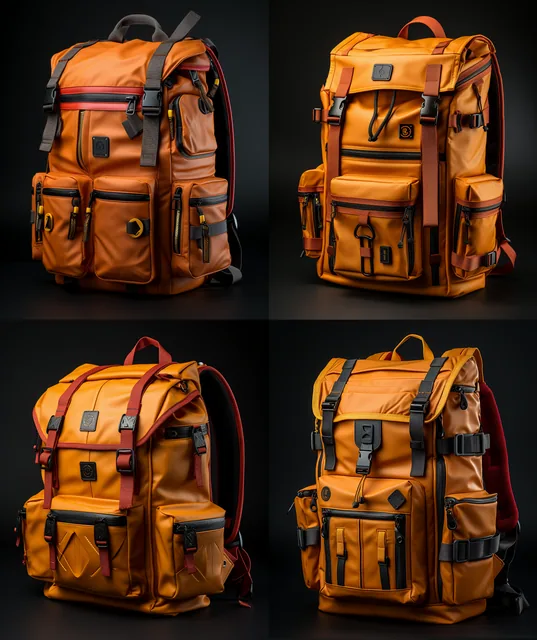
A bag BOM lists every material, component and trim needed to build one style, with a quantity per unit, a unit of measure, a cutting allowance, a supplier, a lead time and a price. It is derived from the tech pack and it drives purchasing. On a 500 pcs order the BOM is what turns a specification into a material commitment several weeks before bulk starts.
The distinction matters most at the point of commitment. A pack can be revised on paper at any time before bulk. A BOM, once it has been acted on, becomes purchase orders, dye lots and tooling, and revising it costs money rather than time. That is the moment the two documents stop behaving the same way.
The distinction that matters is between the pack and the BOM. The pack is a specification: it says the shell is 600D polyester, PU coated, from a named mill, in a named shade. The BOM is the consequence: how many linear metres of that shell are needed to cut 500 bags, what the marker yield is, what the allowance for defects is, when it has to be ordered and what it costs.
Buyers who have never built one tend to treat the BOM as paperwork to be produced after the price is agreed. It is the opposite: the BOM is how the price is built, and a BOM produced afterwards is a reconstruction rather than a calculation.
What Columns Does a Bag BOM Actually Need?
Twelve, and the four that get dropped are the ones that matter. Most BOMs carry the component name, the material, the quantity, the unit and the supplier. What is missing is the allowance, the lead time, the minimum purchase quantity and the approved-substitute rule — and those four decide what happens when something goes wrong.
The minimum purchase quantity is the one that surprises buyers. Fabric is bought by the metre and hardware by the thousand, and a colour matched to a team shade may carry a dye-lot minimum that exceeds what the order needs. Where that happens, the surplus is either paid for and held, or the colour is changed, and both are decisions the BOM should surface before the order rather than during it.
How Is Quantity Per Unit Calculated?
From the marker for fabric and from the cut length for everything else. Fabric consumption comes from the panel sizes and the marker efficiency, expressed in linear metres at a stated width; webbing and binding come from the cut length plus the turn-back; thread comes from the stitch count and the seam length and is usually expressed as metres per bag.
Hardware is the easy part and foam is the hard one. Hardware is a count: two buckles, four D-rings, one slider. Foam is an area, because it is cut from sheet or die-cut from a profile, and the yield depends on the die layout. State the foam as an area per bag and the sheet size it is cut from, not as a thickness alone.
| Column | What it holds | Why it is there | If it is missing |
|---|---|---|---|
| Line number | A stable identifier for the row | Changes are tracked against it | Two versions cannot be compared |
| Component | The name, matching the pack callout | Joins the BOM to the pack | The BOM and the pack drift apart |
| Material specification | Construction, weight, finish, colour | What is actually bought | A correct row for the wrong material |
| Quantity per unit | Number, area or length for one bag | The arithmetic of the order | No way to cost the run |
| Unit of measure | Pieces, linear metres, square metres, kilograms | Ends the ambiguity | A quantity nobody can price |
| Allowance | Waste and defect percentage | What is actually ordered | A shortfall mid-run |
| Supplier | Named mill or component source | A substitution is a deviation | An invisible change |
| Lead time | Days from order to delivery | When it must be ordered | Bulk waits on a component |
| Minimum purchase | The smallest quantity sold | Whether the order covers it | A dye-lot minimum nobody budgeted |
| Price and currency | Unit price with a break level | The material cost line | A price that moves at order time |
| Approved substitute | What may replace it, and who approves | A controlled fallback | An uncontrolled swap made at the bench |
| Certification | OEKO-TEX, GRS or REACH document reference | What a customer or an authority can ask for | A claim with no document behind it |
What Is the Difference Between a BOM and a Cost Sheet?
The BOM is quantities and the cost sheet is money. A BOM can be correct at any price, and it stays correct when the price of a component moves. A cost sheet applies prices to those quantities, adds labour, overhead and margin, and expires the moment any input moves.
Keeping them separate is what makes a price defensible. When a component cost rises, the BOM does not change and the cost sheet recalculates. Where the two are merged into one document, a price change reads as a specification change, and the conversation that follows is about the wrong thing.
What a BOM is not
- It is not the tech pack. The pack says how the bag is built; the BOM says what is bought.
- It is not a cost sheet. Quantities live here; money lives on the costing sheet.
- It is not a cutting order. The cutting order adds the marker and the size run to the BOM.
- It is not static. Every revision of the pack produces a revision of the BOM.
- It is not complete without lead times. A BOM that says what to buy but not when cannot be actioned.
Who Owns the BOM and When Is It Issued?
The buyer owns the decision and the production team owns the arithmetic, because consumption depends on the marker and the die layout, which sit on the production side. In practice the BOM is drafted from the pack, completed with consumption and allowance, and then approved by the buyer line by line.
It is issued after the pack is signed and before the material is ordered. That ordering matters: a BOM issued after material has been bought is a record of what was bought rather than a plan for what should have been, and the two diverge as soon as anything runs short.

How Do Allowance and Waste Get Decided?
By component class, and stated as a percentage with the reason. Fabric carries a cutting allowance from the marker plus a defect allowance; webbing carries a cut-length allowance; hardware carries a defect and loss allowance; foam carries a die-layout allowance. Each is a different number for a different reason.
The number that gets argued about is the fabric defect allowance, because it is the one that can be inflated or squeezed without anybody being able to check. State it as a percentage agreed before the order, and state who carries the cost of anything above it. That single clause removes most of the argument.
| Component class | Typical allowance driver | What to state | Who carries an overrun |
|---|---|---|---|
| Shell and lining fabric | Marker efficiency and defect rate | A percentage over the net consumption, with the marker reference | Agreed before the order |
| Foam and interlining | Die layout yield | Area per bag and the sheet size it is cut from | Agreed before the order |
| Webbing and binding | Cut length plus turn-back | Metres per bag including the turn-back | Production side |
| Hardware | Defect and loss rate | A percentage over the piece count | Production side |
| Thread | Stitch count and seam length | Metres per bag from the stitch schedule | Production side |
| Print and transfer | Spoilage on application | A percentage over the piece count | Production side |
| Packaging | Carton and polybag loss | A percentage over the carton count | Production side |
How Does the BOM Connect to MOQ and Lead Time?
MOQ is a programme figure and the BOM decides whether it is achievable. At 500 pcs per style and colourway, most components clear their own minimum comfortably. The exceptions are dyed-to-match components and tooled parts: a custom shade of webbing and a branded metal puller each carry a minimum of their own, and either can exceed what 500 bags consume.
Where a component minimum exceeds the order requirement, there are three options and the BOM should name which applies: buy the minimum and hold the surplus against a repeat, change to a stock component, or accept a price that carries the surplus. None of them is wrong, and all of them are better decided early.
How Is a Multi-Level BOM Structured?
Most bag BOMs are single-level: one row per purchased item. That is right for a simple style and wrong for a bag with sub-assemblies. A cooler bag with a welded liner, a camera bag with a divider set, and a kit bag with a studded base all have parts made up before they go into the bag, and those need a second level.
A two-level BOM carries the sub-assembly as a parent row and its components as children, with the parent quantity being one per bag. This matters for purchasing, because the child components have their own lead times and their own minimums. It also matters for cost, because a sub-assembly that is made rather than bought carries labour that sits nowhere on a single-level list.
| Style | Sub-assembly | Child components | Why a single level fails |
|---|---|---|---|
| Cooler bag | Welded liner | Liner film, weld patch, drain grommet | The grommet lead time is hidden under the liner |
| Camera bag | Divider set | Foam sheet, hook-and-loop, stiffener | The die cost and the foam yield are invisible |
| Kit bag | Studded base | Base panel, studs, washer plate | The stud count is not visible as a purchased quantity |
| Drawstring bag | Cord and toggle set | Cord, toggle, end cap | The cord length per bag is lost |
| Neoprene sleeve | Bound edge | Binding tape, thread | The binding consumption is never costed separately |
How Does the BOM Survive a Repeat Order?
By being reissued rather than reused. A repeat runs the same BOM against the current revision of the pack, with the allowance figures checked against what actually happened on the last run. Where the last run overran on a component, the allowance moves; where it came in under, the allowance can come down.
This is the practical answer to reorder drift. The BOM is where a material substitution becomes visible, because a changed supplier or a changed specification has to appear as a changed line. A programme that reissues its BOM on every repeat catches drift at the document level rather than at the inspection. The reorder consistency note covers the rest of the controls.
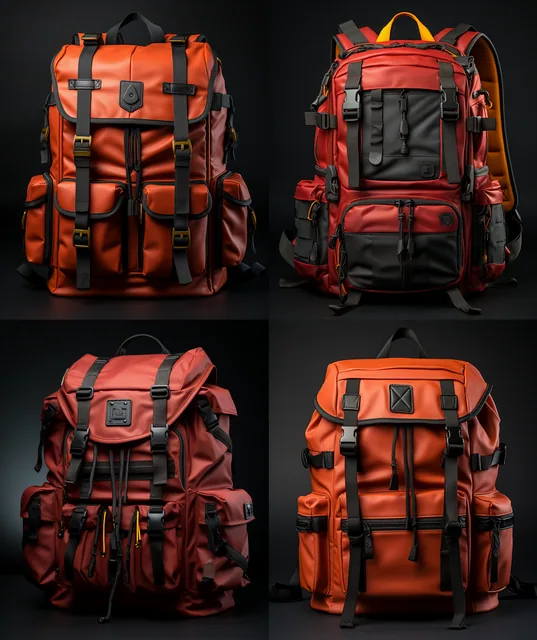
What Does the BOM Show on a Worked 500-Piece Order?
Take a soft kit bag with a 600D polyester shell and a 210D lining. If the marker yields 0.62 linear metres of shell per bag at 150 cm width, the net consumption on 500 pieces is 310 metres. Add a cutting and defect allowance of 8% and the order becomes 334.8 metres, which is what actually gets bought. The lining works the same way on its own marker.
Hardware is counted rather than calculated: two buckles, four D-rings and one slider per bag gives 1,000 buckles, 2,000 D-rings and 500 sliders before allowance. Add a 3% defect and loss allowance and the buy is 1,030, 2,060 and 515. Those three lines are then checked against the pack quantity each part is sold in.
| BOM line | Quantity per bag | Net on 500 pcs | Allowance | Quantity to buy |
|---|---|---|---|---|
| Shell, 600D polyester, 150 cm | 0.62 linear metres | 310.00 m | 8% cutting and defect | 334.80 m |
| Lining, 210D polyester | 0.48 linear metres | 240.00 m | 8% cutting and defect | 259.20 m |
| Foam, 5 mm closed cell | 0.19 linear metres at 1,000 mm | 95.00 m | 10% die-layout yield | 104.50 m |
| Side-release buckle, 25 mm | 2 pieces | 1,000 pcs | 3% defect and loss | 1,030 pcs |
| D-ring, 25 mm | 4 pieces | 2,000 pcs | 3% defect and loss | 2,060 pcs |
| Slider, #5 reverse coil | 1 piece | 500 pcs | 3% defect and loss | 515 pcs |
| Webbing, 25 mm | 1.85 linear metres | 925.00 m | 4% cut-length loss | 962.00 m |
| Thread, polyester ticket 40 | 62 metres | 31,000 m | included in consumption | 31,000 m |
| Carton, 5-ply | 0.2 cartons | 100 cartons | 2% handling loss | 102 cartons |
What Should a Buyer Ask to See Alongside the BOM?
Three things: the consumption worksheet behind the fabric figure, the component lead-time list, and the certificate references for every line that carries a claim. The first lets the buyer check the arithmetic, the second tells them when material has to be committed, and the third is what a customer or an authority will ask for.
Then hold the whole thing against the calendar. Bulk runs 35-50 days from written sample approval, and the longest component lead time in the BOM has to fit inside that window with room for inspection at AQL 2.5 under ISO 2859-1. Where it does not, the BOM is telling the buyer something about the delivery date before anybody has promised one.
Get a BOM drafted from your pack
Send the signed pack and the order quantity. You get a twelve-column BOM with consumption, allowance and lead time on every line.
Frequently Asked Questions
What does BOM stand for and what is it for?
Bill of materials. It is the purchase list derived from the tech pack: every material, component and trim, with a quantity, a unit, an allowance, a supplier and a lead time.
How is a BOM different from a tech pack?
The pack says how the bag is built; the BOM says what has to be bought to build it. One is a specification and the other is a purchasing document.
How is a BOM different from a cost sheet?
The BOM holds quantities and the cost sheet holds money. Keeping them separate means a component price change recalculates the cost without reading as a specification change.
Who should write the BOM?
Drafted from the pack with consumption and allowance completed on the production side, then approved line by line by the buyer, who owns the material decisions.
When should the BOM be issued?
After the pack is signed and before material is ordered. A BOM issued afterwards records what was bought rather than planning what should be.
What is a cutting allowance?
The percentage added to net fabric consumption to cover marker loss and defects. It should be agreed before the order, along with who carries an overrun.
Why does hardware need a minimum purchase column?
Because hardware is sold in pack quantities and dyed-to-match or tooled parts carry minimums of their own that can exceed what an order consumes.
How is foam quantity expressed?
As an area per bag plus the sheet size it is cut from, because yield depends on the die layout. Thickness alone is not a quantity.
What happens when a component minimum exceeds the order?
Three options: buy the minimum and hold the surplus against a repeat, change to a stock component, or accept a price carrying the surplus. Name which applies on the BOM.
Does the BOM change on a repeat order?
Yes — it is reissued against the current pack revision with the allowance figures checked against what the last run actually used.
What certificates belong on the BOM?
A document reference on every line that carries a claim: OEKO-TEX, GRS transaction certificate, or a REACH restricted-substance statement.
How does the BOM affect the delivery date?
The longest component lead time in the BOM has to fit inside the 35-50 day bulk window with room for inspection, and the BOM tells you that before anybody promises a date.
What is an approved substitute?
A named second source, with the rule on who approves its use. Without it, a substitution is uncontrolled and invisible.
How many columns should a bag BOM have?
Twelve: line number, component, specification, quantity, unit, allowance, supplier, lead time, minimum purchase, price, approved substitute and certification.
People Also Ask
What is a BOM in bag manufacturing?
The bill of materials: the purchase list derived from the tech pack, giving every material, component and trim with quantity, unit, allowance, supplier and lead time.
What should a BOM include?
Twelve columns, of which the four most often dropped are allowance, lead time, minimum purchase quantity and the approved-substitute rule.
What is the difference between a BOM and a tech pack?
The pack specifies how the bag is built; the BOM lists what has to be bought to build it, in what quantity and by when.
How do you calculate fabric consumption for a bag?
From the panel sizes and the marker efficiency, expressed as linear metres at a stated width, plus a cutting allowance and a defect allowance.
Why does a BOM need lead times?
Because the longest component lead time has to fit inside the bulk window, and the BOM is the document that reveals it before a date is promised.
Sources and further reading
Every figure on this page is either our own programme data or attributed below. Open the originals before you write them into a specification.
- ASTM D6193 — Standard Practice for Stitches and SeamsASTM International
- ISO 9001 — Quality management systemsInternational Organization for Standardization
- Textile Exchange — recycled content and chain of custodyTextile Exchange