What Is a Bag Tech Pack and What Should It Include?
A bag tech pack is the written specification a production team builds from: dimensions in millimetres, a material list with mill and shade reference, construction notes, hardware callouts, artwork and packing. It is the document that turns a drawing into a repeatable order.
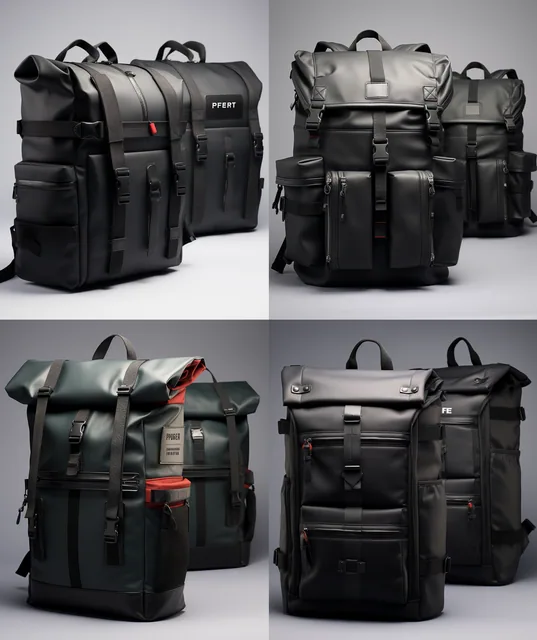
A bag tech pack is one file that answers every question a production team would otherwise ask by email: size, material, construction, hardware, branding, testing and packing. Twelve sections cover it. When the pack is complete, sampling runs 6-10 working days and bulk runs 35-50 days from written sample approval; when it is not, both clocks start late and stop often.
Buyers meet the tech pack at the same moment they meet the first real quotation, and that is not a coincidence. A price for a bag that does not exist yet is a price for an assumption. The pack is what turns the assumption into a set of decisions somebody can cost, and it is the only artefact in a bag programme that survives contact with a second run.
The useful way to think about it is as a contract with yourself. Everything agreed before the first sample is written down in one place, numbered, and dated. Six months later, when the fabric has changed mill and the colour has drifted half a shade, the pack is the only thing that can say what the original decision was.
What Exactly Sits Inside a Bag Tech Pack?
Twelve sections, in a fixed order, because the order follows the way a bag is actually built. The cover carries the style code, the revision number and the date, without which nothing else in the file can be trusted. The drawing carries orthographic views with dimensions. The materials section names shell, lining, foam, webbing, thread and hardware with a mill and a shade reference for each.
After that come construction notes, the stitch and seam schedule, the hardware schedule, artwork and placement, the label and compliance block, the colourway list, the packing specification, the testing requirements with the standard numbers, and finally the approval block with names and dates. A pack missing the last section is a draft, however good the drawing is.
Why Does a Tech Pack Decide the Price Before a Sample Exists?
Because the quotation is arithmetic performed on the pack. Shell fabric is costed from the marker width and the yield, foam from the die size, webbing from the cut length, hardware from the schedule, and labour from the stitch count and the operation list. None of those inputs exists until the pack states them, so a quotation issued before the pack is finished is a placeholder.
This is why two quotations for the same photograph can differ by a wide margin without anybody being dishonest. One was priced against a complete specification and one was priced against a guess about what the specification would turn out to be. The gap closes the moment the pack is signed, which is the single strongest argument for finishing it before asking for a number.
| Section | What it carries | Who signs it | What breaks when it is thin |
|---|---|---|---|
| 1. Cover and revision | Style code, revision letter, date, owner | Buyer and programme manager | Two versions of the truth circulate at once |
| 2. Drawing | Front, back, side, base views, all dimensions in mm | Buyer | The sample comes back the wrong size and nobody agrees why |
| 3. Materials | Shell, lining, foam, webbing, thread, each with mill and shade | Buyer | A substitution nobody approved changes the hand and the price |
| 4. Colourways | Each colourway with its own component references | Buyer | The trim on the second colourway arrives in the first colour |
| 5. Construction | Seam sequence, binding, turning, closing allowance | Production team | The bag is assembled in a different order and fits badly |
| 6. Stitch schedule | Stitch type per seam, stitches per inch, thread | Production team | A seam passes the eye and fails the pull test |
| 7. Hardware | Every buckle, ring and slider with size, finish and pull test | Buyer | A zinc-alloy part arrives where brass was expected |
| 8. Artwork and placement | File format, size, position, tolerances | Buyer | The logo sits 8 mm low across the whole run |
| 9. Labels and compliance | Fibre content, care, country of origin, warnings | Buyer | The shipment is held at the port on a marking issue |
| 10. Packing | Fold method, polybag, carton, carton count and weight | Production team | Cartons arrive over the carrier limit and get repacked |
| 11. Testing | Standard numbers, limits and sample size | Buyer | A claim is made that no laboratory can reproduce |
| 12. Approval block | Names, dates, the golden sample reference | Both sides | No written approval exists, so bulk starts on a nod |
How Is a Tech Pack Different from a Drawing or a Photograph?
A drawing fixes geometry and a photograph fixes intent. Neither fixes the decisions that cost money: which mill supplies the shell, what the seam allowance is, whether the webbing is 25 mm or 32 mm, how many stitches per inch close the gusset. Those decisions live only in the pack, and they are the ones that move the price.
There is also a difference in who can act on it. A drawing can be read by anybody; a pack can be built from. The test is simple. Hand the file to somebody who has never spoken to the buyer and ask whether a sample can be produced without a single question. If the answer is no, the file is a drawing with notes, not a pack.
The no-questions test, applied to one pack
- Every dimension on the drawing carries a unit and a tolerance.
- Every material names a mill, a construction and a shade reference.
- Every hardware item has a size, a finish and a performance requirement.
- Every seam says what stitch type and how many stitches per inch.
- Every piece of artwork states the file format, the size and the position measured from a named seam.
- Every test names the standard, the limit and the sample size.
- Every revision is numbered, dated and traceable to the change that caused it.
What Does a Complete Materials Section Actually Name?
Fabric is the section buyers fill in fastest and get wrong most often. "600D polyester" names a yarn count and nothing else: it does not say whether there is a coating, what the coating is, what the finished weight is, or who supplies it. A usable line reads "600D polyester, PU coated, finished 260 gsm, mill A, shade reference PMS 19-4052, OEKO-TEX STANDARD 100 certificate on file".
The same discipline applies to the parts buyers treat as minor. Thread is specified by ticket number and fibre, not by colour alone, because a polyester thread sewn through a nylon shell behaves differently from a nylon thread in the same seam. Foam is specified by density in kg per cubic metre and by thickness in millimetres, because a 5 mm foam at low density and the same foam at high density are not the same part.
How Should Construction and Stitching Be Written Down?
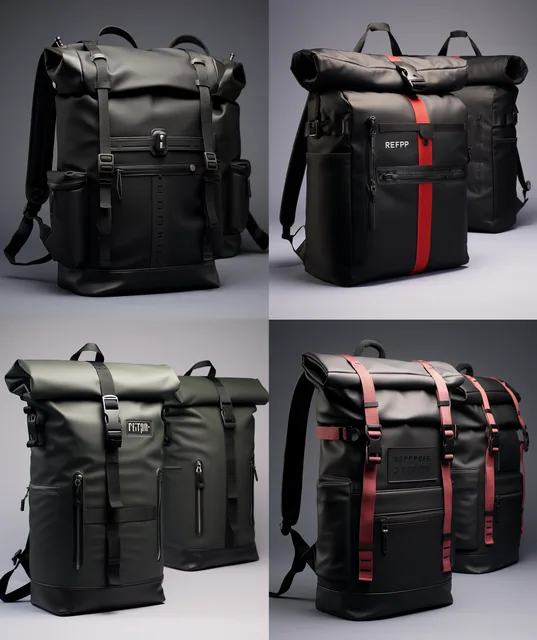
As a schedule, one line per seam, rather than as prose. Each line names the seam, the stitch type, the stitches per inch, the thread and the needle size. ASTM D6193 is the reference most bag programmes use for stitch and seam types, and naming a stitch type by its class number from that practice removes the ambiguity that words such as "strong" or "reinforced" always leave behind.
Two numbers carry most of the load. Stitches per inch sets both the strength and the cost of the seam: more stitches means a stronger seam and a slower operation. Seam allowance sets how much material sits inside the seam, and it is the number that decides whether a turned bag comes out square or twisted. Both belong in the pack, not in the sampler's judgement.
| Seam on a soft bag | Stitch type (ASTM D6193 class) | Stitches per inch | Seam allowance | Failure it prevents |
|---|---|---|---|---|
| Shell to shell, main body | Class 301 lockstitch, single needle | 8 to 10 | 10 mm | Seam grinning under load |
| Lining to shell, top edge | Class 301 with binding, Class 501 overedge on the raw edge | 8 to 10 | 8 mm | Raw edge fraying into the cavity |
| Webbing anchor | Class 401 chainstitch or a boxed Class 301 | 7 to 9 | 15 mm plus a bar tack | The strap pulling out of the body |
| Base gusset | Class 301, double pass | 9 to 11 | 12 mm | Base splitting under a full load |
| Zip insertion | Class 301, two passes, one either side of the coil | 9 to 11 | 6 mm | Zip tape peeling away from the shell |
| Bound internal seam | Class 503 or a tape-bound Class 301 | 8 to 10 | n/a, taped | Abrasion of the contents against the raw edge |
| Welded seam, coated shell | Radio-frequency or hot-air weld, no thread | n/a | 12 mm weld width | A leaking or peeling seam on a cooler bag |
Where Do Hardware, Branding and Artwork Go in the File?
Hardware gets its own schedule, one line per part, because hardware is the component most often substituted without comment. Each line names the part, the size in millimetres, the material, the finish, the colour, the supplier and the performance requirement. "Buckle" is not a specification; "25 mm acetal side-release buckle, black, 180 N minimum pull" is.
Artwork gets a block that states the file format, the colour space, the size in millimetres, the position measured from a named seam or edge, the rotation tolerance, and the process it will be applied by. A logo drawn for embroidery and the same logo drawn for a heat transfer are two different files, and a pack that says "logo on front panel" without saying which file is being referred to has not specified anything.
What Does the Packing and Compliance Section Cover?
Packing is specified because it is the part of the bag the buyer never sees on a sample and always sees on an invoice. The pack states the fold method, whether the bag is stuffed, the polybag gauge and whether it is perforated, the carton specification, the number of pieces per carton, and the carton weight and dimensions. Those five lines decide the freight bill and whether the carton survives the drop it will get.
Compliance is specified as a list of named documents rather than as an adjective. Where the programme sells into the European Union, REACH restricted-substance compliance is a document; where it sells into California, a Proposition 65 position is a document; where it sells children's product, CPSIA tracking and testing is a document. Writing "compliant" in the pack specifies nothing that a laboratory can test.
Who Holds the Pack and Who Is Allowed to Change It?
One controlled copy on each side, named in the distribution block, and one person on each side authorised to issue a revision. Everything else is an uncontrolled copy. This reads as bureaucracy until the first time a buyer and a production team discover they have been working from different files for three weeks, which is a discovery that always happens after the material has been bought.
The rule that matters is that a revision is issued, never implied. A change agreed on a call, in a message, or at the bench is not a revision until it is in the file with a new letter and a date. Sampling is priced on the assumption that the file is the only source of truth; when it stops being that, the 6-10 working day window stops meaning anything.
How Does a Signed Tech Pack Start the Sampling Clock?
Sampling is quoted as 6-10 working days from a signed-off pack, and the signature is the trigger rather than a formality. The clock includes pattern making, cutting, assembly, and the internal check against the pack; it does not include the days spent clarifying what the pack meant. A pack that arrives with four open questions has not started the clock.
Once the sample is approved in writing, bulk runs 35-50 days and is inspected at AQL 2.5 under ISO 2859-1 at General Inspection Level II. Both figures are honest windows rather than promises: the sampling window widens to 12-15 working days on a complex style with welded seams or multi-panel foam, and bulk widens where a component has to be tooled. The development note on why bulk takes 35-50 days sets out what fills those days.
Get the pack reviewed before sampling starts
Send the drawing, the material list and the quantity. You get a field-by-field review of what is missing and what it will cost to leave out, in writing.
Frequently Asked Questions
What is a tech pack in bag manufacturing?
It is the written specification a bag is built from: drawing with dimensions, materials with mill and shade references, construction and stitch schedule, hardware schedule, artwork and placement, labels and compliance, packing, testing and a signed approval block.
How long does a bag tech pack take to write?
For a straightforward style with an existing reference, a day of focused work. For a cooler bag with welded seams, or a camera bag with foam cradles, expect several days, because the pattern and the foam dies have to be resolved before the pack is complete.
Do I need a tech pack to get a quotation?
You need one to get a quotation you can hold anybody to. A number issued against a photograph is priced against an assumption about the shell, the hardware and the stitch count, and it moves as soon as those are stated.
What is the difference between a tech pack and a spec sheet?
A spec sheet usually covers dimensions and material only. A tech pack adds construction sequence, stitch schedule, hardware performance, artwork placement, testing and the approval block — everything needed to build a sample without asking a question.
Who writes the tech pack, the buyer or the mill?
The buyer owns it, because the buyer owns the decisions. In practice the production team completes the construction and stitch sections, and the buyer approves every line. A pack written entirely by the mill is a record of what the mill prefers, not of what the buyer specified.
What units should a bag tech pack use?
Millimetres for every linear dimension, grams per square metre for fabric weight, kilograms per cubic metre for foam density, and newtons for hardware pull. Mixing centimetres and inches inside one pack is the most common source of a wrong first sample.
Should each colourway have its own tech pack?
One pack with a colourway matrix, provided every component that changes colour is listed. Where a colourway changes a material as well as a colour, it becomes a separate style code and needs its own pack.
How many revisions before the pack is frozen?
As many as it takes, and each one numbered. What matters is that the revision letter on the pack matches the revision on the sample the buyer approved, because bulk is built from the approved revision and not from the latest one.
What is a golden sample and where does it live?
It is the physical sample approved in writing against a named revision of the pack. Two are kept: one with the buyer, one with the production team. Every dispute about colour, hand or construction is settled against the golden sample and the revision it belongs to.
Does the tech pack cover the carton and the packing?
Yes. Fold method, whether the bag is stuffed, polybag gauge and perforation, carton specification, pieces per carton and carton weight are all specified in the pack, because they decide freight cost and whether the carton survives transit.
What compliance documents belong in the pack?
Named documents with a standard or regulation behind each: REACH restricted-substance position for the European Union, a Proposition 65 position for California, CPSIA tracking and testing where the product is a children's product, and OEKO-TEX or GRS certificates where the programme claims them.
When does the sampling clock actually start?
On written sign-off of a complete pack. Sampling is 6-10 working days from that point, widening to 12-15 working days on a complex style with welds or multi-panel foam.
People Also Ask
What should a tech pack include for a bag?
Twelve sections: cover and revision, drawing, materials, colourways, construction, stitch schedule, hardware, artwork and placement, labels and compliance, packing, testing, and the signed approval block.
How do I make a tech pack for a bag?
Start from the drawing with every dimension in millimetres, then name every material with a mill and a shade reference, then write the construction and stitch schedule one line per seam, then the hardware, artwork, packing and testing blocks, then sign it.
What is a tech pack template?
A blank version of the twelve sections with a worked example in each. A template matters less than the discipline of filling every field: the value is in the completed pack, not in the form.
Why do factories ask for a tech pack?
Because without one every unspecified decision becomes a question, and every question stops the sampling clock. A complete pack is the only way a quotation can be held to.
Can a photograph replace a tech pack?
No. A photograph fixes intent and a drawing fixes geometry; neither states the mill, the shade reference, the seam allowance, the stitch count or the hardware pull requirement that the price depends on.
Sources and further reading
Every figure on this page is either our own programme data or attributed below. Open the originals before you write them into a specification.
- ASTM D6193 — Standard Practice for Stitches and SeamsASTM International
- ISO 2859-1:1999 — Sampling procedures for inspection by attributesInternational Organization for Standardization
- OEKO-TEX STANDARD 100 — limit values and test criteriaOEKO-TEX