What Fabrics Stand Up to Team Travel: 600D, 840D or Ballistic Nylon?
Team travel kills bags at the base, the corners and the strap roots, not in the middle of the side panels. That means the fabric decision is a zoning decision: choose one shell for the panels and spend the extra denier only where the bag actually fails.
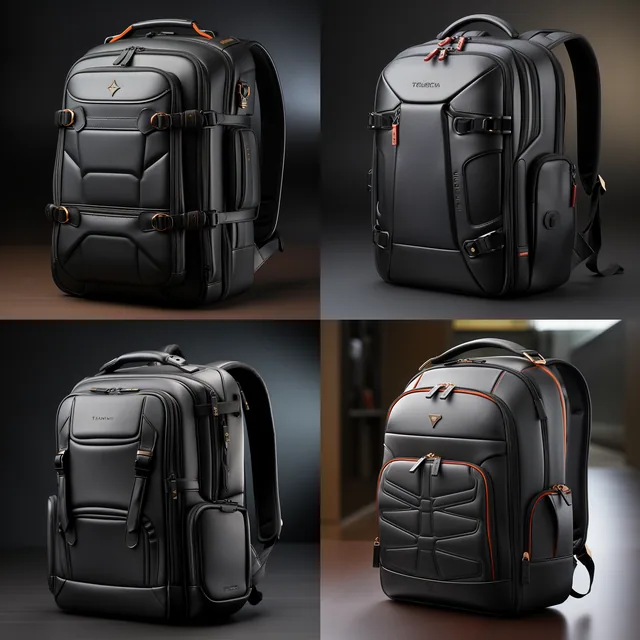
600D polyester is the default shell for a team bag and it is adequate for almost every panel. 840D earns its place on the base and on bags that travel by bus. Ballistic nylon is a specific weave with a specific job, and it belongs on a bag that gets dragged rather than carried.
What Does Denier Actually Tell a Buyer?
Denier is a measure of linear mass density — the mass in grams of 9,000 metres of yarn. It tells a buyer that the yarn in an 840D cloth is heavier than the yarn in a 600D cloth. It does not tell the buyer how strong the finished fabric is, because weave, finish, coating and construction change the result more than yarn size does.
This matters because the number is the thing that gets quoted and the property is the thing that gets tested. Two 600D cloths from two mills can differ substantially in abrasion resistance, and a 600D with a good weave and a good finish will outlast an 840D with a poor one. Specify the number to identify the cloth and specify the test result to control it.
| Term | What it measures | What it does not tell you | Where it is used |
|---|---|---|---|
| Denier (D) | Yarn linear mass | Fabric strength or abrasion | Identifying a cloth |
| GSM | Mass per unit area | Construction or fibre | Comparing two fabrics |
| Tensile strength | Force to break a strip | Abrasion or tear behaviour | Load paths |
| Tear strength | Force to propagate a tear | Resistance to puncture | Lining and light panels |
| Abrasion cycles | Cycles to a stated end point | Tensile behaviour | Base and corners |
| Coating adhesion | Bond strength of a coating | Water resistance | Coated shells |
How Do 600D and 840D Compare in Practice?
The practical difference is abrasion and handle rather than strength. An 840D cloth is heavier, stiffer and more resistant to surface wear, and it costs more per metre. A 600D cloth is lighter, softer, and entirely adequate on any panel that is not being rubbed against a floor.
That is why the zoning approach works. A team bag with a 600D shell and an 840D base panel will outlast a bag built entirely from 840D on the panels that matter and it will weigh less, which matters when the bag is carried by a strap rather than wheeled.
| Cloth | Typical use | Abrasion behaviour | Handle and weight | Where it is wrong |
|---|---|---|---|---|
| 600D polyester | Shell panels and linings | Adequate on panels | Light, soft | A base that is dragged |
| 840D polyester | Base panels, heavy-use bags | Good | Stiffer, heavier | Panels where weight matters |
| Ballistic nylon | Bases, corners, dragged bags | Very good | Stiff, heavy | A bag that is carried on the shoulder all day |
| Ripstop nylon | Light panels and linings | Moderate | Very light | An abrasive base |
| Coated polyester | Wet zones and bases | Depends on the base cloth | Stiffer | Where breathability is needed |
What Is Ballistic Nylon and When Is It Right?
Ballistic nylon is a specific woven construction rather than a denier, and it earned its name from a protective application rather than from a bag one. Its value in a bag is resistance to abrasion and resistance to tearing once a cut has started, which is exactly the behaviour a dragged base needs.
It is the wrong call on a bag that is carried on the shoulder all day, because it is heavy and stiff and the weight is felt rather than seen. It is the right call on a bag that goes into a bus hold, gets pulled across a car park, or carries rigid equipment with edges. That is a cricket bag, a catcher bag and a wheeled team bag — and not a coaching bag.
Which Standards Should a Team Bag Fabric Be Evidenced To?
Three properties, three standards, and all three belong on the tech pack as separate requests. Tensile behaviour is evidenced to ISO 13934-1, tear behaviour to ISO 13937-1, and abrasion resistance to ISO 12947. A supplier quoting one of the three has given a partial answer.
The fourth result worth asking for is coating adhesion to ISO 2411, wherever the shell or the lining is coated. A coating that delaminates turns a water-resistant bag into a wet one and it is the failure that appears after a season rather than in the first month.
- Tensile behaviour on the shell and on the assembled seam: ISO 13934-1.
- Tear behaviour on the lining: ISO 13937-1.
- Abrasion cycles on the base panel and on the lining: ISO 12947.
- Coating adhesion wherever a coating is used: ISO 2411.
- Light fastness on any colour that sits in the sun: AATCC 16 at a stated exposure.
How Does Fabric Choice Interact With Colour Matching?
Directly, and this is the part most specifications miss. The same colour dyed onto a 600D polyester and onto a ballistic nylon will not match, because the fibre, the weave and the surface geometry all differ. A club that specifies two cloths in one colourway has committed to two colour approvals.
The consequence is that the zoning approach has a colour cost. Put an 840D base panel under a 600D shell and the base will be a slightly different shade — which is acceptable on a base, where nobody looks closely, and is not acceptable on a side panel next to a crest. Zone by visibility as well as by wear. The method is set out in Reorder colour consistency.
What Does the Base Actually Need?
The base of a team bag is the part that fails first in every sport in this cluster. It takes abrasion from the ground, impact from being set down loaded, and — where there is no board — the whole weight of the contents. Three clauses cover it: a heavier or coated panel, corner protection, and a board.
| Base element | What it does | Without it | Evidence to ask for |
|---|---|---|---|
| Heavier or coated panel | Resists abrasion | The base wears through | ISO 12947 cycles |
| Corner protection | Takes the impact of being set down | The corner splits | Transit evidence on a loaded bag |
| Base board | Keeps the shape and carries the load | The bag sags into its seams | A dimensioned board on the tech pack |
| Feet or studs | Lifts the base off wet ground | The base wicks water | A stated material |
| Sealed base seam | Stops water wicking in | A wet bag after ten minutes on grass | A stated seam treatment |
How Does Fabric Weight Affect the Landed Figure?
Heavier cloth costs more per metre and it costs more to ship, because freight is charged on volume and on mass. On a 500-piece order the freight difference between a 600D shell and an 840D shell across the whole bag is not trivial, and it lands on the same line as the material cost.
That is a second argument for zoning. Putting the heavier cloth only on the base keeps the material spend where it does something and keeps the freight down. The arithmetic is worth running before the cloth is chosen rather than after the quotation arrives, using the landed cost calculator.
What Should the Tech Pack Say About Fabric?
Five fields per zone, and a fabric specification is complete: the cloth identified by construction and denier, the mass per unit area, the finish or coating, the test result required, and the colour reference. Anything less leaves the choice to whoever is buying cloth that week.
Fabric fields to complete on a team bag tech pack
- Shell: construction, denier, mass per unit area and finish.
- Base: the same four, and whether it differs from the shell.
- Lining: the same four, plus whether the wet zone lining differs.
- Test results required: ISO 13934-1, ISO 13937-1, ISO 12947 and ISO 2411 where coated.
- Colour reference per cloth, because two cloths in one colourway is two approvals.
How Does the Inspection Check the Fabric?
Four checks, all measurable: mass per unit area against the stated figure, handle against the retained coupon, coating adhesion where a coating is specified, and colour against the approved coupon set. The first is a weighing exercise and the second is a comparison, and neither needs a laboratory.
The third and fourth do need a laboratory, and they belong in the pre-shipment evidence rather than in the inspection itself. Ask for them with the order and they arrive with the shipment; ask for them at inspection and they arrive three weeks later, by which point the decision has been made.
What Does a Travel-Grade Fabric Cost Compared With a Standard One?
The material difference is a modest uplift per unit and the freight difference is larger than most buyers expect. Both are worth having where the bag travels, and neither is worth having where it does not — a bag that goes from a car to a changing room does not need a bus-hold specification.
The honest answer is that most clubs over-specify the shell and under-specify the base. Moving the spend from the panels to the base costs nothing net and it fixes the part that actually fails. That is the single most useful piece of advice in this cluster.
How Does the Choice Hold Across a Reorder?
By being recorded. A cloth identified only as "600D" will be re-sourced at the next order and the replacement will be close but not identical, which shows up as a handle difference and a shade difference at the same time. Record the construction, the mass, the finish and the mill reference where one exists.
The retained coupon does the rest. With a signed coupon from the original lot, the reorder is a comparison against a physical standard rather than against a description, and the description is what drifts.
What Fails First and What Clause Prevents It?
Abraded base, split corner, torn lining and a delaminated coating — in that order. Each is prevented by one clause: an abrasion result on the base, corner protection on the drawing, a tear result on the lining, and a coating adhesion result where a coating is used.
None of those clauses requires a heavier cloth across the whole bag. They require the specification to say where the cloth changes and what evidence arrives with it.
What Goes Into the Enquiry?
Six fields, and a fabric question is answered. The two that change the quotation most are how the bag travels and whether the base can differ from the shell.
- How the bag travels: carried, wheeled, or into a bus hold.
- Whether the base panel may differ in cloth and therefore in shade from the shell.
- The abrasion expectation, where one exists from a previous season.
- Whether any zone is coated, and what coating.
- Colour references per cloth, with the library stated.
- Quantity split and the date the kit is needed.
How Does Coating Change the Fabric Decision?
A coating turns a woven cloth into a barrier, and it changes three properties at once: water resistance goes up, breathability goes down, and the cloth becomes stiffer. On a team bag that is usually a good trade on the base and a bad one on a wet zone that needs ventilation.
The failure mode is delamination, and it is the one that appears after a season rather than in the first month. A coating that lifts turns a water-resistant panel into a wet one and it leaves a surface that looks worse than a plain woven cloth would have. Where a coating is specified, ask for the adhesion result to ISO 2411 with the order rather than at inspection.
How Does the Lining Differ From the Shell?
The lining is the most under-specified material on a team bag and it is the one that fails most often. It takes abrasion from boots and equipment, it holds whatever damp the wet zone generates, and it is the surface a player sees every time the bag is opened. A shell that outlives its lining has produced a bag that looks finished.
The specification should therefore treat the lining as a separate material with its own mass, its own construction and its own test results — a tear result to ISO 13937-1 and an abrasion result to ISO 12947 at minimum. Where the wet zone has a different lining, that is three materials on one bag, and each one needs its own line on the tech pack.
What Does Water Resistance Actually Mean on a Team Bag?
Three terms get used interchangeably and they are not the same. Water repellency is a surface treatment that makes water bead and run off; water resistance is a measure of how much pressure a cloth takes before water penetrates; and waterproof describes a construction that does not admit water at all under the stated conditions.
A team bag needs the first and a little of the second. It does not need the third, and a fully waterproof shell on a bag that needs to vent is a contradiction — the water that gets inside from damp kit cannot get out again. Specify repellency on the shell and resistance on the base, and leave the vents open.
How Does Fabric Choice Affect Repairability?
A cloth that is widely used can be patched. A cloth that is specific to one bag cannot, and a club that wants bags to last four seasons should think about whether a matching patch exists. That argues for a common shell cloth across the programme rather than a different one per silhouette.
The same logic applies to the lining and to the webbing. Common materials across a programme mean one spare roll covers every bag in the store, which is the difference between a repair that takes an afternoon and a bag that goes in the bin.
How Is the Decision Summarised for a Club Committee?
In one sentence: put the standard cloth on the panels, put the heavier cloth on the base, and ask for the test results rather than the denier. That is the whole fabric decision for a team bag, and it is the one a committee can approve without a textile background.
The second sentence is the one that saves money: two cloths in one colourway is two colour approvals, so zone by visibility as well as by wear and keep the second cloth where nobody looks closely.
And the third is the one that protects the delivery date. A fabric decision made at the enquiry stage is a quotation question; a fabric decision made after the first sample is a second sampling round, and a second sampling round is the most common single cause of a club kit programme arriving late.
Zone the fabric, then ask for the results
Tell us how the bag travels and where it fails today, and we come back with a zoned fabric specification and a delivery date you can calculate.
Frequently Asked Questions
What does denier mean?
Linear mass density — the mass in grams of 9,000 metres of yarn. It identifies a cloth; it does not predict strength.
Is 840D stronger than 600D?
It is heavier and more abrasion-resistant. Strength depends on weave, finish and construction as much as on yarn size.
What is ballistic nylon?
A woven construction rather than a denier, valued for abrasion resistance and for resisting tear propagation. It suits a dragged bag, not a shoulder-carried one.
Which standards should a team bag fabric be tested to?
ISO 13934-1 for tensile, ISO 13937-1 for tear, ISO 12947 for abrasion and ISO 2411 for coating adhesion where a coating is used.
Why does the base fail first?
It takes abrasion, impact and — without a board — the whole weight of the contents.
Can the base be a different cloth from the shell?
Yes, and it usually should be. It will be a slightly different shade, so keep the change where nobody looks closely.
Does a heavier cloth cost more to ship?
Yes. Freight is charged on mass and volume, so the difference lands on the same line as the material cost.
What is the minimum order?
MOQ 500 pcs per style and colourway, with 300 pcs open to discussion on a repeat.
How long does sampling take?
6-10 working days from a signed-off tech pack, extending to 12-15 working days for a complex build or a new colour.
How long is bulk production?
35-50 days from written sample approval, inspected at AQL 2.5 under ISO 2859-1.
How is the fabric checked at inspection?
Mass per unit area against the stated figure, handle against the retained coupon, and colour against the approved coupon set.
How is the cloth held across a reorder?
Record the construction, mass, finish and mill reference, and keep a signed coupon from the original lot.
People Also Ask
What fabric is right for a team bag?
600D on the panels, 840D or ballistic on the base, and test results rather than denier.
What does denier actually mean?
Yarn linear mass. It identifies a cloth; it does not predict strength.
When is ballistic nylon right?
On a bag that is dragged or goes into a bus hold, not on one carried all day.
Why does the base fail first?
Abrasion, impact and the whole load when there is no board.
Which standards apply to bag fabric?
ISO 13934-1, ISO 13937-1, ISO 12947 and ISO 2411 where coated.
Sources and further reading
Every figure on this page is either our own programme data or attributed below. Open the originals before you write them into a specification.
- ASTM D3776 — Standard Test Methods for Mass Per Unit Area of FabricASTM International
- ISO 13934-1 — Tensile properties of fabrics, strip methodInternational Organization for Standardization
- ASTM D3884 — Abrasion Resistance of Textile Fabrics (Rotary Platform)ASTM International