Reorder Colour Consistency in Team Bags: Why Dye Lots Matter
A club colour is a tolerance around a colour, not a point, and the tolerance is what a reorder reproduces or misses. This sets out what a dye lot is, why the same Pantone reference comes back different twice, how a shade band is judged, and what a club must retain to keep the second run matching the first.
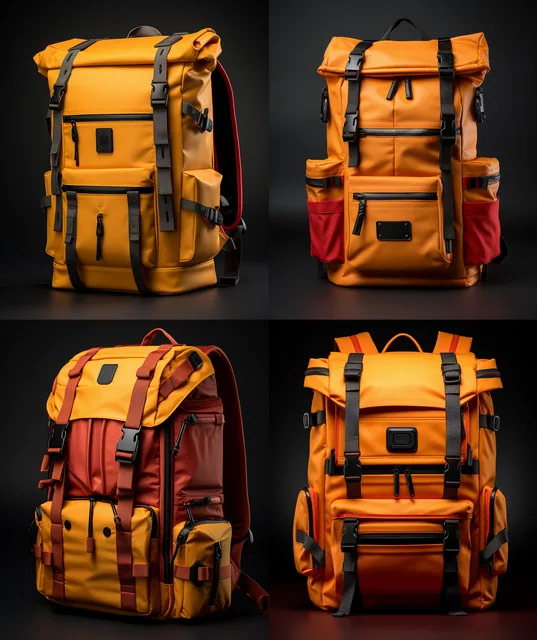
Lock four things and a reorder comes back the same colour: a named Pantone reference, the dye method, a physical shade band with an upper and a lower coupon, and a dye lot record kept against the original order. Miss any one of them and the second run is a fresh colour match, which is the slowest and least predictable version of the job.
What Exactly Is a Dye Lot?
A dye lot is a batch of material dyed together in one operation. Every length of cloth, every roll of webbing and every cone of thread that comes out of that operation shares a colour, and that colour is as close as the operation could get it to the target. The next operation gets its own lot number and its own result, and the two results are close rather than identical.
This is not a defect and it is not a sign of a careless mill. It is how dyeing works. Water chemistry, dye strength, temperature profile, liquor ratio and dwell time all vary slightly between one operation and the next, and the result moves within a tolerance. What separates a good programme from a bad one is not whether the tolerance exists — it always does — but whether it was named, measured and bounded before the first run.
The practical consequence is that a club ordering 500 bags in one colourway is buying one dye lot, and a club ordering the same colourway again next season is buying a second one. The question the second order has to answer is how close the two lots have to be.
Why Does the Same Pantone Reference Come Out Different Twice?
Because a Pantone reference is a target, not a recipe. Pantone publishes the colour as it should appear on a defined substrate under defined lighting. It does not publish how to reach that colour in polyester, in nylon or in a cotton webbing, and it does not publish the dye formulation. Reaching the target is the mill's job, and two mills — or one mill in two lots — reach it by slightly different routes.
There is a second reason that has nothing to do with dyeing. Pantone publishes several libraries, and the same colour name sits in more than one of them at slightly different values. A reference given without its suffix is ambiguous: the paper library, the cotton library and the polyester library are not interchangeable, and a club that specifies "Pantone 286" without saying which has left the most important part of the reference unstated.
The third reason is the substrate. One colour on a woven shell, on a knitted lining, on a flat webbing and on a sewing thread reads as four colours, because the surface reflects light differently in each case. The dye may be correct on all four and the eye still reports a mismatch.
| Cause | How the complaint reads | How it is prevented |
|---|---|---|
| A new dye lot | The whole bag is a shade off | A retained shade band with a stated tolerance |
| An ambiguous reference | The right name, the wrong library | Name the library suffix on the tech pack |
| A different substrate | Shell matches, webbing does not | A coupon per substrate, not one coupon for the bag |
| Different lighting | Matches indoors, differs outdoors | Judge under a stated light source |
How Does Yarn Dyeing Differ From Piece Dyeing Here?
Yarn dyeing colours the yarn before it is woven. Piece dyeing weaves the cloth first and colours the cloth. The two produce different results and different economics, and the choice belongs on the tech pack.
Yarn dyeing gives a colour that runs through the material rather than sitting on it. Where a bag is abraded, cut or scuffed, the colour underneath is the same as the colour on top, which is why yarn-dyed material hides wear better. It also gives a longer colour run: a mill dyes a quantity of yarn and weaves from it, so a large order is more likely to come from one lot.
Piece dyeing is more flexible in small quantities and in colour development, and it is the normal route for a lining or for a colour a club is still settling. Its weakness is shade consistency across a long run: the leading and trailing ends of a piece-dyed batch can differ, and on a bag with several panels cut from different parts of the batch that difference becomes visible.
| Method | What is dyed | Strength | Weakness |
|---|---|---|---|
| Yarn dyeing | The yarn, before weaving | Colour runs through; stable across a run | Higher minimum dye quantity |
| Piece dyeing | The woven cloth | Flexible in small quantities | End-to-end shade drift within a batch |
| Sublimation | A printed panel | Fine detail, gradients, no minimum dye lot | Polyester only; a print profile becomes the reference |
What Is a Shade Band, and How Is It Judged?
A shade band is a pair of physical coupons showing the limits of what the club will accept: one at the upper end of the tolerance and one at the lower end. Everything between them passes. Everything outside them does not. It converts an argument about whether a colour "looks right" into a comparison against two pieces of cloth.
The band has to be physical. A photograph, a screen capture and a printed swatch are all unreliable, because each renders colour in the way its own device produces it. A coupon cut from the approved material is the only reference an inspector and a club will agree on, and it is the only one that survives being posted to two different countries.
Judgement is then made under a stated light source and against a stated scale. The standard method for visual assessment is ISO 105-A02, which uses a grey scale for the change or the difference in colour. Where a club wants a number rather than a visual call, ASTM D2244 gives a colour difference from instrumental measurement, expressed as delta E. Both are legitimate; the important thing is that the method is named on the tech pack before the first run, not after a disagreement.
- Two physical coupons per substrate, one at each end of the tolerance.
- The light source named — a lighting booth with a stated illuminant.
- The method named: ISO 105-A02 for a visual call, ASTM D2244 for a number.
- The tolerance stated, whether as a grey scale rating or as a delta E figure.
- The coupons dated and stored away from light, because coupons fade too.
How Should the Reference Be Written on the Tech Pack?
As four fields, and all four should be present on a club's first order. The Pantone reference with its library suffix. The substrate the reference applies to. The dye method. And the tolerance, with the method used to judge it.
A fifth field is worth adding and is usually forgotten: the position. A club colourway often has more than one colour on the same bag — a shell, an accent panel, a binding and a thread — and each needs its own line. A tech pack that names one reference for "the bag" leaves the mill to decide the other three, and the mill will decide them sensibly and differently from what the club pictured.
Colour fields to lock on a team bag tech pack
- Pantone reference with its library suffix, one per colour.
- The substrate each reference applies to: shell, lining, webbing, thread, zip tape.
- The dye method, where it matters to the result.
- The tolerance, and the method used to judge it.
- A physical coupon for each substrate, retained against the order.
- The dye lot number of the approved sample, recorded at approval.
How Many Coupons Does One Programme Need?
One per substrate, plus the decoration. A club bag typically has a woven shell, a lining, webbing for the straps and the handles, sewing thread, a zip or two with its own tape, and a crest. That is six references, and a club that approves one and assumes the rest will follow is approving one sixth of the colour of its bag.
The decoration needs its own reference because it is made differently. A sublimated panel is a print profile, not a dye lot, and the profile is the reference: the printer, the ink set, the substrate and the colour profile together. An embroidered crest is a thread shade number. A screen-printed mark is an ink reference plus a mesh and a cure. Each is retained differently, and each drifts differently.
| Element | What is retained | How it drifts |
|---|---|---|
| Woven shell | A coupon cut from the approved roll | By dye lot |
| Lining | A coupon, separately | By dye lot, often a different mill |
| Webbing | A short length from the approved batch | By dye lot and by finish |
| Sewing thread | The shade number and a wound card | By thread lot |
| Zip tape | The tape reference and the colour code | By component lot |
| Crest or logo | A coupon, plus the file or the profile | By print run or thread lot |

What Should Be Retained, and for How Long?
Everything in the table above, plus the dye lot number of the approved sample. The dye lot number is the single most useful piece of information a club can hold, because it tells the next run what it is trying to reproduce. Without it, the second order begins with a fresh colour match.
Retention period should cover at least one full kit cycle plus one reorder — for most clubs, three years. Coupons fade, particularly in strong light, so they should be stored flat, dry and dark, in an envelope rather than pinned to a wall. A club that keeps a second sealed set is protected against its own reference ageing, which is a real failure mode and a quiet one.
The record should also say what the coupon was cut from and when. A coupon without a date and a source is a piece of cloth; a coupon with both is evidence, and evidence is what settles a disagreement about a delivered lot.
How Does a Reorder Differ From the First Order?
In three ways, all favourable. Sampling drops from 12-15 working days to 6-10, because no new colour has to be matched. The risk of a second sampling round drops to almost nothing, because the pattern and the decoration file already exist. And the club can specify by reference rather than by description, which is faster and more accurate.
What does not change is the bulk window: 35-50 days from written sample approval, inspected at AQL 2.5 under ISO 2859-1, shipped FOB Xiamen on T/T 30/70. A club should not expect a reorder to be faster in production, only to be more predictable. That predictability, rather than speed, is what a retained reference set buys.
The quantity floor does soften. MOQ 500 pcs per style and colourway is the standard figure, and 300 pcs is open to discussion on a repeat, precisely because the setup — the pattern, the colour match and the decoration file — already exists and does not have to be paid for again.
What Numbers Should a Club Put in the Specification?
Two, and both should be stated rather than assumed. The first is the tolerance, expressed either as a grey scale rating under ISO 105-A02 or as a delta E figure under ASTM D2244. A club that names a number has replaced a judgement with a test, and a test is something two parties can agree on without meeting.
The second is the light source. Colour is a measurement of reflected light, and it changes with the light it is viewed under. Two materials can match under one illuminant and differ under another — the effect is called metamerism, and it is the cause of a large share of colour disputes that are not really about colour at all. Naming the illuminant removes it.
A club that wants to be thorough adds a third number: the fastness requirement. A colour that matches on day one and fades by August has not been specified, only matched. AATCC 16 covers light fastness, AATCC 61 covers laundering and AATCC 8 covers rubbing.
What Does Inspection Actually Check?
Shade, against the retained coupon, under the named light source, at the stated tolerance, and within the AQL 2.5 sample drawn under ISO 2859-1. That is four conditions, and a criteria sheet that omits any of them leaves the inspector to decide.
The sampling is the part clubs misunderstand most. Inspection is a sample, not a hundred-per-cent check, and the sample size and the accept and reject numbers come off the lot size. The sampling table gives both, and AQL 1.5 versus 2.5 sets out what changes between the levels.
One practical note: shade should be checked across the lot, not at one end of it. A batch that drifts end to end can pass at the point it is first opened and fail two hundred bags later. Drawing the inspection units from more than one carton is a small instruction that catches a real failure mode.
What Happens When a Mill Discontinues a Shade?
It happens, and it is worth planning for at the first order rather than discovering at the third. A mill discontinues a shade when the dye stuff becomes unavailable, when the minimum run no longer makes sense, or when a standard is reformulated. The club then has a choice between a fresh match and a change of colourway.
A fresh match is the better option where the club has retained its coupons, because the physical reference still exists even though the dye does not. The mill can match to the coupon. Without coupons, the club is matching to a memory and to a photograph, and that is the slowest version of this job.
Where a fresh match is not possible, the honest answer is to declare a new colourway and tell the squads. Clubs resist this because it reads as an inconsistency, but an announced change is better managed than a denied one, and a club that announces it keeps control of the story.
Why Does One Colour Read Differently on Webbing and on Shell?
Because the surface is different. A woven shell is flat, relatively matte and has a regular structure. A webbing is narrower, often has a slight sheen from the weave tension, and presents its colour at a different angle to the eye. A thread is thinner still and reflects differently again. The same dye formulation on all three reads as three colours.
This is why the coupon set has to be per substrate, and why a single reference for "the club colour" cannot work. It is also why the tolerance has to be per substrate: a tolerance that is reasonable on a woven shell may be unachievable on a narrow webbing, simply because there is less surface to measure.
| Substrate | Typical behaviour | Practical note |
|---|---|---|
| Woven shell | The reference surface; most stable | Judge the bag against this |
| Lining | Often a different mill and a different dye class | Approve it separately, not as a consequence |
| Webbing | Reads darker at the same formulation | Expect a small deliberate offset |
| Sewing thread | Reads differently again; thin surface | Specify by shade number, not by eye |
| Zip tape | Component supply; colour coded by the maker | Hold the code against the order |
How Long Does the Colour Hold Up in Use?
That is a different question from whether it matches on delivery, and it is specified separately. Light fastness to AATCC 16 at a stated exposure, laundering fastness to AATCC 61 where the bag will be washed rather than wiped, and rubbing fastness to AATCC 8 where a dark panel meets a light one.
A club bag spends its life outdoors on a touchline, in a boot, in a changing room and occasionally in a washing machine. The exposures are sunlight, abrasion, sweat and detergent. Three methods cover them, and asking for all three is more useful than asking for one at a higher level, because the failure modes are different and independent.
Worth noting for a club that washes kit: the laundering result is the one most often omitted from a specification and the one most often complained about. Bags get washed because they get muddy, and a dye that is fast to light can still bleed in a wash.
Does Colour Consistency Change the Calendar?
Yes, in sampling. A first order with a new colour takes 12-15 working days in sampling; a repeat with the reference retained takes 6-10. That is a week and a half on the critical path, and in a season with a fixed fixture date it is often the difference between a comfortable programme and a rushed one.
It also changes the calendar in the other direction. A club that loses its reference set does not just lose a week and a half on the next order — it loses the ability to predict the outcome at all, because the second run becomes a fresh match with an unknown number of rounds. Retention is a schedule decision disguised as a filing decision.
The reorder question in full, including what to keep and what the second order should say, is set out in Reorder consistency.
What Is the Honest Answer?
Dye lots matter because a club colour is a tolerance, not a point, and because the second run is a separate physical event from the first. Nothing a club does removes that. What a club can do is bound it: name the reference with its library suffix, approve a coupon per substrate, agree a shade band with an upper and a lower limit, and keep the lot number.
Four things, all of which happen at the first order and none of which cost anything beyond attention. Clubs that do it get a third and a fourth season in the same colour. Clubs that do not end up re-matching every year, and wondering why the bags never quite match the shirts.
Send the reference you are trying to match
Tell us the Pantone reference, the substrates it has to appear on and the quantity per colourway, and we come back with a coupon set and a shade band you can hold us to.
Frequently Asked Questions
What is a dye lot?
A batch of material dyed together in one operation. The next batch gets its own number and its own result, close to the first but not identical.
Why does the same Pantone reference come back different?
Because a Pantone reference is a target, not a recipe. Reaching it depends on the dye operation, the substrate and the library the reference was taken from.
What is a shade band?
Two physical coupons showing the limits of what a club accepts: one at the upper end of the tolerance, one at the lower end.
How is a colour difference judged?
Visually against ISO 105-A02 using a grey scale, or instrumentally as a delta E figure under ASTM D2244. Name the method on the tech pack.
Which Pantone library should a club use?
The one matching the substrate, and the suffix must be stated. A reference given without its suffix is ambiguous.
How many coupons does a club need?
One per substrate — shell, lining, webbing, thread, zip tape — plus one for the crest or logo. Six is typical.
What is yarn dyeing?
Dyeing the yarn before it is woven. The colour runs through the material, so wear shows less and a long run is more consistent.
How long should coupons be kept?
At least one kit cycle plus one reorder — three years is a reasonable figure. Store them dark, because coupons fade.
What happens if a mill discontinues a shade?
A fresh match is made against the retained coupon. Without coupons, the club is matching to a photograph and a memory.
Does colour consistency affect the schedule?
Yes. Sampling runs 12-15 working days on a new colour and 6-10 on a repeat with the reference retained.
What is metamerism?
Two materials that match under one light source and differ under another. Naming the illuminant on the specification removes it.
Which fastness methods should a club ask for?
AATCC 16 for light, AATCC 61 for laundering and AATCC 8 for rubbing. The three cover independent failure modes.
What is the minimum order?
MOQ 500 pcs per style and colourway, with 300 pcs open to discussion on a repeat.
How long is bulk production?
35-50 days from written sample approval, inspected at AQL 2.5 under ISO 2859-1.
People Also Ask
Why does a team bag reorder come back a different colour?
A new dye lot. Every dye operation produces a slightly different result.
What is a dye lot in bag manufacturing?
One batch of material dyed together, with its own lot number.
How do you keep a club colour consistent across orders?
Pantone reference with suffix, a coupon per substrate, a shade band and the lot number.
What is a shade band?
Two physical coupons at the upper and lower limits of an agreed tolerance.
How much colour difference is acceptable?
Whatever the club states, as a grey scale rating or a delta E figure, judged under a named illuminant.
Sources and further reading
Every figure on this page is either our own programme data or attributed below. Open the originals before you write them into a specification.
- AATCC 16 — Colorfastness to LightAmerican Association of Textile Chemists and Colorists
- ASTM D2244 — Calculation of Color Tolerances and Color DifferencesASTM International
- ISO 2859-1:1999 — Sampling procedures for inspection by attributesInternational Organization for Standardization