How Do Australian and New Zealand Importers Plan a Bag Programme?
Four things decide an ANZ bag programme: the classification and the origin claim under the relevant agreement, the goods and services tax position at import, the biosecurity requirements on packaging and materials, and a freight pattern built for a long lane. Distance is the variable nobody plans for.
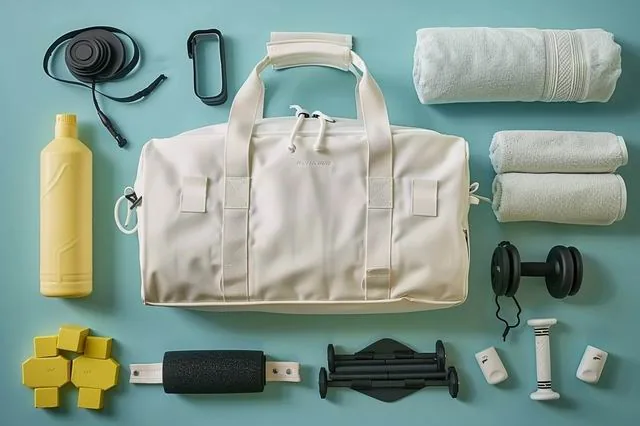
An Australia or New Zealand bag programme turns on four things: the tariff classification and the origin claim under the relevant trade agreement, the goods and services tax position at import, the biosecurity requirements that apply to packaging and to the goods themselves, and the freight pattern to a market that is a long way from the production base. Distance is the one nobody plans for.
Australia and New Zealand are sophisticated importing markets with published tariffs, functioning trade agreements with China, and customs administrations that are efficient once the paperwork is right. They are also a long way from Fujian, which changes the arithmetic: the sea leg is short by the standards of a global lane but long enough that a missed booking costs more calendar than a day of production does.
Both markets also run a goods and services tax on imported goods, and both apply it at the border rather than at the point of sale. For a registered business it is recoverable; for a business below the registration threshold it is a cost. Either way it has to be funded at entry, which makes it a cash-flow line in the landed-cost model rather than an afterthought.
A third feature shapes every ANZ programme: the retail calendar is inverted relative to the northern hemisphere, so a Q4 launch is a Q2 decision. A buyer who works to a European or North American seasonal template will find the production window and the freight window landing at the wrong end of the year, and the fix is simply to redraw the calendar around the local season rather than around the group one.
The third characteristic is the one that surprises buyers who have only imported into Europe: biosecurity. Australia in particular applies quarantine rules to packaging and to goods, and a wooden pallet or a declaration that does not match the container can hold a shipment that is otherwise perfect. Those rules sit with the agriculture authority rather than with customs, and they are not waived because the goods are late.
How Does an Australian Import Declaration Work?
The import declaration is made to the Australian Border Force, usually by a licensed broker, against a classification, a customs value and an origin claim. The goods cannot be released until the declaration is made and any duty and tax are accounted for, so the file has to be complete before the vessel berths rather than after. Most delays on this lane are documentary rather than physical.
The valuation follows the transaction value with the usual adjustments, and the origin claim is what decides the tariff treatment. Where a free trade agreement applies, the claim has to be supported by evidence at the time of entry; a claim made without evidence is worse than no claim, because it invites a verification later.
| Step | Who does it | When it has to be done |
|---|---|---|
| Classification | Buyer with the broker | Before the landed cost is built |
| Origin claim and evidence | Vendor supplies, buyer holds | At entry, not afterwards |
| Import declaration | Licensed broker | Before the goods can be released |
| Duty and tax | Importer | At entry, or under a deferred scheme |
| Biosecurity release | Agriculture authority | Before release, in parallel |
| Delivery order | Carrier and forwarder | After release |
What Does Biosecurity Add to an Australian Shipment?
Two things. First, packaging: wooden packaging has to meet the international standard for phytosanitary measures, and untreated wood is the classic cause of a held container. Second, the goods themselves: a bag made with natural materials, or one that has been stored in conditions where contamination is possible, can attract a question. Neither is likely on a synthetic bag, and both are inexpensive to pre-empt by declaring the materials accurately and by keeping the packing clean.
There is also a seasonal dimension. Certain periods carry heightened scrutiny for particular pest risks, and containers shipped in that window can face additional treatment requirements. A buyer who ships to a fixed calendar should ask the forwarder whether the arrival date falls in such a window and, if it does, build the treatment time into the plan rather than discovering it at the port.
How Does the Trade Agreement With China Affect Origin?
Both Australia and New Zealand have free trade agreements with China, and both can reduce or remove the duty on qualifying goods. The qualifying condition is origin, and origin is earned by the manufacturing process rather than granted by the shipping route. For a bag, that means the evidence has to show where the article was made and, where a rule requires it, that the required transformation happened there.
The operational instruction is simple and worth stating plainly: ask for the origin evidence at quotation stage, in the form the destination administration accepts, and check it against the actual production plan. The country-of-origin rules note covers the reasoning and the free trade agreements and duty note covers what an agreement does and does not do. Preferential origin is the largest single lever on duty in this lane and it is the one most often left unused.
What Is Different About a New Zealand Entry?
The shape is the same — classification, value, origin, declaration, tax — and the administration is separate. New Zealand runs its own tariff, its own trade agreements and its own entry process, so a shipment split across both markets is two entries rather than one. New Zealand also applies its own biosecurity regime, which is strict in the same ways and administered separately.
For a buyer distributing across both markets, the practical answer is to treat them as two programmes that happen to share a container. Separate declarations, separate origin evidence if the rules differ, separate compliance files. The cost of that separation is a few hours of administration; the cost of treating them as one market is a query at the wrong end of a long lane.
How Does GST Apply to Imported Bags?
- Classification
- The tariff subheading for the construction
- Customs value
- Transaction value with the usual adjustments
- Origin
- Evidence held at entry, agreement-based where it applies
- Duty
- The rate for the subheading and origin in the official tariff
- GST
- Applied at import at the prevailing rate; recoverable if registered
- Registration threshold
- Whether the buyer is registered in that market
- Deferral scheme
- Whether duty and tax can be deferred rather than paid per shipment
- Broker
- Licensed in the market of entry
- Biosecurity declaration
- Packaging and materials stated accurately
- Records
- Entry records retained for the statutory period
The GST position is the part buyers get wrong. It is charged on a value that includes the duty and, depending on the arrangement, the freight and insurance, so it is computed on a figure larger than the invoice value. A model that applies it to the invoice alone understates the cash needed at the border, and the shortfall appears on the day the goods are ready to collect.

What Compliance Regime Applies to Bags in ANZ?
Both markets run general product-safety regimes and both have specific rules for products intended for children. Australia and New Zealand also share a joint regime for certain consumer product categories, which means a single test report can in some cases serve both markets — worth asking about, because it halves the testing cost on a two-market launch.
Chemical restrictions apply in both, and neither is identical to the European Union list. A REACH declaration is useful background and is not the answer to an Australian or New Zealand question. Ask for a restricted-substance declaration that names the market, dated, with test reports on the production article, and hold it in the market of sale.
Which Freight Pattern Suits an ANZ Programme?
| Pattern | When it suits | What it costs |
|---|---|---|
| Direct sea to the main port | A full container on a planned calendar | The lowest cost per unit and the longest transit |
| Consolidated sea | Below container quantity | Less capital tied up, more handling and a longer tail |
| Air for the launch | A date that sea cannot meet | Several times the freight cost, and it does not fix a production delay |
| Sea with an air top-up | A partial launch where some stock must land early | Two bookings and two entries instead of one |
One more pattern is worth naming, because it is the one that suits a buyer who is testing a market rather than supplying one: a single consolidated container shared with another importer. It puts less capital into the first buy and it lengthens the tail at both ends, because the container waits for the other consignment and then waits again at the deconsolidation point. For a first ANZ drop on an unproven line that trade is often correct; for a replenishment with a fixed selling date it rarely is.
How Do ANZ Buyers Plan the Calendar?
Backwards from the selling date with the sea leg treated as a fixed block, because it is. Add the biosecurity and declaration period after arrival, then the inland leg, then the inspection cycle at the production end, then the 35-50 day bulk window, then the 6-10 day sampling window, then the tech pack. What remains is the decision time, and on this lane it is shorter than most buyers assume.
Five things ANZ buyers get wrong
- Booking the vessel at the end of the bulk window instead of at sample approval.
- Claiming preferential origin without evidence held at entry.
- Applying GST to the invoice value rather than to the duty-inclusive value.
- Assuming the Union chemical declaration answers the local question.
- Treating Australia and New Zealand as one entry rather than two.
What Should an ANZ Buyer Ask the Vendor For?
Six asks that change an ANZ outcome
- Origin evidence in the form the destination administration accepts, at quotation stage.
- A construction statement naming every material, to support the classification.
- A restricted-substance declaration that names the market, dated, with test reports.
- A packing declaration stating the packaging materials accurately, per shipment.
- One commercial invoice at the real transaction value, with separate charges shown.
- Notice before any material substitution, because it changes the file and the label.
The first and the last of those are the ones that carry money. Preferential origin is the largest single lever on duty in this lane, and a substitution that changes the outer surface material can change the classification, the chemical file and the label at the same time. Both are one-line requests made at the start and both are expensive to fix at the end.
The third point is the one that separates a smooth ANZ programme from a frustrating one: the broker relationship. A licensed broker who has seen the file before the vessel berths can flag a mismatch early, and a broker who sees it on the day of arrival can only report it. Send the draft invoice, the packing list and the origin evidence a week before arrival and the entry becomes a routine filing.
The fourth is the inland leg. Both markets are large relative to their population and the ports are concentrated, so a container entered in one city and sold in another needs an inland movement that can take longer than parts of the sea leg. Include it in the calendar as its own line rather than assuming it is part of the delivery, because the assumption is where the last week goes.
What Documents Does an ANZ Entry Need?
The standard set: a commercial invoice, a packing list, a transport document, the origin evidence, and the declaration itself. Add two ANZ-specific items. A packing declaration that states the packaging materials accurately, because that is the biosecurity question. And a supplier declaration that names the materials of the article, because it supports both the classification and the chemical position.
The invoice deserves one more note. Australian and New Zealand entries are sensitive to the declared value in the same way every market is, and an invoice that shows a nominal value on part of the shipment and a real value on the rest invites a query. Ship one invoice, at the real transaction value, with any sample or tooling charge shown separately rather than netted off.
What Is Different About an ANZ Reorder?
The freight, mostly. A second shipment to the same port with the same broker on the same classification is administratively trivial; the variable is whether the vessel is booked early enough to hold the date. Buyers who run a standing calendar — booking the next shipment at the time the previous one is released — stop losing weeks to booking availability on a long lane.
The other reorder point is the biosecurity declaration. It is per shipment, not per programme, so it has to be re-made each time and it has to match the actual packaging used. A programme that switched to a different pallet supplier without telling anyone will eventually produce a declaration that no longer matches the container.
Plan an ANZ programme with the lane in mind
Send the market, the construction and the quantity. You get a quotation, an origin-evidence checklist and a production calendar built backwards from your selling date.
Frequently Asked Questions
Do I need a broker to import bags into Australia?
In practice yes. The declaration is made through a licensed broker, and the goods are not released until it is made and the duty and tax are accounted for.
How do I claim preferential origin under the China agreement?
By holding the evidence the destination administration accepts at the time of entry. Ask for it at quotation stage and check it against the actual production plan.
Does GST apply to imported bags?
Yes, at import, at the prevailing rate and on a value that includes duty. It is recoverable for a registered business and a cost for one that is not registered.
What is the customs value for an ANZ entry?
Normally the transaction value with the usual adjustments, which brings freight and insurance into the value. Do not model it as the bare invoice figure.
What biosecurity rules affect a bag shipment?
Wooden packaging has to meet the international phytosanitary standard, and the packaging and materials declared have to match the container. Untreated wood is the common cause of a hold.
Is a REACH declaration enough for Australia?
No. It is useful background but it does not answer the local question. Ask for a restricted-substance declaration that names the market and is dated.
Are Australia and New Zealand one entry?
No. They are separate administrations with separate tariffs and separate entry processes, so a split shipment is two declarations.
What is the MOQ for an ANZ order?
500 pcs per style and colourway, with repeat programmes open to discussion at 300 pcs.
How long does sampling take for an ANZ programme?
6-10 working days from a signed-off tech pack, 12-15 for a complex build. The sea leg is the long part of the calendar, not the sampling.
When should I book the vessel?
At sample approval. On a long lane, booking at the end of the bulk window is the most common cause of a slipped delivery date.
What labelling does a bag need in Australia or New Zealand?
A permanent label with the material statement, the country of origin, the importer identity in the market and any required care information. Specify it in the tech pack; a sticker will not survive.
Can one test report cover both markets?
In some consumer product categories the two markets share a joint regime, so a single report can serve both. Ask the laboratory which categories that covers.
When should the broker see the file?
A week before the vessel berths. A broker who has seen the draft invoice, the packing list and the origin evidence early can flag a mismatch; one who sees it on arrival day can only report it.
Do I need separate compliance files for each market?
Yes. Australia and New Zealand run separate regimes even where they share test methods, so hold a file per market with a dated restricted-substance declaration naming it.
How do I keep an ANZ reorder consistent?
Hold the reference sample, require notice before any material substitution, and re-make the packaging declaration so that it matches the pallet actually used.
People Also Ask
What does an Australian importer need before bags arrive?
A licensed broker, a classification, origin evidence held at entry, a GST position and an accurate packaging declaration for biosecurity.
How does GST work on imported bags?
It is charged at import on a value that includes duty, and it is recoverable by a registered business and a cost for one that is not.
Can I use the China free trade agreement for bags?
Yes where the goods qualify. Qualification is earned through the manufacturing process and has to be evidenced at entry.
Are Australia and New Zealand treated as one market?
No. Separate tariffs, separate entry processes and separate biosecurity regimes, so a split shipment is two declarations.
What holds up an Australian bag shipment?
Most often documentation: an incomplete declaration, an unsupported origin claim, or packaging that does not match the biosecurity declaration.
Sources and further reading
Every figure on this page is either our own programme data or attributed below. Open the originals before you write them into a specification.
- Australian Border Force — imports, duty and customs procedureAustralian Border Force
- New Zealand Customs Service — tariff and import entryNew Zealand Customs Service
- WTO — tariff, trade and trade-agreement informationWorld Trade Organization