What Does a One-Day Site Visit Inspection Agenda Cover?
Four blocks in a fixed order: an opening meeting that confirms entity and scope, a floor walk that follows the material from goods-in to packing, a document review against a list circulated in advance, and a close-out written on site before anyone leaves.
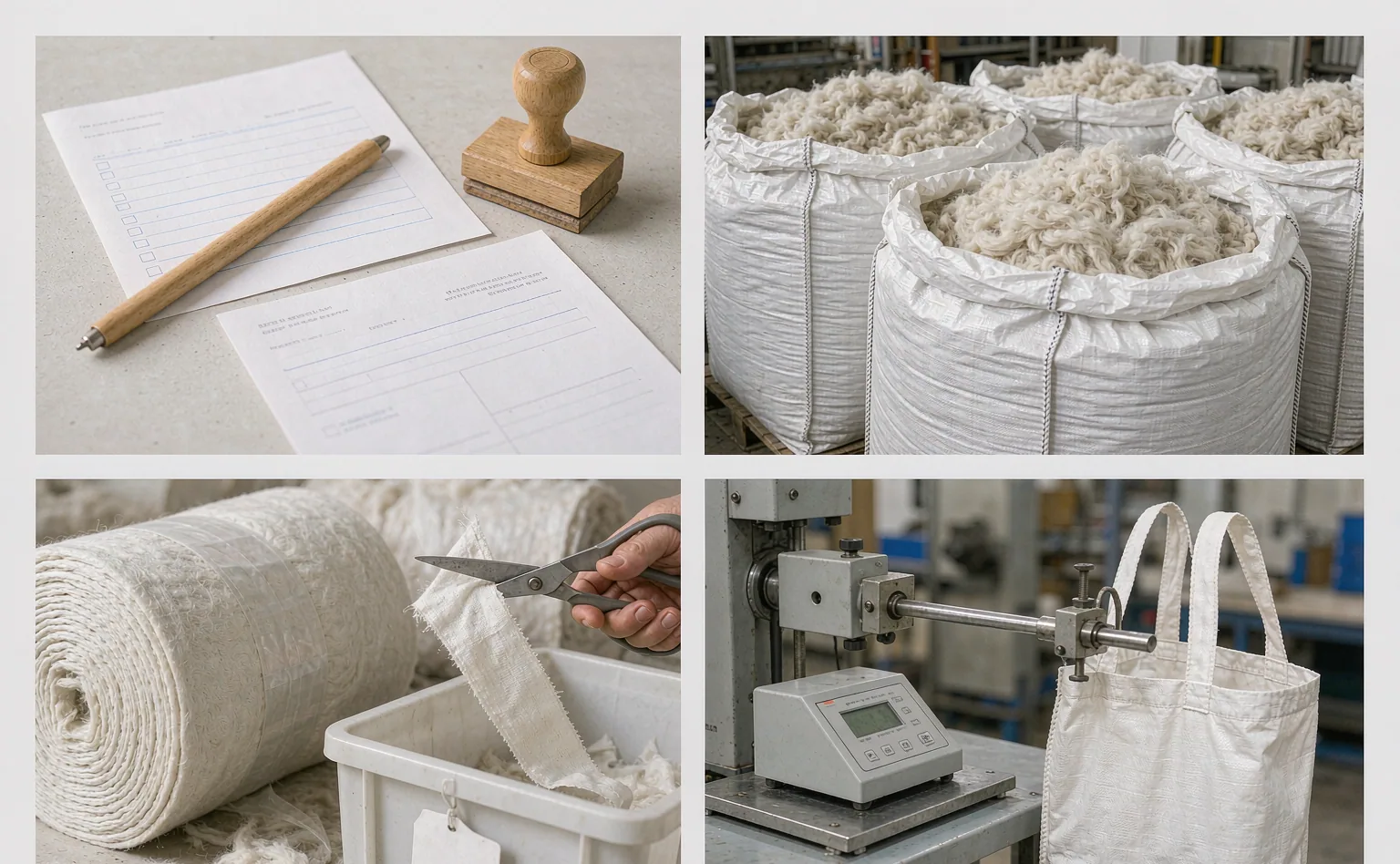
A one-day site visit has four blocks and a fixed order: an opening meeting that sets the scope, a floor walk that follows the material rather than the visitor, a document review against a list prepared in advance, and a close-out that states what was seen before anyone leaves. Nine items on the agenda is plenty; the value is in the order and in what gets recorded.
A site visit is the most expensive due-diligence instrument a buyer has, because it costs a day of travel and a day of attention, and it is the one most often wasted. The waste is not usually a matter of asking the wrong questions; it is a matter of structure. A visit without an agreed shape becomes a tour, a tour becomes a series of impressions, and impressions do not survive the walk to the car.
The fix is a written agenda circulated in advance, with times, owners and a list of documents to be produced. Circulating it does two useful things: it lets the host prepare, which gets better answers, and it tells the host what kind of visitor is arriving, which changes the character of the day from a social call into a working session.
What Is a One-Day Visit For, and What Is It Not For?
It is for three things: confirming that the entity and the site on the paperwork are the entity and the site that will produce the order, observing the processes the order depends on, and meeting the people who will run it. Those three are visible in a day and they are the three that a document cannot fully establish.
It is not for an audit. A day is not enough to sample records over a meaningful period, and a visitor who tries to audit in a day will produce a false clean result and a false sense of assurance. Where a programme needs a compliance conclusion, that comes from the third-party audit with its sampling period; the visit establishes the operating reality around it.
It is also not for renegotiating the price or settling a dispute. Both of those need the right people and the right documents in a room for longer than a day allows, and mixing them into a visit dilutes the observation, which is the only thing the visit is uniquely good at.
How Should the Day Be Divided?
Four blocks, roughly ninety minutes, two hours, ninety minutes and one hour, with a short break before the close-out. The opening meeting sets the scope and confirms the entity. The floor walk follows the material from goods-in to despatch. The document review works through the pre-circulated list. The close-out states what was seen, what was not, and what will follow in writing.
The order matters and should not be rearranged to suit the host. Walking the floor before reading documents means the visitor sees the process before hearing how it is described, which is the only way to compare the two. Reviewing documents after the walk lets the visitor ask about a specific thing seen at a specific station rather than about a general policy.
| Time | Block | Who attends | What gets recorded |
|---|---|---|---|
| First 30 minutes | Opening meeting: scope, entity, agenda confirmation | Host management, visitor | Entity name, site address, scope agreed, names of attendees |
| Next 60 minutes | Floor walk, first half: goods-in to cutting | Production lead, visitor | Material identification, lot labelling, storage conditions |
| Next 60 minutes | Floor walk, second half: assembly to packing | Line supervisor, visitor | Station layout, in-process checks, packing method |
| Next 90 minutes | Document review against the pre-circulated list | Document owner, visitor | Which documents were produced, which were not, and why |
| Last 60 minutes | Close-out: what was seen, what was not, what follows | Host management, visitor | A written summary before anyone leaves |
What Should the Opening Meeting Cover?
Four items in thirty minutes. Confirm the legal entity and the site address against the quotation. Confirm the scope of the visit and which processes are in it and out of it. Confirm who will be available during the walk and who holds the documents later. Confirm the close-out time and that a written summary will be produced before the visitor leaves.
The fourth item is the one that gets skipped and the one that protects the day. A close-out stated at the start is a commitment made while everyone is polite and unhurried; a close-out discovered at the end of the day competes with a car waiting outside, and the summary then gets written on the journey home, where it is worth much less.
What Should the Floor Walk Look At, and in What Order?
Follow the material. Start at goods-in and ask how a delivered roll or component is identified, where it is held and how its lot is recorded. Move to cutting and ask how a marker is made and how cut parts are identified by size and shade. Move to assembly and ask what is checked at the station and what is checked at the end. Finish at packing and ask how cartons are counted, marked and recorded.
Four questions asked at each station are enough: what is checked here, how often, by whom, and what happens when it fails. Those four reveal more about a production system than any policy document, because they are answered by the person who does the work rather than by the person who wrote it down.
One further question belongs at the end of the walk, and it is the one that produces the most useful answer of the day: where does this process strain when volume doubles. Asked as a technical question at the station rather than as a commercial one in a meeting, it gets a technical answer — usually a specific machine, a specific station or a specific material lead time. That answer is worth more than a capacity figure quoted from a spreadsheet, because it names the constraint.
Which Documents Should Be Reviewed on Site?
A list circulated at least two business days ahead, and short enough to be produced in ninety minutes. For a bag programme the useful items are the current order book or capacity plan, the material lot records for the style in question, the in-process check records, the most recent inspection report, the calibration or maintenance log for the key machines, and the corrective action file.
Ask for the record, not the summary, and ask for it in the state it is normally kept. A file produced for the visit is a presentation; a file pulled from the shelf is evidence. Where a document cannot be produced on the day, note that fact and the reason in the close-out rather than accepting a promise to send it, because a note made on the day is worth more than a document sent later.
Handling of what cannot be produced deserves a rule, because it is where a visit either stays honest or drifts. If a document on the pre-circulated list is not available, the correct entry is the name of the document, the reason given and whether a copy is promised. Do not accept a verbal description of its contents instead, and do not treat a promise as a production. A visit record is a record of what happened in the room, and the room either had the document or it did not.

Who Should Be in the Room, and Who Should Not?
On the visitor side, two people at most: one to talk and one to record. A larger party turns a working session into a delegation and the host responds accordingly. The recorder matters more than most buyers expect — a visitor who is also taking notes cannot hold a conversation and observe at the same time, and the notes end up thin exactly where the observation was richest.
On the host side, the useful people are the production lead and the line supervisor, not only the commercial manager. The commercial manager answers questions well and knows the programme; the production lead and the supervisor know what actually happens, and their answers to the four station questions are the ones worth recording.
One question about the sampling room is worth asking on the walk even where the visit has no sampling agenda: are samples made on the same tooling as production, and by the same people. Where the answer is yes, the sample is predictive of the bulk. Where the answer is no, every sample approval carries a caveat, and the buyer should know that before approving rather than after the first bulk run.
What Should Be Photographed, and With What Permission?
Ask at the opening meeting and accept the answer. Most sites permit photography of layout and equipment and decline it where a customer product or a proprietary process is visible. That boundary is normal and should be respected without argument; a visitor who photographs against a stated restriction will not be invited back, and the restriction itself is not a signal of anything.
Where photography is permitted, photograph what will be argued about later: the goods-in area and its labelling, the station where the critical operation happens, the in-process check record as it is filled in, and the packing and marking. Four photographs with a caption each are more useful than forty, because the value is in the caption rather than in the image.
How Should the Day Close?
With a written summary produced on site, before anyone leaves, and read aloud before it is signed. It should have four sections: what was seen, what was not available, what the host committed to send and by when, and what the visitor will do next. Ten minutes of writing at the table replaces an hour of reconstructing memory a week later.
Both sides sign or acknowledge it by message that day. A signed close-out is not a contract and is not meant to be; it is a shared record of a day, and it is the document that makes the next conversation short. Where a commitment was made, the close-out is also the reminder, and a reminder written on the day is far harder to quietly forget.
| Close-out section | What goes in it | Why it matters later |
|---|---|---|
| What was seen | Observations with the station or document named | Separates observation from impression |
| What was not available | Documents or areas not produced, with the reason given | Records the gap while the reason is still accurate |
| Commitments | What the host will send and by when | A reminder written on the day is hard to forget |
| Next steps | What the visitor will do, with a date | Turns a visit into a sequence rather than an event |
Two closing habits are worth building. The first is to leave the agenda behind as a printed handout, so that the host has the same structure the visitor worked to and the follow-up message refers to something both sides hold. The second is to send the written summary as a single message the same evening rather than the following week; a summary sent while the day is still fresh is accurate, and one sent later has begun to reconcile itself with what the visitor would prefer to have seen.
What Turns a Visit Into a Report?
Three things added within two business days: the photographs with their captions, the documents received after the visit, and a short conclusion against the three questions the visit was for. The conclusion should say whether the entity and site match, whether the processes observed support the order, and who the operating contacts are. Anything beyond those three belongs in a different document.
File it where the ordering decision is made, with the expiry logic used for an audit report: the visit describes a day, and a change of site, entity or scale since that day means the visit no longer describes the programme. Record what the programme looked like on the day, which is the note that closes the scope gap later.
Where a visit is the first contact between the two sides, add one item that costs nothing and pays repeatedly: exchange a written list of operating contacts with role, channel and working hours on each side. Most programme friction in the first year is not disagreement, it is a message sent to somebody who does not own the question and a day lost before it reaches the person who does. A contact list agreed on day one removes that class of delay entirely.
The shape of a day that produces evidence
- A written agenda circulated in advance, with times, owners and a document list.
- Walk the floor before reading documents, so observation precedes description.
- Four questions at each station: what is checked, how often, by whom, what happens on failure.
- Two visitors: one talks, one records.
- Ask for records in the state they are normally kept, not files produced for the visit.
- Close out on site, in writing, acknowledged the same day.
- A visit describes a day; record what the programme looked like on it.
A final point on frequency. One visit a year is the usual pattern and it is usually enough, provided the record from each visit is filed where the next ordering decision is made and carries the scope note described above. Two visits a year are warranted in one situation only: when the programme is growing fast enough that the process observed six months ago no longer describes the process running now.
The commercial frame is unchanged by a visit: MOQ 500 pcs per style and colourway, sampling 6-10 working days from a signed-off tech pack, bulk production 35-50 days from written sample approval, inspection at AQL 2.5 under ISO 2859-1 General Inspection Level II, T/T 30/70, quoted FOB Xiamen. A visit does not shorten those windows; it tells a buyer whether the calendar behind them is real.

Get a visit agenda for a programme
Send the style and the processes the order depends on. You get a timed agenda and a document list to circulate, within one business day.
Frequently Asked Questions
What is the purpose of a one-day site visit?
Three things: confirming the entity and site on the paperwork, observing the processes the order depends on, and meeting the people who will run it.
Is a site visit the same as an audit?
No. A day is not enough to sample records over a meaningful period. The compliance conclusion comes from the third-party audit; the visit establishes the operating reality around it.
How should the day be structured?
Four blocks in a fixed order: an opening meeting, a floor walk following the material, a document review against a pre-circulated list, and a close-out written on site.
Why walk the floor before reading documents?
So the observation precedes the description. Reading first means the policy replaces what was actually seen.
What should be asked at each production station?
Four questions: what is checked here, how often, by whom, and what happens when it fails.
Which documents should be requested in advance?
The current capacity plan, material lot records, in-process check records, the most recent inspection report, machine maintenance logs and the corrective action file.
How many people should attend on the buyer side?
Two, one to talk and one to record. A larger party turns a working session into a delegation.
Can a visitor take photographs?
Ask at the opening meeting and accept the answer. Restrictions around customer product or proprietary processes are normal and are not a signal of anything.
Why close out on site rather than later?
Because a close-out stated at the start is a commitment made while everyone is unhurried, and ten minutes at the table replaces an hour of memory work later.
What should the close-out contain?
Four sections: what was seen, what was not available with the reason, what the host committed to send and by when, and what the visitor will do next.
How should a visit be filed?
Where the ordering decision is made, with the photographs, the documents received afterwards, and a note of what the programme looked like on the day.
Does a change at the site invalidate a visit record?
It dates it. A change of site, entity or scale means the visit no longer describes the programme, which is why the scope note matters.
Does a visit change the production window?
No. Bulk production stays at 35-50 days from written sample approval, with inspection at AQL 2.5 under ISO 2859-1 Level II.
People Also Ask
What should a one-day site visit cover?
An opening meeting, a floor walk following the material, a document review and a close-out written on site.
Is a site visit an audit?
No. It confirms entity, process and people; the compliance conclusion comes from a third-party audit with a sampling period.
What should be asked on a factory floor walk?
What is checked at each station, how often, by whom, and what happens when the check fails.
How should a site visit end?
With a written close-out produced at the table, read aloud and acknowledged by both sides the same day.
How many people should a buyer bring?
Two: one to talk, one to record.
Sources and further reading
Every figure on this page is either our own programme data or attributed below. Open the originals before you write them into a specification.
- ISO 19011 — Guidelines for auditing management systemsInternational Organization for Standardization
- ISO 9001 — Quality management systemsInternational Organization for Standardization
- Standards and conformity assessmentBSI Group