Section 301 Tariffs on Bags from China: What Still Applies in 2026?
Section 301 is a second ad valorem rate applied on top of the tariff line rate because the origin is Chinese, not because of what the bag is made of. It is charged on the same transaction value, it is separate from MPF and HMF, and whether your line carries it is a question about the eight-digit code.
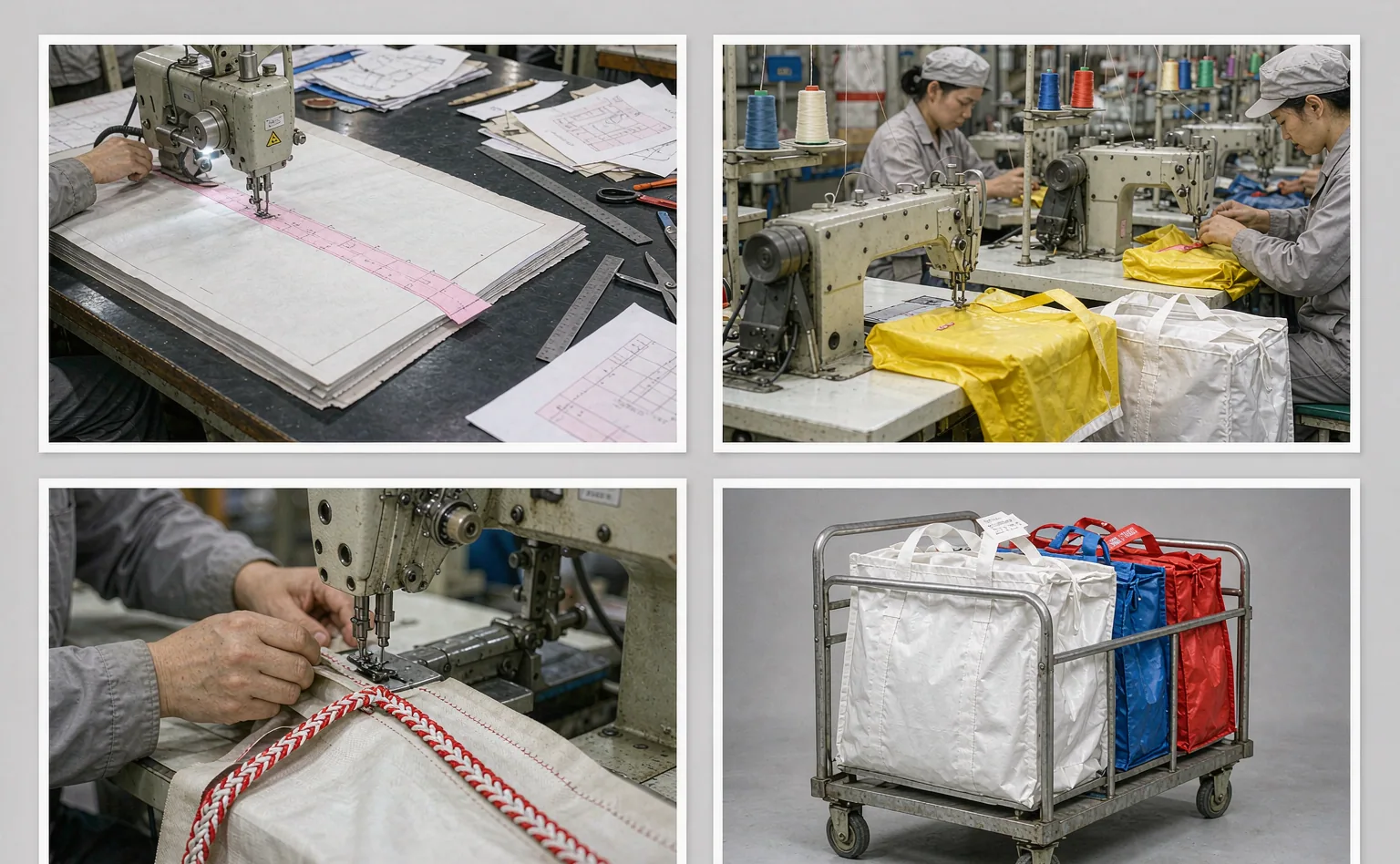
Section 301 duties on Chinese goods are applied as an additional ad valorem rate on the transaction value, on top of the Column 1 rate for the eight-digit line. Published list rates have been 25% on the earlier lists and 7.5% on List 4A, where many 4202 lines sit. Confirm which list your line is on, confirm whether an exclusion covers it, and treat any measure added outside the list process as a separate line in your model.
The single most useful thing a buyer can understand about Section 301 is what it is not. It is not a rate that came out of the tariff schedule, it is not decided by the material or the construction of the bag, and it is not recovered by reclassifying the product. It is a trade-remedy rate attached to the origin of the goods, applied by list, and the list is maintained outside the schedule.
That makes it structurally different from the duty that sits next to it in the landed cost model, and it is why the two should never be added together into one "duty rate" cell. They move independently, they are published independently, and one of them can change while the other does not.
What Is Section 301 and Where Does the Authority Come From?
Section 301 of the Trade Act of 1974 gives the United States Trade Representative authority to act against foreign practices judged to be unreasonable or discriminatory. The action taken against Chinese goods from 2018 onwards took the form of additional ad valorem duties applied to specified tariff lines, published as lists with rates attached and an exclusion process running alongside them.
The lists are the operative instrument. Goods are covered because their eight-digit line appears on a list, at the rate that list carries, and not because they fall within a described product category. A buyer therefore cannot reason from "bags are covered" to a rate; the question is always whether this specific line is on a specific list, and at what rate, on the date of entry.
There is also a timing point that catches importers who enter on a repeating basis. Coverage and rates are fixed by reference to the date of entry, not by reference to the date the order was placed or the goods were shipped. A programme that quotes on one month figure and lands in the next can find the two differ, and the entry is made on the later position.
Which List Do Bag Lines Sit On and What Rate Follows?
The lists that carried the earlier rounds were published at 25%, and the later list — generally referred to as List 4A — was published at 7.5% after an initial higher figure was reduced. Many luggage and bag lines under chapter 42 sit on that later list, which is why 7.5% is the figure most bag programmes have been modelling. That is a widely observed position and not a guarantee: confirm your line.
Two cautions. The first is that a line can appear on more than one list, or move, and the published rate can be amended by notice. The second is that the exclusion process has granted, extended and allowed to expire exclusions on specific lines, and an exclusion that existed when a rate was captured may not exist when the goods arrive.
| Element | What it does | Where it is verified |
|---|---|---|
| List coverage | Decides whether the additional rate applies at all | The USTR list for your eight-digit line |
| List rate | Sets the additional percentage, historically 25% or 7.5% | The list entry for that line, with its date |
| Exclusion | Removes the additional rate for a covered line while it is in force | The exclusion register, checked at entry date |
| Origin determination | Decides whether the goods are Chinese for this purpose | Substantial transformation analysis and production records |
| Review and amendment | Changes rates or coverage by notice | USTR notices; the Federal Register |
How Does the Rate Stack With the Rest of the Entry?
It is applied to the same transaction value as the Column 1 rate, and it is added to it rather than merged with it. On 500 pieces at FOB Xiamen USD 4.80, with a transaction value of USD 2,400.00: the Column 1 duty at an illustrative 17.6% is USD 422.40, and the Section 301 duty at an illustrative 7.5% is USD 180.00. Both sit on the same base and neither changes the other.
The fee layer then sits on top and is unaffected by either. MPF is charged on the entered value at 0.3464% and falls to its floor of USD 32.71 on an order this size; HMF is charged at 0.125% on ocean cargo and comes to USD 3.00. Trade-remedy duties are duties for drawback purposes, which matters for any programme that re-exports.
| Scenario on USD 2,400.00 of transaction value | Additional duty | Landed total | Per unit |
|---|---|---|---|
| No trade-remedy rate | USD 0.00 | USD 3,506.21 | USD 7.01 |
| 7.5% list rate | USD 180.00 | USD 3,686.21 | USD 7.37 |
| 25% list rate | USD 600.00 | USD 4,106.21 | USD 8.21 |
| 7.5% with an exclusion in force | USD 0.00 | USD 3,506.21 | USD 7.01 |
Does Origin Decide It, or Does the Shipping Country?
Origin decides it, and origin for this purpose is determined by substantial transformation rather than by where the vessel sailed or where the invoice was issued. A bag shipped from Vietnam is not Vietnamese for Section 301 purposes unless the operations performed there amount to a substantial transformation of the Chinese inputs into a new and different article.
In practice that turns on what was done. Cutting and sewing fabric panels into a finished bag is the kind of operation that is generally regarded as transformative; attaching a label, packing a finished bag or closing a nearly complete shell is not. The analysis is fact-specific, it is documented rather than declared, and enforcement has focused on exactly this pattern.
Documentation is what decides these cases, and the documents that carry weight are the ones created during production rather than the ones created for the shipment. Cutting records, sewing line output by location, the bill of materials with the origin of each input, and the packing operation records: a declaration written by the shipping desk says what the parties agreed, and production records say what happened.

What Else Has Been Layered On and How Should It Be Modelled?
Measures outside the Section 301 process have been added to imports from China in recent years under other authorities, and their rates and coverage have been revised more than once. This page does not publish a figure for them because a figure published today would be wrong within a quarter. What can be said safely is structural: they are additional ad valorem layers, they are applied by origin, and they belong on their own line in the model.
The modelling rule that follows is simple and worth stating once. Keep one row per measure, each with the rate, the authority, the capture date and the source. Do not add them into the Column 1 rate. A model with separate rows can be updated in one cell when a measure changes; a model with a blended rate has to be rebuilt, and usually is not.
Holding the position on a repeating programme
- Record the eight-digit line and which published list it appears on.
- Record the list rate with the date it was read, and the source.
- Check the exclusion register at the time of entry, not at quotation.
- Keep separate rows for each measure — never a blended duty rate.
- Document the origin determination with production records, not with a declaration alone.
- Confirm whether each measure is drawback-eligible before planning a re-export programme.
- Re-read all of it when a notice is published, and date every change.
One more structural point is worth holding on to: the additional rate is charged on the entered value in the same way MPF is, but it is a duty and not a fee. That distinction decides whether it can be recovered on re-export, whether it counts toward the value for any subsequent calculation, and how it is treated when an entry is amended. Keep it on the duty side of the model and the rest of the arithmetic follows.
Can the Duty Be Recovered If the Goods Are Re-Exported?
Trade-remedy duties are duties, and duties paid on imported merchandise that is subsequently exported or destroyed can be recovered through the drawback provisions. That makes the Section 301 component recoverable in principle for an importer who re-exports, which is a material consideration for a distribution programme that ships onward to a third country.
The administrative requirements are the constraint rather than the law. Drawback claims need the import record, the export record and the identification of the merchandise between them, and a programme that does not capture those at the time will not be able to reconstruct them later. Build the record into the entry process from the first shipment rather than retrofitting it.
What Happens If the Rate Was Wrong?
If the rate applied was too low because the line was misidentified as not covered, the exposure is back duties plus interest, and potentially a penalty that turns on the culpability of the importer. If the rate applied was too high because a coverage decision was conservative, the correction runs the other way and is usually recoverable by protest or by a post-summary correction within the permitted window.
Both directions argue for the same discipline: date every rate, keep the source beside it, and fix a review point. An importer who can show the rate was read from the published list on a stated date is in a materially better position than one who cannot say where the figure came from.

How Should This Sit in the Quotation?
As a separate line, visible to the customer. A quotation that buries a trade-remedy rate inside a unit price transfers the risk of a rate change to the seller for the life of the contract, and contracts in this trade run for long enough that at least one change is likely. A quotation that shows the measure separately, with its date, can be renegotiated when it moves.
The same argument applies to the production programme. Sampling runs 6-10 working days and bulk runs 35-50 days from written sample approval, so a rate change can land inside the production window of an order that was quoted on the old figure. Say which party carries that risk before the first shipment, not after the second.
There is a practical consequence that follows from the timing rule: the rate that matters is the one in force on the date of entry, so a shipment held at the port by an examination can be entered on a different position from the one the order was quoted against. Build the model with the measure on its own row and the change is a single cell.
The commercial consequence of all of this is that the buyer who is serious about this exposure stops treating it as a customs question and starts treating it as a sourcing design question. Where the additional rate is material to the landed cost, the options are a genuine change of origin, a change in the market the goods are sold into, or a price that carries the measure. Only the first of those changes the duty, and it is the one that takes the longest to execute.
Where Does a Buyer Actually Check All of This?
Four places, in this order: the tariff schedule for the eight-digit line, the USTR list for coverage and the rate, the exclusion register for relief, and the customs authority for the current fee table and any notice affecting the entry. Each is a primary source and none of them is a blog post, a supplier email or a figure inherited from last year quotation.
Then put it into a model. The landed cost calculator takes the layers as separate rows, which is what makes a rate change a one-cell edit rather than a rebuild, and the HS code finder holds the line itself so the coverage question can be answered from the same record.
Get the list position for your line
Send the eight-digit line and the destination port. You get the coverage position, the rate to verify and a landed model with each measure separate.
Frequently Asked Questions
What is Section 301 and why does it apply to bags?
It is trade-remedy authority under the Trade Act of 1974 used to apply additional ad valorem duties to specified Chinese goods. Bag lines are covered because their eight-digit line appears on a published list, not because of what the product is.
What rate should I plan on for a bag line?
Published list rates have been 25% on the earlier lists and 7.5% on the later list where many chapter 42 lines sit. Confirm the rate for your line against the published list at the time of entry rather than planning on a remembered figure.
Is the Section 301 rate added to the normal duty?
Yes. It is applied to the same transaction value and added to it. They are separate measures and should be modelled as separate rows rather than as one blended percentage.
Does the merchandise processing fee apply to the Section 301 amount?
MPF is charged on the entered value at 0.3464% with a floor and a ceiling; it is not charged on the duty. The two are separate lines on the entry.
Can an exclusion remove the additional rate?
Yes, while the exclusion is in force. Exclusions have been granted, extended and allowed to expire on specific lines, so the register has to be checked at the time of entry rather than at quotation.
Does shipping from a third country remove it?
Not by itself. Origin for this purpose is decided by substantial transformation, so what matters is what was done in that country rather than where the vessel sailed.
What kind of operation counts as substantial transformation?
Cutting and sewing panels into a finished bag is generally regarded as transformative. Attaching a label, packing a finished bag or closing a nearly complete shell is not. The analysis is fact-specific and evidenced by production records.
Are trade-remedy duties recoverable through drawback?
They are duties, so duties paid on imported merchandise that is later exported or destroyed fall within the drawback provisions in principle. The administrative record is the constraint.
What happens if I applied the wrong rate?
If too low, the exposure is back duties plus interest and potentially a penalty. If too high, the correction is usually recoverable by protest or a post-summary correction within the permitted window.
Should I show the measure separately on a quotation?
Yes. A quotation that buries it inside a unit price transfers the risk of a rate change to the seller for the life of the contract, and contracts in this trade run long enough that a change is likely.
Can a rate change land inside my production window?
Yes. Sampling runs 6-10 working days and bulk runs 35-50 days from written sample approval, so a change can arrive between quotation and delivery. Agree which party carries that risk in advance.
Where do I verify all of this?
The tariff schedule for the line, the USTR list for coverage and rate, the exclusion register for relief, and the customs authority for the fee table and any notice affecting the entry.
Do other measures sit alongside Section 301?
Additional measures have been applied to Chinese goods under other authorities and revised more than once. Keep each as its own row with the rate, the authority and the date it was read.
People Also Ask
Do Section 301 tariffs still apply to bags from China?
Coverage is decided by whether the eight-digit line is on a published list, so check the line. Many chapter 42 lines have been carried at the later list rate, subject to exclusions and amendments.
How much is Section 301 duty on bags?
Published list rates have been 25% on the earlier lists and 7.5% on the later one, applied to the transaction value on top of the Column 1 rate. Confirm against the list for your line.
Is Section 301 duty calculated on FOB or CIF?
On the transaction value, the same base as the Column 1 rate, which generally excludes international freight and insurance when separately identified.
Can I avoid Section 301 by shipping through another country?
Only if the operations in that country substantially transform the goods. Routing alone does not change origin and is treated as transshipment.
Is Section 301 duty drawback-eligible?
As a duty it falls within the drawback provisions in principle, so an importer who re-exports may recover it subject to the record-keeping requirements.
Sources and further reading
Every figure on this page is either our own programme data or attributed below. Open the originals before you write them into a specification.
- Section 301 investigations, tariff actions and exclusionsOffice of the United States Trade Representative
- Harmonized Tariff Schedule of the United StatesU.S. International Trade Commission
- Basic importing and exporting: entry, duties and feesU.S. Customs and Border Protection