How Do You Plan a Seasonal Wine Bag Programme?
A seasonal wine bag programme is a calendar counted back from the release date rather than forward from today. Sampling is 6-10 working days, bulk is 35-50 days from approval, a sea lane is a month on top, and a holiday shelf date in early November is an order placed in July.
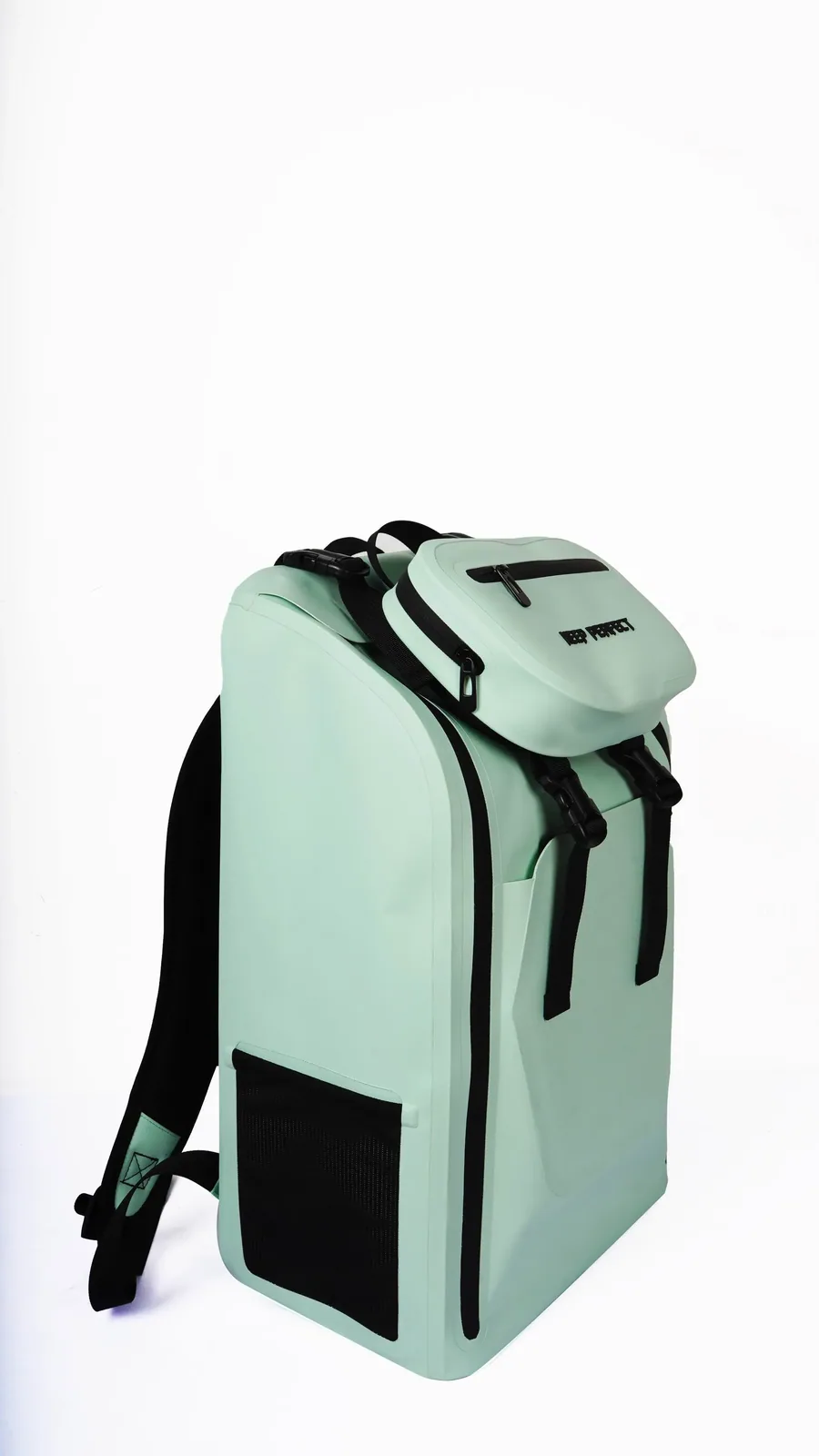
A seasonal wine bag programme is a calendar counted back from the release date rather than forward from today. Sampling is 6-10 working days, bulk production 35-50 days from written approval, and transit is a month on a sea lane. A holiday range releasing in early November has to be ordered in July, and a harvest programme has to be ordered before the fruit is picked.
Seasonal wine programmes have a hard date and no flexibility at the end of it, which is what makes them different from an always-on range. A missed date is not a late delivery, it is a season lost. Everything in this piece is about making the date calculable and about what makes the second season shorter and more predictable than the first.
The development calendar that runs underneath this is in why bulk takes 35-50 days, and the reorder mechanics are in keeping a reorder inside tolerance.
What Drives the Seasonal Calendar for Wine Bags?
Three dates and they are not negotiable: when the wine is released, when the promotional window opens, and when the retailer needs the goods on the shelf. Everything else in the programme is counted back from the earliest of those three, and in practice the retail shelf date is the one that governs, because a promotion without stock is a promotion that costs money.
The second driver is the wine itself. A harvest programme is tied to a vintage and a bottling date, and a bag that arrives after the wine has been released is a bag for next year. A holiday programme is tied to a retail window that opens on the same date every year, which at least makes it predictable.
The third driver is the freight lane, and it is the one most often forgotten in the count. A sea lane from Xiamen to northern Europe is about a month door to door including the customs entry; to the west coast of the United States it is shorter; an air freight lane is days and it costs a multiple. Choose the lane before the calendar is fixed, because it is a month of difference.
| Milestone | Working days | What it depends on | What moves it |
|---|---|---|---|
| Tech pack signed off | 0 | The bottles and the artwork being in hand | A decision left open in the pack |
| Sampling | 6-10, or 12-15 | Whether a die or a component has to be made | A shaped neck block or a sourced closure |
| Approval | variable | A named approver and a written date | An approval given verbally and confirmed later |
| Bulk production | 35-50 | Written sample approval | The material being a stock item |
| Inspection | 2-3 | AQL 2.5, ISO 2859-1, Level II | A re-test after a failed lot |
| Customs entry | variable | The documents being right | A heading or a value queried at entry |
| Transit, sea | about 30 | The lane and the port pair | Peak-season congestion |
| Warehouse to shelf | 5-10 | The retailer booking | A booking missed at the peak |
When Does a Harvest or Holiday Programme Have to Start?
A holiday range releasing in early November has to be ordered in July, and a harvest programme has to be ordered before the fruit is picked. Those two sentences contain most of what goes wrong in this category, because both dates are earlier than a buyer who starts counting in September expects.
The arithmetic is not complicated and it is worth doing on paper rather than in the head. Fifteen working days of sampling for a structured build, plus a week for approval, plus 50 days of bulk, plus three days of inspection, plus about 30 days of transit, plus a week to the shelf — that is roughly a hundred and ten days. From the first week of November that is the middle of July.
The lever that is available at that point is overlap rather than compression. A divider die or a shaped block can be cut while the shell is being sampled, and a long-lead material can be called in at the same time. Compression — asking for a shorter bulk window — is the lever that produces a bag that misses its own inspection.
How Far Back From the Release Date Should the Order Go In?
About a hundred and ten days on a sea lane with a structured build, and about eighty on a simple one with an air lane. Both numbers assume the decisions have been made before the pack is signed off, and both assume approval happens on the day the sample is sent rather than three weeks later. A programme that wants a margin should add two weeks to whichever figure it is using.
The margin is not padding and it is worth explaining why. A seasonal programme runs into a peak freight season, and peak-season congestion is the one delay no supplier controls. A programme with two weeks of margin absorbs a missed vessel; one without it misses the window.
The second margin is on approval, and it is the one the programme controls. Name the approver, name the date by which the approval will be given, and put both on the tech pack. An approval that takes three weeks is the single most common cause of a missed season in this category and it costs nothing to prevent.
How Is a Seasonal Colourway Managed Across Years?
With a physical standard rather than a reference number, and with a shade tolerance written down. A seasonal colourway that returns in a second year has to be matched to the first, and a reference number alone will not do it, because two dye lots from the same number are two shades. Keep a sealed cutting of the approved shade from the first season and match against it.
The second discipline is to buy the colourway in one lot rather than in two. A seasonal range split across two dye lots has two shades on the shelf at the same time, which is visible when two bags sit next to each other and it is the kind of thing a customer notices before a buyer does.
The third is to record the dye recipe and the lot number on the tech pack. Where a third season is planned, that record is the fastest route to a match, and it is the piece of information that is impossible to reconstruct after the fact.
Should a Seasonal Programme Hold Stock or Reorder?
Hold stock on the seasonal item and reorder on the always-on one, and the reason is that a seasonal reorder cannot be delivered in time. A holiday range that sells out in the first fortnight has three weeks of window left and a hundred and ten days of supply chain. The only answer is stock held before the window opens.
The arithmetic is a forecast rather than a guess. Take last year sell-through, apply the growth the programme is planning for, add a safety figure for the promotional peak, and subtract what will still be in transit. Where there is no last year, buy the first season conservatively and treat it as a forecast run for the second.
The second half of the answer is what to do with the leftover. A seasonal colourway that does not sell is dead stock for eleven months and then it is sellable again, and that is a decision to make in the design: a seasonal print on a neutral shell can be carried over, and a seasonal shell cannot.
Planning a seasonal wine bag programme
- Count back from the shelf date: about 110 days on a sea lane with a structured build.
- Overlap the long-lead item with sampling rather than compressing the bulk window.
- Name the approver and the approval date, because that delay is the one the programme controls.
- Hold stock on the seasonal item: a reorder cannot be delivered inside the window.
- Keep a sealed cutting of the approved shade and record the dye lot for the next season.
How Does a Reorder Stay Inside Tolerance?
With three controls that cost nothing: a sealed reference sample held by both sides, a material specification with a figure and a tolerance on every line, and written notice before any substitution. That is the whole mechanism, and it is the one described in keeping a reorder inside tolerance.
On a wine bag the three lines that matter most are the divider material and thickness, the base board thickness and the webbing width, because all three are invisible in a photograph and all three carry load. A reorder that is controlled on the appearance and not on those three is a reorder that will drift.
The second control is a pre-production sample from bulk materials, packed with the actual bottles. Three or four bags, filled, carried and dropped. It costs a day and it is the only thing that approves a reorder before fifty thousand units are made.
What Happens When a Seasonal Design Changes?
The change is classified before it is made, and the classification decides the calendar. A change to the print is a change to a screen or a film and it costs days. A change to a dimension changes the die and the carton and it costs weeks. A change to the divider material changes the die and the test and it can cost a re-sampling.
The discipline is to freeze the construction and let the artwork move. A seasonal programme that changes its print every year and its construction every third year hits its dates; one that changes both every year does not. The customer sees a new programme either way, because the artwork is what they see.
Where a construction change is genuinely needed, the way to keep the date is to run it as a new style alongside the old one rather than as a revision of it. Both then have their own calendar, and the risk sits on the new one rather than on the season.
| Change | What it touches | Calendar cost | Verdict |
|---|---|---|---|
| A new print or colourway | A screen, a film or an embroidery file | days | Safe every season |
| A new label or swing tag | A loom setup | days to a week | Safe every season |
| A cell dimension change | The divider die, the external width, the carton | weeks | Every third season at most |
| A divider material change | The die, the test, the class list | weeks to a re-sampling | Only when the lane changes |
| A handle construction change | The pattern, the jig, the pull test | weeks | Only with a full re-test |
| A new bottle in the range | The bottle table, the cell, possibly the die | weeks | Run it as a new style |
How Are Volumes Forecast for a Second Season?
From the first season sell-through with three adjustments, and all three are judgement rather than arithmetic. Take the units sold, add the growth the channel is planning for, subtract the stock still in the warehouse, and add a safety figure for the promotional peak. Where a promotion is planned and was not last year, the safety figure is large.
The second input is the reorder structure, and it is what makes a second season cost less. Because the dies, the pattern and the material specification exist, a repeat can be discussed at 300 pcs per style and colourway rather than at 500, and the calendar is shorter because there is no die to cut. A programme that plans its second season around that runs a smaller stock and a shorter count.
The third input is the pack-out and the freight, and it is where a second season often finds money. A unit price negotiated on the first order and a landed cost calculated on the first order are two different numbers, and the second season is the moment to compare the two against a nested or a knock-down version of the same bag.
How Do Seasonal and Always-On Programmes Differ?
In what they optimise for. An always-on programme optimises for consistency and for cost, because it reorders the same bag for years and every drift shows up as a complaint. A seasonal programme optimises for the date and for the moment, because a missed window is a lost season and a bag that arrives late is worth nothing.
The operational difference follows from that. An always-on programme holds a sealed sample, a full bill of materials and a written notice clause, and it reorders against them. A seasonal programme holds a calendar, a named approver and a freight booking, and it counts back from the shelf date. Both need the other half, and the programmes that fail usually have the wrong one.
The commercial frame is the same for both: MOQ 500 pcs per style and colourway, with 300 pcs open to discussion on a repeat; sampling 6-10 working days and 12-15 on a complex build; bulk production 35-50 days from written sample approval; inspection at AQL 2.5 under ISO 2859-1 General Inspection Level II; T/T 30/70; FOB Xiamen with CIF and DDP available. What differs is which of those numbers the programme has to plan backwards from.
- Shelf date
- The earliest of release, promotion window and retail shelf
- Lane
- Sea or air, and the port pair, chosen before the calendar is fixed
- Build
- Simple or structured, and whether sampling is 6-10 or 12-15
- Long-lead item
- Named at quotation so it can be cut in parallel
- Approver
- A named person and a date by which approval will be given
- Order date
- Counted back from the shelf date, with a two-week margin
- Forecast
- Last-year sell-through, growth, stock on hand, safety figure
- Stock or reorder
- Hold stock on the seasonal item; reorder the always-on one
- Shade control
- A sealed cutting and the dye lot recorded for the next season
- Change policy
- Freeze the construction; let the artwork move
Count back from the shelf date
Send the release date, the lane, the count and the bottle shapes. You get a calendar with the order date on it, within one business day.
Frequently Asked Questions
How far in advance should I order seasonal wine bags?
About 110 days on a sea lane with a structured build, and about eighty with a simple build on an air lane. Add two weeks of margin for the peak season.
When does a holiday wine bag programme have to start?
A range releasing in early November is ordered in July. Fifteen working days of sampling, a week of approval, 50 days of bulk, 30 days of transit and a week to the shelf.
What is the biggest cause of a missed season?
Approval delay. An approval given verbally and confirmed three weeks later has moved the release date by three weeks, and it costs nothing to name an approver and a date.
Can a seasonal programme reorder inside the window?
No. A hundred and ten days of supply chain does not fit inside a three-week window. Hold stock before the window opens.
How do I match a seasonal colourway in a second year?
Keep a sealed cutting of the approved shade from the first season, record the dye lot and the recipe, and buy the colourway in one lot rather than two.
Should a seasonal design change every year?
Change the artwork every year and the construction every third year at most. The customer sees the artwork and the calendar is governed by the construction.
What is the calendar cost of changing a dimension?
Weeks. A cell change touches the divider die, the external width and the carton. A print change touches a screen or a film and costs days.
How do I forecast a second season volume?
Last-year sell-through, plus the growth the channel is planning for, minus stock on hand, plus a safety figure for the promotional peak.
Why does a second season cost less?
The dies, the pattern and the material specification exist, so a repeat can be discussed at 300 pcs rather than 500 and the calendar is shorter without a die to cut.
What is the difference between a seasonal and an always-on programme?
A seasonal one optimises for the date and holds a calendar and a freight booking. An always-on one optimises for consistency and holds a sealed sample and a material specification.
Does air freight save a season?
It saves about three weeks and it costs a multiple. Where a programme has missed its sea date, air freight on a partial quantity is often the answer for the launch and sea for the balance.
What is the MOQ for a seasonal wine bag?
MOQ is 500 pcs per style and colourway, and 300 pcs can be discussed on a repeat where the construction, material and artwork are unchanged.
How long is bulk production?
35-50 days from written sample approval, inspected at AQL 2.5 under ISO 2859-1 General Inspection Level II, on T/T 30/70, FOB Xiamen.
What happens to leftover seasonal stock?
It depends on the design. A seasonal print on a neutral shell can be carried over; a seasonal shell is dead stock for eleven months. Decide it in the design rather than after the season.
People Also Ask
How early should I order wine bags for Christmas?
About 110 days before the shelf date on a sea lane with a structured build, which for an early November release means ordering in July.
How long does a wine bag order take from start to finish?
Roughly 110 days: 12-15 working days of sampling, a week for approval, 35-50 days of bulk, inspection, the customs entry and about 30 days of transit.
Can I reorder a seasonal bag mid-season?
Not in time. Hold stock before the window opens, because a reorder cannot be delivered inside a three-week promotional window.
How do I match last year bag colour?
Keep a sealed cutting of the approved shade, record the dye lot and the recipe, and buy the colourway in one lot.
Does a second season of wine bags cost less?
Usually, because the dies and the pattern exist and a repeat can be discussed at 300 pcs rather than 500.
Sources and further reading
Every figure on this page is either our own programme data or attributed below. Open the originals before you write them into a specification.
- ISO 2859-1:1999 — sampling procedures for inspection by attributesInternational Organization for Standardization
- CETIE — international technical centre for bottling: bottle finish and dimension data sheetsCETIE (Centre International Technique de l'Embouteillage)
- FEVE — the European container glass federation: glass container design and specificationFEVE — European Container Glass Federation