Sea Freight vs Air Freight for Bags: Cost and Timing Trade-Offs
Bags are volumetric cargo: a carton of soft bags is mostly air, so air freight is charged on the box rather than on the weight and sea freight is charged on the container. That single fact sets the crossover point, and it is usually higher in the order size than buyers expect. MOQ 500 pcs.
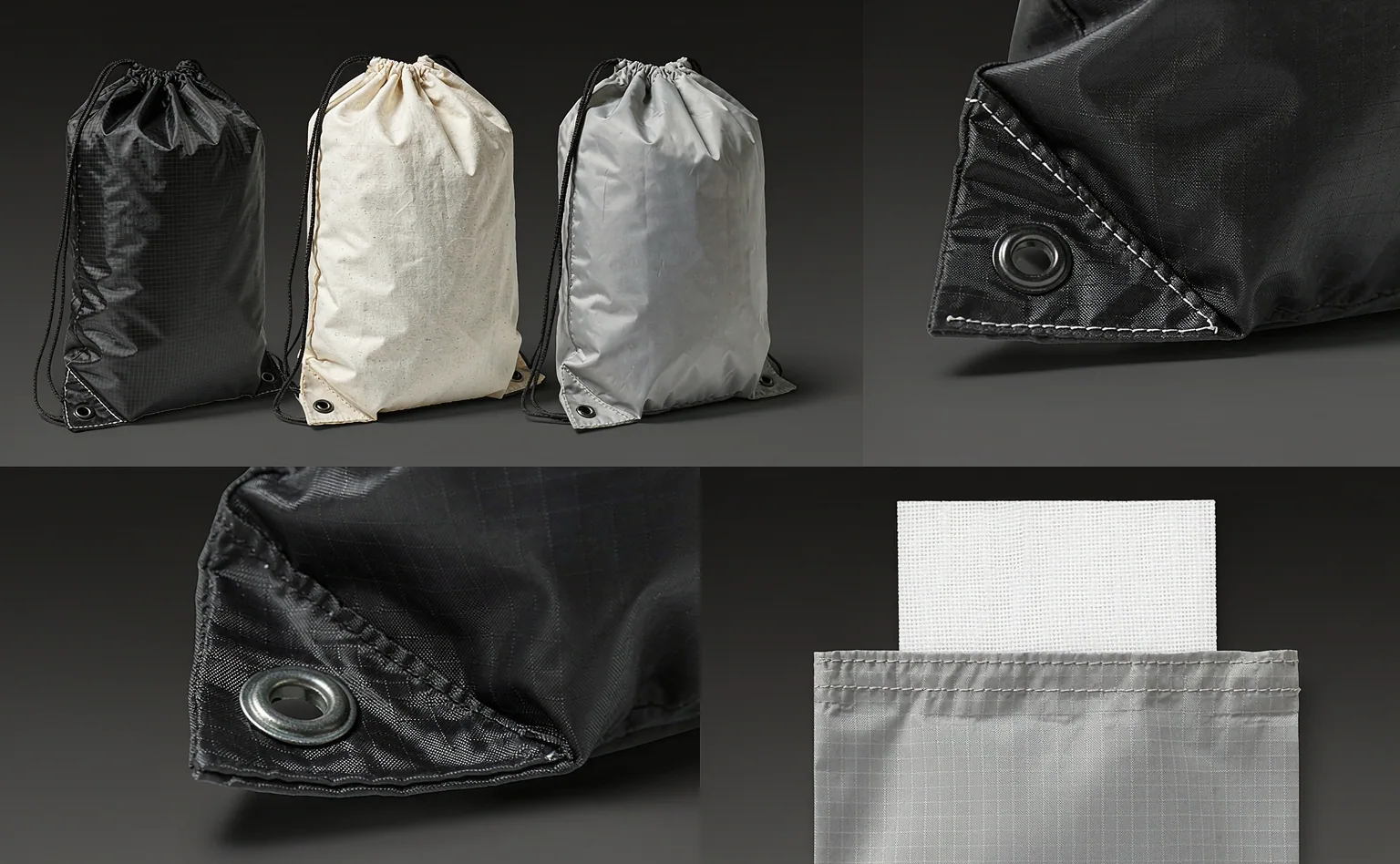
Sea freight is charged on the container, or on the cubic metre with a minimum for a consolidation, and takes a planning window of several weeks door to door. Air freight is charged on the higher of actual and volumetric weight, and takes days in the air but still needs packing, export filing, entry and delivery. Because bags are voluminous, air is usually billed on the box rather than on the weight, which is why the crossover sits higher than most first-time buyers assume.
What Actually Differs Between the Two Modes?
Three things differ: the charge basis, the transit window, and the handling. The charge basis is the one that decides the money. Sea is sold by the box — a 20-foot or 40-foot container, or a share of one. Air is sold by the kilogram, and for a low-density cargo the kilogram is a calculated one: the volume expressed as weight at a fixed divisor.
The transit window differs by weeks rather than days, and it differs at both ends as well as in the middle: a container waits for a cut-off before sailing and for a berth after arrival, while an air waybill waits for a flight and for a build-up and breakdown at each end. What does not differ is the paperwork: both modes need an export declaration, a commercial invoice, a packing list, an entry at destination and a delivery.
How Is Air Freight Charged on Bag Cargo?
Air freight is charged on the chargeable weight, which is the greater of the actual gross weight and the volumetric weight. The volumetric weight is calculated from the dimensions of the consignment using a divisor published in the IATA tariff rules; the standard divisor is 6000 when dimensions are in centimetres, giving kilograms from cubic centimetres. A carton measuring 60 x 40 x 40 cm therefore has a volumetric weight of 16 kg.
That number is the whole story for soft bags. The same carton of drawstring bags might weigh 7 kg on a scale and 16 kg on the tape measure, and the airline bills 16. A carton of cooler bags with foam insulation might weigh 11 kg and still bill at 16. Unless the bag is dense — a camera bag with dividers and hardware, for instance — the tape measure decides the bill.
| Carton contents | Carton size | Actual weight | Volumetric weight | Charged on |
|---|---|---|---|---|
| Drawstring bags, flat packed | 60 x 40 x 40 cm | about 7 kg | 16 kg | Volume |
| Insulated cooler bags | 60 x 40 x 40 cm | about 11 kg | 16 kg | Volume |
| Neoprene bottle sleeves | 60 x 40 x 40 cm | about 9 kg | 16 kg | Volume |
| Wine bags with dividers | 60 x 40 x 40 cm | about 13 kg | 16 kg | Volume |
| Camera bags with dividers | 60 x 40 x 40 cm | about 18 kg | 18 kg | Weight |
| Hardware-heavy equipment cases | 60 x 40 x 40 cm | about 24 kg | 24 kg | Weight |
How Is Sea Freight Charged on Bag Cargo?
Sea freight is sold three ways depending on size. Below roughly 15 cubic metres it is sold as a consolidation, charged per cubic metre against a minimum charge that often amounts to two or three cubic metres. Above roughly 25 cubic metres it becomes sensible to buy the whole container, charged as a flat rate for the box regardless of how full it is. In between, the comparison is arithmetic on both sides.
The flat-rate structure is the important one, because it means the cost per bag is a function of how many bags you got into the box. Fill the container to 60% of its internal volume and you have paid for the other 40% anyway. That is why packing efficiency — carton size, units per carton and how the cartons stack — is a freight decision and not a packaging footnote.
What Is the Crossover Point?
There is no universal crossover, because it depends on the rate on the day, but the shape of the answer is stable. A small consignment — a few cartons, under two cubic metres — is frequently lower in cost by air than by sea consolidation, because the consolidation minimum charges you for volume you are not using. A mid-size consignment costs less by sea. A very large consignment costs less by sea by a wide margin.
The reason is the shape of the two cost curves. Air cost rises almost linearly with volume. Sea consolidation cost rises linearly too until it hits the point where a container is lower in cost, and then it becomes a step: one box, one price, whatever is inside it. Find that step and the decision follows.
| Consignment | Volume | Sea structure | Air structure | Usual answer |
|---|---|---|---|---|
| 500 pcs, about 50 cartons | about 4.8 cubic metres | Consolidation, minimum applies | Charged on volumetric weight | Compare both; air is often closer than expected |
| 1,000 pcs, about 100 cartons | about 9.6 cubic metres | Consolidation | Charged on volumetric weight | Usually sea |
| 2,500 pcs, about 208 cartons | about 20 cubic metres | A 20-foot container | Charged on volumetric weight | Sea, clearly |
| 5,000 pcs, about 417 cartons | about 40 cubic metres | A 40-foot container | Charged on volumetric weight | Sea, by a wide margin |
| Replenishment of one carton | under 0.5 cubic metres | Consolidation minimum | Express courier | Courier, for speed and simplicity |
What Does Air Actually Save in Days?
Air saves the sailing and the port dwell, which on a Xiamen to Los Angeles consignment is a planning window of several weeks replaced by a flight of a day plus handling at both ends. Door to door, an air consignment is commonly inside ten days and frequently inside a week; a sea consignment on the same lane is a matter of weeks. The gap is real and it is large.
What is smaller than buyers expect is the gap at the margins, because a large part of the door-to-door window is not transit at all. Packing takes the same time. Export filing takes the same time. Entry at destination takes the same time, and an air consignment is not exempt from examination. Delivery booking takes the same time. Air removes the middle of the chain and leaves both ends intact.

What Does Air Not Save?
Air does not save the production window, which is the longest single item in the chain: bulk production runs 35-50 days from sample approval. A buyer who flies the goods saves two or three weeks on a five-to-eight week chain and has still spent the same five weeks waiting for the bags to be made. If the schedule is under pressure, the pressure is usually in production, not in transit.
Air also does not save the sampling window, which is 6-10 working days, or the approval cycle. And it does not remove the inspection: a consignment inspected at AQL 2.5 under ISO 2859-1 is inspected whether it flies or sails. Buyers who pay for air and then discover the schedule was set by the sample approval are paying for speed in the wrong place.
When Is Air the Right Call for a Bag Programme?
Air is right when the value per kilogram is high, when the volume is small enough that the consolidation minimum dominates, when the date is fixed by an event that cannot move, or when the goods are a replenishment against a stock-out rather than a planned order. Each of those is a legitimate reason and each of them is about the commercial situation rather than about the freight.
Two qualifications belong on that last case. First, the premium is worth paying once per style, not once per season — the point is to learn the sell-through rate, and once you know it the second shipment is a planned order that should sail. Second, the data is only useful if the air shipment is otherwise identical to the sea shipment: same specification, same packing, same inspection. If the air lot was packed differently, the sell-through data describes a different product.
Air is also right for the first shipment of a new style, and this is the case buyers miss. Flying the first 500 pcs gets the goods into the market, generates a sell-through rate, and produces the data that makes the second order — which will sail — the right size. Paying a premium on 500 units to size a 5,000 unit reorder correctly is not expensive, it is insurance against ordering the wrong number.
How Does Packing Change for Air?
The carton specification changes because air cargo is handled more often and stacked less predictably than containerised cargo. The same 60 x 40 x 40 cm carton works, but the grade of board, the closure and the edge protection matter more, and the ISTA test procedures and ASTM D4169 give a way to specify what the carton has to survive. A carton that only has to survive one container move is not the same carton that has to survive an air build-up and breakdown.
The second change is that volume becomes money in a way it does not on a container. Compress the bag — roll a drawstring bag rather than folding it, ship a cooler bag nested or compressed to a stated height — and the volumetric weight falls directly. A 10% reduction in carton volume is a 10% reduction in the air bill, and on a container it is worth nothing at all until it changes the carton count.
What About Rail and Courier?
Two other modes sit in the picture. Express courier is the right answer for a single carton or a sample: it is one invoice, one tracking number and a door-to-door service, and for a small parcel it is simpler than an air waybill with a broker. China-Europe rail sits between air and sea on both cost and time on the European lane, and it is worth asking about when the sea window is too long and the air cost is too high.
One more mode question is worth settling early because it changes the packing rather than the freight: whether the consignment will be palletised. Pallets protect cartons and speed handling, and they cost volume — a pallet base, the overhang and the wrap take space that cartons would otherwise use. On a sea container the loss is usually worth accepting; on an air consignment, where volume is billed directly, it often is not.
Neither changes the arithmetic of the main decision. Both still require export filing, entry and delivery, and both are billed on a chargeable weight that is calculated the same way. Ask for all three quoted on the same consignment — sea consolidation, air and courier — and the answer is usually obvious once the three numbers are on one page.
Six questions before you choose the mode
- What is the chargeable weight of the consignment — the tape measure or the scale?
- Is the consignment above or below the point where a whole container becomes the structure?
- What part of the schedule is actually under pressure: production, transit or entry?
- Does the date depend on a fixed event, or is it a replenishment against a plan?
- Is this the first shipment of a new style, where speed buys sell-through data?
- What does the packing specification cost to change, and what does it save in volume?
How Do You Decide Without a Rate Card?
Decide on structure first and price second. Work out the carton count and the volume, decide whether that is a consolidation or a container, and only then ask for rates. A buyer who asks for an air rate and a sea rate before knowing the volume is asking two questions that cannot be answered, and will get two numbers that cannot be compared.
Ask for the quotation to state the chargeable weight, the divisor used and the rate per kilogram, because those three let you recheck the arithmetic yourself. A quotation that gives a total without them cannot be audited, and air quotes in particular are worth rechecking: the volumetric weight and the actual weight are both on the packing list, and the higher of the two should be the one on the invoice.
Then put the two numbers on one sheet with the same carton count and the same delivery address, and add the schedule difference as a line of its own. The schedule difference has a cost — working capital tied up for the extra weeks, or a stock-out if the goods are late — and putting a number on it is what turns a freight comparison into a commercial decision. The landed cost calculator holds both columns, and the HS code finder supplies the duty line that is identical on either mode.

Freight bands and transit windows in this cluster are planning ranges drawn from quoted lots, not published tariff rates. They move with bunker cost, vessel rotation, port congestion and the week you book; ask for a live quotation against your sailing before you commit the order to a calendar.
Compare the two modes on one sheet
Send us the style, the quantity and the destination and we will quote the consignment by sea and by air on the same carton count, with the volumetric weight and the schedule difference shown.
Frequently Asked Questions
Why is air freight expensive for bags?
Because bags are voluminous and air is charged on the greater of actual and volumetric weight. A 60 x 40 x 40 cm carton bills at about 16 kg whatever it weighs, so you pay for the air inside the box.
What is volumetric weight?
The volume of the consignment expressed as a weight using the divisor in the IATA tariff rules, normally 6000 for centimetres. Chargeable weight is the greater of that and the actual gross weight.
At what order size does sea clearly cost less?
The step is where a whole container costs less than paying per cubic metre, which for soft bags in the standard carton is usually somewhere around 20 cubic metres. Ask for both quoted on your actual carton count.
Does air freight avoid customs entry?
No. An air consignment needs the same export declaration, the same document set and the same entry at destination, and it is not exempt from examination.
Is air justified for a first order?
Often yes. Flying the first 500 pcs gets sell-through data that makes the second order the right size, and the premium on 500 units is small against the cost of mis-sizing a reorder.
Does air freight reduce the total lead time much?
It removes the sailing and the port dwell, which is weeks. It does not touch production, sampling, export filing, entry or delivery, which is where most of the window sits.
How can I reduce the air freight bill on bags?
Reduce carton volume, because air is billed on the box. Nested or compressed packing, a tighter carton and fewer oversized cartons all lower the chargeable weight directly.
Is the carton specification different for air?
Yes. Air cargo is handled more and stacked less predictably, so board grade, closure and edge protection matter more. ISTA procedures and ASTM D4169 give a way to specify performance.
When is a courier better than an air waybill?
For a single carton or a sample, where one invoice and one tracking number beat an air waybill plus a broker. Above a few cartons the air waybill usually wins on rate.
Is China-Europe rail worth considering?
On the European lane it sits between sea and air on both cost and time, so it is worth asking about when the sea window is too long and the air cost is too high.
Do both modes use the same inspection?
Yes. Inspection at AQL 2.5 under ISO 2859-1 happens before shipment whichever mode the goods travel by.
How do I compare two freight quotations properly?
Same carton count, same delivery address, same day, and a number attached to the schedule difference. Without those two quotations are not comparable.
People Also Ask
Why is air freight expensive for bags?
Because air is charged on the greater of actual and volumetric weight, and a carton of soft bags is mostly air. A 60 x 40 x 40 cm carton bills at about 16 kg regardless of scale weight.
What is volumetric weight?
Volume expressed as weight using the IATA divisor, normally 6000 for centimetres. Chargeable weight is the greater of that and the actual gross weight.
Does air freight avoid customs entry?
No. It needs the same export declaration, the same documents and the same entry, and it is not exempt from examination.
When is air justified for bags?
For a small consignment below the consolidation minimum, for a date fixed by an event, for a replenishment against a stock-out, or for the first shipment of a new style.
How do I reduce the air freight bill?
Reduce carton volume. Nested or compressed packing and a tighter carton lower the chargeable weight directly, because air is billed on the box.
Sources and further reading
Every figure on this page is either our own programme data or attributed below. Open the originals before you write them into a specification.
- IATA — air cargo tariff rules, dimensional weight and cargo handlingInternational Air Transport Association
- ISTA test procedures — packaged-product performance testingInternational Safe Transit Association
- ISO 2859-1:1999 — Sampling procedures for inspection by attributesInternational Organization for Standardization