Custom Sports Bags for School Teams: Name, Number and Logo Personalisation
A school programme personalises more units with more variation than any club order, because a school has pupils who join, leave and change year group every twelve months. The specification answer is a stable silhouette with the personalisation carried as data.
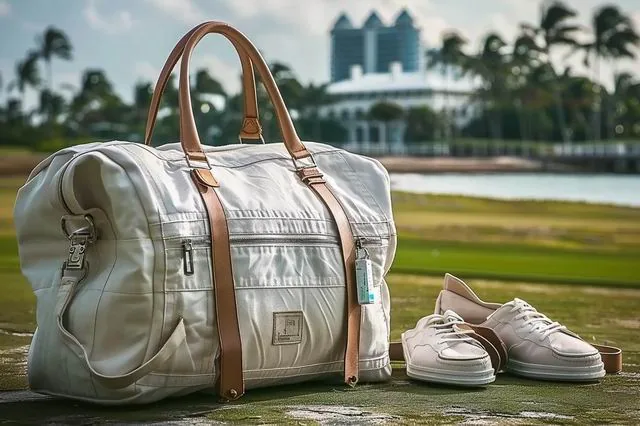
Separate the bag from the data. Fix the silhouette, the colourway and the position once, then supply the names and numbers as a file each year. That is the whole trick to a school programme that survives a change of staff and a change of roll.
Why Is a School Programme Different From a Club One?
Three reasons, all structural. A school roll changes every year by definition — pupils leave, join and move year group. A school buys across several sports from one fund, so the silhouette has to serve more than one. And a school is buying for children, which brings a compliance dimension a club order does not have.
The consequence is that a school programme is a data problem as much as a product problem. The bag is stable; the list of names on it is not. Getting that separation right at the start is worth more than any product decision in the programme.
| Dimension | Club programme | School programme | Consequence |
|---|---|---|---|
| Roster stability | Stable within a season | Changes every year | A plain float every year |
| Sports covered | Usually one | Several, one fund | One silhouette, option packs |
| Compliance | General product rules | A children's-product market | Evidence asked for with the order |
| Personalisation volume | Names and numbers | Names, numbers, year group, house | More data, more fields |
| Buying cycle | Annual, tied to fixtures | Annual, tied to the school year | Order against the autumn term |
How Should Name and Number Personalisation Be Specified?
As three separate decisions: the method, the position and the data. The method is embroidery, print or a woven tab. The position is a measurement from a seam. The data is a file — a list of names and numbers in a format that can be read rather than retyped.
Mixing these is where school orders go wrong. A school that sends a list of names without saying where they go, or a position without saying how tall the letters are, has given half a specification, and the missing half is decided by somebody else.
| Field | What a complete entry contains | What a weak entry contains |
|---|---|---|
| Method | Embroidery, print or woven tab, per element | Names on the bag |
| Position | Two measurements from named seams, plus a tolerance | On the end panel |
| Size | Cap height and the maximum name length | Not stated |
| Data | A file: surname, number, year group, house | A paragraph in an email |
| Float | How many plain units are held | Not stated |
| Spelling check | Who signs off the file, and when | Assumed |
How Many Plain Units Should a School Hold?
More than a club does. A school roll changes by definition — a pupil joins in October, a pupil moves house, a bag is lost — and a school that personalised every unit has no answer to any of those except a fresh personalisation run.
A workable figure is around ten per cent of the order, held plain, ordered with the main lot so they come from the same dye lot. On an order of 500 that is fifty units, which covers a year of changes with margin and costs nothing beyond the personalisation that was not applied.
How Does a School Handle Houses and Year Groups?
Houses and year groups are the two additional fields a school carries that a club does not, and both can be done in two ways: as colour, or as a tab or print. Colour is more visible and more expensive, because each house colourway is a separate colourway with its own minimum.
- House carried by a woven tab or a print — one colourway, one minimum.
- House carried by shell colour — one minimum per house.
- Year group carried by a tab, because it changes annually.
- Year group carried by print, where the school wants it large.
- A compromise: house in colour where there are four or fewer, tab above that.
What Compliance Evidence Does a School Market Need?
A school is buying for children, and a children's-product market carries substance requirements that a general product does not. In the United States that is CPSIA; in the European Union it is REACH. Both apply to the finished article rather than to the fabric alone, and both are asked for with the order rather than after it.
| Market | Framework | What it covers | What to ask for |
|---|---|---|---|
| United States | CPSIA | Lead and phthalates in children's products | A test report against the applicable limits |
| European Union | REACH Regulation (EC) 1907/2006 | Restricted substances | A statement and a test report where requested |
| California | Proposition 65 | Listed substances and warning requirements | A safe-harbour assessment where the market requires it |
| Voluntary | OEKO-TEX STANDARD 100 | Limit values on the textile | A certificate where the school asks for one |
| Retailer-driven | Buyer-specific restricted substance lists | Whatever the buyer names | The list, supplied with the enquiry |
How Does Colour Work Across a School With Several Sports?
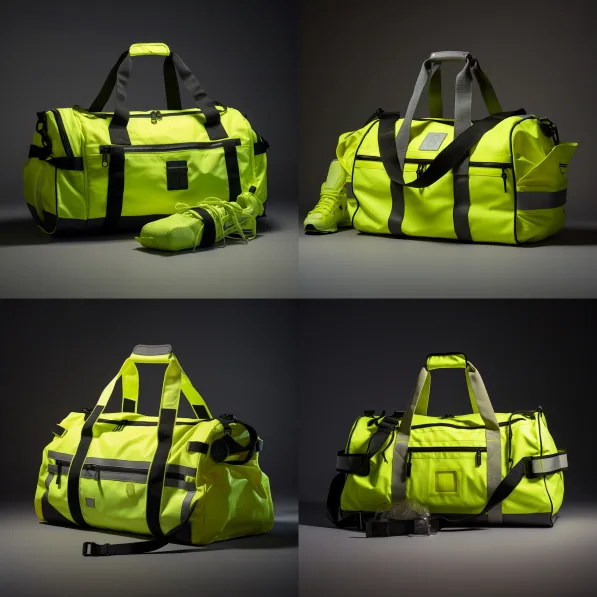
A school with six sports and one fund cannot run six silhouettes in six colourways. The workable arrangement is one shell silhouette in one school colourway, with the sport carried by an option pack and the house or year group carried by a tab or print.
Where a school insists on a colour per sport, the programme has the same problem a multi-sport club has — one minimum per colourway — and the consolidation advice applies with more force, because a school fund is fixed in a way a club fund often is not. The method is set out in Reorder colour consistency.
What Should the Tech Pack Say for a School Order?
Six fields, and they are the same ones as any club order plus the two school-specific ones: the personalisation data format and the compliance evidence required.
Tech pack fields for a school sports bag
- Silhouette and compartment layout, serving more than one sport.
- Colour references for shell, binding, webbing, tape and thread.
- Personalisation: method, position, size, and the maximum name length.
- Data format: the fields, in a file, with a named sign-off.
- Compliance: the frameworks the market requires, and the evidence to arrive with the order.
- The float: how many plain units, held back from the main lot.
How Is a School Sample Judged?
With the longest name on the roll and the largest number. That is the test a school needs, because the failure mode of school personalisation is not the average name — it is the name that does not fit in the space that was specified.
The second check is the same as any club order: load the bag, carry it, set it down. A school bag is carried by a pupil rather than by an adult, so it is worth checking that the strap adjusts short enough and that the bag is not heavier than the pupil can carry with their school things as well.
How Does the School Year Drive the Order?
Hard, because a school year starts on a fixed date that cannot move. A school that wants bags for the autumn term has to have raised the enquiry in the spring, and the calculation is the standard one run backwards: bulk 35-50 days from written sample approval, sampling 6-10 working days from a signed-off tech pack.
The additional pressure is the summer holiday. A school department that decides in June and expects bags in September has no chance, and the decision is usually made in June because that is when the fund is confirmed. The fix is to specify in the spring against a provisional roll and to supply the data later — which is exactly why the personalisation should have been separated from the product in the first place. The calendar is set out in Why 35 to 50 days.
What Does the Inspection Criteria Need to Include?
Six checks: personalisation position and size, spelling and number accuracy against the file, colour against the approved coupon set, compartment dimensions, compliance marking where required, and carton marking by dye lot. Written into the major defect classification, they are enforceable at the Ac/Re decision.
The spelling check deserves a note. It is not a manufacturing defect, but it is the single most common reason a school rejects part of a consignment, and it belongs in the criteria because a check against the file is quick and a re-personalisation is not. The arithmetic is set out in AQL 1.5 versus 2.5.
What Does a School Programme Cost to Run?
The four usual levers apply, and the school-specific one is personalisation volume. A school personalising names, numbers, year groups and houses on 500 units is running four data passes, and each one is a setup. Consolidating to two elements — a number and a house tab — removes most of that.
The second lever is the float. Holding plain units costs nothing beyond the personalisation not applied, and it removes the re-personalisation run that a school otherwise faces every October.
What Goes Into the Enquiry?
Six fields, and a school enquiry is complete. The roll file and the compliance requirement are the two schools most often leave until later.
- The silhouette and the sports it has to serve.
- Colour references for shell, binding, webbing, tape and thread.
- Personalisation: which elements, which method, and how the data will be supplied.
- The roll size, and how much of it is expected to change during the year.
- The compliance frameworks the market requires.
- The date the bags are needed, working backwards from the autumn term.
What Fails First on a School Bag?
Personalisation accuracy, then the strap, then the base. The first is a data problem, the second is a specification problem and the third is the same specification problem every bag in this cluster has.
The clause that prevents each: a signed-off data file checked against a printed proof, a reinforcement patch with a stitch type named to ASTM D6193, and a coated base panel with corner protection. None of them is expensive.
How Is the Programme Handed Over Between Staff?
Schools change staff more often than clubs change committees, and the handover problem is the same one, only faster. The fix is the same: a one-page programme record held by the school, with the reference and its library, the substrate list, the coupon set, the dye-lot history, the tech pack revision number and the personalisation data format.
Where that page exists, a new head of department can place the order in an afternoon. Where it does not, the school re-develops, and the re-development lands in the summer, which is the one window in which it cannot be recovered.
How Does a School Handle Kit for Several Sports?
Most schools run four to six sports on one silhouette, which is the same problem a multi-sport club has with more pressure on it. The answer is the same: one shell, one colourway, and the sport carried by an option pack — a bat sleeve here, a ball holder there, a wet pocket everywhere.
The two sports that do not fit the pattern are cricket, because of the bat, and swimming, because everything arrives wet. A school with either should plan a second silhouette for that sport alone and accept the second minimum, rather than compromise the silhouette that serves the other four.
How Does a School Store Bags Between Terms?
School storage is harder on bags than club storage, because a school stores them in bulk over a long summer holiday and often in a space that is hot and unventilated. A bag put away damp in June comes out in September with a lining that has grown something.
The instruction is the same one that applies to a club, applied more strictly: empty, dry, store open and out of direct sunlight. A school that adds a summer term check — bags emptied and aired before the holiday — avoids the most common complaint a school kit programme generates.
Should a School Buy the Same Bag as a Club?
Usually yes, and it should buy it on the same specification. A school bag is not a different product — it is the same bag carrying more data and subject to a stricter compliance framework. The two extra requirements are worth stating on the tech pack, and they do not change the silhouette.
The one genuine difference is weight. A pupil carries the bag alongside school things, so a slightly lighter shell and a slightly smaller volume are worth specifying. That is a dimension change rather than a different product, and it is the only one a school programme usually needs.
How Does a School Handle Lost and Damaged Bags?
A school loses bags at a rate a club does not, because a school bag goes home with a pupil rather than into a club store. The float covers the first wave; after that the school is replacing individual bags, which is the most expensive way to buy anything.
Two clauses soften it. Hold a larger float than a club would — ten per cent rather than five — and keep the personalisation to a number and a house tab rather than a surname, so a replacement can be issued without a personalisation run. A bag marked with a number is replaceable from stock; a bag marked with a surname is not.
What Is the Shortest Useful Advice for a School Buyer?
Separate the bag from the list. Decide the bag in the spring, supply the names in the summer, and hold ten per cent plain. Those three moves remove most of what goes wrong in a school kit programme.
The fourth is to ask for the compliance evidence with the order. It is a sentence on the enquiry and it is the difference between a delivery that clears and one that sits in a store while somebody looks for a certificate.
Schools that do all five tend to run the same programme for years without a problem, which is the actual measure of whether a kit programme works. The bag is the easy part; the administration around it is what decides.
And the fifth is to fix the maximum name length before the roll file is produced. A school will always have one pupil whose surname does not fit the space that was specified, and deciding what happens in that case — smaller type, an initial, or a second line — is a decision made more calmly in advance than in the week before term.
Separate the bag from the name list
Tell us the silhouette, the personalisation elements and the compliance market, and we come back with a costed programme and a delivery date you can calculate.
Frequently Asked Questions
How should school name personalisation be specified?
As three separate decisions: the method, the position measured from a seam, and the data supplied as a file.
How many plain units should a school hold?
Around ten per cent of the order, held back from the main lot so they come from the same dye lot.
Should houses be carried by colour or by a tab?
By a tab or a print wherever possible. Each house colourway carries its own MOQ 500 pcs.
What compliance evidence does a school need?
CPSIA in the United States and REACH in the European Union, asked for with the order. Proposition 65 in California and OEKO-TEX where requested.
When should a school order for the autumn term?
Specify in the spring and supply the data later. Bulk is 35-50 days and sampling is 6-10 working days.
What is the minimum order?
MOQ 500 pcs per style and colourway, with 300 pcs open to discussion on a repeat.
How long does sampling take?
6-10 working days from a signed-off tech pack, extending to 12-15 working days for a complex build or a new colour.
How long is bulk production?
35-50 days from written sample approval, inspected at AQL 2.5 under ISO 2859-1.
How is the sample judged?
With the longest name on the roll and the largest number in place, then loaded and carried.
What fails first on a school bag?
Personalisation accuracy, then the strap, then the base.
Should a school bag be lighter than a club bag?
Yes. A pupil carries it alongside school things, so a smaller volume and a lighter shell are worth specifying.
How is the programme handed over between staff?
A one-page record held by the school: reference, substrate list, coupon set, dye-lot history, tech pack revision and data format.
People Also Ask
How should school bag personalisation be specified?
Method, position measured from a seam, and the names supplied as a file.
How many plain bags should a school hold?
About ten per cent, from the same dye lot as the main order.
Should school houses be colour or tabs?
Tabs or prints — each house colourway carries its own minimum.
What compliance applies to school bags?
CPSIA in the US and REACH in the EU, requested with the order.
When should a school order for September?
Specify in the spring and send the name list later.
Sources and further reading
Every figure on this page is either our own programme data or attributed below. Open the originals before you write them into a specification.
- Consumer Product Safety Improvement Act (CPSIA)U.S. Consumer Product Safety Commission
- ASTM D6193 — Standard Practice for Stitches and SeamsASTM International
- AATCC 16 — Colorfastness to LightAmerican Association of Textile Chemists and Colorists