What Do Brands Require in a Restricted Substances List?
A restricted-substances list is a private procurement instrument: it binds by contract, it moves faster than legislation, and it is usually stricter than any single regulation. This page sets out the families that matter for bags, how limits are expressed, and who should own the list inside your own programme.
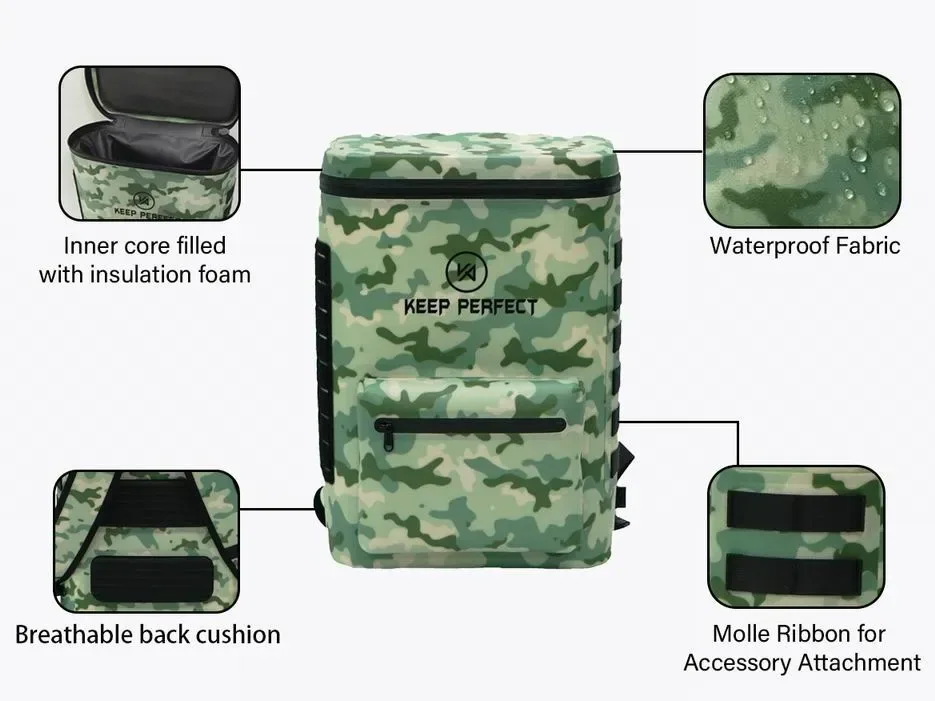
A restricted-substances list is not law. It is a buying requirement issued by a brand or a retailer, enforced through the purchase agreement, and usually wider than any single regulation because it bundles several jurisdictions into one document. For bags the recurring families are aromatic amines from colorants, formaldehyde from finishes, plasticisers in coatings and prints, metals in hardware and pigments, and finishes developed for water repellency. Limits, lists and thresholds change when a regulation is amended. Confirm every figure against the current official text before you rely on it, and ask your importer of record to confirm the version that applies in the destination market. MOQ 500 pcs, sampling 6-10 working days, bulk 35-50 days.
What Is a Restricted Substances List?
A single document that says which substances are not permitted above which limits, in which materials, for which user group, and tested by which method. Its purpose is to convert a scattered body of regulation into one requirement a buying organisation can hand to everyone in its supply chain without each party reinterpreting the law. That convenience is why brands publish them and why the versions keep coming.
It is also why the document feels stricter than the law, because it usually is. A list built to satisfy the most demanding jurisdiction a brand sells into will exceed the requirement in every other market. Compliance with the list therefore tends to imply compliance with the legal floor, while the reverse is rarely true.
| Instrument | Who issues it | What binds you to it | How often it changes |
|---|---|---|---|
| A regulation | A legislature or regulator | The law of the market | On amendment, after consultation |
| A brand restricted-substances list | A buying organisation | Your agreement with that organisation | Frequently, usually annually |
| A voluntary product standard | A standards body or association | Your decision to certify against it | On revision, with transition periods |
| Your own programme list | You | Your own specification | Whenever your inputs or markets change |
Which Substance Families Appear on Almost Every Bag List?
The same families recur across published lists, because they follow the chemistry of soft goods rather than the preferences of whoever wrote the document. Knowing the route each one takes into a bag is more useful than memorising thresholds, because the routes tell you which components to evidence first.
| Family | How it reaches a bag | Where the exposure sits | What the list usually asks for |
|---|---|---|---|
| Aromatic amines from cleavable colorants | Dyes used on shell, lining, webbing and thread | Dark and saturated shades, printed panels | Testing by the relevant textile method per material |
| Formaldehyde from easy-care finishes | Resin finishes and some print binders | Coated and printed panels, lining | Testing by an extraction method appropriate to the material |
| Plasticisers in coatings and prints | PVC and other softened polymer layers, plastisol prints | Printed artwork, coated cloth, flexible trims | A per-material limit where that family is named |
| Metals in pigments, coatings and hardware | Pigments, plating, anodising and printed inks | Hardware, metal trims, printed areas | Content testing, and release testing for prolonged contact |
| Fluorinated finishes used for repellency | Durable water-repellent treatments | The outer face of performance cloth | A developing area: confirm the current position per market |
| Polycyclic aromatic hydrocarbons | Extender oils in elastomers and some prints | Rubberised grips, dark prints, softer plastics | Content testing where elastomers are present |
| Organic tin compounds | Catalysts and stabilisers in polymers | Coatings and polymer-coated fabrics | Testing against the family rather than one compound |
Which Components Carry the Widest Exposure?
Ranking components by the number of entries they can trip gives you the order to evidence things in, and it usually surprises people. The shell fabric is not automatically first: its supply chain is well documented because everyone asks about it. The components with the widest exposure tend to be the ones added late and asked about rarely.
| Component | Why it carries wide exposure | What to request | Evidence difficulty |
|---|---|---|---|
| Printed panels and artwork | Several families meet in one layer: pigments, binders, plasticisers | Testing on the printed panel as its own sample | Straightforward once specified |
| Coated cloth and laminates | The coating adds chemistry the substrate does not have | Declaration plus testing on the coated construction | Depends on coating maker's disclosure |
| Hardware and metal trims | Metals in the alloy, in plating and in any lacquer | Content testing plus release testing where contact is prolonged | Straightforward, frequently omitted |
| Webbing, tape and elastic | Dyed and finished to tighter tolerances than most expect | Declaration, then testing where the maker is silent | Often undeclared rather than difficult |
| Foam and padding | Residues from blowing agents and catalysts | Declaration, then targeted testing | Harder — makers are less forthcoming |
| Thread | Small by mass, close to the user at every seam | Declaration from the thread maker | Usually available on request |
Everyone asks about the shell. The gaps that fail a review are usually the printed panel, the foam and the webbing, because nobody built a relationship with those makers.
How Are Limits Expressed and Tested?
Usually as a maximum quantity per unit mass of the material tested, with a named extraction method and conditions. Some entries instead require that nothing detectable migrates from a surface, and others are expressed as a prohibition rather than a threshold. Reading which kind each entry is matters more than reading the number, because the test that answers one does not answer another.
Then comes the question of how the sample is prepared. Testing may be specified per material, per component or on the assembled article, and where a coated layer is involved there is often a provision about how much of the coating counts. Those provisions decide whether two laboratories produce comparable numbers for the same cloth, which is why they belong in your test request rather than only in the list.
A report without the version it answered cannot be re-read later. Make the version a mandatory field on the test request, then check it on arrival.
Why Do Two Brands Give You Two Different Lists?
Because a list records risk appetite rather than scientific consensus. One buying organisation may include a substance another has never heard complaints about, set a tighter figure for philosophical reasons, or add a whole family while regulators are still consulting. Where both sell into the same market, both positions are lawful and neither is wrong.
Two further drivers widen the gap. The first is the set of markets each brand actually sells into, because a list covering more jurisdictions includes more substances. The second is customer pressure from the retailers they supply, since several retail compliance teams impose their own requirements upstream. Harmonisation efforts have reduced the overlap, never eliminated it.
Where Does the Candidate List Fit?
Alongside rather than inside. The candidate list of substances of very high concern is maintained by a regulator and grows as assessments conclude. Membership creates information and notification duties in some circumstances, and many buying organisations simply adopt entries from it into their own lists ahead of any legal restriction. Watching it is how you see restrictions coming.
- Track new entries as they are added, not once a year.
- Note whether each addition touches a material you actually buy.
- Decide per entry: declare, test, or substitute.
- Record the decision, including the decision to do nothing.
- Revisit when the maker of a component changes.
Who Owns the List Inside Your Own Programme?
One named person, and not a committee. A list nobody owns drifts: the technician assumes the buyer maintains it, the buyer assumes it arrived from the customer, and the version quoted in the last test request turns out to be two revisions old. Naming an owner costs nothing and prevents the most common failure in this area.
Nine questions every list should answer
- Which substances are named, and with which identifier?
- What limit applies to each, expressed how?
- Which materials does each entry apply to?
- Which user group does it apply to?
- Which method settles the result, including its version?
- How is the sample prepared and how is it taken?
- When was the list issued and which version is current?
- What happens on a result at or near its limit?
- Who accepts the answer on your side?
How Do You Maintain a List Across Reorders?
Treat it as a living document with three inputs: amendments to the regulations it drew from, revisions issued by the buying organisation you sell to, and changes in your own materials. The first two arrive on someone else's schedule, which is why subscribing to updates rather than asking for them annually matters. The third is yours to control.
| Input | How it arrives | What it changes | Who acts |
|---|---|---|---|
| A regulation is amended | Through official publication | Limits, applicability or methods | The list owner, with advice where needed |
| The customer issues a revision | Through your commercial contact | Whole entries, or their interpretation | The list owner, before the next test |
| A material source changes | Through your own purchasing | Which components have to be evidenced | Whoever buys the material, then the owner |
| A new family gains attention | Through trade bodies and customers | Whether you screen before you must | The list owner, as a decision rather than a duty |
| Your review date passes | Through your own calendar | Confidence that the version is current | The list owner, once per year at least |
What Should You Send a Laboratory to Quote Against?
The versioned list, not its title. Two organisations publish lists with similar names and different contents, and a laboratory quoting against the wrong one will produce a perfectly good report you cannot use. Send the document itself, its version number and issue date, plus the bill of materials and the colourways actually being shipped.
Then agree four things before the samples go out: which components are tested separately and which are combined, how many colourways are covered, which user group the result has to satisfy, and what turnaround is needed against your production gate. All four change the fee, and all four cost less to decide in writing than to discover in an amended report.
- Substance or family
- Named unambiguously
- Identifier
- The registry number where one exists
- Limit
- With unit and basis stated
- Material scope
- Which materials it covers
- User group
- Adult, younger, or both
- Test method
- Named with its version
- Reporting limit
- The smallest value to be reported
- Effective date
- When this entry took effect
- Note
- Exemptions, exclusions or conditions
How Does a List Relate to the Standards You Cite?
A standard is evidence-ready and a list is requirement-specific. Certifying against a recognised product standard gives you a document a reviewer already understands, and it often satisfies large parts of a list at once. It does not cover everything, because a standard's panel is set by whoever maintains it rather than by your customer's buying decision.
The efficient arrangement is to use a recognised standard as the baseline and add the entries your customer's list carries beyond it. That avoids duplicating the common ground while still answering the specific requirement, and it means one test request can cover both rather than two laboratories answering overlapping questions about the same cloth.
What Does a Near-Limit Result Mean?
Treat it as a warning rather than as either a pass or a fail. A result close to its limit tells you the material sits near the edge of what the list allows, so ordinary batch variation may push the next lot over it. That possibility is a manufacturing question as much as a testing one, because the most economical response is usually to change the input before the next run rather than keep testing hoping the next result falls.
Write the response into the procedure so nobody improvises under pressure. Typical responses are re-testing individual parts after a combined result, requesting the maker's position in writing, and moving to a replacement material for the next booking. Each is defensible; doing nothing is not, because the next lot will be tested against the same entry.
Finally, record near-limit results in the product file even where they pass. The person reviewing the file two seasons later needs to know which entries are marginal, because those are the ones that turn into findings when a dye lot shifts or a mill changes its auxiliary supply.
One habit makes the whole approach workable: keep a single register mapping every component in the current bill of materials to the entries it can trip, the evidence held and the date last checked. Building it takes an afternoon for one style and far less per style afterwards, because most components repeat across a range. Once it exists, a customer revision becomes a comparison against that register rather than a fresh investigation, and the question of what to test next answers itself.
It also changes the conversation with makers. Asking for a declaration against named entries gets a usable answer, whereas asking whether something meets their requirements gets a yes. The register is what lets you ask precisely, and precision is what turns the exercise from correspondence into evidence.
Send the list you were given
Send the restricted-substances list you have been asked to meet, in its current version, and our production team will tell you which entries touch your construction, which components carry the exposure, and what each additional test line costs. MOQ 500 pcs, sampling 6-10 working days, bulk 35-50 days from sample approval, FOB Xiamen.
Frequently Asked Questions
Is a restricted-substances list the same as the law?
No. A list is a private buying requirement enforced through your agreement with the customer. It is usually wider than the legal floor because it bundles several jurisdictions into one document.
Why do two customers hand me two different lists?
Because a list records that organisation's risk appetite, the markets it sells into and the requirements its own retail customers impose upstream. Both positions can be lawful at once.
Which substances should I expect to see named?
Aromatic amines from cleavable colorants, formaldehyde from finishes, plasticisers in coatings and prints, metals in pigments and hardware, polycyclic aromatic hydrocarbons in elastomers, organic tin compounds in polymers, and treated finishes for water repellency.
How are limits usually expressed?
Commonly as a maximum quantity per unit mass of the material, with a stated test method. Some entries are prohibitions, and others are expressed as migration rather than content.
What should I send a laboratory when requesting a test?
The versioned list itself, plus the bill of materials and the colourways being shipped. Then agree the per-component versus combined decision, the colourway count, the user group and the turnaround.
Does holding a product standard certificate satisfy a list?
Partly. A recognised standard covers much of the common ground, but a customer's list often carries entries beyond the standard's panel, so the additions still need testing.
Who should own the list inside our programme?
One named person. Committees let versions drift, which shows up as reports quoted against superseded documents.
How often should our list be reviewed?
At least once a year, plus whenever a regulation changes, your customer revises, or your own material sources move. Only two of those four arrive on your own schedule.
Does the candidate list belong inside a restricted-substances list?
It sits alongside it. Membership brings information and notification duties, and many buying organisations adopt entries ahead of any legal restriction, which is why watching it matters.
What does a result near its limit mean?
That ordinary batch variation may push the next lot past it. The sensible response is usually a material decision for the next booking rather than repeated testing of the current one.
Should a list cover my own programme even without customer pressure?
Yes. A short internal list makes every downstream question quicker to answer, and it converts customer revisions into a comparison rather than a rebuild.
How do I handle a change in the maker of a component?
Treat it as a new line to evidence. The drawing has not changed, but the chemistry supplying it may well have, and no earlier report covers it.
People Also Ask
What is an RSL for bags?
A buying requirement listing substances, their limits, the materials they apply to and the method that settles each result.
Is it law?
No. It binds through your agreement with the customer, though it is usually stricter than the legal floor.
Why do lists differ between brands?
They record risk appetite, market coverage and upstream customer requirements rather than a single scientific standard.
How often does it change?
Usually annually, plus whenever the regulations behind it are amended or your own materials change.
Who should own the list?
One named person, because committees let versions drift and reports then quote superseded text.
Sources and further reading
Every figure on this page is either our own programme data or attributed below. Open the originals before you write them into a specification.
- Restricted substances under REACH (Annex XVII)European Chemicals Agency
- Candidate List of substances of very high concernEuropean Chemicals Agency
- OEKO-TEX STANDARD 100 — limit values and product classesOEKO-TEX