HS Code for Neoprene Bags: Rubber-Based Classification Explained
Neoprene is a cellular synthetic rubber, which is not one of the materials heading 4202 lists. Where the bag is laminated with a textile jersey on its outside face, the surface condition is met and the bag is a 4202.92 article. Where the outside is bare rubber, the classification has to be tested elsewhere.
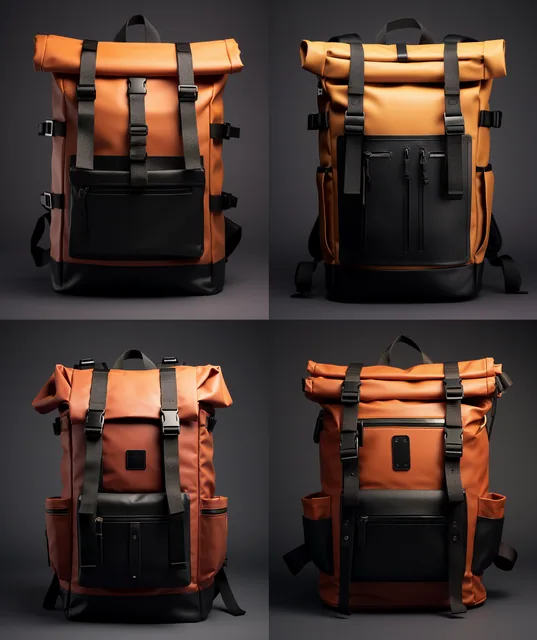
A neoprene bag with a textile jersey laminated to its outside face has a textile outer surface and classifies at 4202.92, because the heading covers articles mainly covered with textile materials. A bag whose outside face is bare cellular rubber is not covered with a listed material, and it has to be tested against chapter 40 — usually the line for other articles of cellular vulcanised rubber. Confirm the reading against published rulings on your construction.
Two questions therefore decide it, and they are worth stating separately because they get confused. The first is whether the article is a bag at all, which for a sewn sleeve with a closure is not usually contested. The second is whether the heading materials condition is met, which is where neoprene does its damage.
Neoprene is the product in this cluster where the material and the heading disagree, and that is why it generates more classification arguments than any other bag family. The material sits in chapter 40. The article looks like a bag. The nomenclature resolves the tension through the surface test rather than through the bulk of the material.
The rulings reflect that history. Search the published decisions on neoprene and the holdings run in both directions, which looks like inconsistency until the constructions are read side by side. They are consistent: the ones that land on 4202.92 describe a textile face, and the ones that do not describe a rubber one.
For a buyer the practical consequence is that two neoprene products that look nearly identical can be entered on different lines, and the difference is a finishing decision made at the specification stage. That makes it a specification question rather than a customs question, which is the least expensive kind of classification question there is.
Why Is Neoprene Not a Listed Material in Heading 4202?
Because the heading lists what it covers: leather and composition leather, sheeting of plastics, textile materials, vulcanised fibre and paperboard, or materials wholly or mainly covered with those. Cellular rubber is not on that list. Vulcanised fibre is, and it is a different material made from cellulose-based paper treated with a chemical process.
Vulcanised fibre is worth a word, because it is the material people reach for when trying to bring rubber inside the heading. It is not rubber: it is a cellulose-based material that has been chemically treated and, in some forms, laminated. A product made of vulcanised fibre satisfies the heading directly. A product made of cellular rubber does not.
So the analysis is not "is neoprene a bag material" but "is this bag covered with a listed material". Almost every commercial neoprene bag is: the standard construction laminates a knit jersey to one or both faces of the foam, both to protect it and to take print. A laminated jersey is a textile covering.
What Does "Wholly or Mainly Covered" Mean Here?
It means the outside of the finished article is covered with a listed material. A neoprene panel with jersey on both faces is wholly covered. A bag with jersey on the outside face and a bare rubber interior is covered on the surface that matters. A bag with a jersey panel on the front and bare rubber elsewhere is mainly covered, and that is the case where a ruling is worth having.
The measurement is worth doing properly where it matters, and it is simpler than it sounds. Photograph the article from each face, estimate the area covered by the textile, and record the estimate. An officer reading a file that says "approximately 80% of the external surface" is reading a file somebody prepared.
The word to hold on to is mainly. It is a question about the outside surface area of the finished article, and the answer should be recorded as an estimate with a photograph rather than as an assertion. Where a product sits near the boundary, the measurement belongs in the classification file.
| Construction | Outside face | Reading | Line at six digits |
|---|---|---|---|
| Neoprene with polyester jersey both faces | Textile | Wholly covered with a textile material | 4202.92 |
| Neoprene with nylon jersey outside, bare inside | Textile | The outside surface decides it | 4202.92 |
| Neoprene with a printed smooth skin finish | Cellular rubber | Not a listed material | Test chapter 40 |
| Neoprene with a fabric panel front, rubber elsewhere | Mixed | Mainly covered is arguable | Ruling recommended |
| Neoprene laminated to a woven polyester shell | Textile | The laminated shell is the surface | 4202.92 |
What Happens When the Reading Is Chapter 40?
The article goes to the line for other articles of vulcanised rubber other than hard rubber, which covers a wide range of made-up goods including cellular rubber articles. The duty rate on that line is usually lower than the rate on the textile-surface bag lines, which is what makes the argument worth having — and what makes an unsubstantiated claim worth having avoided.
Chapter 40 is also broader than buyers expect. It covers vulcanised rubber other than hard rubber in a wide range of forms, including cellular sheet and the articles made from it, so a reading there is not unusual — it is the ordinary consequence of a material that falls outside the bag heading.
There is a second consequence beyond the rate. A chapter 40 line carries different documentation expectations and, in some markets, different treatment under trade-remedy measures, because the measure is written against a scope of products rather than against a heading. Changing the classification changes more than the percentage.
How Does a 1,000-Piece Neoprene Order Calculate?
Take 1,000 neoprene bottle sleeves at FOB Xiamen USD 3.40, entered in the United States. The transaction value is USD 3,400.00. At an illustrative 17.6% on the textile-surface bag line the duty is USD 598.40, and at an illustrative China-origin rate of 7.5% the additional duty is USD 255.00. MPF at 0.3464% of USD 3,400.00 is USD 11.78, below the floor, so USD 32.71 is charged. HMF at 0.125% is USD 4.25.
Neoprene is also a product where the freight line deserves attention. Foam is bulky for its weight, and a sleeve packed flat takes far less space than the same sleeve packed stuffed. How the goods are packed for shipment is a freight decision that can move the landed cost by more than the duty classification does.
Freight, terminal handling and booking come to USD 310.00, insurance at 0.30% of the FOB plus freight figure is USD 11.13, broker entry and ISF are USD 150.00, and drayage and delivery are USD 205.00. The landed total is USD 4,966.49, or USD 4.97 per unit against an FOB price of USD 3.40 — an uplift of USD 1.57, or 46.2%.
| Line | Basis | Amount (USD) | Per unit (USD) |
|---|---|---|---|
| FOB Xiamen, 1,000 x 3.40 | 1,000 x 3.40 | 3,400.00 | 3.40 |
| Customs value (transaction value) | FOB, freight excluded in the US | 3,400.00 | 3.40 |
| Ad valorem duty | illustrative 17.6% on a 4202 line | 598.40 | 0.60 |
| China-origin duty | illustrative 7.5% | 255.00 | 0.26 |
| MPF at the floor | 0.3464%, floor applies | 32.71 | 0.03 |
| HMF at 0.125% | ocean cargo | 4.25 | 0.00 |
| Freight, insurance, entry, delivery | quote-driven | 676.13 | 0.68 |
| Landed total | sum of the lines above | 4,966.49 | 4.97 |
| Same order on a lower-rate chapter 40 line | illustrative 2.5% | 4,453.09 | 4.45 |
How Do You Establish the Reading Rather Than Argue It?
With a construction statement and a ruling. The statement names the foam, the thickness, the lamination method, the face fabric and its fibre, and the proportion of the outside surface it covers. The ruling turns that statement into an answer that binds.
A ruling request is not a long document. It states the article, the construction, the materials and their proportions, the intended use, and the lines the applicant considers applicable — and it is usually accompanied by a sample. The authority answers against those facts, and the answer binds for the entries it covers.
Published rulings are the intermediate step and they are worth reading carefully, because the ones on neoprene turn on the face. A ruling that sends a jersey-faced neoprene bag to 4202.92 says nothing about a smooth-skin product, and a ruling on a smooth-skin product says nothing about a jersey-faced one. Match the construction before relying on the holding.

What Should the Specification Say?
Three things a customs reader can act on. The face material, with its fibre and its construction. The method by which it is attached to the foam. And the proportion of the outside surface it covers, stated as an estimate with a photograph. Those three turn a finish into evidence.
Where a programme runs both finishes, keep two specification sheets and two classification records. Mixing them in one document is how a smooth-skin product ends up entered on a textile line, and that error is invisible until somebody compares the declaration with the goods.
Where the product is smooth-skin, say so explicitly and say what the finish is. A printed or embossed skin is still cellular rubber, and writing "coated" on a specification without saying what the coating is invites a reader to assume a plastics sheeting that may not be there.
Deciding a neoprene line without surprises
- Identify the outside face of the finished article, not the bulk material.
- State the face fabric, its fibre, and how it is laminated to the foam.
- Estimate the proportion of the outside surface the face covers.
- Read the heading materials condition against that face.
- Search published rulings for the same face construction.
- Request a ruling where the face is mixed, smooth, or partly covered.
- Re-run the analysis when the finish or the lamination changes.
Does the Thickness of the Foam Change Anything?
Not the classification. Foam thickness is a performance specification — it decides insulation, cushioning and hand feel — and none of those appear in the heading. A 3 mm sleeve and a 5 mm sleeve with the same face are on the same line.
Print is worth a note too, because it is the other thing programmes change without thinking about customs. Sublimation print onto a polyester jersey face does not change the surface: the face is still textile. A heavy surface coating applied over the face may, because the outside of the finished article is then the coating rather than the fabric.
It does change the commercial layer, because thicker foam is bulkier per unit of weight, and freight on soft goods is frequently charged on volume. A programme that moves from 3 mm to 5 mm may find its freight line moving more than its duty line.
How Does This Fit the Rest of the Programme?
There is one more reason to settle it early: the finish is the easiest thing in a bag programme to change without telling anybody. A lamination supplier switch, a different jersey, a new print method — each of those looks like a production decision and each of them is a classification decision. Put the face on the change-control list alongside colour and material, and the code stays true without anybody having to remember it. The other outcome is a reclassification exercise triggered by an entry query, which is the same work done under pressure and to a deadline.
The finish is decided at the tech pack stage, which is also when the classification should be settled. Sampling runs 6-10 working days and bulk runs 35-50 days from written sample approval, so there is time to get it right before production rather than after.
Then it feeds the same two artefacts as everything else in this cluster: the HS code finder holds the line and the construction it came from, and the landed cost calculator turns the confirmed rate into a unit cost.
What Is the Practical Summary?
Jersey-faced neoprene is a textile-surface bag and sits at 4202.92. Smooth-skin neoprene is not covered with a listed material and needs to be tested against chapter 40. The decision is a finishing decision, made once, at the specification stage.
Everything else in the programme is unchanged: MOQ 500 pcs, sampling 6-10 working days, bulk 35-50 days from written sample approval, inspection at AQL 2.5 under ISO 2859-1, T/T 30/70, FOB Xiamen. Settle the face while those are running.
Get your neoprene line confirmed
Send the face construction, the market and the quantity. You get the reading, the rulings to check and a landed unit cost.
Frequently Asked Questions
What is the HS code for a neoprene bag?
A neoprene bag laminated with a textile jersey on its outside face has a textile outer surface and classifies at 4202.92. A bag with a bare cellular rubber face is not covered with a listed material and is tested against chapter 40.
Why is neoprene not covered by heading 4202 directly?
Because the heading lists leather, sheeting of plastics, textile materials, vulcanised fibre and paperboard, or materials covered with those. Cellular rubber is not on that list.
What does "wholly or mainly covered" mean?
It means the outside of the finished article is covered with a listed material. Jersey on both faces is wholly covered; a fabric front with rubber elsewhere is arguable and worth a ruling.
Can I use a chapter 40 line instead?
Where the outside face is bare cellular rubber, that is the line to test. Where the face is textile, the bag meets the heading condition and 4202.92 is the reading.
Does foam thickness change the classification?
No. Thickness is a performance specification. It does change the freight line, because thicker foam is bulkier and freight on soft goods is often charged on volume.
How much difference does the line make?
On 1,000 sleeves at FOB Xiamen USD 3.40, an illustrative 17.6% against an illustrative 2.5% is about USD 0.52 a unit. That is both the reason for the argument and the size of the exposure if it fails.
How do I establish the reading?
With a construction statement naming the face fabric, the lamination method and the surface coverage, plus published rulings on the same construction — or your own ruling where the case is mixed.
Do rulings on neoprene transfer between products?
Only where the face construction matches. A ruling on a jersey-faced product says nothing about a smooth-skin one, and the reverse.
What should the specification state?
The face material with its fibre and construction, the method of attachment to the foam, and the proportion of the outside surface covered.
Is a printed or embossed skin a plastics sheeting?
Not necessarily. A printed finish on cellular rubber is still cellular rubber. State what the finish actually is rather than writing "coated".
When should the classification be settled?
At the tech pack stage, because the finish is decided there. Sampling runs 6-10 working days and bulk 35-50 days from written sample approval.
Does print change the classification?
Sublimation print onto a textile face does not: the surface is still textile. A heavy coating applied over the face may, because the outside is then the coating rather than the fabric.
Does packing method affect the landed cost?
Yes. Foam is bulky for its weight, so a sleeve shipped flat takes far less space than the same sleeve shipped stuffed. Packing is a freight decision that can move the landed cost more than the code does.
Does the production calendar change?
No. MOQ 500 pcs, sampling 6-10 working days, bulk 35-50 days, inspection at AQL 2.5 under ISO 2859-1, T/T 30/70, FOB Xiamen.
People Also Ask
What is the HS code for neoprene bags?
Jersey-laminated neoprene has a textile outer surface and sits at 4202.92. Bare cellular rubber does not meet the materials condition and is tested against chapter 40.
Is neoprene classified as rubber or textile?
The material is a cellular synthetic rubber; the classification turns on what covers the outside of the finished article. A textile face gives a textile surface.
Does a neoprene lunch bag have a different code?
No, the same test applies. An insulated food or beverage bag with a textile outer surface is a 4202.92 article whether the core is foam, neoprene or nothing.
Do I need a ruling for a neoprene bag?
Not for a standard jersey-faced build. Where the face is smooth, mixed or only partly covered, a ruling is the clean answer.
Does thickness affect the HS code?
No. It affects the freight line, because bulkier goods are charged on volume rather than weight.
Sources and further reading
Every figure on this page is either our own programme data or attributed below. Open the originals before you write them into a specification.
- CROSS — Customs Rulings Online Search SystemU.S. Customs and Border Protection
- Harmonized System nomenclature, explanatory notes and amendmentsWorld Customs Organization
- Harmonized Tariff Schedule of the United StatesU.S. International Trade Commission