What Is the HS Code for Insulated Bags and Cooler Bags?
Insulated food or beverage bags are named in heading 4202, so the classification does not turn on the insulation at all. It turns on the outer surface: a textile or plastics sheeting exterior puts the bag at 4202.92 at six digits, and the national schedule takes it from there.
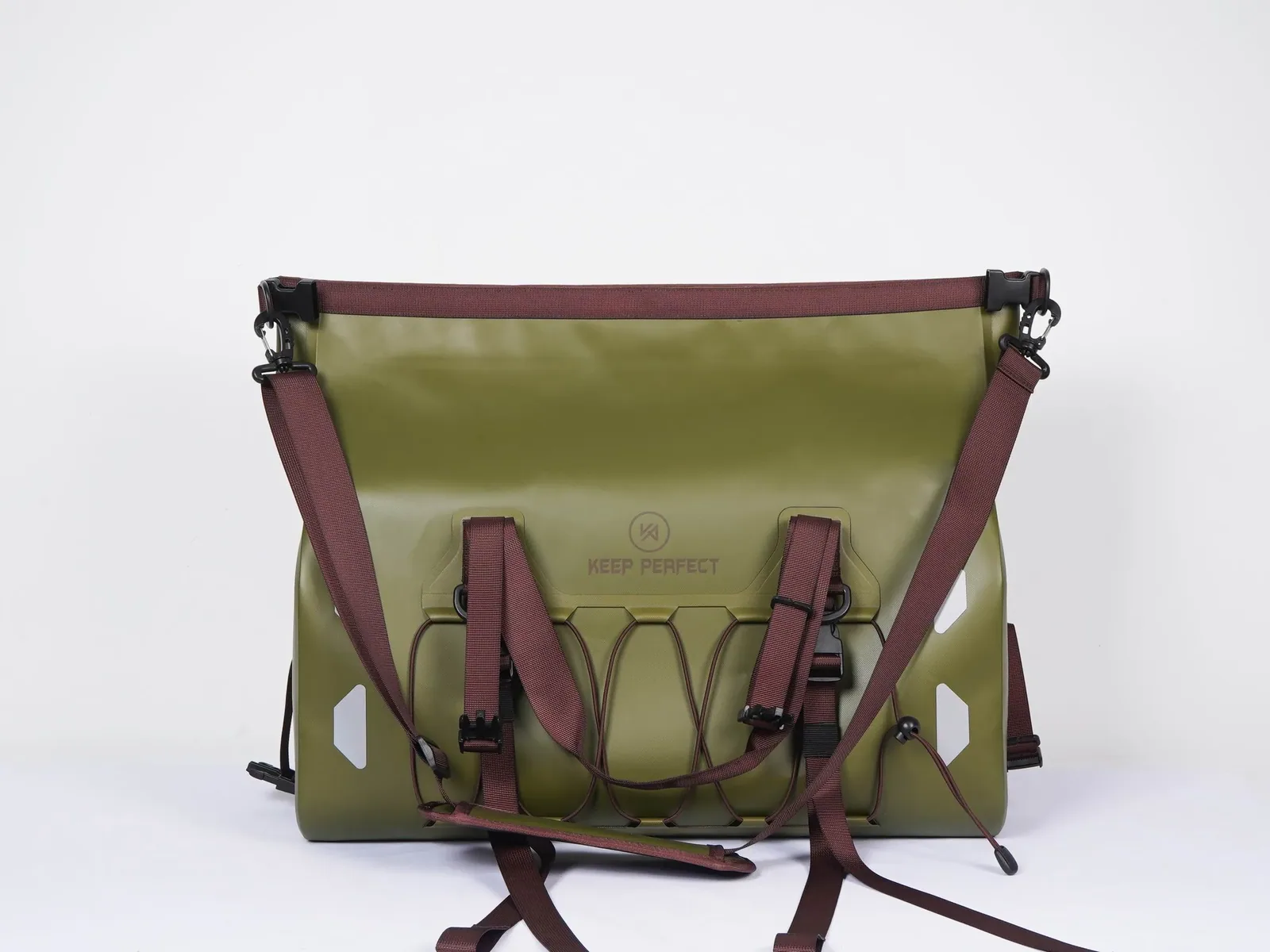
Insulated food or beverage bags are named in the text of heading 4202, so they are classified there rather than in a packaging heading. They sit in the fourth group of the heading, and a textile or plastics outer surface gives 4202.92 at six digits. The European Union breaks that further by surface; the United States carries dedicated statistical lines for insulated bags. Confirm the national line and its rate.
This is the cleanest classification question in the cluster, and it used not to be. Before insulated bags were named in the heading text, they were argued about: some were entered as bags, some as made-up textile articles and some as packaging, and the duty differed between those outcomes. The nomenclature settled it by naming the article.
What remains is the part that always remains: the outer surface. An insulated bag is a laminate by nature — a shell, a foam core and a lining — and the classification reads the outside face and nothing behind it.
Why Does the Insulation Not Decide the Code?
Because the heading names the article. Once a product is named in a heading text, the classification does not turn on what makes it special; it turns on whether it is the named article, and then on the material test the heading applies. For 4202 that test is the outer surface.
The history is worth knowing because it explains the rulings a buyer will find when searching. Older decisions were written before the article was named, and a number of them send insulated bags to other headings. Those decisions are still in the databases, they still come up in a search, and they are no longer the right answer for a standard build.
This matters because buyers instinctively classify by the feature that sells the product. A thermal delivery bag is sold on its insulation, a cooler bag on its ice retention, and neither of those is a classification criterion. The foam thickness, the lining film and the weld method are performance specifications; they are not customs facts.
What Does the Outer Surface Test Ask Here?
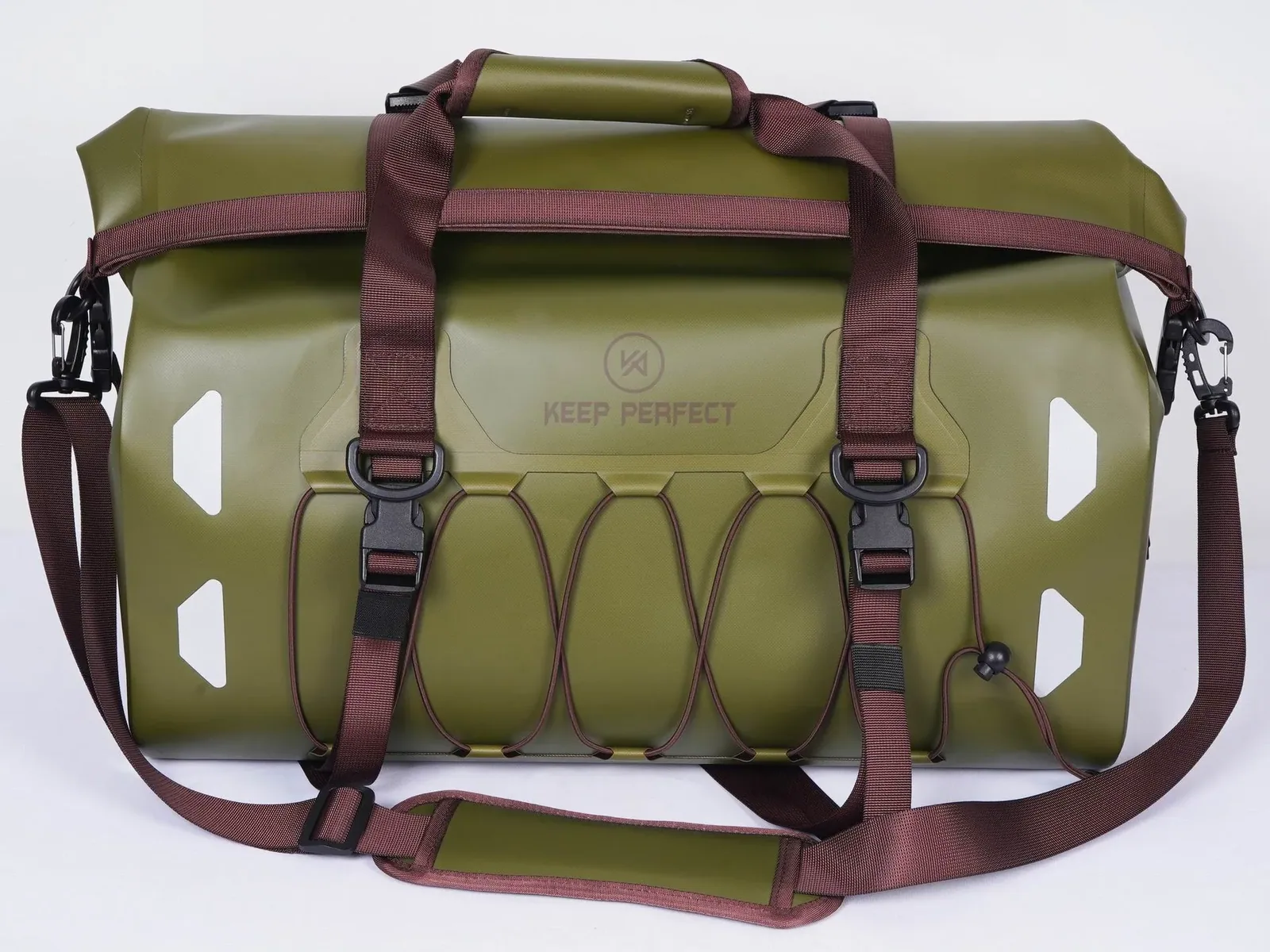
What the outside of the finished bag is made of. A polyester or nylon shell is a textile material. A TPU or PVC-coated shell is sheeting of plastics, and the chapter notes treat sheeting of plastics that is reinforced, laminated, supported or similarly combined as sheeting of plastics. Both give the digit 2, so both land at 4202.92 at six digits.
Non-wovens are the other case that gets argued. A spun-bonded polypropylene shell is a textile material for this purpose, so it lands on the same digit as a woven polyester shell. The argument usually arises because the material looks like a film, and films are not textiles — the distinction is the construction, not the appearance.
The cases that need thought are the ones where the outside is neither. A bag whose exterior is bare aluminium foil, a metallised film without a textile or plastics face, or a moulded shell does not satisfy the materials condition on its face, and those are the products that need a ruling rather than a lookup.
| Construction | Outer surface | Six-digit line | Note |
|---|---|---|---|
| 600D polyester shell, foam core, welded PEVA lining | Textile | 4202.92 | The standard thermal delivery build |
| TPU-coated nylon shell, foam core | Sheeting of plastics | 4202.92 | Coated or laminated sheeting reads as plastics |
| Non-woven polypropylene shell | Textile | 4202.92 | Non-wovens are textile materials for this purpose |
| Bare foil exterior with no textile or plastics face | Neither | Test outside 4202 | Request a ruling |
| Moulded EVA exterior | Neither | Test outside 4202 | Chapter 39 has to be considered |
How Do the National Schedules Break It Further?
The European Union breaks 4202.92 by surface, with separate lines for sheeting of plastics and for textile materials, and it attaches the rate and any measures to the ten-digit line. The United States breaks the line by fibre and construction and carries statistical lines that identify insulated food or beverage bags specifically, which is useful because it tells you the schedule expects the product.
The United Kingdom, Australia and the Gulf states each extend the same core in their own way, and each publishes the rate and the measures against its own line. The pattern is identical in all of them: the international subheading is stable, and the national line is where the rate lives.
Neither of those breaks changes the six-digit answer, and both change the rate. That is the recurring shape of this cluster: the international code is stable and the national line is where the money is.
How Does a 500-Piece Insulated Order Calculate?
Take 500 thermal delivery bags at FOB Xiamen USD 8.90. The transaction value is USD 4,450.00. At an illustrative ad valorem rate of 17.6% the duty is USD 783.20, and at an illustrative China-origin rate of 7.5% the additional duty is USD 333.75. MPF at 0.3464% of USD 4,450.00 is USD 15.42, below the floor, so USD 32.71 is charged. HMF at 0.125% is USD 5.56.
One commercial point is worth adding for this product specifically. Insulated bags are bulky relative to their weight, so the freight line is frequently set by volume rather than by weight — the carrier charges on chargeable measure, whichever is greater. A five-centimetre reduction in carton height can move the freight line more than a classification argument moves the duty.
Freight, terminal handling and booking come to USD 430.00, insurance at 0.30% of the FOB plus freight figure is USD 14.64, broker entry and ISF are USD 150.00, and drayage and delivery are USD 235.00. The landed total is USD 6,434.86, or USD 12.87 per unit against an FOB price of USD 8.90 — an uplift of USD 3.97, or 44.6%.
| Line | Basis | Amount (USD) | Per unit (USD) |
|---|---|---|---|
| FOB Xiamen, 500 x 8.90 | 500 x 8.90 | 4,450.00 | 8.90 |
| Customs value (transaction value) | FOB, freight excluded in the US | 4,450.00 | 8.90 |
| Ad valorem duty | illustrative 17.6% | 783.20 | 1.57 |
| China-origin duty | illustrative 7.5% | 333.75 | 0.67 |
| MPF at the floor | 0.3464%, floor applies | 32.71 | 0.07 |
| HMF at 0.125% | ocean cargo | 5.56 | 0.01 |
| Freight, insurance, entry, delivery | quote-driven | 830.20 | 1.66 |
| Landed total | sum of the lines above | 6,434.86 | 12.87 |
What Does Getting the Line Wrong Cost Here?
On this order, if a competing line carried a rate of 7% rather than 17.6%, the duty would be USD 311.50 instead of USD 783.20 — a difference of USD 471.70, or USD 0.94 a unit. That is the size of the prize for a classification that is argued rather than established.
There is a second exposure that is easier to overlook: the competing line may carry a different regulatory position as well as a different rate. A heading that treats the article as packaging, or as a made-up textile article, can carry documentation requirements the bag heading does not. The duty difference is the visible part.
It is also the size of the exposure. The difference is not a saving that can be banked by picking the lower line; it is the amount that becomes payable with interest, plus a possible penalty, if the lower line is chosen and does not hold. Arguing a classification and establishing one are different activities with different outcomes.
What Evidence Should Support the Entry?
A construction statement that names the shell, the coating if there is one, the core and the lining, in that order; the six-digit subheading with one line of reasoning; and the national line for the destination market with the date it was read. Where the exterior is unusual, add a photograph of the outside face.
It also helps to state the article in the words of the heading on the purchase order. "Insulated food or beverage bag, textile outer surface" is a description a customs officer can map to a line; a style name and a colour code are not. One line on the document that travels with the money.
Keep a sample with the file. A retained sample from the approved production run, labelled with the style and the date, settles every question about what the outside face actually was. It costs one unit per style and it is the evidence nobody argues with.
That is the whole file, and it is the same file described across this cluster because the requirement is the same: a classification that can be reconstructed later by someone who was not there. The construction statement is what makes it reconstructable.
Classifying an insulated bag without surprises
- State the article as the heading does: an insulated food or beverage bag.
- State the outer surface, including any coating or lamination.
- Take the six-digit line from the group and the surface: 4202.92.
- Extend to the national line and read the rate and the measures.
- Where the exterior is foil, film or moulded, stop and test outside 4202.
- Write the reasoning on the tech pack before sampling runs.
- Re-run it when the shell or the finish changes.
Does the Insulation Performance Affect Anything Else?
Not the code, but it affects what else the importer has to be able to show. A thermal bag sold for food contact sits inside food-contact rules in most markets, and a bag sold as protective equipment sits inside the rules for that claim. Those are separate regimes with separate evidence, and they run on their own calendars.
In practical terms that means three separate files for one product: the classification file, the substance and contact file, and the inspection file. They are created at different times, by different people, and all three are needed before a shipment is defensible. Programmes that collapse them into one tend to lose the one nobody was thinking about.
The substance side is the one that surprises importers, because it attaches to the materials rather than to the article. A restricted substance list applies to anything placed on the market, and the list is updated on its own cycle rather than with the tariff. A bag that is classified perfectly can still be withdrawn on a substance finding.
The inspection programme covers the physical side: weld integrity, seam strength, closure cycles and ice retention. Inspection at AQL 2.5 under ISO 2859-1 confirms the goods match the description that was declared. It does not confirm that the description matches the code — that is the classification file.
How Does This Connect to the Rest of the Programme?
Through the schedule. Sampling runs 6-10 working days and bulk runs 35-50 days from written sample approval, and the classification is settled before sampling rather than after it, because the shell is decided at the tech pack stage. Once the shell is fixed, the code is fixed with it.
One detail of the American schedule is worth knowing because it changes how the entry reads: statistical lines identify the product, and a declaration that uses the right duty line with the wrong statistical suffix is a statistical error rather than a duty error. It will still be queried, and it is avoided by reading the line rather than the heading.
Then it feeds the price. The HS code finder holds the line and the construction it came from; the landed cost calculator turns the confirmed rate into a unit cost with the base flag set for the market.
What Is the Practical Summary?
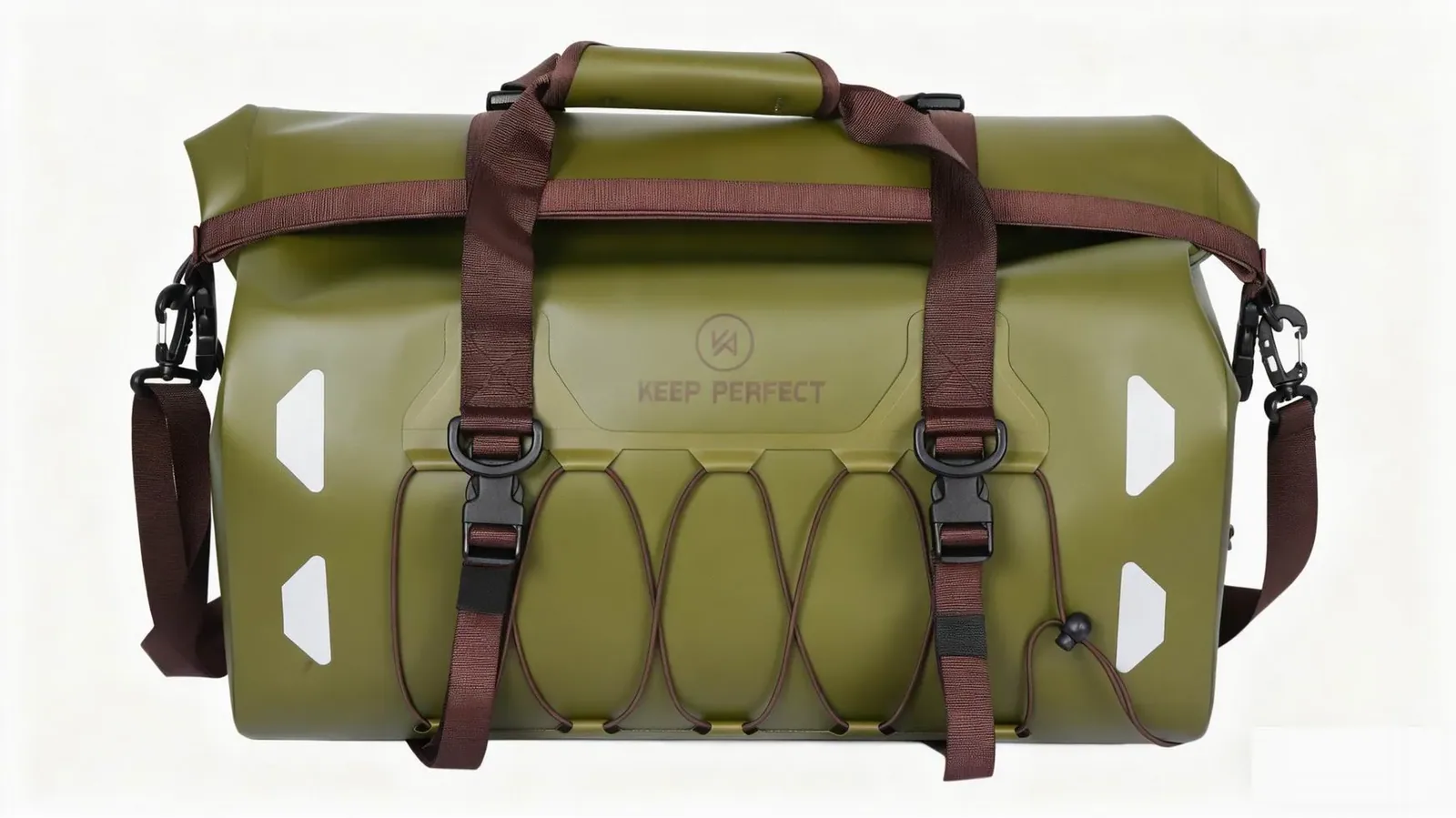
Insulated bags are named in the heading, classified by their outer surface, and almost always a 4202.92 article at six digits. The work is in the national line, the rate and the construction statement — not in the insulation.
One more practical note on the repeat. An insulated bag programme tends to run the same styles for years, and the shell is the most likely thing to change — a supplier switch, a coating substitution, a denier change made for cost reasons. Each of those is a classification event, and none of them announces itself as one. Put the re-check on the reorder calendar and the classification stays true.
The rest of the programme is unchanged: MOQ 500 pcs, sampling 6-10 working days, bulk 35-50 days from written sample approval, inspection at AQL 2.5 under ISO 2859-1, T/T 30/70, FOB Xiamen. Settle the code while those are running and it never becomes a project.
Get your insulated line confirmed
Send the shell construction, the market and the quantity. You get the subheading, the national line to check and a landed unit cost.
Frequently Asked Questions
What is the HS code for an insulated bag?
Insulated food or beverage bags are named in heading 4202 and sit in its fourth group, so a textile or plastics outer surface gives 4202.92 at six digits. The national schedule then breaks it further and carries the rate.
Does the insulation affect the classification?
No. The article is named in the heading, so the classification turns on the outer surface rather than on the foam, the lining or the thermal performance.
What if the outer surface is aluminium foil?
A bare foil or metallised film face is not a textile or plastics sheeting, so the materials condition is not met on the face of it. That construction needs a ruling rather than a lookup.
How does the EU break the line?
The European Union separates sheeting of plastics from textile materials below the six-digit level and attaches the rate and measures to the ten-digit line.
Does the US schedule recognise insulated bags?
Yes. The American schedule carries statistical lines that identify insulated food or beverage bags, which is a useful confirmation that the product is expected in the line.
What is the duty on 500 insulated bags at FOB Xiamen USD 8.90?
At illustrative rates of 17.6% and 7.5% on a transaction value of USD 4,450.00, the duty is USD 783.20 plus USD 333.75. The order lands at USD 12.87 a unit.
What does a competing lower-rate line save?
On this order a 7% line instead of 17.6% would be USD 311.50 rather than USD 783.20 — a difference of USD 471.70. It is a saving only if the line holds; otherwise it is the exposure.
What should the construction statement say?
The shell material and its finish, the core, and the lining, in that order. Coating and lamination have to be stated because they decide how the surface reads.
Does a coated shell read as plastics or textile?
A coated or laminated sheeting reads as sheeting of plastics under the chapter notes. Both readings land on the digit 2, but they can lead to different national lines.
When should the code be settled?
Before sampling runs its 6-10 working days, because the shell is decided at the tech pack stage and the code follows the shell.
Does inspection confirm the classification?
No. Inspection at AQL 2.5 under ISO 2859-1 confirms the goods match the description. The classification file is what confirms the description matches the code.
Are there other rules for a thermal food bag?
Yes, food-contact requirements sit alongside the classification and run on their own calendar. They attach to the use rather than to the code.
Do substance rules apply to an insulated bag?
Yes. Restricted substance and food-contact requirements attach to the materials and the use rather than to the code, and they run on their own cycle. A perfectly classified bag can still be withdrawn on a substance finding.
Does a bulky bag change the freight model?
Yes. Insulated bags are bulky relative to their weight, so freight is frequently set by volume rather than weight. Carton dimensions can move the freight line further than a classification argument moves the duty.
Should I keep a production sample?
Yes, one per style, labelled with the style and the date. It settles any later question about what the outside face actually was.
People Also Ask
What is the HS code for a cooler bag?
Insulated food or beverage bags are named in heading 4202, so a textile or plastics outer surface gives 4202.92 at six digits, extended to the national line for the destination market.
Are insulated bags classified as bags or as packaging?
As bags. The article is named in the heading text, which settled the argument that used to send some insulated bags into packaging headings.
Does foam thickness change the HS code?
No. Foam thickness, lining film and weld method are performance specifications. Only the outer surface decides the code.
How do I classify a bag with a moulded exterior?
Test it outside 4202, because a moulded shell is not leather, plastics sheeting or textile. Chapter 39 has to be considered, and a ruling is the clean answer.
Do I need a ruling for an insulated bag?
Not for a standard textile or plastics-shell build. Where the exterior is foil, film or moulded, or where two lines look defensible, a ruling is worth requesting.
Sources and further reading
Every figure on this page is either our own programme data or attributed below. Open the originals before you write them into a specification.
- Harmonized System nomenclature, explanatory notes and amendmentsWorld Customs Organization
- Harmonized Tariff Schedule of the United StatesU.S. International Trade Commission
- Access2Markets — the integrated tariff of the European Union (TARIC)European Commission