How to Write a Bag Tech Pack: The 12-Component Template
Write a bag tech pack in twelve components, in build order, and fill every field before the next one. The template below gives each component, what goes in it, why it is there and what happens when it is left thin. Sampling runs 6-10 working days from sign-off.
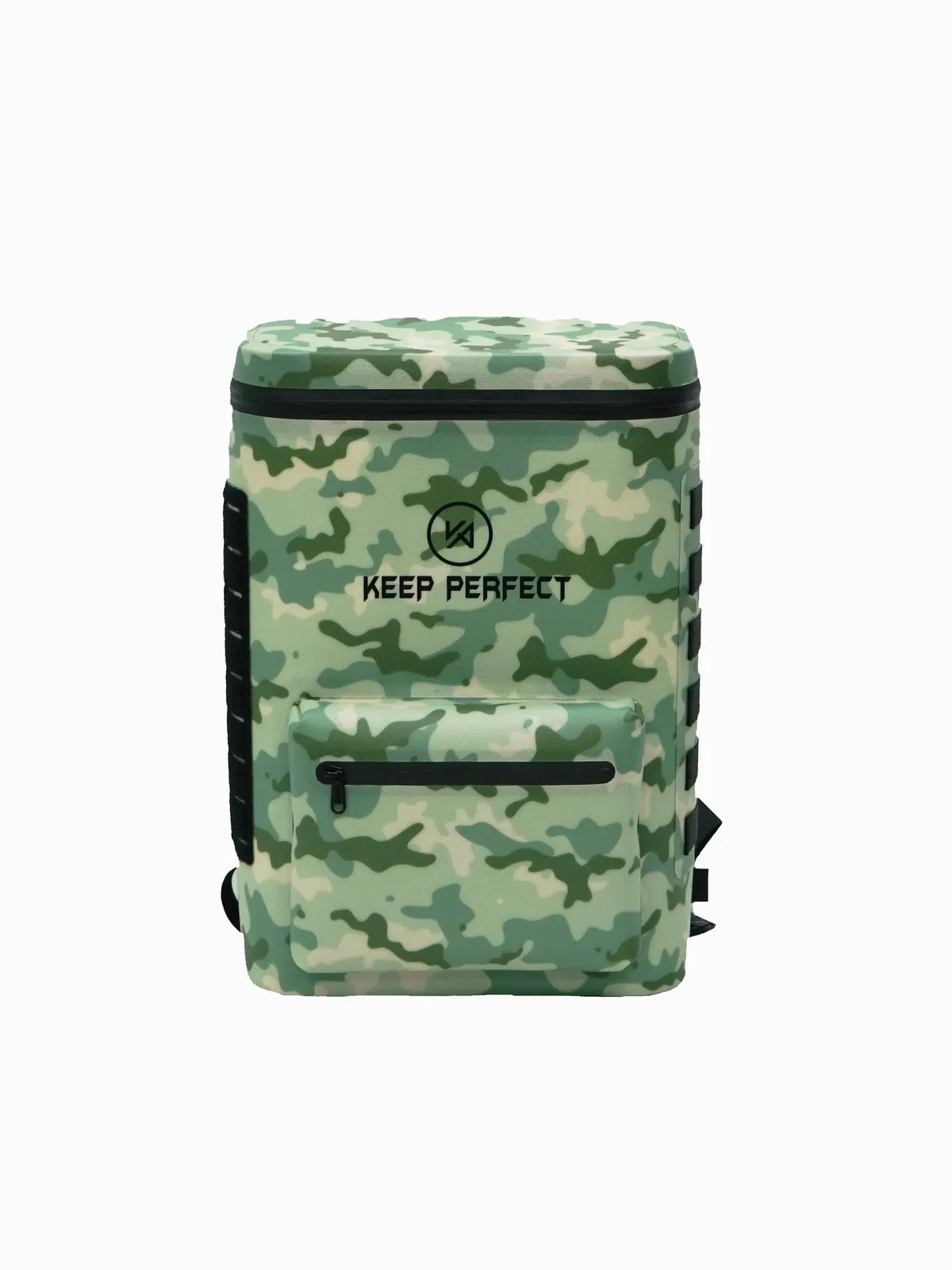
Write the pack in twelve passes: cover and revision, drawing, materials, colourways, construction, stitch schedule, hardware, artwork, labels and compliance, packing, testing, approval. For each field write what it is, why it matters, and what goes wrong if it is blank. A pack finished this way supports sampling in 6-10 working days and bulk in 35-50 days from written approval.
Templates fail for a predictable reason: they give a buyer twelve empty boxes and no way to know which ones are load-bearing. The version below gives every component a purpose and a failure mode, so a buyer working through it can tell the difference between a field that is genuinely not applicable to this style and a field that has been skipped.
Work in order. The components are sequenced the way a bag is built, which means decisions made early constrain the ones that follow. A change to the shell at component three changes the stitch schedule at six and the needle size at six as well, and a pack written out of order has to be gone over twice.
What Goes on the Cover and Why Does Revision Control Matter?
The cover carries the style code, the season, the revision letter, the date and the name of the person who owns the file. None of that is decorative. A bag programme runs for years, and over that time the same style code accumulates revisions from a material change, a hardware change, a cost-down and a customer complaint. Without a revision letter on every page, nobody can say which drawing the golden sample belongs to.
The failure mode is specific and expensive. Bulk runs against revision C, the buyer inspects against revision D because that is the file open on their screen, and the difference between them is a 3 mm change to the binding that nobody remembers agreeing. Put the revision letter and the date in the header and footer of every page.
How Do You Write the Drawing Component?
Orthographic views — front, back, both sides, base and, where it matters, a section — with every dimension in millimetres and a tolerance band. Dimension the bag the way it will be measured on the inspection table, and say which: flat, laid empty and unfastened, or taped around the finished bag. A dimension without a measurement method is two different numbers.
Add callouts. Every callout is a numbered balloon on the drawing that points at a component named in the materials or hardware schedule, so the drawing and the schedules are cross-referenced rather than parallel. A drawing with callouts and a schedule with matching numbers removes most of the arguments that would otherwise be settled by opinion.
| Field | What you write | Why it is there | What happens if it is wrong |
|---|---|---|---|
| Style code | One code per style, never reused | It is the key every other document joins on | The wrong revision is pulled for bulk |
| Revision letter | A, B, C, with the date of each issue | Links the pack to the golden sample | Bulk and inspection read two different drawings |
| Page count | N of M on every page | Stops a page being dropped in an email thread | A section goes missing and nobody notices |
| Owner | Named person, not a department | Somebody answers the question | Questions sit unanswered for days |
| Related styles | Codes this pack was derived from | Preserves the decisions that worked | The same mistake is repeated on the next style |
| Drawing scale | Stated, or the drawing marked not to scale | Prevents measurement off the printed page | Somebody scales a dimension off a screen |
| Golden sample reference | Which physical sample matches this revision | Settles a colour or hand dispute months later | An argument that nobody can close |
| Units | Millimetres, stated once on the cover | Ends the inch and centimetre mix | A panel is cut 10 mm short |
| Measurement method | Flat or taped, stated per dimension | Two methods give two numbers | The inspection fails a bag that is correct |
What Does the Materials Component Have to Name?
One line per material, and each line carries the generic name, the construction, the finished weight or thickness, the supplier, the shade reference and the certificate on file. Six fields, because any one of them being missing turns the line back into a description rather than a specification.
The two fields buyers drop are the supplier and the certificate. Without a named mill, a substitution is not a deviation — it is simply a different material, and nobody has breached anything. Without a certificate reference, a REACH or OEKO-TEX claim cannot be produced when a customer asks for it, which is always at the worst possible moment.
How Is the Colourway Component Structured?
As a matrix with one row per colourway and one column per component that changes. Work through the bag part by part and ask of each whether it changes colour: shell, lining, binding, webbing, thread, zip tape, zip teeth, slider, puller, hardware finish, print and label. Most styles have between eight and fourteen such components.
The common failure is the trim that nobody thinks about. On a two-tone kit bag the shell changes and the webbing changes, and the zip tape stays black on both — unless the buyer wanted it matched, in which case the pack needed to say so. Write the reference for every component in every colourway, including the ones that stay the same.
Six fields per material line
- Generic name and construction: 600D polyester, PU coated.
- Finished weight or thickness: 260 gsm, or 5 mm for foam.
- Supplier: the named mill, not "domestic".
- Shade reference: a Pantone reference or an approved physical swatch number.
- Certificate: OEKO-TEX, GRS transaction certificate or REACH statement, with a document number.
- Allowance: the waste factor agreed for cutting, stated as a percentage.
How Much Does an Incomplete Pack Actually Cost?
Count it in samples rather than in money, because that is how the cost arrives. A pack missing the hardware performance figures produces a sample with the wrong buckle; correcting it costs one more sample and part of the sampling window. A pack missing the measurement method produces a bag that measures wrong on the inspection table and passes in the hand, and correcting that costs a revision, a sample and an argument.
The largest single cost is the one nobody invoices: the delay between the buyer realising something is unspecified and the production team being told. On a programme running 500 pcs at MOQ with bulk at 35-50 days, a week lost to clarification at the sampling stage is a week lost at the delivery end, and the customer does not care where it was lost.
How Do You Write Construction and the Stitch Schedule?
Construction is a numbered sequence: cut, bind, assemble the body, insert the lining, close, turn, topstitch, fit hardware, inspect. The sequence matters because two sequences can produce the same bag at different cost, and because a sequence that has not been written down cannot be held constant on the second run.
The stitch schedule is a table with one row per seam. Each row gives the seam, the stitch class from ASTM D6193, the stitches per inch, the thread ticket and fibre, and the needle size. The stitches-per-inch figure is the one to think about: it is simultaneously the strength of the seam and the minutes of labour in it.
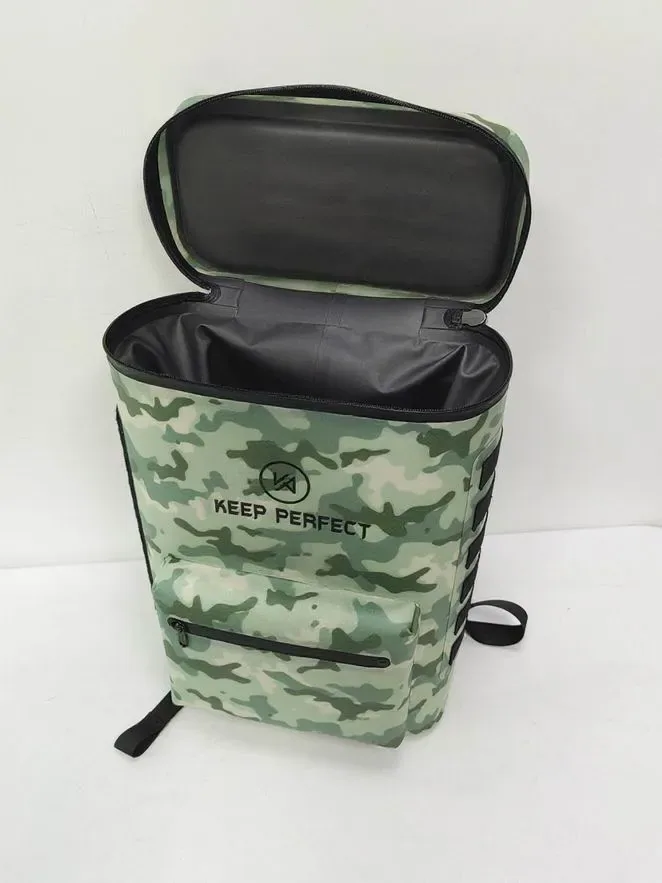
What Does the Hardware Component Need Beyond a Part Name?
Size in millimetres, material, finish, colour, supplier and a performance requirement with a number attached. The performance requirement is the field that gets dropped, and it is the one that matters, because two buckles of the same size and finish can differ by a factor of three in pull strength and nobody can tell by looking.
Write the number as a minimum with a test method behind it, for example a 25 mm side-release buckle tested to 180 N in-line pull on a tensile machine. Where the bag carries load — a camera bag with a body and two lenses, a kit bag with wet kit — the hardware numbers are the ones that decide whether the bag comes back.
| Component | Fields to fill | Typical entry | If left thin |
|---|---|---|---|
| Buckle | Width, material, finish, colour, supplier, pull | 25 mm acetal side-release, black, 180 N minimum in-line pull | A buckle that opens under a loaded strap |
| D-ring | Wire diameter, internal width, finish, supplier, pull | 4 mm wire, 25 mm internal, nickel, 250 N minimum | A ring that opens at the weld |
| Slider and puller | Size matched to the chain, type, finish, supplier | #5 reverse coil, auto-lock slider, black oxide, branded puller | A slider that does not fit the chain that was ordered |
| Magnetic snap | Diameter, pull force, plating, cycles | 18 mm, 2.5 kgf breakaway, nickel, 5,000 cycles | A closure that opens in a bag check |
| Eyelet | Internal diameter, flange type, material, finish | 8 mm internal, spur washer, brass, antique brass | An eyelet that tears out of the panel |
| Hook-and-loop | Width, hook or loop, cycle life, colour | 25 mm, hook, 10,000 cycles, black | A closure that stops gripping after a season |
| Ladder lock | Webbing width, material, colour, supplier | 25 mm acetal, black | A strap that slips under load |
How Do You Handle a Field That Does Not Apply?
Write "n/a — reason" rather than leaving it blank, because a blank field is indistinguishable from a skipped one and a reader cannot tell which. A welded cooler bag has no stitch schedule on the welded seams, and the pack should say so with the reason attached, not leave the row empty and let somebody decide later what it meant.
There are roughly six fields that genuinely do not apply to some styles: the stitch schedule on a fully welded body, foam on an unlined drawstring bag, hardware on a fold-top closure, artwork on an unbranded liner, a country-of-origin label where the bag ships inside another product, and a thermal test on a bag with no insulation. Each of them should be marked with the reason, and each of them should be reconsidered if the style changes.
| Field that may not apply | When it genuinely does not | What to write instead | When it starts applying again |
|---|---|---|---|
| Stitch schedule on a seam | The seam is welded, not sewn | n/a — welded seam, see the weld section | A sewn binding is added to the top edge |
| Foam specification | An unlined bag with no structure | n/a — unstructured style | A base insert or a padded divider is introduced |
| Hardware performance | A fold-top or a drawcord closure | n/a — closure has no load-bearing hardware | A buckle or a slider is added to the closure |
| Artwork placement | An unbranded liner or an unprinted shell | n/a — no decoration on this component | A logo is added to the lining or the puller |
| Origin label | The bag is a component of another product | n/a — labelling sits on the outer product | The bag is sold on its own |
| Thermal test method | No insulation in the build | n/a — no thermal claim is made | A thermal claim is added to the marketing |
Where Do Artwork, Labels and Compliance Sit?
Artwork is a block, not a file attachment. It states the file format, the colour space, the size in millimetres, the position measured from a named seam or edge, the placement tolerance and the application process. A buyer who attaches a file without those six lines has given the production team a picture and not a specification.
Labels and compliance follow as a list of named documents: fibre content, care instruction, country-of-origin marking, the tracking label where the product is a children's product, and the restricted-substance position for each market. Where a recycled-content claim is made, the GRS transaction certificate is the document that supports it, and the pack should name the certificate number rather than the adjective.
What Closes the Pack and Starts the Clock?
The last four components are packing, testing, approval and distribution. Packing states the fold, the stuffing, the polybag, the carton and the count. Testing states the standard number, the limit and the sample size for each claim. Approval names who signs and records which physical sample is the golden one. Distribution states who holds a controlled copy.
Once the last signature is on the file, sampling runs 6-10 working days and bulk runs 35-50 days from written sample approval, with inspection at AQL 2.5 under ISO 2859-1. Those windows hold when the pack is complete; they stretch when it is not, and the stretch is always spent on questions the pack should have answered. Ready-to-use blanks for all twelve components sit in the downloads library.
Have the twelve components checked before you send them
Send what you have, complete or not. You get a marked-up list of the fields that will cost you time and the ones that are safe to leave blank.
Frequently Asked Questions
How many components does a bag tech pack have?
Twelve: cover and revision, drawing, materials, colourways, construction, stitch schedule, hardware, artwork, labels and compliance, packing, testing, and the approval block.
In what order should I fill them in?
In build order. Decisions made at the materials stage constrain the stitch schedule and the needle size, so a pack written out of sequence has to be gone over twice.
What is the most commonly skipped field?
The performance figure on hardware. Size, finish and colour get written; the pull strength in newtons does not, and two parts that look identical differ by a factor of three.
Should the drawing be dimensioned flat or taped?
Both, labelled. Flat means laid empty and unfastened; taped means measured around the finished bag. The two differ by the seam allowance and the fill, and an unlabelled dimension is two numbers.
Do I need a separate pack for every colourway?
No — one pack with a colourway matrix, provided every component that changes is listed, including the ones that stay the same. Where a colourway changes a material, it becomes a new style code.
What file format should artwork be supplied in?
Vector for print and embroidery, with the size in millimetres, the colour space and the position measured from a named seam. A raster file at screen resolution cannot be scaled to a print area without loss.
How do I specify thread?
By ticket number, fibre and colour, not by colour alone. A polyester thread sewn through a nylon shell behaves differently from a nylon thread in the same seam.
Who signs the approval block?
A named person on the buyer side and a named person on the production side, with the date and the reference of the physical sample being approved. A department name is not a signature.
What happens if I change the pack after sampling starts?
The clock stops for the affected operations and the revision letter moves. Sampling is quoted as 6-10 working days from sign-off of a complete pack, not from first contact.
How much material allowance should I state?
State it as a percentage agreed with the production team rather than guessing. It varies with the marker and the panel shape, and an unstated allowance becomes a dispute about who pays for the waste.
Does the pack have to cover the carton?
Yes. Fold method, stuffing, polybag gauge and perforation, carton specification, pieces per carton and carton weight all belong in the pack, because they decide freight and whether the carton survives.
Where do I get a blank template?
The downloads library holds blank and worked versions of the tech pack, the RFQ, the BOM, the inspection checklist and the costing sheet.
How do I mark a field that does not apply to my style?
Write "n/a" with the reason rather than leaving it blank. A blank field cannot be distinguished from a skipped one, and a welded seam genuinely has no stitch schedule.
Does the template change for a cooler bag or a camera bag?
The twelve components stay. A cooler bag adds liner, insulation, weld method and leak test fields; a camera bag adds foam density, divider thickness and a drop protocol.
People Also Ask
What are the 12 components of a bag tech pack?
Cover and revision, drawing, materials, colourways, construction, stitch schedule, hardware, artwork, labels and compliance, packing, testing, and the approval block.
How do you write a tech pack step by step?
Work in build order and fill every field: name the material with its mill and shade, then write the construction sequence, then the stitch schedule one row per seam, then hardware with a pull figure, then artwork, labels, packing and testing.
What is the difference between a tech pack and a BOM?
The pack is the specification — how the bag is built. The BOM is the purchase list derived from it — what is bought, in what quantity, with what allowance and from whom.
Why does hardware need a performance figure?
Because size and finish do not predict strength. Two 25 mm buckles can differ by a factor of three in pull, and only a number in newtons separates them.
What should the approval block record?
The names and dates on both sides, the revision letter being approved, and the reference of the physical golden sample it was approved against.
Sources and further reading
Every figure on this page is either our own programme data or attributed below. Open the originals before you write them into a specification.
- ASTM D6193 — Standard Practice for Stitches and SeamsASTM International
- ISO 13934-1 — Tensile properties of fabrics, strip methodInternational Organization for Standardization
- YKK fastening products — size charts and specification dataYKK Corporation