How Do You Write a Bag Enquiry Email That Gets Quoted?
An enquiry email has one job: to be answerable without a further question. Twelve lines do it — a subject carrying product and quantity, one sentence of context, a six-line specification block, three commercial lines, named attachments, and a closing ask naming the reply fields and the date they are wanted by.
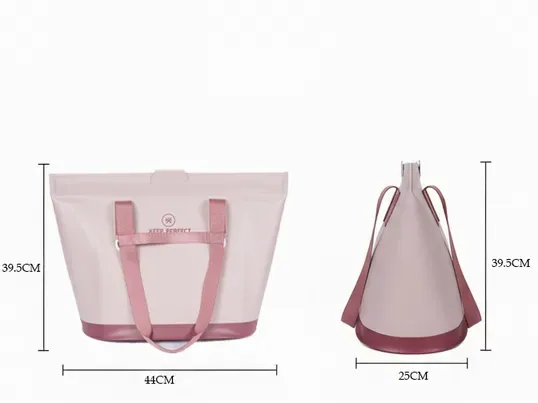
An enquiry email has one job: to be answerable without a further question. The structure that works is a subject line carrying the style and quantity, one sentence of context, a six-line specification block, three commercial lines, two attachments, and one closing question that names the reply you want and the date you want it by. Long emails are not the problem; emails that bury the specification in prose are.
Most enquiry emails fail in the same way. They open with three paragraphs about the brand, the mission and the range, and they mention the specification somewhere in the middle in the form of an adjective. The reader on the other side has to reconstruct the brief before pricing it, and the reconstruction is where the errors enter. This piece sets out the structure that gets read, the fields that belong in the body rather than in an attachment, and the closing line that turns a reply into a commitment.
What Should the Subject Line Carry?
The subject line is a routing instruction, not a greeting. It should carry the product type, the quantity and the stage, because that is what the receiving desk uses to decide who opens it and what queue it lands in. "Enquiry: 500 pcs insulated cooler bag, two colourways, quote requested" tells the desk three things before the email is opened. "Hello" or "New project" tells it nothing and lands in a general inbox.
Include the style reference if there is one, and include the word quote or quotation where a price is wanted, because an email that does not say what it wants tends to be answered with what the sender has to hand rather than with what the buyer needs. Where the enquiry is a follow-up to a conversation, put the date of that conversation in the subject line so the thread can be found.
How Much Context Belongs in the Opening?
One sentence, and it should be a sentence a stranger can use. "We are a grocery delivery business launching a chilled range in March" tells the reader the use case, the season and the time pressure. "We are an exciting young brand on a mission" tells the reader nothing and costs three lines. The opening sentence should contain the end use, because end use drives material choice, compliance scope and construction more than any other single fact.
The second sentence, where it is needed, is the constraint: the date that cannot move, the market that cannot be changed, or the price band that has to be met. Naming the constraint early lets the reader price toward it rather than away from it. A desk that knows the ceiling can propose a configuration; a desk that does not will propose the safest one and the buyer will spend a cycle correcting it.
Which Fields Belong in the Body and Which in an Attachment?
The rule is simple: anything the reader has to quote against belongs in the body, and anything the reader has to build against belongs in an attachment. Quantity, materials, market, Incoterm, target date and inspection standard are quoted against, so they go in the email as a compact block. Drawings, artwork, the full bill of materials and the packing specification are built against, so they are attached and named in the body.
| Field | Body or attachment | Why |
|---|---|---|
| Quantity by style and colourway | Body | It is the first thing priced and the first thing clarified |
| Material and trim summary | Body | Names the cost drivers in the reader own language |
| Compliance market and end use | Body | Sets the test scope and the document set |
| Incoterm, edition and port | Body | Decides what is inside the unit price |
| Target date and its reason | Body | Lets the desk work backwards through the windows |
| Inspection standard and class list | Body | Sets the release gate and the re-work reserve |
| Dimensioned drawing | Attachment | Built against, not quoted against; too long for the body |
| Artwork and logo placement | Attachment | Needed for the branding cost, not for the base price |
| Full bill of materials | Attachment | The reference document for sampling, not for pricing |
How Should the Specification Block Be Written?
As six lines, not as prose. Each line is a label and a value, and each label is a word the pricing desk already uses: quantity, shell, lining and foam, closure and hardware, market, terms. Prose invites interpretation; a labelled block invites completion. Where a value is genuinely unknown, write "to be advised — please recommend" rather than leaving the line out, because an absent line reads as an oversight and an oversight becomes a question.
The block should also say which lines are fixed and which are open. "Shell: 600D polyester with PU coating, or a commercial equivalent" and "Closure: brand open, gauge to suit the panel" tell the reader where there is freedom. That single distinction is worth more than a page of description, because it converts the reply from a guess into a recommendation, and a recommendation can be negotiated.
What Commercial Lines Does the Email Need?
Three: the Incoterm and port, the payment expectation, and the validity the buyer wants on the price. Naming the Incoterm is not a formality — FOB Xiamen, CIF and DDP include different cost elements and cannot be compared without restating them, and a quotation that does not name a rule leaves the delivery point open. Naming the payment expectation early lets the desk say whether it works before the price is spent; on this programme the term is T/T 30/70.
Validity is the line buyers forget and the line that protects them. A price with no validity date is a price that can be withdrawn, and material costs for coated fabric and hardware do move. Asking for thirty days of validity is normal, asking for ninety is not, and a desk that refuses any validity is telling the buyer something about how confident it is in its own material sourcing.
How Do You Ask for the Sampling and Bulk Windows?
Ask for both, and ask what starts each one. The sampling window on this programme is 6-10 working days, and it starts from a signed-off tech pack, not from the first email. The bulk window is 35-50 days and it starts from written sample approval, not from dispatch and not from deposit. An email that asks "how long will it take" gets a number; an email that asks "what starts the clock" gets a schedule, and the schedule is what a planner needs.
- Subject
- Product type, quantity, colourways, and the word quote
- Context
- One sentence with the end use
- Constraint
- The date, market or price band that cannot move
- Quantity
- Per style and per colourway
- Materials
- Shell, lining, foam, closure, hardware
- Market
- Country or region, end use, children or adult
- Terms
- Incoterm with edition and named port
- Payment
- The expectation, stated before the price
- Validity
- How long the price has to hold
- Windows
- Sampling and bulk, each with its trigger event
- Attachments
- Drawing, artwork and bill of materials, named in the body
- Closing ask
- What the reply must contain, and by when
What Should the Closing Ask Say?
Name the reply and the date. "Please send a unit price with validity, the sampling window with its start event, the bulk window with its start event, the payment terms and the inspection plan, by Thursday" is a closing ask. "Looking forward to hearing from you" is not. The closing ask is what converts an email into a commitment, and it is the single easiest improvement most buyers can make to their enquiry.
It also sets up the next step. Where the buyer intends to sample, say so, and ask what the sampling fee will be and whether it is credited against the bulk order. Where the buyer intends to compare three desks, saying so is not rude — it is useful, because it tells the desk that the reply will be compared field by field and that a partial answer will lose.
Should Attachments Be Named in the Body?
Yes, and with their revision state. A drawing attached without being named is a drawing that may not be opened; a drawing named with its revision and date is a document both sides can refer to later. Where there are several files, list them with one line each, and say which one is current if there is any doubt. Attachment confusion is a real source of sampling error, because a pattern can be cut from a superseded drawing.
Keep files in the formats that travel. A dimensioned drawing in PDF with a readable scale works everywhere; a proprietary CAD file may not open on the receiving side. Artwork as vector with fonts outlined, or as a high-resolution raster with the colour reference stated, avoids the most common branding delay. Where a colour is critical, state the reference system and the number rather than relying on a screen match.
What Tone Works With a Programme Desk?
Plain and specific. The reader is a person who prices bags for a living and who would rather have a complete brief than a friendly one. Politeness matters at the level of a clean subject line, a named contact and a clear ask; it does not matter at the level of adjectives. What does help is signalling that the buyer knows the process: naming the Incoterm edition, the inspection standard and the trigger events tells the desk that a partial answer will be noticed.
| What helps | What costs a cycle |
|---|---|
| A subject line with product, quantity and the word quote | A subject line of "Hello" or "New project" |
| A six-line labelled specification block | A paragraph of prose with the specification buried in it |
| "To be advised — please recommend" where a value is open | A missing line that reads as an oversight |
| Windows asked for with their trigger events | "How long will it take?" |
| A closing ask naming the fields and the date | "Looking forward to hearing from you" |
| Attachments named with revision and date | Files attached with no reference in the body |

How Long Should the Email Be?
As long as it needs to be to carry twelve lines, and no longer. In practice that is around 250 to 400 words plus attachments. The failure mode is not length; it is a specification written as narrative. A 900-word email with a six-line block in it will be answered; a 200-word email with no block will not. Put the block in, keep the prose around it to two sentences, and the length takes care of itself.
One structural note: put the block above the attachments list and below the context. A reader who opens the email should hit the context, then the block, then the commercial lines, then the ask. Anything that pushes the specification below two screens gets skimmed, and a skimmed specification is a specification that will be clarified.
What Happens to the Thread After the Reply Arrives?
The reply should be read against the twelve lines the enquiry asked for, and any missing field answered in the same thread rather than in a new email. Keeping one thread matters because the thread is the record: it is where the specification, the price, the windows and the triggers were agreed, and it is the document a planner will read six weeks later. A price agreed in a phone call and confirmed nowhere is a price that will be re-opened.
How Do You Follow Up Without Chasing?
A follow-up that adds information is welcome; a follow-up that only asks whether the email arrived is not. The useful version restates the ask, adds anything that has been settled since — the artwork, the colour reference, the carton marking — and moves the requested date forward by a stated number of days. That gives the desk a reason to re-prioritise rather than a reason to apologise. Where a reply is genuinely overdue, the question to ask is which field is outstanding, because the answer identifies a dependency rather than assigning blame.
Two follow-ups is normal; five damages the relationship before it starts. If the third email has not produced a priced reply, the cause is usually structural: the specification is incomplete in a way neither side has named, or the programme is below the quantity floor and the desk is reluctant to say so. Asking directly whether the quantity, the market or the configuration is the obstacle resolves in one exchange what five reminders will not.
Where the programme has a hard external date, put the date in the follow-up rather than the phrase "urgent". A dated ask can be scheduled; an urgent ask cannot, and every buyer marks every enquiry urgent, so the word carries no information. Give the date, say what it is derived from, and ask what the last safe decision point is. That question produces a real answer because it can be worked backwards from.
Twelve lines, one email
- Subject carries product, quantity, colourways and the word quote.
- One sentence of context naming the end use.
- The constraint that cannot move, stated early.
- A six-line labelled specification block, with "please recommend" where open.
- Incoterm with edition and port, payment expectation and price validity.
- A closing ask naming the reply fields and the date.
Send the enquiry in twelve lines
Send the twelve lines and the attachments. You get a unit price with validity, a sampling window and a bulk window with their trigger events within one business day.
Frequently Asked Questions
What should a bag enquiry email include?
A subject line with product, quantity and the word quote; one sentence of context; a six-line specification block; the Incoterm, payment expectation and validity; named attachments; and a closing ask naming the reply fields and the date.
Should the specification go in the email or in an attachment?
In the email. Anything quoted against belongs in the body; anything built against — drawing, artwork, bill of materials — belongs in an attachment and should be named in the body.
How long should an enquiry email be?
Around 250 to 400 words plus attachments. Length is not the problem; a specification written as narrative is.
What should the subject line say?
The product type, the quantity, the colourways and the word quote. That is what the receiving desk uses to route the email.
How do I ask for lead times without getting a vague answer?
Ask for each window with its trigger event. Sampling runs 6-10 working days from a signed-off tech pack; bulk runs 35-50 days from written sample approval.
Should I state a payment expectation in the first email?
Yes. On this programme the term is T/T 30/70, and naming it early lets the desk say whether it works before the price is spent.
How long should a quoted price stay valid?
Ask for thirty days. Ninety is unusual, and a desk that refuses any validity is telling the buyer about its confidence in its own material sourcing.
What should I do where I do not know a specification value?
Write "to be advised — please recommend" rather than leaving the line out. An absent line reads as an oversight and becomes a question.
Should I attach a drawing in CAD format?
A dimensioned PDF with a readable scale travels everywhere. A proprietary CAD file may not open on the receiving side.
How should artwork be supplied?
As vector with fonts outlined, or as high-resolution raster with the colour reference stated. Where a colour is critical, state the reference system and number.
Is it fine to say I am comparing three suppliers?
Yes, and it is useful. It tells the desk the reply will be compared field by field and that a partial answer will lose.
Should I ask about sampling fees in the first email?
Yes, and ask whether the fee is credited against the bulk order. That is a commercial term and it belongs in the first exchange.
How do I keep a record of what was agreed?
Keep one thread and answer missing fields inside it. The thread is where specification, price, windows and triggers were agreed.
What is the most common mistake in an enquiry email?
Burying the specification in prose. A labelled block with six lines gets priced; a paragraph with adjectives gets clarified.
People Also Ask
How do I write a bag enquiry email?
Subject with product and quantity, one line of context, a six-line specification block, commercial lines, named attachments, and a closing ask.
What should the subject line of a sourcing email be?
Product type, quantity, colourways and the word quote, so the receiving desk can route and price it.
Should I attach a drawing to the first enquiry?
Yes, as a dimensioned PDF, and name it in the body with its revision and date.
How do I ask for a lead time that is real?
Ask for each window with its trigger: 6-10 working days from a signed-off pack for sampling, 35-50 days from written approval for bulk.
How long should an enquiry email be?
About 250 to 400 words plus attachments, with the specification as a labelled block rather than prose.
Sources and further reading
Every figure on this page is either our own programme data or attributed below. Open the originals before you write them into a specification.
- ICC — Incoterms 2020 rules and uniform customs and practice for documentary creditsInternational Chamber of Commerce
- International Trade Centre — sourcing, negotiation and export readiness toolsInternational Trade Centre
- ISO 2859-1:1999 — sampling procedures for inspection by attributesInternational Organization for Standardization