How to Test Fabric GSM Step by Step
Mass per unit area is the least expensive measurement in bag making and the one most often done badly. This page sets out the full procedure: how to condition a specimen, how to cut a known area, what accuracy the balance needs, how many coupons to weigh, and how to turn the result into a clause that protects you.
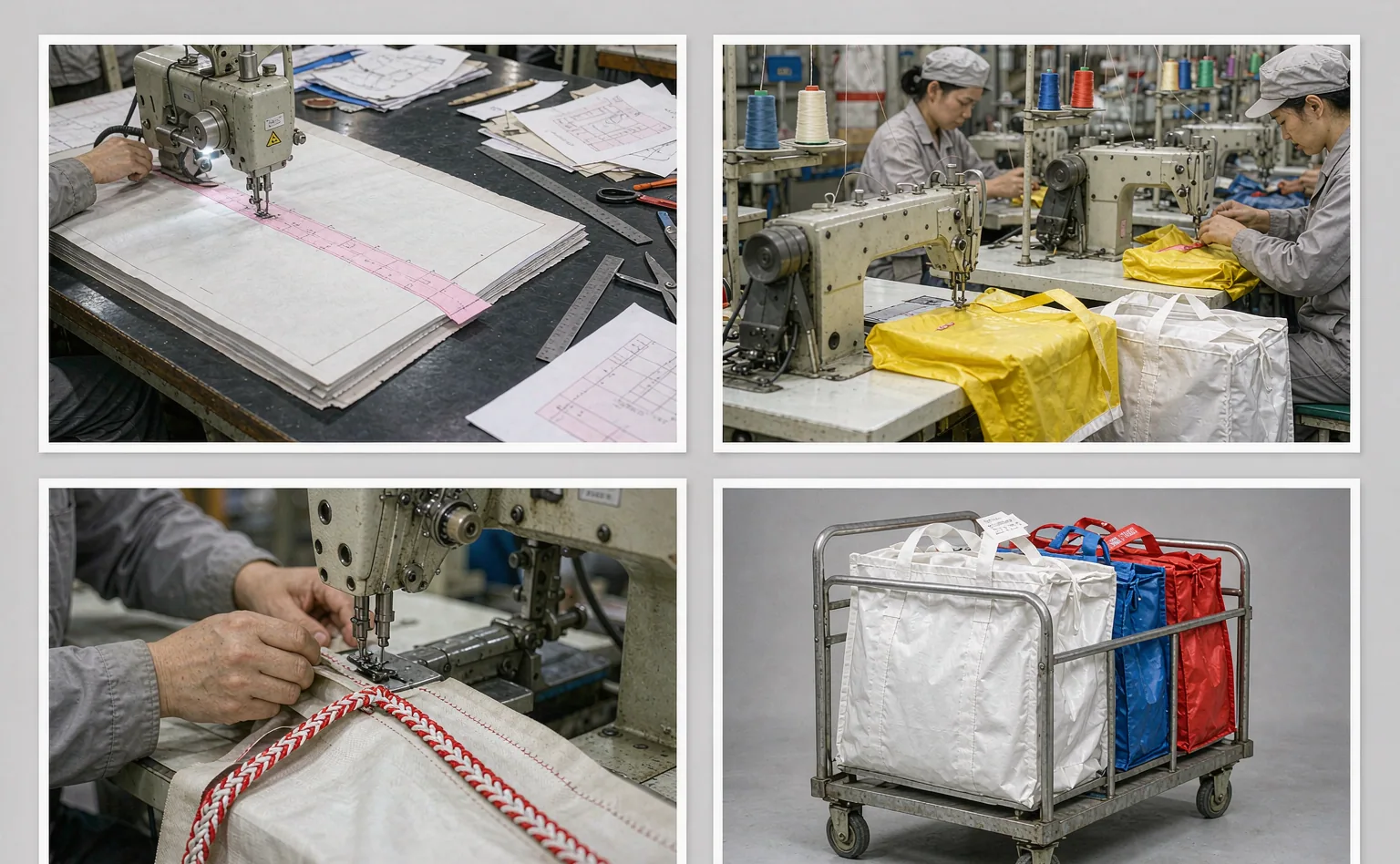
Five things decide the result: the area you cut, how you cut it, whether the cloth was conditioned, how accurate the balance is, and how many coupons you weigh. Everything else about the procedure follows from those five.
What Does GSM Actually Measure and What Does It Cost to Get Wrong?
GSM stands for grams per square metre, the standard way to state how much material you are buying. It is directly tied to price because cloth is sold by mass, tied to performance because heavier usually means more polymer, and tied to freight because thousands of units multiply small differences. A wrong figure therefore costs money twice: once in material and once in shipping.
| Consequence | How it appears | Why it happened | Control written down |
|---|---|---|---|
| Silent substitution | Lighter cloth arrives each season | Nobody measures what actually ships | Weigh every lot and record against the order |
| Freight drift | Container weights exceed plan | Mass increased without anyone modelling it | Put mass into the landed calculation |
| Hand differences | Panels feel different to operators | Weight moved within a wide tolerance | Tighten the tolerance and re-quote |
| Performance arguments | Strength claim disputed later | No weight record backs the claim | Record mass alongside every strength result |
| Cost disputes | Supplier invoiced differently to expectation | Order carried no tolerance clause | State the tolerance before quoting |
| Reorder mismatch | Next season feels different | No retained coupon of the approved lot | Keep a signed coupon per colourway |
What Equipment Do You Need?
Four items, none expensive: a cutting die of known area, a sharp cutting pad, a balance with enough resolution, and a way of conditioning the specimen. Standard dies are circular, cut to an area of one hundred square centimetres, so mass in grams converts directly by multiplying by one hundred. Lower weight linings want finer resolution on the balance than shell cloth does.
- Mark the specimen positions on the roll, away from selvedge and away from creases.
- Condition the specimen in a standard atmosphere until it reaches equilibrium with the room.
- Cut with a die of known area, pressing cleanly so every edge is cut rather than torn.
- Remove any loose fibre or coating flake from the specimen before placing it on the pan.
- Weigh to the resolution the method requires and record the figure immediately.
- Repeat across the required number of specimens and calculate the mean result.
Why Does Conditioning Come First?
Textiles take up water from the air, and the amount taken up changes with humidity and with the fibre itself. Cotton absorbs notably more than polyester, which is why two fabrics cut in the same room can hold different amounts of moisture and therefore weigh differently. Conditioning removes that variable, and skipping it explains a large share of arguments between two parties who both weighed conscientiously.
How Large Should the Specimen Be?
Area and representativeness pull against each other. A small die is convenient and standardised but averages over very little structure, which matters more as the weave gets coarser. A larger cut captures more variation and usually agrees better with a full-width roll measurement. Where the two disagree, prefer the larger specimen and note which one the order refers to.
| Specimen choice | Typical area | Where it suits | Watch out for |
|---|---|---|---|
| Standard circular die | One hundred square centimetres | Most shell and lining cloth | Averages too little on coarse constructions |
| Square template cut | Larger square area | Coarse weaves and open structures | Cut edges must be straight and true |
| Full-width strip | Width by stated length | Checking a whole roll during intake | Requires an accurate width measurement |
| Coated or laminated sample | Same area as the base | Finished mass including the coating | Coating must not be damaged at the edge |
| Very light lining specimen | Same or larger area | Low mass per unit area cloth | Balance resolution becomes critical |
| Multi-ply stack | Several layers together | Where single coupons fall below resolution | Every layer must be counted accurately |
Six lines for a weight clause
- Method referenced, whether by specimen die or by full-width strip, stated once.
- Conditioning state recorded, since absorbed moisture changes the reading.
- Specimen area and number of specimens stated, so the result can be reproduced.
- Balance resolution appropriate to the fabric being weighed.
- Tolerance accepted around the stated target mass per unit area.
- Result recorded with lot reference, date and the operator who took it.
How Many Specimens Give a Trustworthy Answer?
More than most people take, because variation across a roll is real. Taking several specimens from different positions rather than neighbours from one corner gives a mean that means something, and recording the spread alongside the mean tells you whether the roll was consistent. Where the spread is wide, the mean is hiding something worth knowing.
How Do Coatings and Laminations Change the Reading?
Weighing finished cloth measures everything present, including whatever sits on the surface. That is usually what you want, but it also means a coating change mirrors a fabric change exactly unless you separate them. Ask suppliers for greige and finished mass on the same lot so the two components can be compared independently.
Weighing three coupons from adjacent positions produces a tidy number that describes very little. Take specimens from different parts of the roll and record the spread as well.
What Tolerance Belongs on the Figure?
A tolerance of around five per cent either side of target is common and workable, with tighter bands available where a design depends on them. Anything wider invites quiet substitution, and anything very tight tends to be quoted as a premium rather than accepted as a norm. Write the band on the order and everyone quotes against the same expectation.
| Reading situation | Usual tolerance expectation | Why | Note for the clause |
|---|---|---|---|
| Standard shell cloth | Around five per cent either side | Normal production variation | Acceptable for most programmes |
| Lining cloth | Around five per cent either side | Lower absolute values are noisier | Weigh more specimens instead |
| Coated or laminated cloth | Depends on the coating process | Coating adds its own variation | Separate greige and finished figures |
| Critical fitted designs | Tighter than the norm | Fit depends on the mass | Expect a premium to be quoted |
| Open structures | Wider than solid cloth | Cut edges and structure variation | Use a larger specimen area |
| Branded construction | As the supplier publishes | Consistency is part of the premium | Require their figure in writing |

How Is the Result Turned Into Evidence?
Record five fields every time: the method, the conditioning state, the area and number of specimens, the mean result with its spread, and the lot reference with the date. Those fields let anyone reproduce the result and compare it with the next lot, which is the entire purpose of taking the measurement.
Where Does This Sit Inside an Inspection?
During inspection, draw from the shipment rather than from the sample room, and record at AQL 2.5 under ISO 2859-1 General Inspection Level II. Weight findings are usually classed against your defect list, so agree beforehand whether a result outside tolerance is major or minor, because deciding that during a dispute helps nobody.
- Condition every specimen before weighing rather than cutting straight from the roll.
- Take specimens from different positions and record the spread alongside the mean.
- Use a die of known area and note the method on every record.
- Ask for greige and finished mass so coating variation stays visible.
- Write the tolerance on the order instead of agreeing it afterwards.
- Draw inspection specimens from the shipment rather than from sample stock.
How Do You Use the Result in a Commercial Argument?
Present three things side by side: the target from the order, the mean from the shipment, and the retained coupon from approval. When all three line up numerically, discussions become short. When they do not, the numbers say which side has the stronger position, which is considerably better than comparing impressions of how the cloth felt.
What Common Mistakes Produce Bad Numbers?
Weighing without conditioning, cutting with a blunt die that frays the edge, and taking neighbouring specimens from a single corner account for most bad data. The rest come from arithmetic: forgetting the conversion factor, mixing units between records, or averaging across two different constructions because they looked similar on the roll.
| Mistake | Effect on the figure | How to spot it | Preventive instruction |
|---|---|---|---|
| No conditioning | Higher or lower depending on humidity | Results move between days | Condition before every weighing |
| Blunt die | Frayed edges lose material | Edges look torn rather than cut | Replace blades as a scheduled item |
| Neighbouring specimens | Spread looks artificially small | Suspect agreement between coupons | Take specimens from across the roll |
| Unit confusion | Figure out by a factor of ten | Result looks implausible | Write the unit on every record line |
| Coating damage at the edge | Lower reading than reality | Flaking visible along the cut | Cut cleanly and handle carefully |
| Wrong conversion factor | Systematic error across the lot | Everything disagrees with the supplier | State the factor on the worksheet |

What Sample Size Makes Sense at an Incoming Check?
Enough to see variation without turning the check into a project. Several specimens spread across the roll, taken at the same time as any other incoming check, usually achieve that. Record both the mean and the spread, and note whether the specimens came from one roll or several, because that context explains a surprising amount later.
| Shipment situation | Specimen strategy | What the result tells you | What to do next |
|---|---|---|---|
| Single roll, small lot | Specimens across that roll | Consistency within one roll | Release or hold the lot |
| Multiple rolls, one lot | Specimens from several rolls | Variation between rolls | Compare before cutting all of them |
| Repeat of a familiar style | Same positions as last season | Whether the lot matches history | Compare against the retained record |
| Disputed shipment | Re-weigh jointly if possible | Whether the difference is method | Agree the method, then re-measure |
| Coated construction | Base and finished both recorded | Where the variation came from | Address cloth or coating separately |
| New development | Several specimens per candidate | Which candidate meets the target | Choose before artwork is fixed |
How Does Weight Relate to Other Properties?
Weight correlates with tensile and tear because both follow the amount of polymer present, and it correlates much less with abrasion and colour behaviour, which follow finish and construction instead. Use it as a screening measurement rather than as a proxy for everything, and evidence strength separately where it governs the design.
How Do These Figures Support Cost Discussions?
They turn opinion into arithmetic. Comparing the contracted target against the delivered mean, multiplied by area per unit and by unit count, produces a figure in currency that both sides can follow. That approach settles weight disputes faster than any argument about how the cloth felt in the hand.
- Take specimens from across the roll rather than from one corner.
- Record the mean and the spread together, always.
- Re-weigh jointly where a shipment is disputed, after agreeing the method.
- Separate base and finished figures on every coated construction.
- Use weight for screening rather than as a proxy for strength.
- Keep the same die and the same method across every season.
Most weight disputes disappear once both parties agree conditioning, die area and specimen count. Agree those three before anyone touches a specimen.
What Should the Worksheet Carry?
A simple sheet works better than a form nobody fills in. Columns for date, lot reference, conditioning state, area, specimen count, each individual reading, the mean and the spread. Those eight fields take seconds to complete and answer every question anyone asks later about how a figure was reached.
Who Should Take the Measurement?
Anyone with the training and the habit, because the procedure is not complicated. What matters is consistency between people and over time, so agree the method once, write it down where it is taken, and check occasionally that both parties still get the same result from the same cloth.
What Does Good Record Keeping Return?
It converts arguments into comparisons. Seasons sit side by side as numbers rather than as impressions, anomalies stand out before they become patterns, and reorders start from evidence. For one extra minute per lot, that is a strong return on any programme.
Two parties measuring honestly with different methods will disagree honestly. Agree the method first and most differences simply evaporate.
What Should Happen When a Reading Sits Outside Tolerance?
Agree the response before it happens: whether the lot is held, whether a joint re-measurement happens, and what commercial adjustment applies. Deciding that in advance converts a dispute into a procedure, which is far less expensive than improvising a settlement while goods sit in a warehouse waiting for agreement.
Write what happens when a reading fails before any reading fails. Procedures agreed calmly are always better than settlements agreed under pressure.
What Should a Buyer Ask For First?
Start by asking which method the laboratory intends to use and whether it matches the one already written on the order. Most programmes discover too late that cloth was approved against one method and shipped against another, and every later comparison inherits that inconsistency. One question at the outset prevents an entire season of incomparable numbers.
Using the same die and the same conditioning habit every season is worth more than any piece of additional equipment. Consistency is what makes two numbers comparable.
How Do You Keep Two Seasons Comparable?
Keep the same method, the same die and the same conditioning habit every season, and store a signed specimen from each lot. Comparison only works when the variables stay fixed, so the most economical long-term investment is consistency of procedure rather than extra equipment.
Turn weighing into evidence
Send the target mass and the tolerance you need held — we return the method written into the order line, evidenced per lot.
Frequently Asked Questions
What does GSM stand for?
Grams per square metre, the standard measure of how much material a square metre of the cloth weighs. Convert grams per hundred square centimetres by multiplying by one hundred.
Why do my results differ from the supplier?
Usually conditioning or specimen position. If neither party conditioned before weighing, both can be measuring honestly and disagreeing legitimately.
How many coupons should I weigh?
More than one, taken from different parts of the roll, with the spread recorded alongside the mean. Neighbouring specimens produce a tidy number that means very little.
Do I need a special cutter?
A die of known area, kept sharp. Standard circular dies cut one hundred square centimetres, which makes conversion straightforward.
Should I weigh the coating too?
Yes, if you are buying finished cloth. Ask suppliers to quote greige and finished mass so the coating contribution stays visible.
What tolerance is normal?
Around five per cent either side of target is common, with tighter bands available where a design depends on them. Write it on the order rather than agreeing later.
Can I weigh full-width strips instead?
Yes, provided width is measured accurately and the method is recorded. It often agrees better with a whole roll than small coupons do.
Why did my result change overnight?
Because the cloth picked up or lost moisture. Condition specimens to a standard atmosphere before weighing to remove that effect.
Is there a standard method to cite?
Yes. Several published standards describe mass per unit area, including one named by International Organization for Standardization and one by ASTM International. Cite whichever your laboratory uses.
How should I record the finding?
Record method, conditioning state, area and specimen count, the mean with its spread, and the lot reference with the date. Those five fields make the result reproducible.
People Also Ask
How do I measure fabric GSM?
Condition a specimen, cut a known area with a sharp die, weigh it, then convert by the area factor and record the mean of several specimens.
What equipment is needed?
A cutting die of known area, a cutting pad, a balance with suitable resolution and somewhere to condition the specimen.
Why do results vary between days?
Absorbed moisture. Conditioning before weighing removes humidity as a variable.
What tolerance should I allow?
Around five per cent either side is common workable practice, written onto the order before quoting rather than agreed afterwards.
Does coating count in the weight?
Yes, weighing finished cloth measures everything present. Ask for greige and finished figures to separate the two.
Sources and further reading
Every figure on this page is either our own programme data or attributed below. Open the originals before you write them into a specification.
- ASTM D3776 — Standard Test Methods for Mass Per Unit Area of FabricASTM International
- ISO 3801 — Textiles: determination of mass per unit areaInternational Organization for Standardization
- ISO 6330 — Domestic washing and drying procedures for textile testingInternational Organization for Standardization