How to Specify Webbing and Thread: Weight, Width and Composition
Webbing is specified by width, weave, weight and breaking strength, and thread by ticket number, fibre and finish. Both are bought components with published figures, and both are usually ordered by width and colour alone, which is one field out of four.
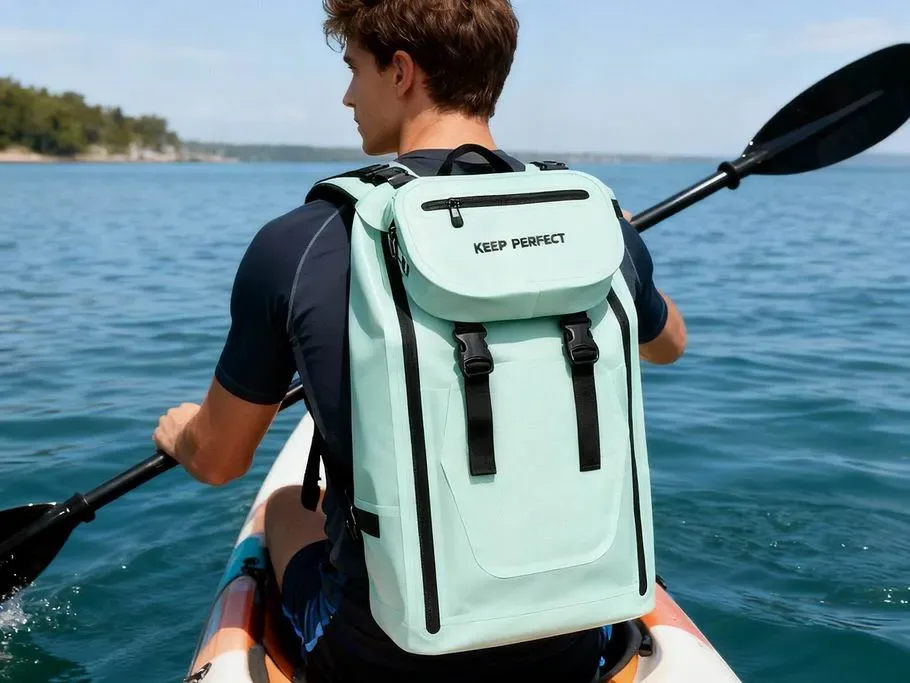
Webbing is specified by width in millimetres, weave, weight in grams per metre and breaking strength in newtons, with a colour reference and a supplier. Thread is specified by ticket number, fibre and finish, with a needle size and a stitches-per-inch figure on the seam. Both are catalogue parts with published data, so both can be specified rather than described.
The two components are grouped because they are specified the same way and fail the same way: by being under-specified. A buyer writes "25 mm webbing, black" and "polyester thread", and both of those are a width and a colour rather than a specification. What arrives is whatever the line buys in that width and colour.
The consequence is not visible on a sample and is visible in service. Webbing that is light for the duty stretches and creeps under load; thread that is the wrong fibre for the shell fails at the seam rather than at the cloth; both failures arrive after the customer has the bag rather than before the shipment leaves.
What Are the Four Fields on a Webbing Line?
Width in millimetres, weave, weight and breaking strength. Width is the nominal width and it has a tolerance of its own, which matters because hardware is made to a nominal width as well. Weave says how the webbing is constructed: plain, twill, or tubular. Weight is usually given in grams per metre. Breaking strength is given in newtons or kilograms force by the supplier.
The fourth field — breaking strength — is the one that gets dropped, and it is the one that decides whether the strap holds. Two 25 mm webbings of the same weave and a similar weight can differ substantially in breaking strength, because the figure depends on the yarn as much as on the construction.
How Does Material Choice Move Webbing Behaviour?
Polyester is the general-purpose choice: it holds its strength when wet, it resists ultraviolet reasonably, and it takes dye well. Nylon is stronger for the same weight and has a softer hand, but it loses some strength when wet and it costs more. Polypropylene is the lightest and least expensive and is used where the webbing is decorative rather than load-bearing.
On a bag that will be used outdoors, the ultraviolet behaviour is the one to ask about, and the pack should state it as a requirement rather than as a hope. Where a strap is the primary carry on a bag that lives outside, polyester in a heavier weight does more for the product than any finish applied afterwards.
| Material | Strength for weight | Behaviour when wet | Ultraviolet resistance | Where it suits |
|---|---|---|---|---|
| Polyester | Good | Holds its strength | Reasonable | General-purpose straps and handles |
| Nylon | Higher for the same weight | Loses some strength | Lower than polyester | Where a soft hand and strength matter |
| Polypropylene | Lower | Holds its strength | Lower, unless treated | Decorative or light-duty webbing |
| Recycled polyester | Close to polyester | Holds its strength | Reasonable | Where a recycled-content claim is made, with a transaction certificate |
| Cotton or a blend | Lower | Holds, but dries slowly | Reasonable | Where the hand matters more than the load |
| Tubular polyester | Good | Holds its strength | Reasonable | Where a softer edge and a flatter lie are wanted |
Why Does Weave Matter Beyond Appearance?
Because it changes how the webbing behaves at the hardware and at the seam. A plain weave is flat and dense and holds a ladder lock well. A twill weave is more supple and lies better on a curve. Tubular webbing is a flattened tube with no edge, which makes it softer and kinder against a shoulder.
The interaction with hardware is the practical point. A ladder lock grips by friction and by the geometry of the bar, and a webbing that is too soft or too thin for the lock will slip even when the nominal width is correct. Specifying the webbing and the hardware as a mating pair is how that failure gets designed out.
Four checks on a webbing line
- Width in millimetres with the tolerance, matched to the hardware aperture.
- Weave: plain, twill or tubular, chosen for how it behaves at the hardware and on a curve.
- Weight in grams per metre, so two suppliers can be compared.
- Breaking strength in newtons, as a minimum with the test method named.
How Is Thread Specified?
By ticket number, fibre and finish. The ticket number is a measure of linear density — a higher ticket number is a finer thread — and it is the field that decides whether the thread suits the needle, the cloth and the seam. Fibre is polyester, nylon or a blend, and it should match the shell: a polyester thread through a nylon shell behaves differently from a nylon thread in the same seam.
Finish is the third field and it covers lubrication and bonding. A bonded thread resists fraying and abrasion at the needle, which matters on a seam that is sewn at speed. Where a bag has a seam that will be abraded in service, a bonded thread is worth specifying explicitly.

How Do Thread and Stitch Count Interact?
The thread size and the stitches per inch together decide how much thread is in the seam, and that is what sets the seam strength. More stitches per inch with the same thread is a stronger and slower seam; a thicker thread at the same stitch count is a stronger seam with fewer punctures in the cloth.
The second interaction is with the needle. A thread that is too thick for the needle shreds at speed; a needle that is too large for the cloth leaves holes that weaken the seam. The pack should state the needle size alongside the thread, because the two are chosen together and not separately.
| Seam on a soft bag | Thread ticket | Fibre | Stitches per inch | Needle size |
|---|---|---|---|---|
| Shell to shell, main body | Tkt 40 | Polyester, bonded | 8 to 10 | Nm 90 |
| Lining insertion | Tkt 50 | Polyester | 8 to 10 | Nm 80 |
| Webbing anchor and bar tack | Tkt 30 | Polyester, bonded | 7 to 9 | Nm 100 |
| Topstitch, visible | Tkt 40 | Polyester, dyed to match | 9 to 11 | Nm 90 |
| Zip insertion | Tkt 40 | Polyester | 9 to 11 | Nm 90 |
| Binding on an internal seam | Tkt 50 | Polyester | 8 to 10 | Nm 80 |
| Heavy load point, kit bag | Tkt 30 | Polyester, bonded | 7 to 9 | Nm 110 |
What Colour Reference Does Each Trim Component Need?
Its own, matched separately against the shell. Webbing, thread, binding, zip tape and hardware finish are five different materials and none of them takes dye the same way as another. A pack that gives one colour reference for the whole bag has specified the shell and left four components to be matched by eye.
The practical fix is a trim card: a single card carrying a swatch of every component in the approved colour, held on each side. Where a dispute about shade arises, the card settles it in a way that a reference number alone does not.
How Do Webbing and Thread Reach the BOM?
Webbing as a length per bag plus a turn-back at each anchor, with a cut-length allowance. Thread as metres per bag, derived from the stitch count and the seam length, and usually bought on cones rather than by the metre — which means the BOM line has to state the cone size as well as the consumption.
Both are bought components with a minimum. A dyed-to-match webbing in a team colour carries a dye-lot minimum that can exceed what one order consumes, and the same applies to a dyed thread in a non-stock shade. Where that happens, the surplus is either held against a repeat or carried in the price, and the BOM should say which.
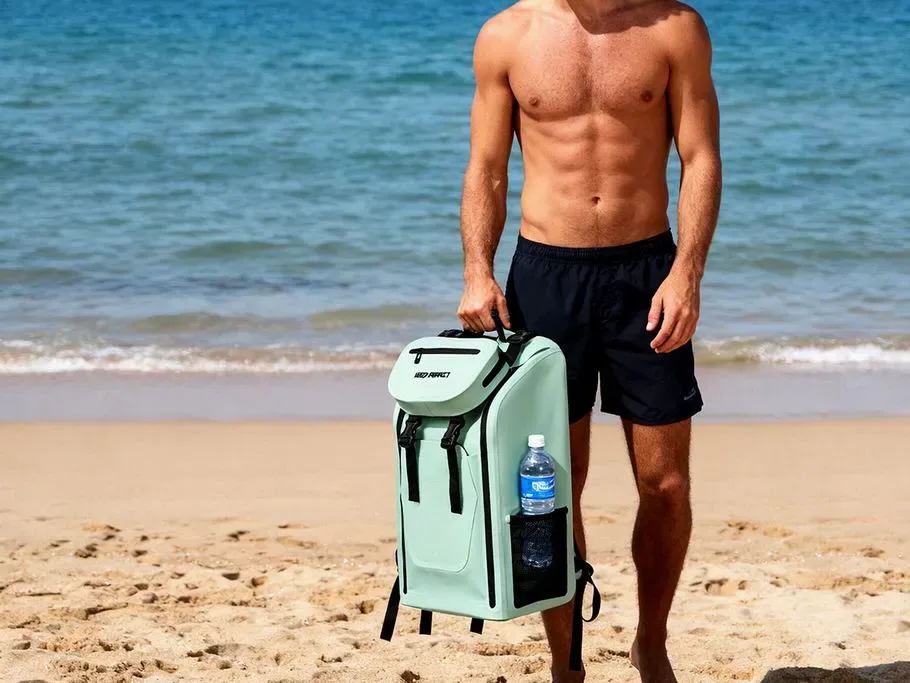
How Is Each Tested and What Goes on the Pack?
Webbing is tested for breaking strength and for colourfastness, and where the strap is load-bearing, for the strength of the assembled anchor rather than of the webbing alone. That last figure is the one that matters, because the webbing almost never breaks — the anchor does.
Thread is tested through the seam rather than on its own: a seam strength test on a specimen sewn to the specified schedule says more than any figure about the thread. The tensile properties of fabrics are covered by ISO 13934-1 and the seam properties by the companion method, so the pack can name the method rather than invent a limit.
How Is the Webbing and Hardware Pair Specified?
A webbing width and a hardware aperture are nominally the same number and practically two different measurements. A ladder lock sold as 25 mm is made to pass a 25 mm webbing, but the tolerance on each is set by a different supplier, and a webbing at the top of its tolerance threaded through a lock at the bottom of its own will not pass, or will pass and then slip under load.
The fix on the pack is to specify them as one line carrying both references, and to say what the assembly has to do rather than what it is. A lift figure on the assembled strap, tested with the lock in place, is a specification; two nominal widths are a description. Where the strap adjusts, add a figure for slip under load, because slip is the failure a customer actually reports.
The anchor is the second half of the pair. A strap bar-tacked to the panel is only as strong as the cloth it is tacked to, and on a light shell the webbing is stronger than the panel by a wide margin. Stating a reinforcement — a patch, a second layer, a longer turn-back — is usually a smaller cost than specifying a heavier webbing, and it is the change that moves the failure point.
| Webbing | Mating hardware | What the pack states | What is tested |
|---|---|---|---|
| 25 mm plain polyester | 25 mm ladder lock | Both references, one line | Slip under load, with the lock in place |
| 25 mm plain polyester | 25 mm side-release buckle | Buckle reference and the webbing reference | Lift on the assembled strap |
| 38 mm twill polyester | 38 mm cam buckle | Return path and the turn-back length | Lift, and the anchor after load |
| 20 mm tubular polyester | 20 mm D-ring and a loop | Whether the webbing is folded or cut | Lift on the loop, not on the webbing |
| 50 mm heavy polyester | 50 mm pad and a wrap | Stitch schedule on the wrap | Lift at the handle, as assembled |
What Changes When the Webbing Carries a Recycled Claim?
Three fields. The recycled content has to be stated as a percentage with the basis — post-consumer, post-industrial, or a mix — because the three are not interchangeable in a claim. The certificate has to be named: a transaction certificate issued against the shipment is the document a retailer asks for, and it is issued per shipment rather than per style.
The third field is the one that gets missed, which is that a recycled webbing is a different part number with its own minimum and its own lead time, and it is usually dyed in a narrower shade range. Ordering a recycled webbing in a team colour on a short run means a dye-lot minimum on a part that is already constrained, and that combination is what turns a 35-50 day bulk window into a longer one.
Where the claim is on the listing, the pack should carry it on the component line rather than only in the header, and the artwork file should carry it in the same wording as the certificate. A claim on a product and a claim on a document that do not match is the version of this that gets a listing pulled.
The practical handling is to treat the certificate as a document on the critical path rather than a certificate that arrives at the end. Where a recycled trim is specified for the first time, the reference is worth confirming before the sampling window opens, because a certificate cannot be issued retroactively against a part that was never declared.
What Is the Short Rule for Both Components?
Buy them as catalogue parts, with the supplier's published figures written onto the pack. Webbing gets four fields and thread gets three, and each field is a number or a name rather than an adjective.
Then hold both steady through the run. Webbing and thread are the two components most often substituted between runs, because a substitution at the same width and colour is invisible on a finished bag and very visible in service. Where the pack names the supplier and the figure, the second run has to match both.
One last field is worth carrying on both lines: the approved sample. A physical length of the webbing and a cone of the thread, held against each side, settle a substitution argument in a way that a written reference cannot, and they cost nothing to keep. A trim card carrying a swatch of each component is the same idea in a form most programmes already hold.
Get the trim components specified with figures
Send the bag and the duty. You get webbing and thread lines with width, weight, strength and ticket written in.
Frequently Asked Questions
How do I specify webbing on a tech pack?
Four fields: width in millimetres with its tolerance, weave, weight in grams per metre, and breaking strength in newtons as a minimum.
What is the strongest webbing material for a bag strap?
Nylon is stronger for the same weight, but polyester holds its strength when wet and resists ultraviolet better, which is why it is the general-purpose choice.
Why does breaking strength matter if the width is right?
Because two webbings of the same width and a similar weight can differ substantially in strength. The width does not predict it.
What is the difference between plain, twill and tubular webbing?
Plain is flat and dense and holds a ladder lock; twill is supple and lies on a curve; tubular is a flattened tube with no edge and a softer feel.
How is thread specified?
By ticket number, fibre and finish. The ticket number is a measure of linear density and decides whether the thread suits the needle and the cloth.
Should the thread fibre match the shell?
It should be chosen with the shell in mind. A polyester thread through a nylon shell behaves differently from a nylon thread in the same seam.
What is a bonded thread?
One treated to resist fraying and abrasion at the needle. It is worth specifying on a seam that will be abraded in service.
Why does the needle size belong on the pack?
Because thread and needle are chosen together. A thread too thick for the needle shreds at speed; a needle too large for the cloth leaves holes that weaken the seam.
Does each trim component need its own colour reference?
Yes. Webbing, thread, binding, zip tape and hardware finish are five materials and none takes dye the same way as another.
What is a trim card?
A single card carrying a swatch of every component in the approved colour, held on each side, used to settle shade disputes.
How is webbing quantified on the BOM?
As a length per bag plus a turn-back at each anchor, with a cut-length allowance.
How is thread quantified on the BOM?
As metres per bag from the stitch count and the seam length, with the cone size stated because thread is bought on cones.
What is the most useful test on a strap?
The strength of the assembled anchor rather than of the webbing alone, because the webbing almost never breaks.
Does a dyed-to-match webbing carry a minimum?
Yes, a dye-lot minimum that can exceed what one order consumes. The BOM should say whether the surplus is held against a repeat or carried in the price.
People Also Ask
How do you specify webbing for a bag?
Width with its tolerance, weave, weight in grams per metre and breaking strength in newtons, plus a colour reference and a supplier.
What thread should I use for bag manufacturing?
A polyester thread matched to the shell, specified by ticket number, fibre and finish, with the needle size stated alongside.
What is a thread ticket number?
A measure of linear density — a higher number is a finer thread. It decides whether the thread suits the needle and the cloth.
Which is better for a bag strap, nylon or polyester webbing?
Nylon is stronger for the same weight; polyester holds its strength when wet and resists ultraviolet better, so it is the general choice.
Why does my strap stretch or slip?
Either the webbing is light for the duty, or the weave does not suit the ladder lock. Specify the webbing and the hardware as a mating pair.
Sources and further reading
Every figure on this page is either our own programme data or attributed below. Open the originals before you write them into a specification.
- ISO 13934-1 — Tensile properties of fabrics, strip methodInternational Organization for Standardization
- ASTM D6193 — Standard Practice for Stitches and SeamsASTM International
- AATCC 16 — Colorfastness to LightAmerican Association of Textile Chemists and Colorists