How to Build a Tech Pack Library for a Multi-Product Bag Brand
A tech pack library is a set of named packs plus a set of shared modules they draw on. Built once, it takes the sampling window out of the next twenty styles, because most of a bag pack is the same pack as the last one.
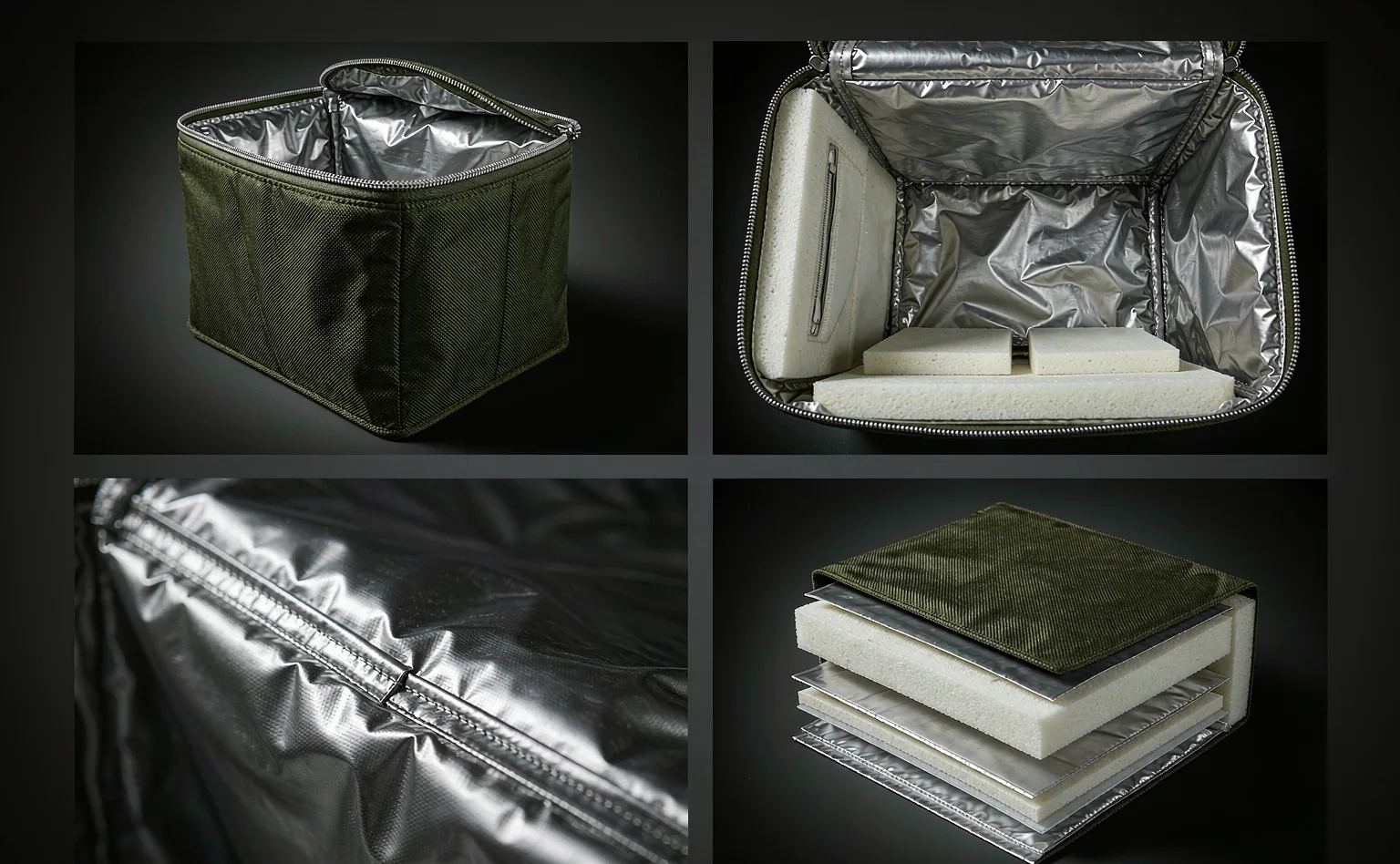
Build the library in four parts: a naming rule that produces a unique reference for every style and every revision; a set of common modules for the components every bag shares; a template per product family for the parts that differ; and a review cadence that keeps all three current. Four parts, and the first two are most of the value.
A brand with twenty styles usually holds twenty packs that share about seventy per cent of their content. The zipper block, the webbing block, the label block, the packing block and the testing block are the same document repeated twenty times, and every one of them drifts a little each time it is copied.
A library removes the copying. The shared content lives once, each style references it, and a change to the shared content reaches every style that uses it. The remaining thirty per cent — the panel shapes, the foam, the artwork — is what actually differs and it is the only part written from scratch.
The return on building it is at the next style rather than at this one. The first pack in a library takes as long as any pack; the fifth takes a fraction of that, and the difference compounds across a range.
What Is a Tech Pack Library and What Does It Hold?
Two things: a set of complete packs, one per style, and a set of modules those packs are built from. A module is a block that appears in more than one pack — a zipper schedule, a webbing and thread schedule, a hardware schedule, a label and packing block, a testing block.
It is not a folder of old packs. A folder of old packs is a useful thing and it is not a library, because there is no way to know which old pack holds the current zipper line. The library is the folder plus an index plus a rule about which copy is authoritative.
The third thing it holds is the component list: one row per reference, with the full set of fields, which every module and every pack draws on. That list is the spine of the library and it is the part worth building first.
How Are Packs Named and Numbered?
With a rule that produces a unique, sortable reference without anybody having to think: a family code, a sequence number and a revision letter. A cooler bag in the third slot at revision C becomes one short string, and the same string appears on the pack, the BOM, the pattern and the order.
The discipline that matters is that the revision letter is part of the reference rather than a note on the document. Where the revision is in the file name and nowhere else, a pack printed out loses it, and a printed pack is what the sample room works from.
The second rule is that a revision is issued rather than edited. The previous version stays on file under its old reference and the new one takes the next letter. That is what lets a question about the second run be answered from the record rather than from memory.
| Artefact | Naming rule | Where the reference appears | What it prevents |
|---|---|---|---|
| Pack | Family code, sequence, revision letter | On every page, and on the order | Two versions of one pack in circulation |
| Module | A block name and a revision letter | On the module and on the pack that uses it | A shared block changed on one style only |
| Component | A type code and a sequence number | On the BOM, the trim card and the order | One part under four different spellings |
| Pattern file | The pack reference and the revision letter | In the file and in the file name | A superseded shape being cut |
| Approved sample | The pack reference and a date | On the tag on the bag | An argument about what was approved |
| Certificate | The component reference and the shipment | On the document and on the declaration | A certificate that cannot be matched to a part |
What Are Common Modules and How Are They Reused?
The blocks that appear in every pack in the range. For a bag brand that is usually five: a closing and trim schedule, a webbing and thread schedule, a hardware schedule, a labelling and packing block, and a testing and compliance block. Everything else is style-specific.
A module is referenced rather than copied. The pack says which revision of the zipper module it uses, and the module lives in one place. Where a module changes, the revision letter changes, and the list of packs referencing the old letter is the list of styles that have to be reviewed.
The caution is that a module should only be shared where it is genuinely identical. A zipper schedule shared across a range where one style uses a #3 and another a #10 is two modules, and forcing them into one is how a shared block becomes a source of error rather than a saving.
How Is a Template Built for One Product Family?
By taking the last pack in that family, stripping everything that is specific to one style, and saving what is left as the template. What remains is the skeleton: the section order, the shared modules, the drawing conventions and the fields that every style in the family has to fill.
The template should carry blanks rather than examples. A template with the last styles figures still in it produces a new pack where half the numbers are the old product, and those are the numbers that survive to the sample because nobody notices them.
The third thing a family template carries is a family-specific section. A cooler bag family needs an insulation and weld section; a camera bag family needs a padding and divider section; a team kit family needs a compartment and personalisation section. That section is what makes the template worth having.
Six modules most bag ranges share
- A closing and trim schedule: every zipper line, with six fields a line.
- A webbing and thread schedule: width, weave, weight, strength and ticket.
- A hardware schedule: a reference, a finish and a pull figure per part.
- A labelling and packing block: origin, content, care, carton and mark.
- A testing and compliance block: the methods, the limits and the declarations.
- A component list: one row per reference, used by all of the above.
How Does Versioning Work Across a Library?
One revision per artefact, and a record of which pack used which revision of which module. That second part is the piece most libraries miss, and without it a module change cannot be traced to the styles it affects.
The practical shape is a table: one row per pack, one column per module, each cell holding the revision letter in use. It is a small table and it answers the where-used question that a folder of files cannot.
The third rule is that a pack revision and a module revision are different things. A module can change without the pack changing, because the pack references the module rather than containing it. That is the whole point of the structure and it is what keeps a shared change to a single edit.

Who Owns the Library and How Often Is It Reviewed?
One named person, with a deputy. A library without an owner becomes a folder, because nobody is responsible for the index, the module revisions or the annual check that a certificate is still current.
The cadence that works is a review per season rather than a continuous one. At each review, four things are checked: that every component reference is still available, that every certificate is still current, that every module revision in use is the latest, and that every approved sample on the shelf still matches its pack.
The fourth is the one that catches the most. An approved sample degrades — a coated shell yellows, a white webbing greys, a printed panel fades — and a sample that has aged is a poor reference for a run two years later. Replacing it costs one unit and closes the question before it is asked.
How Does the Library Change the Sampling Window?
It shortens the first two gates rather than the sampling itself. A new style written from a family template is complete faster, and its materials are confirmed faster, because most of the references already exist. Sampling still runs 6-10 working days from the signed pack.
What changes more is the number of rounds. A pack built from a library carries the same component references the supplier has already sampled on another style, so the first sample is more often right. The saving is a second round avoided rather than a first round shortened.
The third change is at quotation. A pack that names references the supplier already buys needs no sourcing step, and the return comes back faster and with more specifics. That is the earliest place a library pays for itself.
| What the library changes | Before | After | Where the saving is |
|---|---|---|---|
| Writing a new pack | From the last similar pack, by copying | From a family template, with blanks | Hours per style, and no carried-over figures |
| Confirming materials | Every reference sourced afresh | Most references already in the list | Days off the material confirmation gate |
| Getting a return | A description on most lines | A reference on most lines | A comparable quote, faster |
| Sampling rounds | Two or three is common | One is the norm | Most of a sampling window avoided |
| A shared component change | Found style by style, when noticed | Found from the version table | A range that stays consistent |
| A certificate question | Answered from an inbox, if at all | Answered from the component record | A compliance question answered in minutes |
What Does the Library Do for a New Supplier?
It makes the range portable. A pack that names its own components and carries its own test figures can be sent to a second supplier and quoted without a development round, because the specification is self-contained. A range that lives in one suppliers head cannot.
That portability is worth stating plainly, because it is the reason to build a library rather than to buy one. A library is what lets a programme move a style, or hold a second source, without paying for the same development twice.
The third thing it does is make the second source comparable. Two returns scored against the same pack with the same references can be compared on the sheet rather than on the relationship, and that is the position a buyer wants to be in.
What Breaks a Library and How Is That Avoided?
Three things. Copying a module into a pack rather than referencing it, which turns the library back into a folder. Letting a style carry a one-off component without adding it to the list, which means the next style cannot find it. And skipping the review, which lets certificates lapse and samples age.
The fourth is subtler: over-sharing. A module forced across a range where the products genuinely differ produces packs that are wrong in the same way, which is worse than packs that are wrong differently. Where two families need different figures, two modules is the answer.
The fifth is the one that ends libraries: nobody updates the index. An index that is out of date is worse than no index, because it is trusted. Where the review cadence cannot be kept, the honest answer is to hold a folder of dated packs rather than a library that claims more than it delivers.

How Is a Library Built When the Range Already Exists?
Backwards, and it is faster than it sounds. Take the three styles that ship most often, strip them into modules, and build the component list from what those three share. That gives a working library covering most of the volume in a day rather than a restructuring project covering everything in a season.
The second step is to convert the rest of the range style by style as each one is next revised. A pack that is not being revised does not need converting, because it is stable; forcing a conversion on every style at once is what turns this into a project that never finishes.
The third step is to accept that the oldest styles stay outside the library for a while. A library covering the styles that carry the volume is worth more than a complete one that is two seasons late, and the stragglers can be brought in when they next move.
| Step | What it covers | How long it takes | What it produces |
|---|---|---|---|
| 1. Strip the top three styles | The styles carrying the most volume | About a day | Five working modules and a component list |
| 2. Name and number everything | Every pack, module and component | Half a day | A reference on every artefact |
| 3. Build one family template | The largest product family | Half a day | A template with blanks rather than figures |
| 4. Convert on next revision | Every other style, as each is revised | An hour per style, spread over seasons | A library that grows without a project |
| 5. Run the first seasonal review | Availability, certificates, samples | Two hours | A library that is actually current |
What Is the Short Rule for Building a Library?
Build the component list first, then the shared modules, then a template per family, then a version table. Four steps in that order, and the first one is the spine.
Then give it one owner and one review per season. A library that is maintained beats a system that is not, and the difference is one named person rather than a licence.
Get a library structure for your range
Send the styles you run. You get a naming rule, five shared modules, a family template and a version table.
Frequently Asked Questions
What is a tech pack library?
A set of complete packs, one per style, plus a set of shared modules and one component list that both draw on.
What is a module in a tech pack?
A block that appears in more than one pack: a zipper schedule, a hardware schedule, a packing block or a testing block.
How should tech packs be named?
With a rule producing a unique sortable reference: a family code, a sequence number and a revision letter, on every page.
Should a module be copied into a pack?
No. It should be referenced, with the revision letter recorded, so a shared change reaches every style at once.
When should a module not be shared?
Where two families genuinely need different figures. Forcing them into one module produces packs that are wrong in the same way.
How does versioning work across a library?
One revision per artefact, plus a table of which pack uses which revision of which module.
Who should own the library?
One named person with a deputy, reviewed once per season.
What is checked at a library review?
That every reference is available, every certificate is current, every module revision in use is the latest, and every approved sample still matches its pack.
Does a library shorten sampling?
It shortens the gates before it and reduces the number of rounds. Sampling itself still runs 6-10 working days from the signed pack.
What does a library do for a second supplier?
It makes the range portable. A self-contained pack can be quoted by a second source without a development round.
What breaks a library?
Copying modules instead of referencing them, one-off components never added to the list, and an index nobody updates.
What are the standard programme windows?
Sampling 6-10 working days from a signed pack, bulk 35-50 days from written sample approval, inspection at AQL 2.5 under ISO 2859-1.
People Also Ask
What is a tech pack library?
One pack per style, shared modules for the blocks that repeat, and one component list behind both.
How do I organise tech packs for a bag range?
A naming rule, shared modules referenced rather than copied, a version table and a review per season.
Should tech pack modules be shared across styles?
Yes where the block is genuinely identical, and no where two families need different figures.
How often should a tech pack library be reviewed?
Once per season: availability, certificates, module revisions and approved samples.
Does a pack library make a range portable to a new supplier?
Yes. A self-contained pack with its own references can be quoted without a development round.
Sources and further reading
Every figure on this page is either our own programme data or attributed below. Open the originals before you write them into a specification.
- ISO 9001 — Quality management systemsInternational Organization for Standardization
- ISO 2859-1:1999 — Sampling procedures for inspection by attributesInternational Organization for Standardization
- ASTM D6193 — Standard Practice for Stitches and SeamsASTM International