Should a Pilot Order With Sampling Come Before You Scale?
Yes, provided the pilot crosses the production routing threshold. Below that threshold the work goes to a sample room and measures nothing the bulk will use. A valid pilot ends with four artefacts: a retained reference unit, a recorded parameter set, defect counts and a scale note.
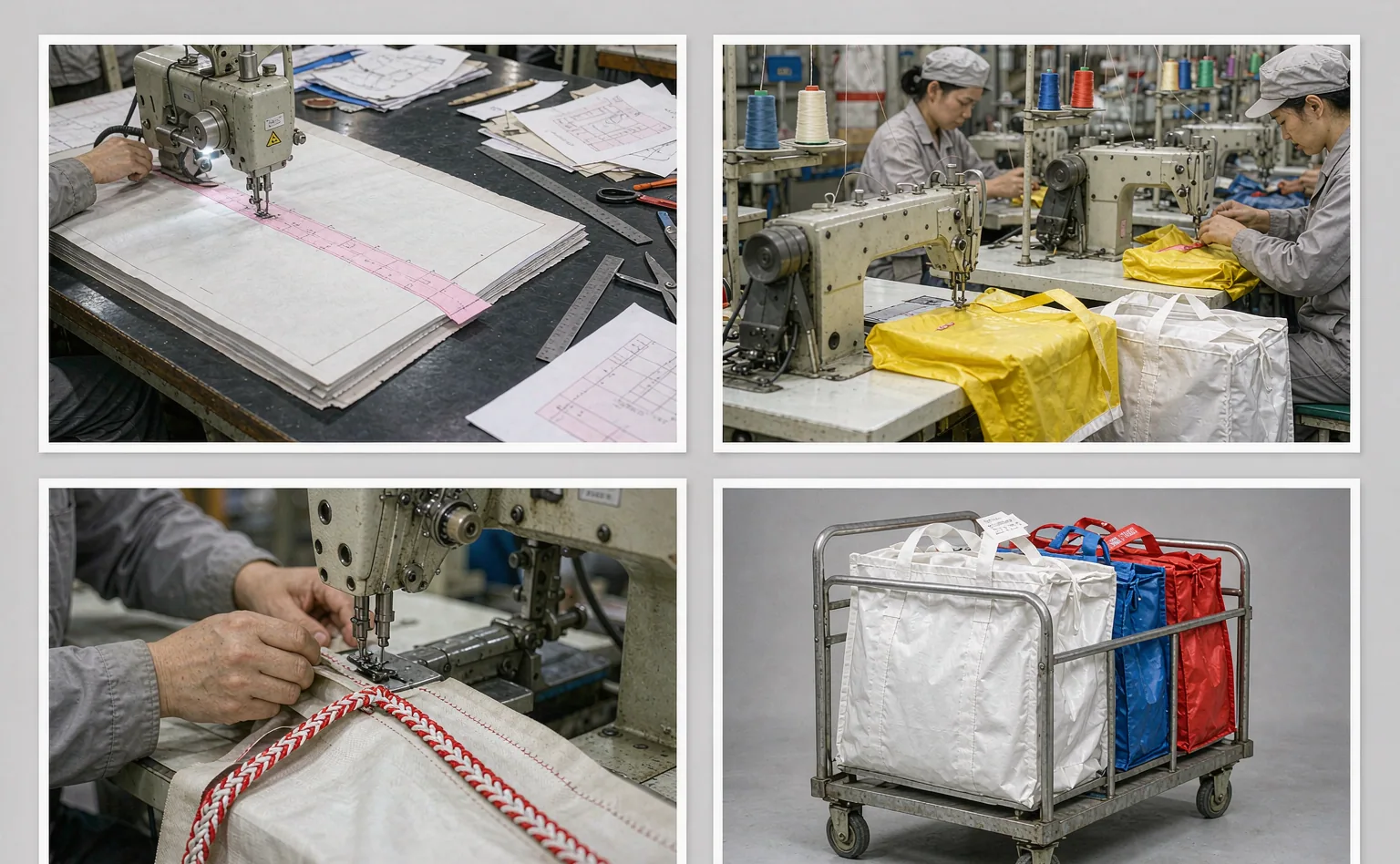
A pilot order is a measurement exercise, not a smaller first order. It should be large enough to run on production tooling and through the normal inspection gate, small enough that a failure is survivable, and it should end with four artefacts: a retained reference sample, a recorded parameter set, an inspection result with defect counts, and a written note of what would change at scale.
The instinct on a new sourcing relationship is to place the smallest order the production partner will accept, on the theory that a small order carries small risk. The theory is wrong in this category, because the failures that matter are process failures and a small order does not exercise the process. A run made by a sample room on hand-cut parts tells a buyer almost nothing about a run made on production tooling with a full cutting marker, and the difference between the two is exactly where the risk sits.
A pilot is therefore defined by what it must exercise, not by how few units it contains. It has to run on the tools that will run the bulk. It has to go through the inspection gate that the bulk will go through. It has to produce the records the bulk will produce. Where a pilot skips any of those three, it has measured the sample room rather than the programme, and the buyer will discover the difference on the first real order.
What Is a Pilot Order Actually Meant to Prove?
Four things, and it is worth stating them before the order so that the end of the pilot is not a matter of opinion. First, that the specification can be made repeatedly rather than once: the second, twentieth and hundredth unit should match the first. Second, that the inspection plan produces a verdict the buyer and the production partner both accept, which is a test of the defect class list as much as of the goods. Third, that the schedule quoted is the schedule delivered. Fourth, that the paperwork the buyer needs at import and at goods-in exists and is correct.
Notice that none of the four is about whether the product is nice. Aesthetics are settled at sample approval; the pilot is about repeatability and governance. A buyer who treats the pilot as an extended sampling stage will approve a beautiful unit and learn nothing, and a buyer who treats it as a process test will learn whether the programme scales even if the first hundred units are imperfect.
How Small Can a Pilot Be While Still Being Representative?
The floor is set by three things: the quantity needed to exercise production tooling rather than hand work, the quantity needed to draw a meaningful inspection sample, and the quantity below which the production partner will quietly route the work through the sample room. The third is the one buyers rarely check and the one that decides the outcome. Ask directly how the order will be routed and who will make it, and ask for the answer in writing.
On this programme the commercial floor is MOQ 500 pcs per style and colourway, and a pilot sits at that figure rather than below it. That is deliberate: a run at 500 pcs goes through the same cutting, the same line and the same inspection gate as a run at 5,000, whereas a run at a fraction of that figure does not. On a repeat programme the figure can be discussed down to 300 pcs, but a pilot and a repeat are different instruments and should not be confused.
| Pilot size | What it exercises | What it misses | Verdict |
|---|---|---|---|
| Under the production routing threshold | The sample room only | Cutting, line balance, operator variation, inspection gate | Not a pilot |
| At the MOQ floor | Production tooling, standard routing, the inspection gate | Line balance at high volume | A valid pilot |
| Two to three times the MOQ | Everything above, plus a second shift or a second routing | Peak-season behaviour | A stronger pilot where the programme allows it |
| A full first bulk order | Everything, including peak behaviour | Nothing | Not a pilot; that is the first order placed without evidence |
Which Variables Should the Pilot Hold Constant?
A pilot is an experiment, and an experiment with two changing variables produces no knowledge. Hold the specification, the material set, the tooling, the inspection plan and the packing specification constant, and change only the quantity. Where a buyer uses the pilot to try two fabrics, two colours or two constructions, the result cannot be attributed to anything and the pilot has to be run again.
The corollary is that a pilot should be specified more tightly than a bulk order, not less. Every field the tech pack can fix should be fixed before the pilot starts, including the ones a buyer expects to negotiate later: shade band, stitch density, hardware brand, carton pack-out and marking. A loose pilot produces a loose result and a false sense that the relationship is understood.
What Evidence Has to Come Out of the Pilot?
Four artefacts, agreed before the order and collected at the end. The first is a retained reference unit, signed and dated, held by both sides, taken from the production run rather than from the sample room. The second is the recorded parameter set: the machine settings, the tooling identity and the material lot references used. The third is the inspection report with the defect counts by class rather than only a pass verdict. The fourth is a written note of what the production partner says would change at scale.
That fourth artefact is the one buyers forget and the most valuable of the four. Asked directly and in writing, a production team will say where a larger run would need a different routing, a second tool, a longer fabric lead time or a different packing line. That answer is worth more than the inspection result, because it predicts the first bulk order rather than describing the pilot.
How Do You Decide the Pilot Has Passed?
Write the pass criteria before the goods are made, in the same document as the order. Four criteria cover most programmes: the inspection verdict at the agreed AQL, the schedule against the quoted window, the dimensional and appearance conformance against the reference sample, and the completeness of the documentation set. Each needs a threshold, and each needs a named decision-maker.
A pass on all four is a green light to scale. A pass on three with a documented exception is a green light with a condition attached and a date for clearing it. A pass on two or fewer is not a pilot failure, it is useful information: it says the relationship needs another cycle or a different specification, and discovering that at 500 pcs is far better than discovering it at 5,000.
| Criterion | Threshold on this programme | Who decides | What a miss means |
|---|---|---|---|
| Inspection verdict | Accept at AQL 2.5 major, ISO 2859-1 Level II | The named inspector and the buyer | Re-work or a second cycle before scaling |
| Schedule | Bulk window 35-50 days from written sample approval | The programme team | Re-baseline the calendar before committing a launch |
| Conformance | Retained reference unit matched on dimension, shade and hardware | The buyer | Re-issue the tech pack and re-run the pilot |
| Documentation | The agreed document set complete and correct | The buyer compliance owner | Fix before scaling; a document gap is not a quality problem but blocks import |
What Changes Between the Pilot and the First Bulk Run?
Three things change and all three are predictable. Volume changes the line balance: a run long enough to settle will produce a different defect profile in its first hundred units than in its thousandth, because operators move and stations re-balance. Material lot changes: the pilot used one fabric lot and the bulk may use three, which is where shade drift appears. And time passes: the tooling has been used, the pattern has been handled and the parameter set may have drifted.
All three are handled by the same instrument, which is the control addendum agreed at the pilot. It states the material lot rule or an approved-equivalent rule, the parameter set as a recorded value with a tolerance, and the retained reference as the arbiter. With that document, the first bulk run is a controlled repeat rather than a fresh negotiation; without it, the pilot has produced goods but no governance.

How Should the Pilot Be Priced Against the Repeat?
Expect the pilot to cost more per unit and say so openly rather than negotiating it away. The extra cost is real: tooling is amortised over fewer units, the line is set up for a short run, and inspection is charged as a fixed attendance regardless of quantity. A buyer who insists on bulk pricing for a pilot is asking the production partner to absorb the setup, which is how a pilot quietly gets routed back to the sample room.
The useful question is not the pilot price but the committed repeat price. Ask for both in the same document: the pilot price, and the price at the volume the programme expects twelve months out. A production partner willing to state the second figure is pricing a programme; one that will only quote the first is pricing a transaction, and that distinction predicts more about the relationship than any audit report does.
When Should a Pilot Be Skipped, and When Must It Never Be?
A pilot can be skipped when the programme is a genuine repeat: same specification, same tooling, same material set, same production partner, same inspection plan, and a retained reference from the previous run held against the new one. That is not a new relationship, it is a reorder, and the evidence from the previous run already exists. Everything else gets a pilot.
A pilot must never be skipped when any one of these is true: the tooling is new, the material is new, the construction is new, the production partner is new, or the inspection plan is new. Each of those introduces a variable that has never been measured, and the cost of measuring it at 500 pcs is a fraction of the cost of measuring it in a container.
What makes a pilot a measurement and not a small order
- It runs on production tooling and through the production routing, not through the sample room.
- It holds every variable constant except quantity, so the result can be attributed.
- It ends with four artefacts: reference unit, parameter set, defect counts, scale note.
- Its pass criteria are written into the order before the goods are made.
- It is priced honestly for the setup it carries, with the repeat price stated alongside.
What Does the Pilot Tell a Buyer About Governance?
More than it tells about the product, and this is the part of the exercise buyers under-use. A pilot exercises the communication protocol, the escalation route and the documentation discipline of both sides. How quickly was a question answered. Was a change communicated before it was made. Did the inspection report arrive with counts or with a verdict. Did the document set arrive complete the first time. Each of those is a governance signal that no audit report can produce, because an audit looks at a system and a pilot runs through it.
Record those signals in the same file as the artefacts. A programme that scales on a good product with poor governance will spend its second year managing exceptions, and a programme that scales on a mediocre pilot with excellent governance will improve. The pilot is the least expensive place to find out which one a buyer is looking at.
The fourth artefact deserves one more note, because it is the one most often skipped. A written statement of what would change at scale is uncomfortable to ask for and easy to obtain: most production teams know exactly where a larger run strains, whether that is a second tool, a fabric lead time or a packing bottleneck. Asked as a technical question during the pilot rather than as a complaint afterwards, it arrives freely and it is worth more than the inspection result.
The commercial frame stays fixed through all of it: MOQ 500 pcs per style and colourway, sampling 6-10 working days from a signed-off tech pack, bulk production 35-50 days from written sample approval, inspection at AQL 2.5 under ISO 2859-1 General Inspection Level II, T/T 30/70, quoted FOB Xiamen. A pilot does not shorten those windows; it makes them predictable, which is a different and more valuable thing.
A useful addition to the pilot file is a short note on the people involved. Who on the production side answered technical questions, who signed the inspection release, and who would be contacted if the run went wrong. Those three names are the operating interface of the relationship, and a pilot is the least expensive place to find out whether they are one person or three people who do not talk to each other.
Decide at the pilot what the reorder rule will be, because the second order is where specification drift appears and the pilot is where the control costs least to agree. The rule is short: the material lot or an approved equivalent, the recorded parameter set as a value with a tolerance, the retained reference as the arbiter, and written notice before any substitution. Agreed at 500 pcs it costs one email; agreed after the first bulk run it costs a negotiation.

Scope a pilot for a new programme
Send the specification and the volume you expect at twelve months. You get a pilot plan with pass criteria and a repeat price in the same document, within one business day.
Frequently Asked Questions
What is a pilot order in sourcing?
A first run sized to cross the production routing threshold, run to measure repeatability, inspection, schedule and documentation rather than to buy goods at the lowest unit price.
How many units should a pilot order be?
Enough to run on production tooling through the standard routing and to draw a meaningful inspection sample. On this programme that means at the MOQ floor of 500 pcs per style and colourway.
Can a pilot be smaller than the MOQ?
Below the routing threshold it stops being a pilot, because the work goes to the sample room and exercises none of the processes the bulk will use.
What should a pilot prove?
Four things: repeatability across units, an inspection verdict both sides accept, the quoted schedule delivered, and a complete and correct document set.
What artefacts come out of a pilot?
A retained reference unit from the production run, the recorded parameter set, the inspection report with defect counts by class, and a written note on what changes at scale.
Should the pilot specification be looser than the bulk one?
No, tighter. Every field the tech pack can fix should be fixed before a pilot, including shade band, stitch density, hardware brand and carton pack-out.
Why does a pilot cost more per unit?
Tooling is amortised over fewer units, the line is set up for a short run, and inspection is charged as a fixed attendance. Asking for bulk pricing on a pilot pushes the work back to the sample room.
When can a pilot be skipped?
Only on a genuine repeat: same specification, tooling, material set, production partner and inspection plan, with a retained reference held against the new run.
What is a control addendum?
A one-page document agreed at the pilot stating the material lot rule, the recorded parameter set with a tolerance, and the retained reference as the arbiter for the next run.
What happens if a pilot fails?
Treat it as information. A miss on two of four criteria says the relationship needs another cycle or a different specification, and finding that at 500 pcs costs a fraction of finding it later.
Does a pilot change the bulk production window?
No. Bulk stays at 35-50 days from written sample approval. A pilot makes that window predictable rather than shorter.
Should a pilot use two fabrics to compare them?
No. A pilot with two changing variables produces no attributable result. Compare fabrics at sampling stage and hold the pilot to one material set.
What is the payment term on a pilot?
T/T 30/70, quoted FOB Xiamen, with CIF and DDP available. The terms do not change because the run is a pilot.
Who decides whether a pilot passed?
A named decision-maker per criterion, recorded in the order document before the goods are made — not a consensus formed in a review meeting afterwards.
People Also Ask
What is a pilot order?
A first run sized to exercise production tooling, routing and inspection, run to produce evidence rather than goods.
How big should a pilot order be?
Large enough to cross the production routing threshold: on this programme, at the MOQ floor of 500 pcs per style and colourway.
Why run a pilot before scaling?
Because the failures that matter are process failures, and a small order routed through a sample room exercises none of the processes the bulk will use.
What should a pilot end with?
A retained reference unit, a recorded parameter set, inspection defect counts and a written note on what changes at scale.
Does a pilot cost more per unit?
Yes, because tooling and setup are spread over fewer units. Ask for the repeat price in the same document.
Sources and further reading
Every figure on this page is either our own programme data or attributed below. Open the originals before you write them into a specification.
- ISO 2859-1:1999 — Sampling procedures for inspection by attributesInternational Organization for Standardization
- ISO 9001 — Quality management systemsInternational Organization for Standardization
- Standards and conformity assessmentBSI Group