How Do Fabric Lead Times Move a Bag Delivery Date?
Fabric is the longest thread on most programmes and it runs entirely before sewing starts. A held stock fabric and a dyed-to-order shell with a functional finish are nineteen days apart on the same order. We do not promise the fastest 20 days. We promise a delivery date you can calculate.
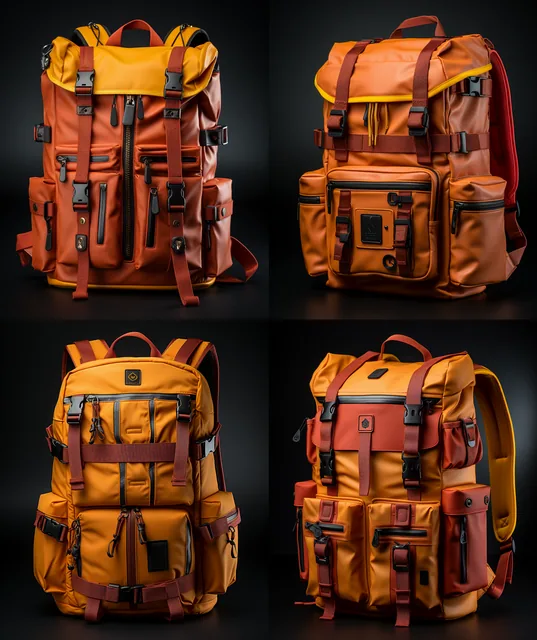
Fabric is the longest thread on most bag programmes and it runs entirely before sewing starts. A held stock fabric in a stock colour removes seven to nine days. A dyed-to-order shell adds five to eight, a functional finish on top adds another three to five, and a second dip round adds up to six. Nothing downstream can be planned until the mill gives an inbound date, which is why a late fabric booking costs more than the days it is late.
Ask a buyer what sets the date on a bag order and the answer is usually the sewing line. It is almost always the fabric. The cloth has to be booked, dyed if it is not held, finished if it needs one, and physically in the store before a single panel can be cut, and every one of those steps runs on somebody else calendar. This piece sets out how the fabric thread is measured and what each choice on it does to the delivery date.
Why Does Fabric Sit at the Front of the Critical Path?
Because everything else waits on it. Cutting cannot be sequenced, the line cannot be slotted and the inspection cannot be booked against a carton count that does not exist yet. A fabric booking that lands four days late does not move the schedule by four days; it moves it by four days plus whatever slot was lost while the line sat waiting, because the line was re-sequenced to something else in the meantime.
The second reason is that fabric is the only thread with a queue the buyer cannot see. A mill holds greige and finishes to order, and the finishing queue is set by whatever else is booked. A 600D polyester with a PU back-coating in a stock colour is a short call. The same cloth piece-dyed to a brand shade with a water-repellent finish on top goes behind every other order already in the dye house.
| Fabric choice | Days on the critical path | What the days are |
|---|---|---|
| Held stock fabric, stock colour | 3 to 5 | Booking, picking and inbound transport |
| Stock fabric, held colour, with a finish applied | 6 to 9 | Booking plus a place in the finishing queue |
| Greige held, piece-dyed to a brand shade | 10 to 15 | Dye-house queue plus dip rounds |
| Dyed to a brand shade plus a functional finish | 13 to 20 | Dye house, then the finishing queue |
| A named technical substrate with a mill minimum | 15 to 22 | Mill order quantity and the production slot behind it |
How Much Does a Dyed-to-Order Shade Add?
Five to eight days for the dyeing itself, and up to six more if the first dip is not accepted. The dyeing is a queue: the mill dyes in lots and a small lot goes behind the larger ones. The dip rounds are chemistry and human colour vision, and they cannot be shortened by spending money, because the constraint is the light box rather than the capacity.
The multi-substrate case is the one that surprises buyers. A shell that has to match webbing and binding is dyed in different places by different processes, and a shell that matches under the light box with webbing that does not is not a match. The only way to find that out is to look at the three together, which is why the shade gate examines a set rather than a swatch.
What Does a Functional Finish Cost in Days?
Three to five, applied after dyeing and in its own queue. A water-repellent finish, a PU back-coating, a fire-retardant treatment or an anti-microbial finish each add a pass through a finishing line, and a finishing line is booked in the same way the dye house is. Where a programme needs both a dye and a finish, the two queues are sequential rather than parallel.
There is a specification trap here that costs more days than the finish does. A finish applied to a fabric that was not specified for it behaves differently: a coating on a tightly woven cloth can crack, and a repellent on an already-coated cloth can sit on the surface rather than bonding. The correction is a substrate change, which puts the whole thread back to the start.
Why Does a Second Colourway Cost More Than Half a Run?
Because each colourway is its own dye lot, its own webbing and binding lot, and its own print or embroidery set-up. Two colourways of 250 are not equivalent to 500 of one: they are two dye lots with two set-ups, two chances to be off shade, and two inbound dates to wait for. This is the mechanical reason MOQ is stated per style and colourway rather than per order.
The schedule consequence is four to six days, and it is a consequence buyers rarely see coming because the quantity has not changed. Where a launch needs two colourways, the honest plan either runs them as two orders with two dates or accepts that both land at the long end of the window.
How Does the Thread Read on a Worked 40-Day Order?
Take a 500-piece insulated style with a dyed-to-order shell. Material releases on day 5. The mill confirms a twelve-day inbound, so the cloth is due in the store on day 17. Dips are submitted on day 10, the first is off by half a shade, the second is approved on day 16, and the dyeing runs against that approved lot. Cutting starts on day 19.
| Day | Fabric thread event | Effect on the rest of the run |
|---|---|---|
| Day 5 | Mill order placed and confirmed | The inbound date is fixed at day 17 |
| Day 10 | First dip submitted | The shade gate opens |
| Day 13 | First dip rejected, second ordered | Two days used and the dye house has not started |
| Day 16 | Second dip approved, dye-lot recorded | Dyeing can be released against a known recipe |
| Day 17 | Cloth in the store with a lot tag | Cutting is sequenced for day 19 |
| Day 19 | Cutting begins | The booked line slot holds |
Now change one decision: the buyer accepts a held stock shade on day 5 instead. Dips are not needed, dyeing is not needed, the cloth is in the store on day 9 and cutting starts on day 11. The whole run moves eight days earlier for one decision taken in the first week, and the only thing given up is the shade.
How Does Fabric Choice Interact With the Rest of the Build?
Three interactions matter. An insulated style needs a foam laminate, and the laminating step is a further queue behind the fabric itself. A welded style needs a film that is compatible with the shell, and a substitution at the mill therefore breaks the weld rather than just changing the hand. A structured style needs a substrate with the right stiffness, and a lighter cloth produces a bag that stands up differently from the approval sample.
The common thread is that a fabric substitution is never only a fabric substitution. It changes the weld, the drape, the stiffness and the thermal behaviour, and it does so after the approval sample was signed against the original. The control is a written change note and a new pre-production sample, and it is the single clause most worth having in a schedule where a mill might substitute.
There is a second interaction that only appears on reorder. A substrate that performed well on the first run is reordered by description rather than by lot, and the mill supplies the same reference from a different production batch. The two behave the same in most respects and differently in one — usually the coating weight or the shade — which is exactly why the lot number belongs on the mill confirmation and on the sealed sample record.
A worked example makes the interaction concrete. An insulated style specified with a welded liner and a foam laminate depends on the shell film being compatible with the weld. If the mill substitutes a substrate with a different coating, the weld does not hold and the failure is a leak rather than a cosmetic difference, discovered at the leak test rather than at goods-in. The substitution rule exists for exactly this case.
What Should the Mill Confirmation Say?
- Substrate
- Base cloth, denier, weave and coating, named
- Shade
- Reference, and the dye-lot number once assigned
- Finish
- Named, with the application standard where one applies
- Quantity
- Roll or metre count, including the cutting allowance
- Inbound date
- A date, not a window, on the mill letterhead
- Substitution rule
- Written notice before any change of substrate or finish
The quantity field deserves a line of its own, because it is where a small decision costs a large amount of time. Cloth is ordered with a cutting allowance, typically around three per cent on a 500-piece run, and an order placed at exactly the theoretical consumption leaves no margin for a cutting error or a damaged roll. The correction is a second mill order, which is a fresh place in the queue rather than a top-up.
Six fields, and the confirmation stops being a receipt and becomes a specification somebody else can be held to. The inbound date is the one that matters most, because it is the only date in the whole schedule written by a party other than the one promising you the delivery.
A word on testing, because it belongs on this thread rather than on the inspection one. A new substrate should be tested before it is booked, not after: seam strength to the construction, abrasion where the duty needs it, and colour fastness to the method the buyer market requires. Those tests take days and they sit inside the fabric thread, so a buyer who waits until the cloth is in the store has put the test after the decision it was meant to inform.
Can the Fabric Thread Be Shortened?
- Accept a held fabric in a held colour. Removes dyeing and the dip rounds, seven to fifteen days. Cost: the shade is the warehouse shade, and every later run has to match it.
- Choose a stock fabric with the finish already applied. Removes the finishing queue, three to five days. Cost: a narrower range of finishes.
- Approve the first dip if it is inside the band. Saves up to six days. Cost: none, provided a shade band was agreed before the dips were submitted.
- Air-freight the inbound leg. Shortens transport by three to five days. Cost: freight, and it does nothing for the dye-house or finishing queue.
- Book the mill before the sample is approved, at the buyer risk. Removes the release gap. Cost: if the specification changes, the fabric is wrong and the thread restarts.
The fifth lever is the one to be careful with, and it is offered more often than it should be. Booking material against an unapproved sample removes a gap and creates a risk: if the approval changes the substrate, the shade or the finish, the fabric in the store is the wrong fabric and the whole thread restarts. It is a reasonable gamble on a reorder and a bad one on a first run.
How Should Fabric Risk Be Written Into the Schedule?
As a named thread with its own row and its own contingency. The row carries the substrate, the shade, the finish, the inbound date and the substitution rule, and the contingency is the honest answer to what happens if the mill slips: usually nothing, because a missed dye-house slot means the next slot rather than overtime.
There is a second, quieter risk on the thread that belongs in the same clause. A mill that cannot supply the specified substrate will often offer the nearest one it can, which is a reasonable commercial reflex and a catastrophic one for a welded or laminated construction. Naming the substitution rule in the mill confirmation, rather than in the schedule alone, puts the obligation where the decision is actually made.
That is the uncomfortable part of the fabric thread and the reason it deserves its own row in the schedule rather than being folded into "material". Every other stage can be recovered by spending money. A dye-house queue cannot, which means the fabric decision is the one decision in the programme that should be made earliest and changed least.
Managing the fabric thread
- Fabric is the longest thread on most programmes and it sits entirely before sewing.
- A late fabric booking costs more than the delay, because the lost line slot goes with it.
- Dip rounds cannot be shortened with money; the constraint is the light box, not capacity.
- A second colourway is a second dye lot and a second set-up, not half a run.
- A fabric substitution is never only a fabric substitution. Require a written change note.
Get the fabric thread named in your schedule
Send the style, the substrate you have in mind and the date you need the goods on board. We will tell you which fabric choices shorten the thread and what each one costs. Sampling 6-10 working days, bulk 35-50 days, AQL 2.5, FOB Xiamen.
Frequently Asked Questions
How much does fabric choice affect a bag delivery date?
More than any other single decision. A held stock fabric and a dyed-to-order shell with a functional finish are nineteen days apart.
Why is fabric the longest thread on a bag programme?
Because everything waits on it: cutting, the line slot and the inspection booking all need a carton count that does not exist until the cloth is in the store.
How much does a dyed-to-order shade add?
Five to eight days for the dye house, plus up to six more if the first dip is not accepted. Dip rounds cannot be shortened by spending money.
Does a functional finish add time?
Three to five days, applied after dyeing in its own queue. Where a programme needs both a dye and a finish the two queues are sequential.
Why is a second colourway not just half a run?
Each colourway carries its own dye lot, its own webbing and binding lot and its own print set-up, so two colourways of 250 are two set-ups rather than one run of 500.
What is a mill order confirmation?
The document that names the substrate, the shade, the finish, the quantity and an inbound date on the mill letterhead. It is the one date in the schedule written by a third party.
Can fabric be booked before the sample is approved?
It can, and it removes a gap while creating a risk. If the approval changes the substrate, shade or finish, the fabric in the store is wrong and the thread restarts.
What is the substitution rule for?
A fabric substitution changes the weld, the drape, the stiffness and the thermal behaviour, so the rule requires written notice and a new pre-production sample before any change.
How do I shorten the fabric thread safely?
Accept a held fabric in a held colour, choose a stock fabric with the finish already applied, and approve the first dip if it sits inside an agreed shade band.
Why can a late fabric booking not be recovered with overtime?
Because a missed dye-house or finishing slot means the next slot. Overtime recovers the sewing block, not the mill queue.
What is the MOQ per colourway?
500 pcs per style and colourway, with 300 open to discussion on a repeat. The per-colourway basis is a mill and set-up constraint rather than a commercial one.
Should a new substrate be tested before it is booked?
Yes. Seam strength, abrasion and colour fastness take days and sit inside the fabric thread, so testing after the cloth arrives puts the test after the decision it was meant to inform.
Does air-freighting the fabric help?
It shortens the inbound transport leg by three to five days and does nothing for the dye house or the finishing queue.
What should I ask the mill to confirm?
Six fields: substrate, shade with the dye-lot number, finish, quantity including the cutting allowance, an inbound date, and the substitution rule.
People Also Ask
How long does fabric take to source for a bag order?
Three to five days for a held stock fabric and up to twenty-two for a named technical substrate with a mill minimum.
Why does fabric take so long in bag manufacturing?
Because mills hold greige and finish to order, so the dye house and the finishing line are queues the buyer cannot see or jump.
How much does custom dyeing add to a bag order?
Five to eight days for the dye house plus up to six for additional dip rounds, and neither can be shortened by spending money.
Can I use stock fabric to speed up my order?
Yes, and it is the largest single lever available. The cost is that the shade is the warehouse shade and later runs must match it.
Why does a second colourway add lead time?
Each colourway is its own dye lot with its own set-up and its own inbound date, so two of 250 is not the same as one of 500.
Sources and further reading
Every figure on this page is either our own programme data or attributed below. Open the originals before you write them into a specification.
- AATCC — evaluation procedures for colour and appearanceAmerican Association of Textile Chemists and Colorists
- ECHA — REACH restricted substances and obligationsEuropean Chemicals Agency
- ISO 9001 — quality management systemsInternational Organization for Standardization