Fabric Coatings: Which Type Does What?
Almost everything a bag does with water, stiffness and print behaviour comes from its coating rather than from its base cloth. This page sets out the main families, how each behaves, what each costs, and how to write a coating clause that survives discussion after delivery.
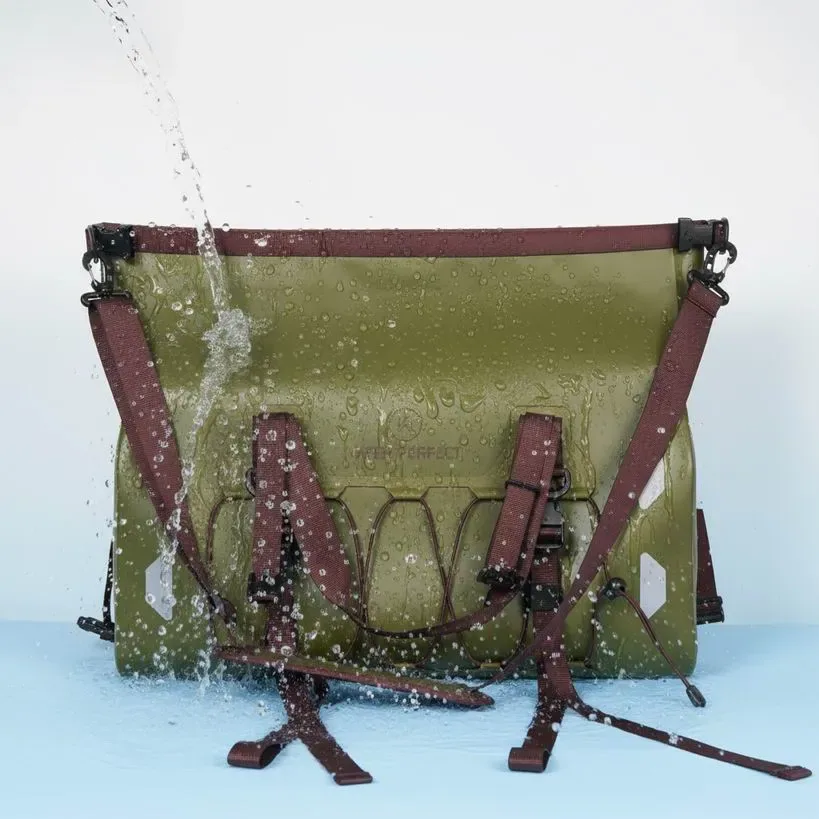
Three lines define a coating: which polymer, how much of it, and how it was applied. Those three decide water behaviour, stiffness, print hold-out, cold performance and the documentation burden, which is to say almost everything buyers care about.
What Is a Coating Actually Doing on a Bag Fabric?
It is doing four jobs at once, and every one of them can conflict with another. It blocks water passing through the weave. It stiffens the panel, which helps some designs and ruins others. It provides a surface that print can key into. And it changes how the cloth behaves when folded, particularly in the cold. Deciding the coating therefore means deciding all four rather than picking the first treated cloth offered.
| Coating family | What it does | Cost band | Where it earns its keep | When not to use it |
|---|---|---|---|---|
| Polyurethane for textiles | Flexible water-resistant face, good hand | Mid | General shells needing soft handle | Where a very low entry price governs |
| Vinyl systems | High water hold-out and easy welding | Low to mid | Liners and bodies needing easy joining | Where a chlorine-free request applies |
| Thermoplastic elastomer systems | Strong cold behaviour and clean welds | Upper mid | Cold routes and welded seams | Where breakeven does not allow the premium |
| Acrylic finishes | Surface treatment rather than a thick layer | Low | Stiffening and light abrasion resistance | Where water hold-out under pressure is needed |
| Wax-based finishes | Handling appearance that changes with use | Mid | Heritage styling where patina is wanted | Light colours and washable products |
| Fluorocarbon-free water treatments | Water beads and runs off the surface | Low | Shower resistance without added thickness | Where sustained pressure against the face occurs |
How Much Coating Do You Actually Need?
Mass per unit area is how coating is measured, and it tracks with cost, stiffness and water behaviour together. Light applications give a soft hand and modest resistance, while heavier ones give real water hold-out at the cost of handle and of flexibility at corners. Most programmes settle around the minimum that passes their stated water requirement, and that is usually the correct answer.
What Is Difference Between a Coating and a Lamination?
A coating is applied directly to the cloth as a liquid, paste or melt, so it penetrates the surface and moves with it. A lamination bonds a pre-made film onto the cloth, which gives a more uniform thickness and usually better weld consistency. Neither is better, but a specifier who confuses the two tends to write inconsistent requirements.
How Does It Change the Hand and the Making Up?
Added coating changes behaviour immediately at the machine. Stiffer cloth feeds less evenly, turns less cleanly at corners and adds bulk where several panels meet. Cutting usually gets easier because fraying reduces, and print hold-out usually improves. Ask the production team how the construction behaves on your pattern before committing, since their answer predicts scrap better than any datasheet.
| Application route | How it is applied | Resulting behaviour | Suits which duty |
|---|---|---|---|
| Direct coating | Applied on to the cloth and dried | Penetrates the surface, firm bond | General purpose water resistance |
| Transfer coating | Formed on release paper then bonded | Even thickness, flatter face | Panels needing print detail |
| Film lamination | Pre-made film bonded by heat and pressure | Uniform layer, consistent welding | Welded seams and structures |
| Foam bonding | Foam layer joined between two faces | Cushioning and loft | Padded panels and straps |
| Immersion treatment | Cloth passes through then dries | Thin even deposit | Light applications and breathability |
| Spray application | Applied to one face as a mist | Minimal added mass | Durable water-repellent finishes |
Six lines for a coating clause
- Polymer family named, with a statement about plasticiser content where relevant.
- Application route named: coated, laminated or treated, rather than simply treated.
- Coating mass or film thickness stated with tolerance.
- Water behaviour evidenced to either a spray rating or a hydrostatic head.
- Adhesion evidenced where delamination has appeared before on this style.
- Cold bend evidenced where the product ships into cold conditions.
How Is Water Behaviour Evidenced?
Two measurements cover the question and they answer different things. A spray rating shows whether water sheds from the surface, which is what customers notice first. A hydrostatic result shows how much pressure the construction resists before penetrating, which is what matters when a loaded bag is set into water. Choose the one that matches the failure you are protecting against, or specify both where both apply.
Spray behaviour and pressure resistance answer different questions. Buyers who ask for the wrong one end up holding a passing result for a test their product never needed.
What Damages a Coating Over Time?
Four mechanisms account for most coating failures. Creasing cracks the film where it was folded hard and repeatedly. Cleaning removes finishes faster than buyers expect. Heat during storage or transport softens some systems into blocking. And ultraviolet exposure attacks the polymer in others. Each has a low-cost written control, so name the ones your product will meet.
How Does Colour Interact With a Coating?
Coating changes apparent depth and gloss, so it changes how colour reads. It can also yellow slightly with age, which is visible on pale cloth and invisible on dark. Approve the colour on the coated material rather than before coating, and keep a retained coupon so gradual change can be seen rather than argued about.
- Name the polymer and the application route rather than writing treated alone.
- Specify coating mass rather than relying on a nominal figure.
- Evidence water behaviour using the method that matches your failure mode.
- Add an adhesion line wherever delamination has appeared before.
- Ask how the coating behaves at your coldest expected condition.
- Approve colour after coating rather than before it.
What Does Coating Add to Unit Cost?
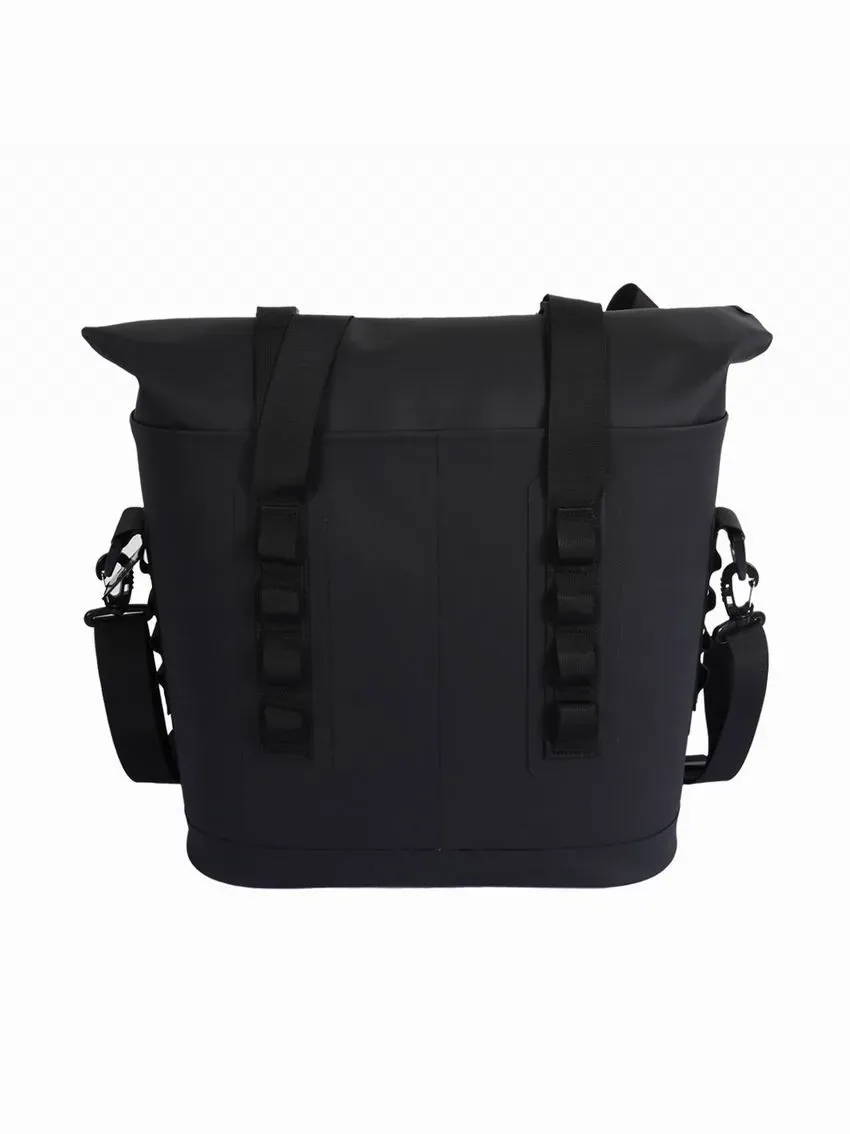
Usually less than its effect on performance suggests, because the incremental material is small relative to the whole bag. The bigger cost effects are indirect: handling becomes easier or harder, print scrap may fall or rise, and water claims may disappear. Model those second-order effects rather than judging coating purely on the material line, and always ask what the next mass step would cost before settling at the minimum.
How Do Adhesion Problems Show Up?
Delamination usually appears first along a crease, then spreads. It is caught early by an adhesion result and at far lower expense than discovering it on returns. Where a style has previously shown any lifting, add an adhesion line to the clause permanently rather than investigating it season by season.
| Failure mode | How it appears | Most economical detection | Written control |
|---|---|---|---|
| Delamination at creases | Layer lifts along a fold | Adhesion result after flexing | Adhesion minimum plus crease check |
| Finishing washed out | Water stops beading quickly | Spray rating after stated cycles | Requirement after washing, not only before |
| Blocking in store | Faces stick together | Interleaving trial before packing | Interleave and cool storage note |
| Cracking when cold | Fine lines at folds after cold storage | Low-temperature bend result | Temperature threshold stated |
| Print lifting | Ink detaches at the edges | Adhesion result after washing | Ink set named and tested |
| Yellowing of pale cloth | Pale goods shift warmer with age | Comparison against a dark-stored coupon | Grade requirement plus retained reference |
How Should Two Coating Offers Be Compared?
Ask both sellers for polymer, application route, mass, water evidence and any compliance declaration on identical lines. If either leaves a blank, the lower figure is usually an unspecified material rather than a better price. Differences then show up as four or five numbers and the comparison takes minutes.
What Belongs in the Purchase Clause?
A workable clause reads: coating polymer named, application route stated, mass per unit area within tolerance, water behaviour evidenced either by spray rating or hydrostatic result at a stated threshold, adhesion evidenced where relevant, cold bend evidenced for cold programmes, declaration naming grade and lot. Everything in that list is measurable by an independent laboratory.

How Do Coatings Change Breathability?
Continuous layers stop water moving in both directions, so they also stop moisture escaping. Where ventilation matters, either leave that area uncoated or use a vented panel around it, because a fully coated compartment will retain damp regardless of anything else the design does.
What Should Be Considered Before Choosing a Laminated Route?
Laminations give uniform thickness, which helps welding and gives predictable compliance thresholds, but they add a bonding step that can fail at creases. Weigh the handling advantages against the risk of delamination and against cost, then decide rather than defaulting to whichever your material contact happens to offer first.
| Decision area | Coated route | Laminated route | Better placed with |
|---|---|---|---|
| Thickness uniformity | Varies slightly across the width | Very uniform by construction | Uniform where welding is required |
| Handling at creases | Moves with the cloth well | Can lift at hard folds | Coated where sharp folding occurs |
| Predictable compliance | Depends on spread control | Easier to hold consistent | Either, once specified properly |
| Cost position | Usually lower | Usually higher | Depends on the duty |
| Print hold-out | Good when the face is flat | Excellent and very flat | Either, both are printable |
| Repairability | Hard to restore locally | Hard to restore locally | Neither repairs easily |
How Do Coatings Influence Compliance Requests?
Restricted-substance requests follow whichever polymers and additives were applied, so the coating often attracts more questions than the cloth beneath it. Ask for declarations naming the applied system, keep them per lot, and check any new colourway for its own document rather than assuming the original one covers it.
How Should Thickness Be Verified on Arrival?
Measure, do not assume. A coating can arrive lighter than specified and every other property follows it downwards, while nothing about the appearance changes. Sampling the shipped lot and comparing against the retained coupon catches most of these cases before thousands of units are cut.
- Leave breathing zones uncoated rather than relying on ventilation elsewhere.
- Compare coated and laminated routes against duty rather than against habit.
- Request declarations that name the applied system rather than the company.
- Measure coating on arrival rather than trusting nominal figures.
- Record both water figures so comparisons stay possible next season.
- Keep retained coupons from every approved coated lot.
Coating mass sitting slightly above the minimum usually costs very little and removes a large share of water complaints. Ask what the next step up costs before settling.
How Does Coating Age in Storage?
Applied layers continue to cure and sometimes stiffen after delivery, particularly where storage is warm. That ageing rarely matters in service but it can make an old reference behave differently from fresh goods, which is another reason to compare against retained coupons rather than against memory.
What Records Make Next Season Easier?
Record polymer, route, mass, both water figures and the retained reference together on one card. Next season then starts as a comparison rather than another investigation, and any change in either the supplier or the material becomes visible immediately rather than slowly.
What Should Be Asked About a New Grade?
Five questions cover almost everything: which polymer and application route, what mass, what spray and hydrostatic figures, whether adhesion evidence exists, and whether it behaves at your coldest condition. Two materials can share a name and answer those five very differently, which is exactly why asking them replaces most later arguments.
| Question | Good answer | Weak answer | Decision to take |
|---|---|---|---|
| Polymer and route | Named chemistry and application method | Described simply as treated | Ask again before quoting |
| Coating mass | Figure with tolerance | Described by feel or appearance | Measure it and write it in |
| Water behaviour | Two numeric results given | Described as water resistant | Require evidence to a method |
| Adhesion | Result available | Not mentioned | Add a line where style risk exists |
| Cold behaviour | Result after conditioning | Assumed acceptable | Require a bend result |
| Declaration scope | Names grade and lot | Names the company only | Require document tied to lots |
- Ask for both water figures rather than one descriptive claim.
- Request adhesion evidence wherever the style has lifted before.
- Check cold behaviour rather than assuming any polymer copes.
- Keep declarations tied to lots rather than to companies.
- Record both figures so next season compares on equal terms.
- Refresh retained coupons whenever the grade reference changes.
A coating offer that answers all five is usually a specification. One that answers two is usually a description, and descriptions do not survive shipping.
How Does Coating Choice Reach the Compliance File?
Whatever goes onto the cloth belongs in the compliance file, because most screening questions follow the applied system rather than the base material. Keeping that record updated whenever a grade changes is what prevents the familiar situation where goods arrive and documentation describes an earlier version of them.
- Update the compliance file whenever a coating grade reference changes.
- Ask for both water figures rather than accepting a descriptive water claim.
- Evidence adhesion wherever the style has previously lifted at creases.
- Keep breathing zones uncoated instead of relying on ventilation elsewhere.
- Measure applied mass on arrival rather than trusting nominal figures.
- Compare every delivered lot against a retained coupon from approval.
Polymer, route, mass, water behaviour and cold behaviour decide almost every coating outcome. Two materials sharing a name can answer those five very differently.
When two coats look identical and price differently, compare applied mass and the two water figures. Those three numbers explain almost every price difference in this category.
How Is It Verified on Arrival?
Draw at AQL 2.5 under ISO 2859-1 General Inspection Level II, compare against the retained coupon, then run whichever water evidence was specified. Coating substitution is one of the quietest changes in this trade, because both versions look the same and only behave differently after weeks of use.
Keep one retained coupon per approved lot, labelled with the polymer, the applied mass and the lot number it came from. That shelf of coupons is what turns an argument about substitution into a comparison that either party can repeat without anyone needing to remember anything.
Name the polymer and the mass
Tell us the failure you are protecting against and the coldest condition the bag will meet — we come back with the coating clause written out.
Frequently Asked Questions
What is the difference between coating and lamination?
Coating is applied directly to the cloth and penetrates its surface, while lamination bonds a pre-made film onto it. The second gives more uniform thickness and usually cleaner welds, which is worth a great deal on any seamed or stitched joint that has to hold water.
How thick should a coating be?
Whatever mass per unit area passes your stated water requirement. Heavier applications cost more and stiffen the handle without necessarily serving the product better.
Which water test should I ask for?
A spray rating answers surface shedding and a hydrostatic result answers resistance under pressure. Choose the one that matches how the product actually fails.
Does coating change the colour?
Yes. It changes apparent depth and gloss, and some systems shift pale goods warmer with age. Approve colour on the coated material.
Why did my water-repellent finish stop working?
Usually washing or abrasion removed it. Require the rating after stated cycles rather than only before any, so the requirement reflects service rather than the day of manufacture.
Can every print method go on top of a coating?
No. Some faces resist ink adhesion and some mark under press heat. Prove the route on a coupon at production temperature.
What causes delamination?
Poor adhesion between layers or flexing beyond what the construction tolerates. An adhesion result catches most cases early at low cost.
Do coated fabrics crack in the cold?
Some do. Add a low-temperature bend requirement where the route includes cold conditions rather than relying on the polymer name.
Does coating add much cost?
Material cost is modest; the larger effects are on handling, print scrap and water claims. Model the second-order effects rather than the material line alone.
How do I evidence that the right coating arrived?
Compare against a retained coupon, then evidence whichever water behaviour the order specified, sampled from the shipment rather than from sample stock.
People Also Ask
What is a fabric coating?
A polymer layer applied to cloth to stop water, stiffen the panel, improve print hold-out and change how it folds.
Which coating is best for bags?
Depends on what governs: soft handle favours polyurethane chemistry, cold routes favour elastomer systems, and welded seams favour laminated film.
Does coating make fabric waterproof?
It stops water through the face, but seams, closures and edges still need their own treatment before the whole article resists anything.
How long does a finish last?
Until washing, abrasion or heat removes it. Require evidence after stated cycles rather than only at manufacture.
Can coating be added later?
Not practically to a finished bag. Specify it on the cloth at the start, alongside the polymer and the mass.
Sources and further reading
Every figure on this page is either our own programme data or attributed below. Open the originals before you write them into a specification.
- ASTM D751 — Standard Test Methods for Coated FabricsASTM International
- AATCC 22 — Water Repellency: Spray TestAmerican Association of Textile Chemists and Colorists
- ISO 811 — Resistance to water penetration (hydrostatic pressure test)International Organization for Standardization