How to Handle Damaged Bag Shipments: Claim Process and Evidence
A damage claim is won or lost in the first hour at delivery: note the damage on the delivery document, photograph the container, the seal and the stow before anything is moved, and notify inside the period stated in the clauses. Everything after that is paperwork. MOQ 500 pcs per style.
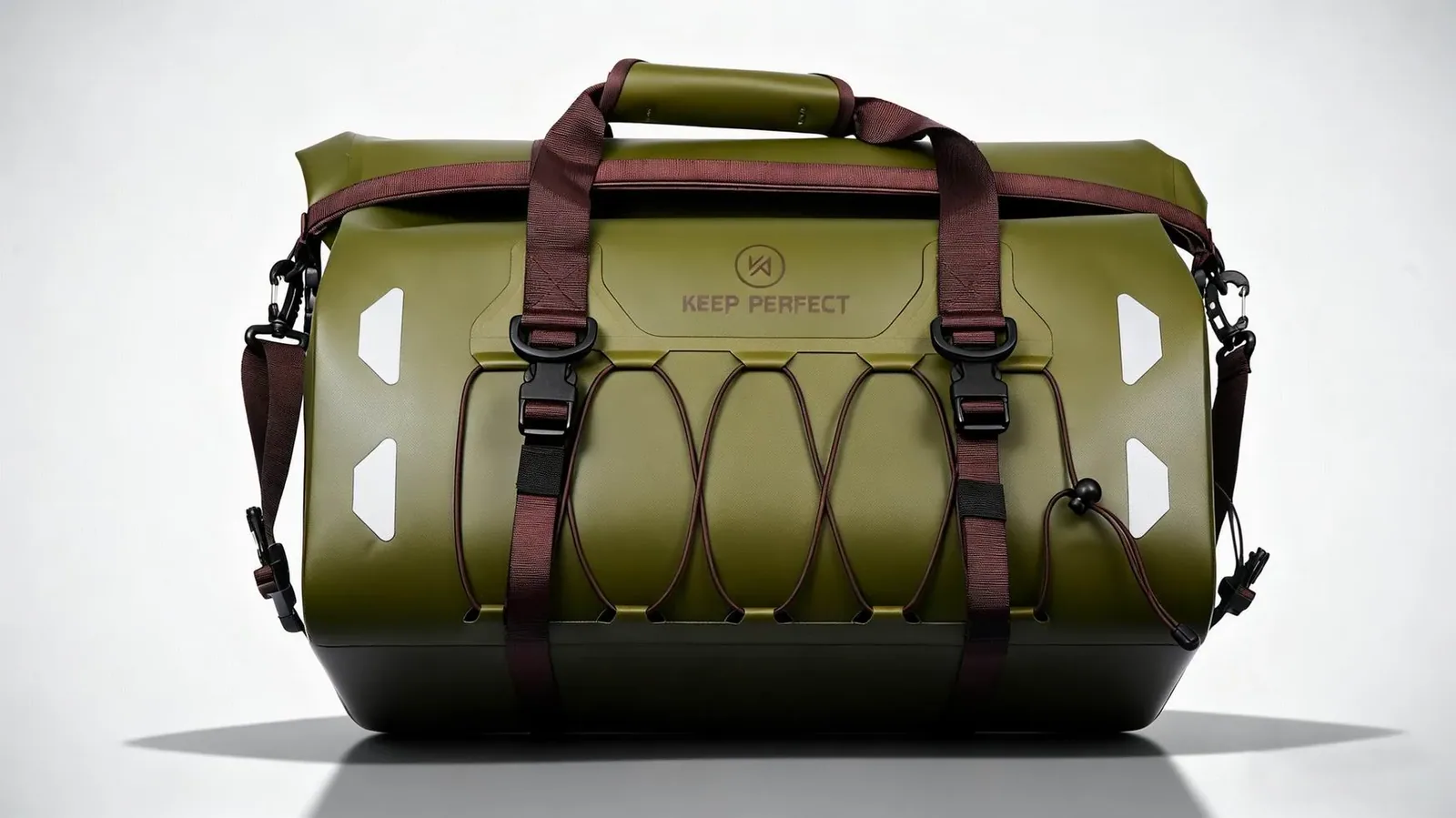
Note the damage on the delivery document at the time of delivery, photograph in sequence — container exterior, seal, interior before unloading, then each damaged carton before it is opened — then notify the insurer or the carrier inside the period stated in the clauses. Preserve the damaged goods until the survey, keep the packing specification and the inspection report, and quantify the claim from the commercial invoice rather than from an estimate.
What Counts as Damage in Transit?
Damage in transit is loss or damage occurring between the point the cover attaches and the point it terminates, from an insured or a carrier-liable cause. The definition has three parts and a claim fails if any one of them is missing: it happened in the insured period, it happened to the insured goods, and it came from a cause the policy or the carriage regime responds to.
There is a third argument and it is the one insurers make most: whether the goods were packed dry. Textile products packed at a humidity that is normal in a Fujian summer will generate condensation in a container arriving in a cold climate, and the resulting staining can be argued as inherent to the goods rather than as a transit event. The desiccant record and the drying step are the answer.
One more exclusion deserves its own mention because it is the one that decides most bag claims in practice: insufficient or unsuitable packing. The word unsuitable is doing the work — it does not mean the packing failed, it means the packing was not adequate for the journey. A carton that would have survived a domestic delivery is unsuitable for a consolidation with six handling points, and the specification is what says which journey it was specified for.
The parts that are argued about are the first and the third. Pre-existing damage — goods already crushed when they were packed — is not transit damage, which is why the inspection report matters. And a cause that is excluded — unsuitable packing, inherent vice, ordinary shortage — is not a cause the policy responds to, which is why the carton specification matters.
Who Is Liable and Under What Regime?
Two routes exist and they are not the same. The first is a claim against the carrier under the carriage regime, which is a liability regime with limits and exceptions rather than an insurance policy. The second is a claim against the insurer under the cargo policy, which responds to the clauses and is not limited in the same way.
A fourth route exists and is worth knowing because it is the one that applies when the loss happened before the goods were ever at the carriers risk: a claim against the seller under the sales contract. Where damage was present at loading, the buyer may have a remedy against the seller rather than against an insurer, and the inspection report at AQL 2.5 is what establishes which of the two it is.
In practice the buyer claims on the insurance and the insurer then pursues the carrier, because that is faster for the buyer and because the insurer is better equipped to run the recovery. That is also why the insurer will ask for the same evidence the carrier would want: the claim has to be one the insurer can pass on.
| Route | Against whom | Basis | Practical note |
|---|---|---|---|
| Cargo insurance | The insurer under the policy | The clauses and the exclusions | The usual route; the insurer then seeks recovery |
| Carrier liability | The carrier | The carriage regime and its limits | Limited by a package or weight limitation in most regimes |
| Consolidator liability | The consolidator | The terms of the consolidation | On a consolidated shipment the claim travels through two parties |
| Seller liability | The seller under the sales contract | Where risk had not yet passed | Only where the loss happened before the delivery point |
What Is the First Hour at Delivery?
Four actions, in order, and the order matters. First, note the damage on the delivery document in the drivers presence and get it countersigned if possible — a clean delivery note signed without remark is the single most damaging document in a claim. Second, photograph in sequence. Third, segregate the damaged cartons without opening them. Fourth, notify.
One further step belongs in the first hour and is frequently forgotten: check the seal number against the bill of lading and photograph it before it is broken. A seal that does not match is evidence of interference in transit and it changes the nature of the claim, but only if it is recorded before the container is opened.
The photographic sequence is worth stating precisely because it is the part people improvise. Container exterior showing the number. The seal, showing the number and whether it is intact. The container interior before any carton is moved, which is what proves the stow. Then each damaged carton before it is opened, from two angles. Then the contents. Six sets of images, in that order.
What Evidence Does a Claim Need?
Seven documents. The insurance policy or certificate. The commercial invoice. The packing list. The bill of lading with its on-board date. The delivery document with the damage noted on it. The photographs in sequence. And a survey report where the loss is significant.
There is a fourth document in the same category and it is the one nobody keeps: the stuffing record. A photograph of the container interior taken at stuffing, with the carton count and the seal number, is the strongest single piece of evidence a claim can have, because it shows the condition of the goods at the moment the carrier took responsibility.
Two more documents make the difference between a claim that settles and one that is argued: the carton specification and the inspection report. The first answers the unsuitable-packing exclusion. The second answers the pre-existing-damage question. Both are inexpensive to keep and both are usually produced late or not at all.
| Evidence | What it proves | When to collect it |
|---|---|---|
| Delivery note with damage noted | The condition on arrival, witnessed | At delivery, before the driver leaves |
| Photographs in sequence | The stow, the seal and the damage | Before anything is moved |
| Bill of lading with on-board date | When risk passed and cover attached | Held from shipment |
| Commercial invoice | The value of the goods | Held from shipment |
| Packing list | What was loaded, in carton order | Held from shipment |
| Carton specification | That the packing was suitable | Held from the specification stage |
| Inspection report at AQL 2.5 | The condition of the goods when they left | Held from before shipment |
| Survey report | An independent assessment of cause and extent | Within days, before disposal |
How Do You Notify and Within What Period?
Notify in writing, immediately, to the party named in the policy or to the carriers agent, and keep the notification. The period is stated in the clauses and it is short; it runs from discovery rather than from the date of the loss, and a claim notified after it has usually lost the argument before it starts.
Notify everybody, not just one party. The insurer, because the policy requires it. The carrier or its agent, because the carriage regime requires it and because the insurer will want the carrier on notice. And the seller or the forwarder, because they may hold evidence — the stuffing photographs, the seal record — that is not otherwise available.
What Is a Survey and When Is One Needed?
A survey is an independent inspection of the damaged goods to establish the cause and the extent. It is needed on any significant loss, on any loss where the cause is disputed, and on any loss where the insurer is likely to raise the packing or inherent-vice exclusions. It is not needed on a single damaged carton that can be photographed and written off.
The timing is the point. A survey carried out a week after delivery, on goods that have been moved, sorted and partly disposed of, is a survey of almost nothing. Appoint the surveyor before the goods are disturbed, and hold the damaged goods until it has been done — holding them costs little and losing them is fatal to the claim.
How Is the Claim Quantified?
From the commercial invoice, not from an estimate and not from the retail value. The insured value in the policy is the ceiling, and within that the claim is the value of the goods lost or damaged, plus the freight and insurance attributable to them, plus any salvage cost or disposal cost that was reasonably incurred.
One caution about salvage is worth adding: do not dispose of anything before the insurer has agreed, even damaged goods. A claim reduced by salvage is still a claim, but goods disposed of without agreement can be treated as abandonment of the whole, and that is a much worse position than a carton of crushed bags.
Then set the salvage question early. Damaged bags are rarely worthless — a carton with a crushed corner may contain units that are undamaged — and the insurer will ask what was salvaged and what it realised. Sorting the salvage and recording the result is part of the claim rather than a favour to the insurer, and doing it promptly usually increases the recovery.
Where part of a carton is damaged, quantify the units rather than the carton. Where the damage is cosmetic and the goods can be sold at a reduced price, the claim is the difference rather than the whole. And where the goods can be repaired or reworked, the claim is the cost of doing so, which is usually less than the value and is worth establishing before the insurer suggests it.
What Usually Goes Wrong in a Claim?
Five things, and all five are procedural. A clean delivery note signed without remark. Photographs taken after the goods were moved. Late notification. Disposal of the damaged goods before a survey. And a claim presented without the carton specification, which invites the packing exclusion.
A fifth failure belongs on the list because it is the one that produces a preventable second loss: putting the damaged goods back into stock. A carton with water staining that is signed in and shelved will produce a customer complaint weeks later, when no claim is possible and the evidence has gone. Segregate and hold, do not shelve.
The first of those is the one that ends most claims before they start, because it is a document the buyer signed that says the goods arrived in good order. Drivers are in a hurry, the delivery is large, and the note gets signed. Train whoever signs to walk the delivery first.
| Failure | How it happens | Consequence | Countermeasure |
|---|---|---|---|
| Clean delivery note | Signed without remark | No evidence of condition on arrival | Inspect the delivery before signing |
| Late photographs | Taken after sorting | The stow cannot be proved | Photograph before touching anything |
| Late notification | After the clause period | The claim is time-barred | Notify the same day as discovery |
| Early disposal | Goods thrown away before survey | No independent assessment | Hold the damaged goods until released |
| No carton specification | Nothing to answer the packing exclusion | The exclusion is arguable | Keep the specification with the shipment file |
| No inspection report | Nothing to prove pre-shipment condition | Pre-existing damage is arguable | Keep the AQL 2.5 report with the file |
How Do You Prevent the Next One?
Three measures, in order of effect. Improve the packing where the failure mode is crushing — board grade, dunnage, stack limit. Improve the stow where the failure mode is movement — load to a plan, fill the void, strap or air-bag. And improve the handling where the failure mode is pilferage or water — a full container rather than a consolidation, and a direct service rather than a transhipped one.
Then test it. The ISTA test procedures and ASTM D4169 give a way to test the packed carton against the distribution environment, and a single test carton shipped on the real route and opened at destination catches most of what a test programme would find at a fraction of the cost. The carton specification is set out in Bag packaging for export.
The standing procedure, in six steps
- Inspect the delivery before signing, and note any damage on the delivery note.
- Photograph in sequence: container, seal, stow, cartons, contents.
- Segregate the damaged cartons without opening them.
- Notify the insurer, the carrier and the seller in writing the same day.
- Appoint a surveyor on a significant loss and hold the goods until it is done.
- Quantify from the commercial invoice, and keep the specification and inspection report with the file.
What Should Be in the Standing Procedure?
One further habit makes the procedure survivable at scale: name a deputy for every role. The person who inspects deliveries goes on holiday, and a procedure that depends on one named individual produces a clean delivery note the week they are away.
Six steps on one page, at the delivery address, in the language the people signing actually work in. Who inspects and signs. Who photographs and in what sequence. Who notifies and by when. Who appoints the surveyor. Who holds the goods. And who assembles the file. Six names and six actions.
The reason to write it down rather than rely on common sense is that the first hour after a damaged delivery is not calm. Somebody has a truck waiting, a warehouse to clear and a customer expecting goods, and the natural response is to start sorting. A procedure on the wall is what stops that, and one rehearsed once a year is what makes it work when it is needed.
Freight bands and transit windows in this cluster are planning ranges drawn from quoted lots, not published tariff rates. They move with bunker cost, vessel rotation, port congestion and the week you book; ask for a live quotation against your sailing before you commit the order to a calendar.
Ask for the evidence set with the shipment
Tell us the shipment and we will confirm what cover applies, what the notification period is and what evidence the claim will need, before anything has to be claimed.
Frequently Asked Questions
What should I do first when a bag shipment arrives damaged?
Note the damage on the delivery note before signing, then photograph in sequence: container, seal, stow, cartons, contents. Do not sort anything until that is done.
How long do I have to notify a claim?
The period is stated in the clauses and it runs from discovery, not from the date of loss. It is short, so notify the same day.
Who do I claim against?
Usually the insurer under the cargo policy, which is faster and which then pursues the carrier. Notify the carrier as well, because the carriage regime requires it and the insurer will want it on notice.
Why does the carton specification matter to a claim?
Unsuitable packing is a common exclusion, so the specification is the evidence that the packing was suitable and the damage happened in transit.
Do I need a survey?
On any significant loss, or where the cause is disputed, yes. Appoint the surveyor before the goods are disturbed and hold the damaged goods until it is done.
What if I already signed a clean delivery note?
Notify immediately and gather what evidence remains — photographs, the cartons, the seal record — because the clean note is damaging but not necessarily fatal where the other evidence is strong.
How is the claim value calculated?
From the commercial invoice, within the insured value stated in the policy, plus the attributable freight and insurance and any reasonable salvage or disposal cost.
Can I dispose of the damaged goods straight away?
No. Hold them until the survey is done and the insurer releases them. Disposal before a survey removes the evidence.
Is condensation damage covered?
It depends on the clauses and on whether it can be argued as inherent to the goods. Keep the carton specification, the desiccant record and the inspection report.
What is the most common reason a claim fails?
A clean delivery note signed without remark, or photographs taken after the goods were moved. Both are free to prevent.
Does the delivery term affect who claims?
Yes. Under FOB and CIF the buyer bears the risk from loading and claims; under DDP the seller carries the risk to the door and the claim is theirs to manage.
How do I prevent the next one?
Improve the packing where the failure is crushing, the stow where it is movement, and the handling where it is pilferage or water. Then test the carton on the real route.
People Also Ask
What should I do first when a bag shipment arrives damaged?
Note damage on the delivery note before signing, photograph in sequence, and do not sort anything until that is done.
How long do I have to notify a claim?
The period stated in the clauses, running from discovery. Notify the same day.
Who do I claim against?
Usually the insurer, who then pursues the carrier. Notify the carrier as well.
Why does the carton specification matter?
Unsuitable packing is a common exclusion, so the specification is the evidence the packing was suitable.
Can I dispose of damaged goods straight away?
No. Hold them until the survey is done and the insurer releases them.
Sources and further reading
Every figure on this page is either our own programme data or attributed below. Open the originals before you write them into a specification.
- Institute Cargo Clauses (A, B, C) — marine cargo insurance clausesLloyd's Market Association
- ISTA test procedures — packaged-product performance testingInternational Safe Transit Association
- ISO 2859-1:1999 — Sampling procedures for inspection by attributesInternational Organization for Standardization