Custom Team Kit Bag Manufacturer: What Do Clubs Actually Order?
Clubs and colleges order far fewer silhouettes than a catalogue shows. A season usually comes down to one squad holdall, one coach or staff bag, and one small personalised item per player — bought as a colour-matched set, not as separate products. MOQ 500 pcs per style and colourway.
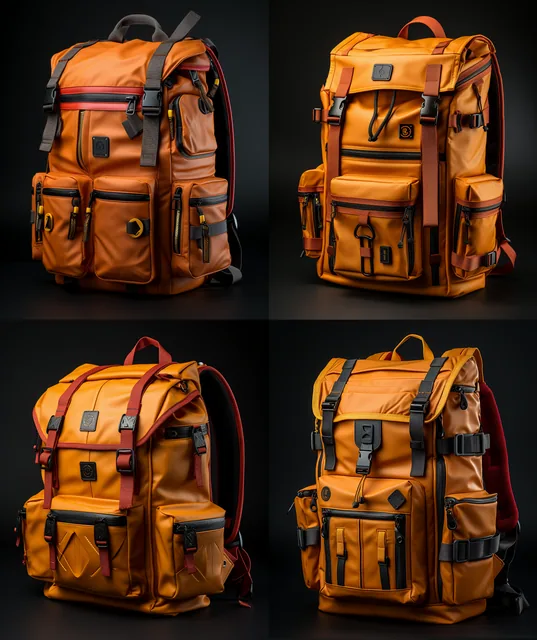
Order patterns repeat with almost no variation. A club wants one bag a player can carry on match day, one bag the staff can carry a clipboard and a first-aid roll in, and a colour that sits beside the jersey without arguing with it. Everything else is detail that can be settled after those three are fixed.
What Does a Club Actually Buy When It Commissions a Kit Bag?
Very few clubs buy a range. They buy a set. The set has a job: it has to move a squad and its equipment from a changing room to a pitch, survive a season of being thrown into a bus hold, and read as club property when it is photographed. That is a narrower requirement than a catalogue implies, and it is why most of the enquiry time is spent on three things — size, compartment layout and colour — rather than on thirty.
The buying entity is usually a club secretary, a college kit manager or an academy director, and the decision is usually made once a year against a fixed calendar. That matters more than it sounds: a programme that misses the first fixture of the season has failed even if the bag is perfect, so the order conversation starts with the date the kit has to be on the bus, and works backwards from there.
How Many Bags Does One Squad Order?
Headcount drives the number, and headcount is not the same as squad size. A squad of eighteen players needs player bags, staff bags, and a float for replacements, lost items and new joiners. Clubs that order the exact squad size almost always come back mid-season for a top-up that no production line can make quickly, because a repeat is not a new order — it is a dye-lot and colour-matching exercise all over again.
| Squad profile | Players | Staff and coaches | Replacement float | Typical first order |
|---|---|---|---|---|
| Single adult squad | 18 | 3 | 4 | 25 |
| Two adult squads | 36 | 5 | 8 | 49 |
| Academy, three age groups | 54 | 6 | 12 | 72 |
| College programme, six teams | 108 | 12 | 20 | 140 |
| Gym group, member retail | n/a | n/a | n/a | 500 |
Which Compartments Do Clubs Ask For and Which Ones Get Used?
Every club asks for more compartments than it uses. The ones that earn their keep are a ventilated or drainable pocket for wet or muddy kit, a compartment that separates boots from jerseys, an external ball or equipment holder, and a valuables pocket that takes a phone and a set of keys. The ones that get abandoned are the small internal organisers that only work when the bag is half empty.
| Compartment | Asked for by | Used after week four | Why it survives or dies |
|---|---|---|---|
| Wet or drainable pocket | Most clubs | Yes | Mud and rain are weekly, not occasional |
| Boot or shoe separation | Most clubs | Yes | A boot against a jersey is the complaint |
| External ball holder | Ball sports | Yes on match day | Frees both hands at the gate |
| Valuables pocket | All clubs | Yes | Phone and keys have nowhere else to go |
| Small internal organiser | Often | Rarely | Works only when the bag is half empty |
| Bottle sleeve, external | Sometimes | Sometimes | Depends on the sport and the climate |
Why Does Colour Matching Decide Whether the Order Repeats?
A club forgives a zip that sticks. It does not forgive a bag that is a different shade from the jersey, because the bag sits in the same photograph as the shirt and the discrepancy is visible to every member at once. This is the single most common reason a club changes supplier after one season, and it is entirely preventable — but only if colour is treated as a specification with a reference and a tolerance rather than as a swatch somebody liked.
The reference has to travel. A jersey is knitted or sublimated; a bag shell is woven and piece-dyed or yarn-dyed; the binding, the webbing, the zipper tape and the embroidery thread are four more substrates, each of which takes the same colour differently. Approving the shell alone guarantees a mismatch at the trim. The approval has to be a set of coupons, one per substrate, all measured against the same reference under the same light. The full method is set out in Reorder colour consistency.
What Does a Club Expect the Bag to Survive?
Club kit lives harder than retail luggage. It is dragged across gravel, stood in the rain on a touchline, over-packed on the way home and stored damp all week. The failure modes are predictable and they are all specification failures: a seam that opens at the strap root, a base that abrades through at the corner, a coating that cracks after a winter, and a print that lifts.
| Failure reported | Where it starts | What to specify | Evidence to ask for |
|---|---|---|---|
| Strap pulls away | Strap root, no reinforcement | Bar-tack or box stitch at the root | ASTM D6193 stitch type named on the tech pack |
| Base corner abrades | Corner, no binding or foot | Bound corner or moulded foot | ISO 12947 abrasion cycles on the base fabric |
| Colour shifts on the touchline | Sun exposure on the shell | Light fastness rating | AATCC 16 result at a stated exposure |
| Seam opens under load | Seam allowance too narrow | Seam allowance and stitch density | ISO 13934-1 tensile result on the seam |
| Lining tears at the pocket | Lining mass too low | Lining fabric named by mass | ISO 13937-1 tear result |
How Is the Order Split Across Colours, Sizes and Age Groups?
MOQ 500 pcs applies per style and colourway, and that is where a multi-team programme either works or stalls. Three age groups in three colourways is three separate minimums unless the colourway is shared. The way through it is to design one silhouette that carries the personalisation — the number, the name, the age-group tab — and to let colour do the differentiating only where a club insists on it.
- One silhouette, shared across age groups, with the group carried by a tab or a print.
- One base colourway for the shell, with the second colour carried by trim, not by fabric.
- Personalisation as a position and a method rather than as a separate product.
- Spare plain units held back for late joiners, ordered with the main lot.
- A written split by colourway submitted with the enquiry, not after the sample.
The split is worth arguing about before the tech pack is signed rather than after. Every colourway is its own minimum, so a programme that wants four colourways is committing to four times the exposure on the dye-house schedule and four sets of coupons to approve. Clubs that consolidate to one shell colourway and put the second colour on the trim get the same visual result from a single colour approval, and they get it faster. Where a club genuinely needs distinct colourways — home and away, or one per age group — the programme should be planned as a single production slot with all the colourways booked together, so the dye house is working to one schedule rather than four.
What Goes on the Bag Besides the Club Crest?
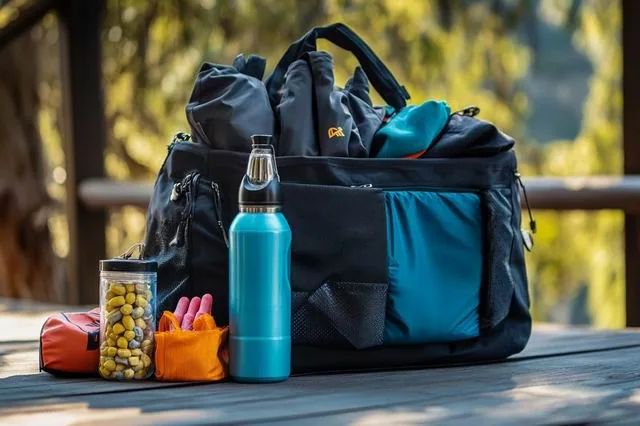
Personalisation is where club orders are won and where they go wrong. A crest is one thing; a crest plus a player number plus a surname plus a sponsor plus an age-group tab is five decisions that each need a method, a position, a size and a tolerance. The cost of the programme is rarely in the bag — it is in the number of times a name has to be set up, checked and re-checked before bulk.
What to fix before personalisation is quoted
- The crest as vector artwork with the colour references named, not as a raster image.
- The method for each element — embroidery, sublimation panel, screen print or woven label.
- The position of each element measured from a seam, not described in words.
- The number range and the surname list, supplied as a file rather than as prose.
- The spare rate — how many plain units are held for late joiners and replacements.
How Does a Club Plan a Kit Cycle Without Over-Ordering?
Clubs over-order because a top-up is painful and under-order because the first invoice hurts. Both are solved by planning the cycle rather than the order. A season is a known length, attrition is a known rate, and the next reorder is a known date — so the first order should be sized to reach that date with a float, not sized to the squad list.
The practical rule is to order the squad plus staff plus a float, then to set the reorder date at the point where the float would run out, and to work backwards by the production window to find the date the enquiry has to be raised. Clubs that do this stop paying for emergency air freight and stop running out of bags in October. The window itself is set out in Why 35 to 50 days.
How Does the Order Timeline Run from Enquiry to Delivery?
The timeline is a chain of milestones, and the only one a club controls is the first. Sampling runs 6-10 working days from a signed-off tech pack — longer, 12-15 working days, where the build is complex or where a new colour has to be matched. Bulk runs 35-50 days from written sample approval, inspected at AQL 2.5 under ISO 2859-1, shipped FOB Xiamen on T/T 30/70.
| Milestone | Window | Who holds it | What can slip it |
|---|---|---|---|
| Tech pack signed off | Club decision | Club | Artwork without colour references |
| Colour coupons approved | Within sampling | Club | Approving the shell only |
| Sample built | 6-10 working days | Production team | Late artwork or late trim |
| Sample approved in writing | Club decision | Club | Verbal approval, then a change |
| Bulk production | 35-50 days | Production team | Fabric or trim not booked early |
| Inspection at AQL 2.5 | Within bulk window | Inspection team | No agreed defect list |
| Shipment, FOB Xiamen | After release | Freight desk | Booking made after release |
What Should a Club Put in Writing Before It Sends an Enquiry?
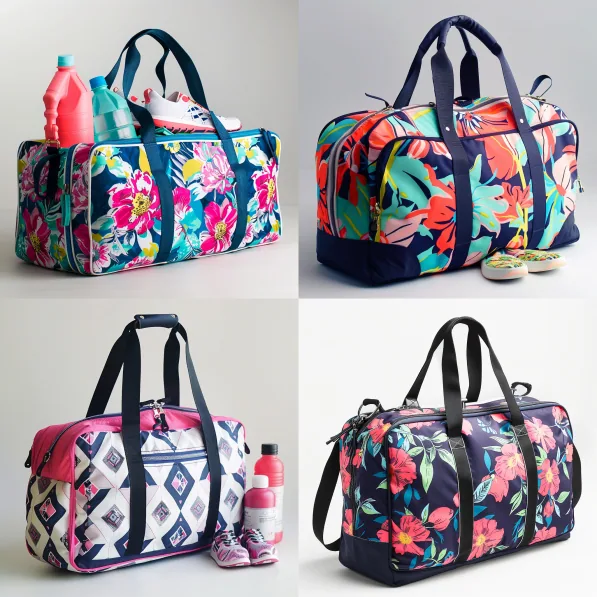
An enquiry that arrives complete is quoted in days; one that arrives as a paragraph is quoted in weeks, because every missing field turns into a round of questions. The fields below are the ones that actually change the number, and they are the same fields a sourcing and programme-management company needs in order to hold a delivery date.
- Silhouette, dimensions and the compartment layout, with a sketch if no tech pack exists.
- Colour references for shell, trim, webbing, zipper tape and thread.
- Quantity split by style and colourway, and the reorder expectation for the season.
- Personalisation: method, position, size and the number range.
- The date the kit has to be on the bus, not the date it would be nice to have it.
- The test or compliance evidence the market requires — REACH, CPSIA or Prop 65 as applicable.
How Should a Club Judge a Sample Before It Signs It Off?
A sample should be judged on the bag it will become, not on the bag in the photograph. That means filling it. A club that approves an empty bag has approved a shape, and a shape tells you almost nothing about whether a pair of boots, a wet training top and a water bottle will fit at the same time. Load the sample with the actual kit list, carry it, and then look at where it strains — because the place it strains on day one is the place it fails in March.
The second judgement is colour, and it has to happen in daylight. A sample approved under the fluorescent light of a committee room has been approved under the wrong condition, and the club will discover the difference on the first Saturday of the season. Put the sample next to a jersey, outdoors, before signing anything. Written approval is the milestone that starts the bulk clock, so it is worth spending an extra day on it rather than a week on a re-sampling round afterwards.
What Changes When a Club Switches Supplier Mid-Season?
Switching in the middle of a cycle is expensive in ways that never appear on an invoice. The new programme has to re-establish the colour, re-cut the pattern and re-sample, which puts the club back at the start of the calendar with a fixture list running. Most clubs that switch do so over a colour mismatch or a missed delivery, and both are preventable with the records described below rather than with a new supplier.
Where a switch genuinely is the right call, the handover pack matters more than the handover meeting. A club that can hand over the tech pack, the approved coupon set, the dye-lot record and the shade band has given the incoming programme everything it needs to land the same colour first time. A club that can hand over only a photograph and a complaint has guaranteed itself a second season of drift.
How Does a Club Keep a Kit Programme Stable When the Committee Changes?
Club committees turn over every year or two, and the kit programme usually lives in one person's inbox. When that person leaves, the next order starts from nothing: no reference, no coupon set, no lot record, and a colour that has to be re-approved from a photograph of last season's bag. The failure is administrative rather than technical, and it is the most common cause of a shade change between season one and season two.
The fix is a one-page programme record held by the club rather than by the supplier: the reference and its library, the substrate list, the approved coupon set, the dye-lot numbers, the shade band, the tech pack revision number and the reorder date. One page, updated once a year, and a new kit manager can run the programme from day one without a single guessing game. It also makes the reorder quotable in hours instead of weeks.
Send the six fields and get a calculated date
Tell us the silhouette, the colourway split, the personalisation and the date the kit has to be on the bus, and we come back with a costed programme and a delivery date you can calculate.
Frequently Asked Questions
What is the usual first order for one squad?
Squad plus staff plus a float. For an 18-player squad that is around 25 units, and the float is what avoids a mid-season top-up.
Why is the minimum set at 500 pcs?
MOQ 500 pcs per style and colourway is where a stable colour match and a stable line can be held. On a repeat, 300 pcs is open to discussion.
Can one silhouette serve several age groups?
Yes, and it is the most reliable way to keep a multi-team programme inside one minimum — carry the group on a tab or a print instead of on the colourway.
How long does sampling take?
6-10 working days from a signed-off tech pack, extending to 12-15 working days where the build is complex or a new colour has to be matched.
How long is bulk production?
35-50 days from written sample approval. The date is calculated, not promised.
What inspection standard applies?
AQL 2.5 under ISO 2859-1, General Inspection Level II, with the defect classification agreed before inspection rather than during it.
Which compartments should a club insist on?
A wet or drainable pocket, boot separation, an external ball holder and a valuables pocket. Small internal organisers are rarely used after the first month.
Why does the bag colour drift from the jersey?
Because the jersey and the bag are different substrates. Approve a coupon set — shell, binding, webbing, zipper tape and thread — against one reference under one light.
What payment terms apply?
T/T 30/70, FOB Xiamen. CIF and DDP are available where the club wants a delivered figure.
Can a club order a spare plain units?
Yes, and it should. Plain units held back cover late joiners and lost kit without a fresh colour approval.
What artwork format is needed for a crest?
Vector artwork with the colour references named. A raster file forces a redraw and adds time to sampling.
How is a reorder kept identical?
By holding the reference coupon, the dye-lot record and the approved shade band, and by ordering from the same lot wherever the quantity allows.
People Also Ask
What does a club buy when it orders team bags?
A set: one player silhouette, one staff silhouette and one shared colourway.
How many bags does a squad need?
Players plus staff plus a replacement float, sized to reach the next reorder date.
What is the minimum order for custom team bags?
MOQ 500 pcs per style and colourway, with 300 pcs open to discussion on a repeat.
Why do club bags fail?
At the strap root, the base corner and the colour match — all three are specification issues.
How far ahead should a club order kit?
Backwards from the first fixture: sampling 6-10 working days, then bulk 35-50 days.
Sources and further reading
Every figure on this page is either our own programme data or attributed below. Open the originals before you write them into a specification.
- ASTM D6193 — Standard Practice for Stitches and SeamsASTM International
- AATCC 16 — Colorfastness to LightAmerican Association of Textile Chemists and Colorists
- ISO 13934-1 — Tensile properties of fabrics, strip methodInternational Organization for Standardization