Custom Swim Team Bags: Mesh Drainage and Wet Pockets
A swim bag is the only bag in this cluster whose entire contents arrive wet. There is no dry zone to protect — there is a volume that has to drain, vent and dry before the next session, and a small dry pocket for the things that must stay dry.
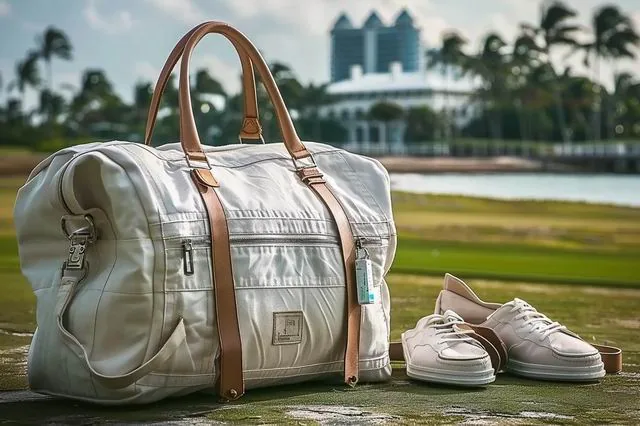
A swim bag is a drainage problem with a small dry pocket attached. Specify the mesh area and where it sits, specify a drain at the lowest point, and keep one sealed pocket for a phone and a set of keys. Everything else in the bag will be wet by design.
Why Is a Swim Bag a Different Design Problem?
Every other bag in this cluster protects dry kit from a damp item. A swim bag has no dry kit. A costume, a towel, goggles, a cap and often a pair of sandals all arrive wet, and the bag has to move that water out rather than keep it in.
That inverts the usual specification. The main volume should be the most permeable thing on the bag rather than the most protected, and the one protected pocket is the exception rather than the rule. Clubs that buy a general kit bag for a swim programme get a bag that holds water and smells within a fortnight.
| Item | Condition on arrival | Where it goes | Implication |
|---|---|---|---|
| Costume | Wet | Main volume | Must drain and vent |
| Towel | Wet | Main volume | The bulk of the water load |
| Goggles | Wet, scratchable | A soft-lined pocket | Separated from anything hard |
| Cap | Wet | Main volume | Small, easy to lose — a pocket helps |
| Sandals | Wet, dirty | An external or drained pocket | Separated from the costume |
| Phone and keys | Dry | A sealed valuables pocket | The only dry zone on the bag |
What Is the Difference Between Drainage and Ventilation Here?
Drainage removes liquid water and it works by gravity, so it needs an opening at the lowest point of the bag as it is normally carried. Ventilation removes water vapour and it works by air movement, so it needs area rather than a single hole. A swim bag needs both, and they are two separate lines on the tech pack.
The reason to insist on both is the timetable. A drained bag stops dripping within minutes; a ventilated bag is dry by the next session. A bag that drains but does not ventilate will still be damp on Wednesday, and a damp bag that is closed for two days is a smell problem rather than a design problem.
How Much Mesh Area Does a Swim Bag Need?
Mesh is the practical way to get both, and the useful convention is to express it as a proportion of the bag surface rather than as a panel count. A workable figure for a swim bag is mesh over at least a quarter of the total surface, distributed rather than concentrated, with the remainder in a coated cloth that can be wiped.
| Construction | Drains | Vents | Holds shape | Best for |
|---|---|---|---|---|
| Full mesh body | Yes | Yes | Poorly | A poolside sack, not a team bag |
| Mesh panels on two faces | Yes | Yes | Well | The standard swim team bag |
| Mesh panel plus a coated base | Yes | Yes | Well | Any bag set down on a wet deck |
| Coated body, mesh lid panel | Partly | Weakly | Very well | Not adequate on its own |
| Coated body, no mesh | No | No | Very well | Nothing in this category |
Where Should the Dry Pocket Sit?
At the top, sealed, and lined with a coated cloth. A phone and a set of keys are the only things in a swim bag that must stay dry, and they are small, so the pocket does not need to be large. It needs to be genuinely sealed rather than covered.
The failure mode is a pocket that is water-resistant on the outside and open at the seam. A sealed pocket needs a coated lining with the seams sealed as well, and that is a construction note rather than a material one. Clubs that specify "a dry pocket" without saying sealed get a pocket with a wet phone in it.
How Does Chlorine Affect the Specification?
Chlorine and chloramine are harder on colour and on elastane than fresh water is, and a swim bag sees them every session. That changes two things: the colourfastness requirement and the trim specification. A colour that survives laundering may not survive chlorinated water, and the standard result to ask for is a laundering grade alongside the light fastness grade.
- Ask for a laundering colourfastness result, not only a light fastness one.
- Name the chlorine exposure on the tech pack so the dye class is chosen for it.
- Specify hardware that resists corrosion rather than hardware that is merely plated.
- Avoid elastane trims that will relax under repeated chlorinated exposure.
- Ask for a rubbing result where the crest sits against a light shell.
What Hardware Survives a Pool Environment?
Pool environments corrode. Chlorinated water, humidity and a wet deck between them will attack a plated steel part within a season and will mark the cloth around it. The specification answer is a moulded polymer part for anything that does not carry load, and a stainless or a well-plated part for anything that does.
| Hardware | Corrosion behaviour | Use on a swim bag | Watch for |
|---|---|---|---|
| Moulded acetal or nylon | Immune | Buckles, adjusters, feet | Small parts under load |
| Stainless steel | Very good | Rings and hooks | Unit cost |
| Zinc alloy, plated | Poor in a pool environment | Avoid on the exterior | Plating failure and marking |
| Coated steel | Moderate | Interior use only | Once the coating chips, it rusts |
| Plastic zip with a moulded slider | Immune | The main closure | Choose the gauge properly |
How Does Colour Hold on a Swim Bag?
Swim clubs tend to run bright, saturated colours, and those are the ones that move most under light and under chlorinated exposure. Two results matter: light fastness to AATCC 16 at a stated exposure, and laundering fastness for the chlorinated cycle.
The third consideration is the mesh. A mesh panel and a coated panel in the same colourway are two substrates and they will not read identically, which is acceptable on a swim bag in a way that it is not on a formal club bag — but it should still be approved as a coupon set so the difference is a decision rather than a surprise. The method is set out in Reorder colour consistency.
What Should the Tech Pack Say?
Six fields, and a swim bag specification is complete. The two most often left out are the mesh proportion and whether the dry pocket is sealed at the seams.
Tech pack fields for a swim team bag
- Mesh: proportion of surface, and which faces it sits on.
- Drain: position at the lowest point as the bag is normally carried.
- Dry pocket: dimensions, lining, and whether the seams are sealed.
- Base: coated and wipeable, because it is set down on a wet deck.
- Hardware: corrosion-appropriate material, named rather than implied.
- Colour references for shell, mesh, binding, tape and thread, with chlorine exposure noted.
How Is the Sample Judged?
With water in it. Fill the main volume with a wet towel, hang the bag as it would normally be carried, and check two things: that water leaves through the drain rather than pooling in the base, and that the dry pocket is still dry after an hour.
The second test is a two-day one. Leave the wet towel in, close the bag, and open it after forty-eight hours. If it smells, the ventilation is not working, and no amount of mesh on the lid will fix a bag that has no air path across the load.
How Does a Swim Club Handle Goggles and Small Items?
Goggles are the item that gets damaged and the item that gets lost. They scratch against anything hard, the strap tangles, and they end up at the bottom of a wet volume where nobody can find them. A small soft-lined pocket at the top of the bag solves all three and it costs almost nothing.
The cap has the same problem in miniature: it is small, it is wet and it disappears. A small mesh pocket inside the main volume keeps it findable, and because it is mesh it still drains. These two pockets are the difference between a bag a swimmer uses and a bag a swimmer tips out onto the poolside.
How Does the Bag Carry to and From the Pool?
A wet swim bag is heavier than it looks and it is carried on one shoulder through a changing room with a wet floor. The strap therefore carries a surprising load and the padding matters more than on a dry bag, because a wet strap on a bare shoulder is uncomfortable in a way a dry one is not.
The second point is the handle position. A bag carried by a top handle drips from its lowest point onto the floor behind the carrier; a bag carried by a shoulder strap drips against the carrier's leg. Clubs that care about a wet changing-room floor specify a drained base and accept that the bag will be carried by the handle.
How Does the Season Calendar Work for Swim?
Swim programmes are the least seasonal in this cluster — a club swims year-round and the busiest ordering periods are around a new intake and around a championship meet. That gives a swim club more freedom in the production calendar than a winter sport has.
Sampling runs 6-10 working days from a signed-off tech pack, extending to 12-15 working days where a mesh construction or a bright new club colour is involved. Bulk runs 35-50 days from written sample approval, inspected at AQL 2.5 under ISO 2859-1 and shipped FOB Xiamen on T/T 30/70. The calendar is set out in Why 35 to 50 days.
What Does the Inspection Criteria Need to Include?
Six checks: mesh proportion and position, drain presence and position, dry pocket seam sealing, hardware material, colour against the approved coupon set, and crest position measured from a seam. Classified as major defects, they are enforceable at the Ac/Re decision.
The seam-sealing check is the one that needs care, because it is not visible without testing. A club can specify a water test on a sample from the inspection pull — fill the pocket, leave it, and check. It takes ten minutes and it is the only way to know. The sampling arithmetic is set out in AQL 1.5 versus 2.5.
What Does a Swim Programme Cost to Run?
The four usual levers apply — quantity, colourway count, decoration count and silhouette count — and swim has one extra: mesh is a material cost that scales with area. A bag with mesh over a third of its surface costs more in material than one with a single panel, and the difference is worth knowing before the drawing is finalised.
The saving available is the reorder. Holding the reference, the coupon set, the dye-lot record and the shade band makes the next intake a comparison rather than a re-development, and it is what makes 300 pcs available on a repeat against the standard MOQ 500 pcs.
What Goes Into the Enquiry?
Six fields, and a swim enquiry is complete. The chlorine exposure is the one clubs forget, and it changes both the colour and the hardware specification.
- What arrives wet, and how wet — a damp costume is a different load from a soaked towel.
- Mesh proportion and which faces it should sit on.
- Whether the dry pocket has to be genuinely sealed, and what goes in it.
- Chlorine exposure: yes or no, and how many sessions a week.
- Colour references for shell, mesh, binding, tape and thread.
- Quantity split and the date the kit is needed.
What Fails First on a Swim Bag?
The hardware, the mesh seam and the dry pocket. The hardware corrodes and marks the cloth around it; the mesh seam takes the load of a wet towel against a woven panel and it is the join that opens; the dry pocket leaks at the seam because it was covered rather than sealed.
All three are one clause each: a corrosion-appropriate hardware material, a bound mesh seam with a named stitch to ASTM D6193, and a sealed-seam construction note on the dry pocket. None of them is expensive and all three decide whether the bag survives a season of daily use.
How Is the Programme Kept Stable Across Seasons?
With the four artefacts: the reference, the coupon set, the dye-lot record and the shade band. Swim clubs have an extra reason to hold them, because bright saturated colours drift more visibly than navy or black do, and a reorder in a bright club colour without a reference is the most visible kind of mismatch there is.
Where the artefacts exist the reorder is a comparison. Where they do not, the club re-develops, and the re-development lands in the same chlorinated environment that produced the original fade.
Should a Swim Club Use the Same Bag as a Land-Training Kit?
Usually not, and the reason is the volume. Land-training kit is dry and bulky — trainers, a hoodie, a water bottle — while swim kit is wet and compact. One bag asked to do both ends up either too mesh-heavy for the dry kit or too sealed for the wet kit.
Where a club insists on one bag, the compromise is a moderate mesh proportion with a drained wet zone at one end and a genuinely dry zone at the other. It works, it is a compromise in both directions, and it is worth going into with eyes open rather than discovering the compromise in November.
What Does the Club Do About Drying Between Sessions?
The same answer as for hockey, and it is worth repeating: no bag dries kit that is closed for two days. A drying rail, a ventilated cupboard or a hook in a room with air movement does more for a swim programme than any mesh specification, because air movement across an open bag beats any construction.
The bag's job is to make drying possible rather than to do the drying. A bag that drains and vents, opened and hung after every session, dries. The same bag closed and left in a locker does not, and no specification change fixes that.
Specify the mesh area and the sealed pocket
Tell us what arrives wet, how much mesh you need and what has to stay dry, and we come back with a specified bag and a delivery date you can calculate.
Frequently Asked Questions
Why does a swim bag need mesh?
Because the whole contents arrive wet. The main volume needs to drain and vent rather than contain.
How much mesh area does a swim bag need?
A workable convention is mesh over at least a quarter of the surface, distributed across faces rather than concentrated in one panel.
What is the difference between drainage and ventilation?
Drainage removes liquid water by gravity through an opening at the lowest point. Ventilation removes vapour by air movement and needs area.
Should the dry pocket be sealed?
Yes, at the seams. A pocket that is water-resistant on the outside and open at the seam puts a wet phone inside a dry pocket.
How does chlorine change the specification?
It changes the colourfastness requirement and the hardware choice. Ask for a laundering result alongside the light fastness grade, and avoid plated exterior hardware.
What hardware survives a pool environment?
Moulded polymer for anything that does not carry load, and stainless for anything that does. Plated parts will corrode and mark the cloth.
What is the minimum order?
MOQ 500 pcs per style and colourway, with 300 pcs open to discussion on a repeat.
How long does sampling take?
6-10 working days from a signed-off tech pack, extending to 12-15 working days where a mesh construction or a bright new colour is involved.
How long is bulk production?
35-50 days from written sample approval, inspected at AQL 2.5 under ISO 2859-1.
How is the sample tested?
Hang it as it would be carried with a wet towel in, check where the water goes, and check the dry pocket after an hour.
What fails first on a swim bag?
The hardware, then the mesh seam, then the dry pocket seam.
Should one bag serve swim and land training?
Usually not. Wet and compact is a different volume from dry and bulky.
People Also Ask
Why does a swim bag need mesh?
The whole contents arrive wet, so the bag has to drain and vent rather than contain.
What is the difference between draining and venting?
Draining removes liquid by gravity; venting removes vapour and needs area.
How much mesh does a swim bag need?
About a quarter of the surface, distributed across faces.
What hardware survives a pool environment?
Moulded polymer or stainless. Plated parts corrode and mark the cloth.
How do you test a swim bag sample?
Hang it as carried with a wet towel in and see where the water goes.
Sources and further reading
Every figure on this page is either our own programme data or attributed below. Open the originals before you write them into a specification.
- World Aquatics — competition rules and equipment guidanceWorld Aquatics
- ISO 811 — Resistance to water penetration (hydrostatic pressure test)International Organization for Standardization
- AATCC 61 — Colorfastness to Laundering: AcceleratedAmerican Association of Textile Chemists and Colorists