How Much Padding Density Does a Lens Pouch Need?
A pouch protects the barrel and the mount, not the glass, so the base and the lining matter more than the wall. Size it from the lens with the hood reversed, specify the density as well as the thickness, and cover the closure.
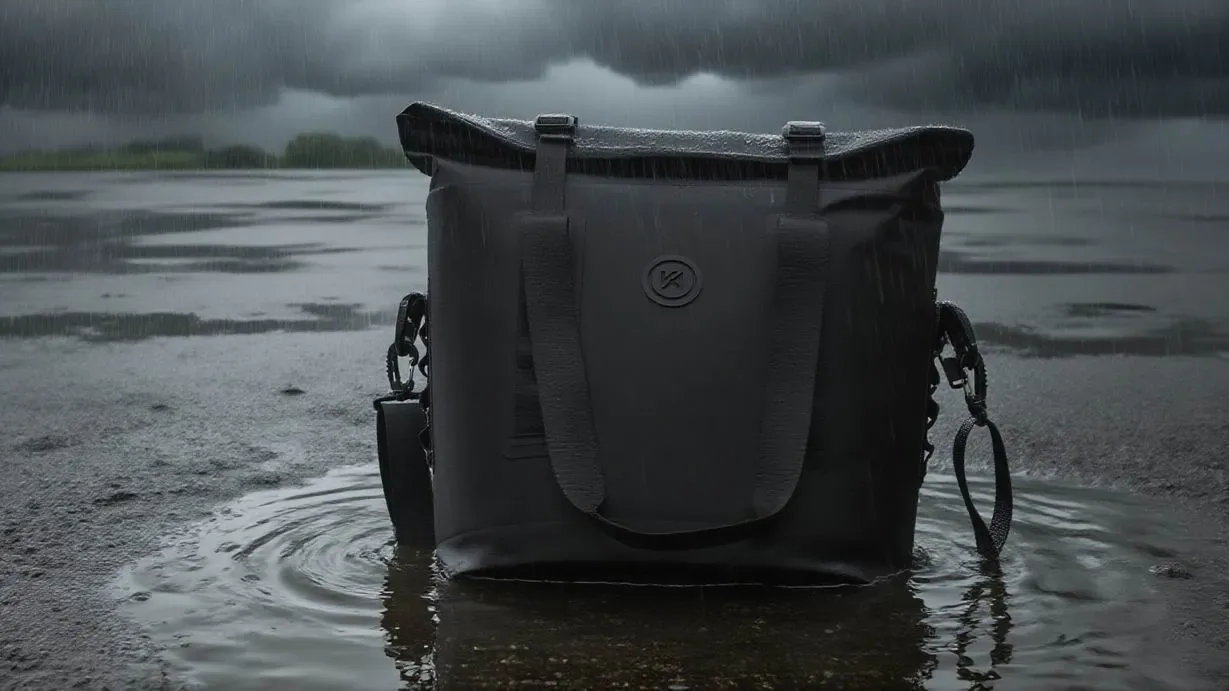
A lens pouch is specified by diameter and length, by padding density rather than thickness alone, and by a closure that keeps dust out without pressing on the barrel. Eight millimetres of closed-cell foam at about 40 kilograms per cubic metre over a soft brushed lining is the working build for a mid-size zoom; a 70-200 mm needs 10 to 12 mm and a cradle that stops the barrel rotating. The closure should be a covered zipper or a hook-and-loop flap, not a bare drawstring.
A lens pouch does a narrower job than a camera bag and is specified differently. It holds one item of known diameter and length, it is carried loose in a larger bag or on a belt, and it is opened many times a day. Those three facts decide everything: the padding can be thinner because the pouch is usually inside another bag, the shape should be cylindrical rather than rectangular because the item is, and the closure has to work one-handed.
The failure modes are also specific to the product. A pouch that is too loose lets the lens rotate and the mount takes the wear; a pouch with a hard lining scratches the barrel; a pouch with a bare drawstring lets dust into the mount, which is the failure that costs the most and is noticed last. All three are specification failures rather than workmanship failures.
What Does a Lens Pouch Have to Protect?
Three things, and the glass is the least of them. The barrel finish is the first: a lens barrel is painted or anodised and a pouch with a hard or a dirty lining marks it, which shows as a resale complaint rather than a functional one. The mount is the second and the most expensive, because a mount takes the load when a lens is set down on its rear and a bayonet is a thin ring of machined metal. The glass is third and is protected by the front cap rather than by the pouch.
That ordering changes the specification. Padding on the base of the pouch, which is where the mount sits, matters more than padding around the barrel, and a pouch with a reinforced base and a thinner wall is better than the reverse. It also means the lining is a specification item rather than a trim item, because the lining is what touches the finish.
How Is a Lens Pouch Sized?
A pouch is sized on diameter and length, and the convention is the nominal diameter and length of the lens at its widest, plus a small allowance. For a 24-70 mm zoom at about 88 mm long and 83 mm in diameter, a pouch interior of 90 mm in diameter and 105 mm deep gives room for the hood reversed and for a finger to reach the lens. For a 70-200 mm at about 200 mm long and 89 mm in diameter, the interior is 92 by 215 mm.
The allowance is where programmes go wrong. Too little and the hood will not go on reversed, which is how most users carry a lens in a pouch; too much and the lens rotates and the mount rubs the base. The working rule is 3 to 5 mm on the diameter and 15 to 20 mm on the length, and the length allowance exists to take the hood, not to take up slack.
| Lens | Barrel diameter x length, mm | Pouch interior, mm | Padding | Note |
|---|---|---|---|---|
| 50 mm prime | About 70 x 65 | 74 x 85 | 6 to 8 mm | Small pouch, often a drawstring |
| 24-70 mm f/2.8 zoom | About 83 x 88 | 88 x 105 | 8 mm | The hood reversed sets the length |
| 70-200 mm f/2.8 zoom | About 89 x 200 | 94 x 215 | 10 to 12 mm | Needs a cradle and a reinforced base |
| 100-400 mm zoom | About 95 x 195 | 100 x 210 | 10 to 12 mm | The heaviest common pouch item |
| 2x converter | About 70 x 55 | 74 x 70 | 6 mm | Short and wide; a cradle is not needed |
What Padding Density Does a Lens Pouch Need?
Density rather than thickness is the specification that gets missed. A pouch with 10 mm of foam at 20 kilograms per cubic metre feels soft and protective in the hand and bottoms out completely under a 1.4 kg lens, so the barrel rests on the compressed foam with nothing between it and the ground. The same pouch at 40 to 60 kilograms per cubic metre holds the lens off the base and still absorbs a knock.
The working band for a pouch is 33 to 50 kilograms per cubic metre for a mid-size zoom and 50 to 70 for heavy glass, with 8 to 10 mm of thickness for the first and 10 to 12 for the second. Both numbers belong in the specification with a tolerance, and both are measured on the flexible cellular materials methods in the ASTM D3574 family, which is also where compression force deflection comes from.
Does the Padding Need a Stiffener or a Cradle?
A cylindrical pouch gets most of its shape from its geometry, so a stiffener is usually unnecessary on the wall. The base is different: a pouch that is set down loaded puts the whole mass on a circular seam at the base, and a base without a stiffener deforms and lets the mount touch the ground. A 1.5 to 2 mm board in the base, bonded to the foam, is the smallest change that fixes the most expensive failure mode in the product.
A cradle is needed for the long lenses and not for the short ones. A 70-200 mm in a cylindrical pouch will rotate about its axis under a knock, and the rotation carries the mount against the base. A short internal strap, or a shaped foam insert that holds the barrel off the base by its shoulder rather than by its mount, removes the rotation and costs one component.
Which Closure Works on a Lens Pouch?
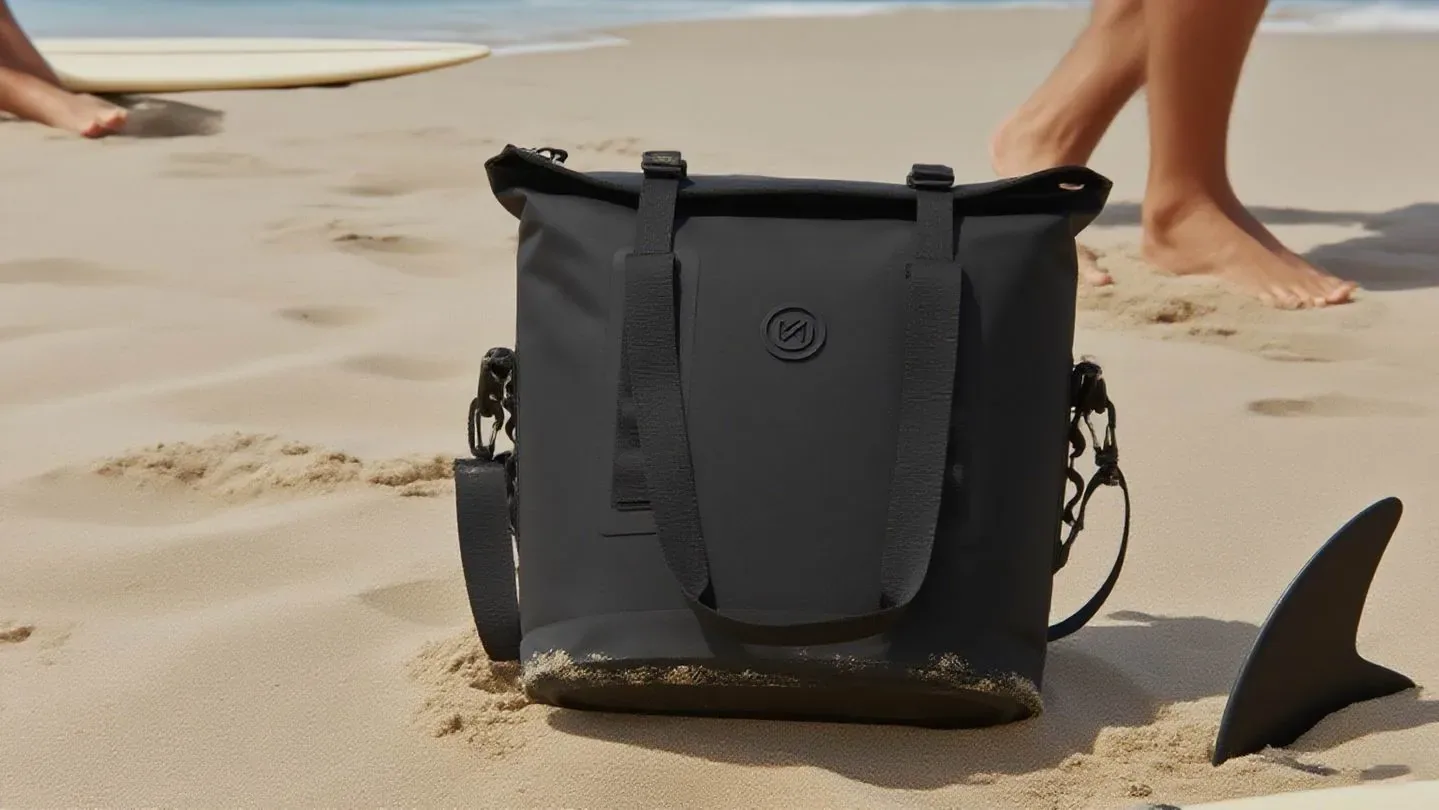
Three closures are in use and they are not equivalent. A drawstring is fast, one-handed and quiet, and it is the right answer for a pouch that lives inside another bag, but it leaves a gap at the top that dust finds. A covered zipper closes properly and keeps dust out, at the cost of two hands and a little more time. A hook-and-loop flap is the fastest of the three and the noisiest, which matters to a wildlife photographer and not to a studio one.
| Closure | Speed | Dust protection | Noise | Best use |
|---|---|---|---|---|
| Drawstring | Fastest, one-handed | Poor: the opening stays open | Quiet | A pouch that lives inside a host bag |
| Drawstring with a fabric skirt | Fast, one-handed | Good | Quiet | Travel pouches and pouch sets |
| Covered zipper | Slower, two hands | Best | Moderate | A pouch carried on a belt or in the open |
| Hook-and-loop flap | Fastest to open | Good if the flap covers fully | Loud | Studio and event work, not wildlife |
| Magnetic closure | Fast and quiet | Moderate | Quiet | Premium pouches where hardware weight is acceptable |
The rule that follows is that a pouch carried on a belt or in the open needs a covered closure and a pouch carried inside a host bag can take a drawstring. Where a drawstring is used, a short fabric skirt above the cord, or a flap that folds over the opening after the cord is pulled, restores most of the dust protection for very little cost, and that combination is the usual answer for travel pouches.
What Should Line the Inside of a Lens Pouch?
The lining is what touches the barrel finish, and the property that matters is not softness but cleanliness and abrasion behaviour. A brushed tricot or a brushed polyester lining holds less grit than a plain woven lining, and grit trapped in a lining is what marks a barrel over a season. A plain woven lining is smoother and lower in cost and marks more, because it holds particles against the surface rather than swallowing them.
Colour matters too, and for a reason that surprises buyers: a light lining makes the contents findable in a dark pouch, and a dark lining hides the grit that is doing the damage. For a lens pouch the better choice is a mid-tone lining that shows dirt without showing every mark. The lining abrasion behaviour is checked on the Martindale method under ISO 12947, and colour fastness to rubbing is checked in the ISO 105 series, because a lining that crocks onto a light barrel is a complaint.
How Is a Pouch Attached to a Belt or a Bag?
Four systems, each with a territory. A belt loop of webbing with a hook-and-loop or a snap opening lets the pouch come off without undoing the belt, and is the usual answer for a working photographer. A D-ring and a clip lets the pouch hang and swing, which is fine for a light lens and annoying for a heavy one. A MOLLE-style webbing ladder is used where the pouch attaches to a vest or a pack. A hook-and-loop patch mates to a loop lining inside a host bag.
The attachment is load-rated and should be specified as such. A belt loop carrying a 1.4 kg lens on a walking day is a cyclical load on a sewn joint, and the joint is bar-tacked to a reinforcement rather than sewn into the shell alone. Stitch type and stitch density are covered by ASTM D6193 and seam tensile behaviour by ISO 13934-1, and both belong in the specification for any attachment that carries more than half a kilogram.
How Is a Lens Pouch Tested?
Two tests cover the product. The first is a drop with a ballasted pouch from a stated height onto a stated surface, using the geometry of ISO 2248 or ASTM D5276, with the lens represented by a mass of the right shape and the acceptance rule written in advance. The second is a fit test: the lens, with the hood reversed, goes in and comes out one-handed, and the pouch closes without pressing on the barrel.
Neither is a standard written for pouches, so the programme has to write its own protocol and set its own limits. The fit test is the one usually skipped and it is the one that decides whether the product gets used, because a pouch that needs two hands and a struggle to close will be left open, and an open pouch protects nothing at all.
- Interior diameter and depth
- Lens dimensions plus 3-5 mm on the diameter and 15-20 mm on the length
- Hood state
- Reversed and fitted, stated, because it sets the length
- Padding thickness
- 6 mm for a prime, 8 mm for a mid zoom, 10 to 12 mm for a long zoom
- Padding density
- Kilograms per cubic metre with a tolerance, 33-50 or 50-70
- Base
- 1.5 to 2 mm board bonded to the foam, carrying the mount off the ground
- Cradle
- Shoulder cradle or a short internal strap for lenses above 1 kg
- Lining
- Brushed tricot or brushed polyester, with the Martindale result stated
- Closure
- Drawstring with a skirt, covered zipper, or hook-and-loop flap
- Attachment
- Belt loop, D-ring, webbing ladder or hook-and-loop patch, load-rated
- Acceptance
- Drop test and a one-handed fit test with the hood reversed
What Does a Pouch Programme Cost?
A pouch is the least costly product in the category to develop and one of the more expensive per unit of volume, because it is all labour and little material. Cutting, bonding and closing a cylinder takes more operations than its size suggests, and a cylindrical base seam is slower than a flat one. The result is that a pouch carries a unit price closer to a small bag than buyers expect.
The way to control that is to standardise the range. A set of three pouches sharing one lining, one webbing, one cord and one closure family across three sizes costs far less to build than three pouches each engineered separately, and it reads as a range rather than as three products. Where a programme needs a fourth size, adding it to the family is a pattern change rather than a development.
How Do You Write a Pouch Specification?
The specification starts from the lens, not from the pouch. Name the lens, give its diameter and length with the hood reversed, add the allowances, and the interior follows. Then the padding thickness and density, then the base, then the lining, then the closure, then the attachment. A pouch specified the other way round, from a size range to a lens, produces a pouch that fits several lenses loosely rather than one properly.
Then write what the pouch does not have to do, which is the field nobody adds and the one that saves money. A pouch that lives inside a host bag does not need a weather closure, a shoulder strap or a base that survives being set down in water, and saying so in the specification removes three components from the quotation. The pouch that is described only as padded will be quoted with all three.
What decides a lens pouch specification
- Size from the lens with the hood reversed; three to five millimetres on the diameter.
- Density matters more than thickness: 33 to 50 kilograms per cubic metre, and 50 to 70 for heavy glass.
- The base carries the mount, so it needs a bonded board even when the wall does not need one.
- A shoulder cradle stops a long lens rotating and wearing its mount against the base.
- A drawstring belongs inside a host bag; a carried pouch needs a covered closure.
- A plain lining holds grit against the barrel; a brushed lining swallows it.
Programme arithmetic is the same for a pouch as for a bag: MOQ 500 pcs per style and colourway, sampling 6-10 working days from a signed-off tech pack, bulk production 35-50 days from written sample approval, inspection at AQL 2.5 under ISO 2859-1 General Inspection Level II, payment T/T 30/70, quoted FOB Xiamen. What differs is that a pouch family of three sizes shares one development, and that is where the money is.
Send the lens list with the pouch enquiry
Send the lenses the pouches have to hold, the closure you prefer and the target quantity. You get a sizing table, indicative pricing and a sampling window within one business day.
Frequently Asked Questions
How much padding does a lens pouch need?
Six millimetres for a prime, 8 mm for a mid-size zoom and 10 to 12 mm for a 70-200 mm, at 33 to 50 kilograms per cubic metre for the first two and 50 to 70 for the long lens.
Should I choose a drawstring or a zipper on a lens pouch?
A drawstring for a pouch that lives inside a host bag, and a covered zipper for one carried on a belt. A drawstring with a fabric skirt above the cord gives most of the dust protection of a zipper.
How do I size a lens pouch?
Take the barrel diameter and the length with the hood reversed, add 3 to 5 mm on the diameter and 15 to 20 mm on the length.
Why does my lens rotate inside its pouch?
Too much diameter allowance and no cradle. A long lens rotates about its axis under a knock and the mount then rubs the base, which a shoulder cradle prevents.
Does a lens pouch need a reinforced base?
Yes. A pouch set down loaded puts the whole mass on a circular seam at the base, and a 1.5 to 2 mm bonded board keeps the mount off the ground.
What lining is best inside a lens pouch?
A brushed tricot or a brushed polyester. A plain woven lining holds grit against the barrel, and grit is what marks the finish over a season.
How is pouch padding density measured?
On the flexible cellular materials methods in the ASTM D3574 family, which also gives compression force deflection. Density and thickness are separate fields.
Can a lens pouch be dropped-tested?
Yes, using the drop geometry of ISO 2248 or ASTM D5276 with a ballasted pouch and an acceptance rule written before the test. There is no pouch-specific standard.
How strong does a belt loop on a pouch need to be?
It carries a cyclical load, so the loop is bar-tacked to a reinforcement rather than sewn into the shell. Stitch class is covered by ASTM D6193 and seam tensile behaviour by ISO 13934-1.
Why is a lens pouch expensive for its size?
It is all labour. Cutting, bonding and closing a cylinder, and a cylindrical base seam, take more operations than the size of the product suggests.
Should a pouch programme cover several sizes?
Yes, as one family. Three sizes sharing a lining, a webbing, a cord and a closure family cost far less to build than three separate products.
Does a pouch need weather protection?
Only if it is carried in the open. A pouch that lives inside a host bag does not need a weather closure, and saying so removes a component from the quotation.
People Also Ask
How thick should lens pouch padding be?
Six to 8 mm for a prime or a mid-size zoom and 10 to 12 mm for a 70-200 mm, at a stated density of 33 to 70 kilograms per cubic metre.
What is the best closure for a lens pouch?
A covered zipper for a pouch carried on a belt, and a drawstring with a skirt for one that lives inside another bag.
How do I stop a lens rattling in its pouch?
Reduce the diameter allowance to 3 to 5 mm and add a shoulder cradle so the barrel is held by its shoulder rather than by its mount.
Do lens pouches protect the glass?
The front cap protects the glass. The pouch protects the barrel finish and the mount, which is why the base and the lining matter more than the wall.
Can one pouch fit several lenses?
Loosely. A pouch sized for one lens with its hood reversed holds that lens properly; a pouch sized for a range holds all of them badly.
Sources and further reading
Every figure on this page is either our own programme data or attributed below. Open the originals before you write them into a specification.
- ASTM D3574 — standard test methods for flexible cellular materialsASTM International
- ISO 2248 — vertical impact test by dropping for filled transport packagesInternational Organization for Standardization
- ASTM D6193 — standard practice for stitches and seamsASTM International