Custom Gym Merchandise Bags for Fitness Brands: What Sells to Members?
Members buy a bag that solves the journey to and from the gym floor, not one that advertises it. The merchandise that moves is the silhouette a member would have bought anyway, in a colour the brand owns, with the mark placed where the member will still tolerate it in six months.
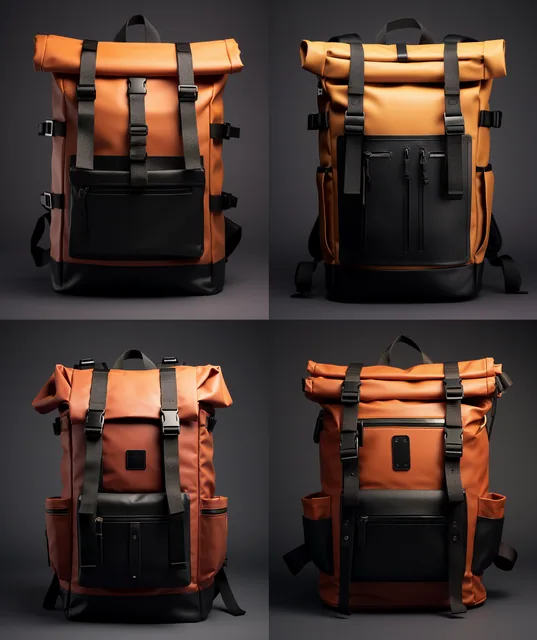
Three things decide whether member merchandise moves: the silhouette has to solve a real carry problem, the colour has to be one the brand owns, and the mark has to be small enough that a member will still carry it in public. Get those three right and the merchandise sells itself at reception.
What Does a Member Actually Carry to the Gym?
A gym member carries a training top, shorts, a pair of trainers, a towel, a bottle and a phone. That is the list, and it is remarkably consistent across markets. Two of those items are damp after use and one of them is dirty, which means the bag that works is the bag with separation rather than the bag with volume.
The second observation is that a member carries the bag twice — in and out — and leaves it in a locker in between. That sounds trivial and it decides the silhouette. A bag that has to fit a locker shelf is a different shape from one that lives in a car boot, and a brand that specifies for the car boot will produce merchandise that members leave at home.
| Item | Condition on the way home | Where it needs to go | What that implies |
|---|---|---|---|
| Training top | Damp | Separated from the dry kit | A drained or ventilated pocket |
| Trainers | Dirty, abrasive | Separated from everything | A lined shoe compartment |
| Towel | Damp | With the top, not with the phone | A second wet zone or a loose pouch |
| Bottle | Wet on the outside | External or lined | A bottle sleeve or lined pocket |
| Phone and keys | Dry | Somewhere findable | A valuables pocket at the top |
Which Silhouettes Move and Which Sit in the Stock Room?
The silhouettes that move are the ones that solve the list above in the smallest possible volume. The ones that sit are the ones that were chosen because they looked impressive on a product page — oversized, over-compartmented, and too large for a locker. A fitness brand buying merchandise should be buying against the locker, not against the photograph.
The second pattern is that members buy replacement, not addition. A member who already owns a gym bag buys a brand bag when the old one fails, or when the brand bag clearly does something the old one does not. That argues for a silhouette with one obvious advantage — a genuine shoe compartment, a genuinely ventilated wet pocket — rather than a long feature list that nobody reads at reception.
| Silhouette | Fits a locker | Solves the damp kit | Member verdict |
|---|---|---|---|
| Compact holdall with shoe compartment | Yes | Yes | Moves steadily |
| Drawstring with a wet pocket | Yes | Partly | Moves, entry price point |
| Small structured kit bag | Yes | Yes | Moves well with members who commute |
| Large wheeled holdall | No | Yes | Sits — too large for the locker |
| Oversized multi-compartment bag | No | Yes | Sits — nobody wants to carry it |
| Insulated bottle carrier | Yes | n/a | Sells as an add-on, not as the main item |
Where Should the Brand Mark Go?
A member will carry a mark they respect and abandon one they feel is decorating them. The difference is size and position far more than design. A mark at 60 to 80 mm on a side panel reads as brand ownership; the same mark at 200 mm across the front reads as a billboard and the bag stays in the cupboard.
The second rule is that the mark should be placed where the member sees it, not where the brand sees it. A mark on the panel facing outward when the bag is carried is seen by everyone else; a mark on the panel facing the member is seen by the member every time they open it. Merchandise that is worn publicly benefits from the first; merchandise that is carried for the brand's own community benefits from the second.
Which Decoration Method Suits Gym Merchandise?
Four methods cover the market, and the choice is driven by the artwork and the substrate rather than by preference. Embroidery suits a simple mark on a woven panel and it survives laundering. A woven label suits a wordmark and costs less per unit at volume. Screen print suits a flat single-colour mark on a smooth panel. A sublimated panel suits a full-colour or gradient mark, and it only works on a polyester substrate.
| Method | Best for | Substrate | Durability | Unit cost at volume |
|---|---|---|---|---|
| Embroidery | A simple mark, two or three colours | Woven panels | High | Higher at small sizes |
| Woven label | A wordmark | Any | High | Low |
| Screen print | A flat single-colour mark | Smooth panels | Moderate | Low |
| Sublimated panel | Full colour or gradient | Polyester only | High | Moderate |
| Silicone or rubber patch | A raised mark | Woven panels | High | Higher |
How Does Colour Work for a Fitness Brand?
A fitness brand usually owns a colour, and the merchandise is an extension of it. That makes colour the most important specification on the order and the one most often left to a swatch. One reference, a coupon per substrate, approval under a single light — the same discipline as any club programme.
There is a second consideration that club programmes do not face: merchandise is reordered on a retail calendar rather than a season, and a member will compare the bag they bought in March with the one on the shelf in September. Two dye lots on the shelf at the same time is a visible problem in a way that a club reorder eleven months later is not. The method is set out in Reorder colour consistency.
- Name one reference and state the library it comes from.
- Approve a coupon per substrate: shell, binding, webbing, zipper tape and thread.
- Hold an upper and a lower shade coupon as the acceptance band.
- Record the dye lot against the order and against the carton marking.
- Reorder from the same lot wherever the quantity allows it.
What Quantity Should a Fitness Brand Order?
MOQ 500 pcs per style and colourway is the standard, and for a fitness brand with several sites that is usually a comfortable number rather than a stretch. A brand with twenty clubs and a member merchandise programme will place 500 units across a network easily. A single-site studio will not, and should not try to.
The single-site answer is to consolidate: one silhouette, one colourway, ordered once for the year rather than in four drops. Two drops of 250 is two production slots, two approval rounds and two freight movements, and it costs more than one order of 500. Where a brand genuinely cannot reach the standard figure, 300 pcs is open to discussion on a repeat.
What Does the Specification Need to Say About the Wet Pocket?
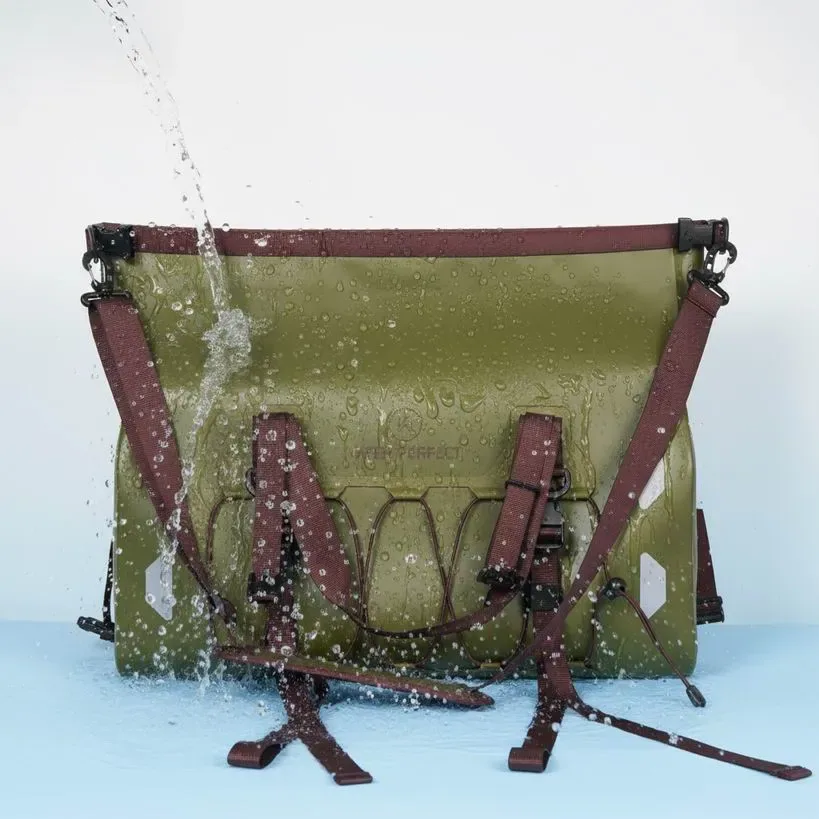
The wet pocket is the feature that makes gym merchandise work and the feature most often specified badly. Three fields: the lining, whether it drains, and whether it is ventilated. A coated lining that does not drain holds water; a mesh panel that drains but is not lined lets damp through to the dry compartment. The specification that works is a coated lining with a drain at the lowest point, or a mesh panel separated from the main volume by a barrier.
Ventilation is a separate question from drainage and it is worth stating separately. Drainage removes water; ventilation removes damp. A gym bag that drains but does not ventilate will still smell after a week, because the member closes it and puts it back in a locker. Two grommets at opposite ends of the wet pocket achieve more than one drain.
How Should a Brand Plan the Merchandise Calendar?
Member merchandise has two natural peaks — the January intake and the pre-summer period — and a brand that wants stock on the shelf for both has to plan two production slots. Sampling runs 6-10 working days from a signed-off tech pack, and bulk runs 35-50 days from written sample approval, so a January shelf date means an enquiry in the early autumn.
That is the part brands get wrong. A retail calendar is planned forwards from a launch meeting; a production calendar has to be planned backwards from a shelf date, and the two rarely agree the first time they are put side by side. The reasoning is set out in Why 35 to 50 days.
| Milestone | Window | Held by | What slips it |
|---|---|---|---|
| Artwork and colour reference fixed | Brand decision | Brand | A raster logo with no colour reference |
| Tech pack signed off | Brand decision | Brand | Undecided compartment layout |
| Coupon set approved | Within sampling | Brand | Approving the shell only |
| Sample built | 6-10 working days | Production team | Late trim booking |
| Bulk production | 35-50 days | Production team | Booking into a peak slot late |
| Inspection at AQL 2.5 | Within bulk window | Inspection team | No agreed defect list |
| Shipment, FOB Xiamen | After release | Freight desk | Booking after release |
What Should the Inspection Criteria Include?
Six checks, written by the brand and agreed before inspection: wet pocket dimensions and drain presence, lining type, stitch type at the strap root, colour against the approved coupon set, mark position and size measured from a seam, and carton marking by dye lot. Classified as major defects, those six are enforceable at the Ac/Re decision.
Six checks to write into the inspection criteria
- Wet pocket: internal dimensions and whether the drain is present.
- Lining: the specified type, in the specified compartment.
- Strap root: reinforcement present and the stitch type named to ASTM D6193.
- Colour: within the approved shade band, judged against the coupon set.
- Mark: position measured from a seam and size within tolerance.
- Cartons: marked by dye lot, so two lots never reach the shelf together.
How Does a Brand Avoid Two Shades on the Same Shelf?
Carton marking by dye lot. It is a one-line clause, it costs nothing, and it is the only reliable defence against a member finding two shades of the same brand colour on a shelf. Without it, a reorder that lands while the first drop is still on sale will mix, and the mixing is visible to everybody.
The second defence is ordering from the same lot wherever the quantity allows. A brand that plans the year as one order rather than four drops has one lot, one shade and one approval round. A brand that orders four times has four chances to drift.
What Does the Fabric Need to Survive in a Gym Bag?
Gym bags fail at the lining and the base, in that order. The lining takes abrasion from trainers and it holds damp; the base takes the locker floor and the changing-room floor. The shell, by contrast, is carrying almost nothing and does not need the heaviest cloth in the range.
The evidence to request is an ISO 12947 abrasion result on the base fabric and the lining, and an ISO 13934-1 tensile result on the assembled strap joint. Both are standard requests and both are the difference between merchandise that lasts a year and merchandise that comes back to reception with a split lining.
What Should a Fitness Brand Send With an Enquiry?
Six fields, and a merchandise enquiry is complete. The two that are most often missing are the colour reference and the locker dimension — and they are the two that change the quotation most.
- The locker shelf dimension, measured rather than estimated.
- The carry list: what the member brings, and what arrives damp.
- The brand colour reference, with the library stated.
- The mark: vector artwork, method, size and position by measurement.
- Quantity split by silhouette and colourway, and the reorder expectation.
- The shelf date, working backwards from the launch or the January intake.
What Does Member Merchandise Cost to Get Right?
The cost sits in the same four places as any club programme: quantity, colourway count, decoration count and silhouette count. A brand that consolidates to one silhouette in one colourway with one decoration position will hit a figure that works for member retail; a brand that runs three silhouettes in four colourways with a different mark on each will not.
The saving that matters is the reorder. Holding the reference, the coupon set, the dye-lot record and the shade band makes the second drop a comparison rather than a re-development, and it is what makes 300 pcs on a repeat available instead of the standard MOQ 500 pcs.
What Does the Hardware Specification Need to Say?
Hardware is small, low in unit cost and the first thing a member notices when it fails. Three fields cover it: the material, the finish and the attachment. The material decides whether it survives a damp locker; the finish decides whether it marks or corrodes; the attachment decides whether it stays on the bag. Naming all three is a single line on the tech pack.
The second point is availability. A slider that can be replaced and a buckle in a common size turn a bag that would have been thrown away into one that gets repaired. For merchandise that a member has paid for, repairability is a brand question as much as a cost question, and it is decided at quotation rather than at failure.
How Is the Programme Kept Identical Across Drops?
With the same four artefacts a club programme uses: the reference, the coupon set, the dye-lot record and the shade band. For a fitness brand these belong with the brand guidelines rather than with the buying desk, because the person placing the second drop is often not the person who placed the first.
Where they are missing, the brand discovers it the expensive way — a second drop that does not match the first, a shelf with two shades on it, and a re-approval that puts the January intake at risk. The artefacts cost one afternoon to create and they are what makes a merchandise programme repeatable.
Send the locker dimension and the colour reference
Tell us the locker size, the carry list and the brand colour, and we come back with a costed programme and a delivery date you can calculate.
Frequently Asked Questions
What size bag sells to gym members?
One that fits a locker shelf and separates damp kit. Oversized bags sit in the stock room.
Where should the brand mark go?
At 60 to 80 mm on a side panel. A mark at 200 mm reads as a billboard and the bag stays in the cupboard.
Which decoration method should a fitness brand use?
Embroidery for a simple mark, a woven label for a wordmark, screen print for a flat mark and a sublimated panel for full colour on polyester.
What is the minimum order?
MOQ 500 pcs per style and colourway, with 300 pcs open to discussion on a repeat.
How should a single-site studio reach the minimum?
Consolidate: one silhouette, one colourway, one order for the year rather than four drops.
How long does sampling take?
6-10 working days from a signed-off tech pack, extending to 12-15 working days for a complex build or a new brand colour.
How long is bulk production?
35-50 days from written sample approval, inspected at AQL 2.5 under ISO 2859-1.
When should a brand order for the January intake?
In the early autumn. Bulk is 35-50 days and sampling is 6-10 working days on top of the brand's own approval time.
Should the wet pocket drain or ventilate?
Both, where the spend allows. Drainage removes water; ventilation removes damp. A pocket that drains but does not ventilate will still smell after a week.
How does a brand avoid two shades on one shelf?
Carton marking by dye lot, and ordering from the same lot wherever the quantity allows.
Which standards apply to a gym bag?
ASTM D6193 for stitches and seams, ISO 13934-1 for tensile behaviour and ISO 12947 for abrasion on the base and lining.
What fails first on a gym bag?
The lining, from abrasion by trainers and from holding damp, and then the base.
People Also Ask
What gym bag sells to members?
A compact silhouette that fits a locker and separates damp kit from dry.
How big should a brand mark be?
60 to 80 mm on a side panel — large enough to own, small enough to carry.
Should a gym bag wet pocket drain?
Yes, and ventilate too. Drainage removes water, ventilation removes damp.
What is the minimum order for gym merchandise?
MOQ 500 pcs per style and colourway, 300 pcs on a repeat.
When should a brand order for January?
In the early autumn — bulk is 35-50 days plus sampling 6-10 working days.
Sources and further reading
Every figure on this page is either our own programme data or attributed below. Open the originals before you write them into a specification.
- ISO 13934-1 — Tensile properties of fabrics, strip methodInternational Organization for Standardization
- AATCC 16 — Colorfastness to LightAmerican Association of Textile Chemists and Colorists
- Textile Exchange — Global Recycled StandardTextile Exchange