Custom Esports Team Bags: Laptop Compartments and Peripheral Pouches
An esports bag carries rigid electronics, a tangle of cables and a set of peripherals that all have to arrive working. It is a protective-carry problem inside a team-bag format: padded sleeves, separated pouches and cable management, in a colourway the organisation owns.
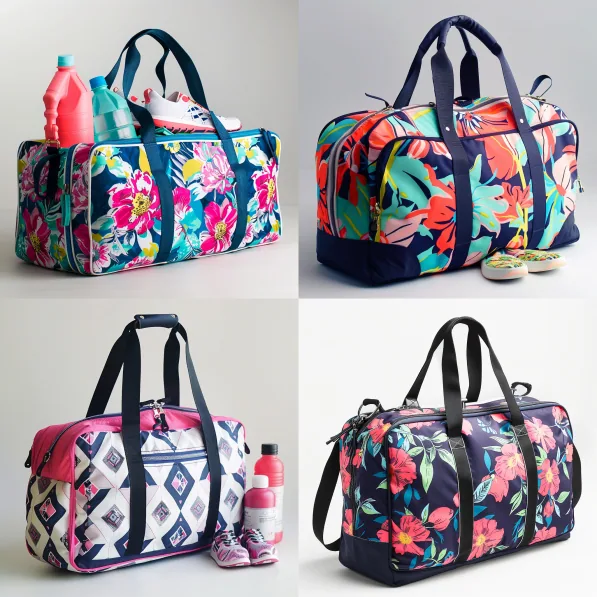
An esports bag is three things: a padded sleeve for the machine, pouches for the peripherals, and somewhere for the cables. Everything else in the bag is organisation around those three, and the colourway is what makes it team kit rather than generic electronics carry.
What Does an Esports Team Actually Carry?
A machine, a mouse, a keyboard or a keypad, a headset, a controller, a mouse mat, a power brick, a tangle of cables and often a webcam or a capture device. Nine categories, all rigid or semi-rigid except the cables, and several of them crushable or scratchable.
That is closer to a camera bag than to a football bag. The governing design principle is the same one that governs equipment protection: every fragile item gets its own shaped, padded space, and nothing rigid is left to rub against anything else.
| Item | Fragile | Rigid | What it needs |
|---|---|---|---|
| Machine | Yes | Yes | A padded sleeve with a stiffener and a base board |
| Mouse | Yes | Yes | A small shaped pouch |
| Keyboard or keypad | Yes | Yes | A flat padded sleeve |
| Headset | Yes | Semi-rigid | A shaped compartment that does not crush the band |
| Controller | Yes | Yes | A pouch of its own |
| Mouse mat | No | No | A flat sleeve or a rolled strap |
| Power brick | No | Yes | A pouch separated from the machine |
| Cables | No | No | Loops or a pouch — the item everybody loses |
| Webcam or capture device | Yes | Yes | A small padded pouch |
How Should the Machine Sleeve Be Specified?
Four fields, and they are the ones that decide whether a machine arrives working: the internal dimensions with a margin, the padding thickness, the stiffener behind it, and the base board under it. A sleeve with padding but no stiffener will not stop a point load.
The second field worth stating is the position. A machine sleeve against the back panel keeps the weight close to the wearer and keeps the flat object flat; a sleeve in the middle of a volume lets the bag flex around it.
| Sleeve element | What it does | Without it | Evidence to ask for |
|---|---|---|---|
| Internal dimensions plus margin | The machine fits without force | It is forced | A stated internal figure |
| Padding | Absorbs a knock | The machine takes the load | A stated thickness |
| Stiffener | Spreads a point load | A point load reaches the machine | A stated material |
| Base board | Stops the bag sagging under the weight | The load moves to the seams | A dimensioned board |
| Soft lining | Prevents scratching | The machine is marked | A stated lining type |
How Is Cable Management Specified?
As loops, pouches and straps rather than as one open space. Cables thrown into a compartment tangle, and a tangled set takes longer to unpack than the rest of the bag put together — which is the complaint every esports organisation makes about a generic bag.
- Elastic loops of two sizes, for thin cables and for power leads.
- A zipped pouch for the power brick, separated from the machine.
- A flat pouch or a rolled strap for the mouse mat.
- A labelled position for each, so a player unpacks in the same order every time.
- Nothing loose in the main volume, because that is where cables disappear.
How Much Padding Is Enough?
Enough to stop a point load, not enough to double the weight of the bag. A workable convention for a machine sleeve is 8 to 10 mm of closed-cell foam behind a stiffener, with a softer facing cloth against the machine — and less than that for the peripheral pouches, which need separation more than cushioning.
The distinction matters: the machine needs impact protection and the peripherals need separation. Padding the peripherals to the same level as the machine produces a bag that is heavier and bulkier than it needs to be.
How Does the Bag Carry the Weight?
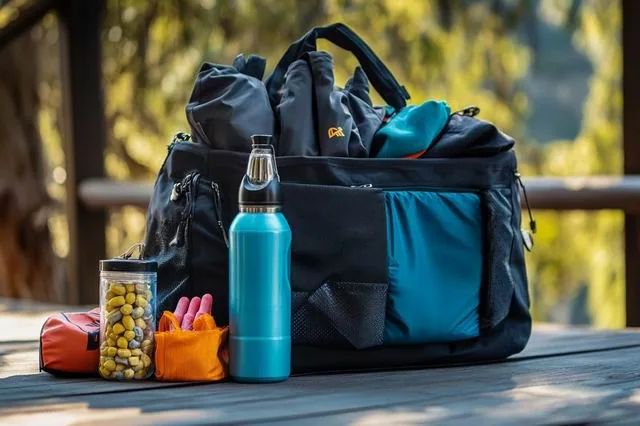
A loaded esports bag is heavy in a dense, awkward way — a machine plus a power brick plus peripherals approaches 5 kg in a small volume. The strap or yoke has to carry that, and the base has to stop the bag sagging under it.
The specification answer is a wide padded strap or a yoke, a reinforcement patch at the root with a stitch type named to ASTM D6193, and a stiff base board. Three clauses, and they are the ones that decide whether the bag survives a season of travel to events.
How Does Colour Work for an Esports Organisation?
Esports organisations are the most colour-exacting buyers in this cluster, because the colourway is brand identity rather than club tradition and it appears on a jersey, a bag, a mouse mat and a stream overlay at the same time. That makes the reference and the coupon set non-negotiable.
The second point is the substrate list. An esports bag carries a sublimated panel more often than any other bag in the cluster, because organisation marks tend to be full colour — and a printed panel beside a dyed shell is the highest metamerism risk there is. The method is set out in Reorder colour consistency.
| Substrate | Drift risk | Why | What to insist on |
|---|---|---|---|
| Shell fabric | Moderate | Piece-dyed, one lot per order | A coupon and a lot number |
| Sublimated panel | High | A different colour system from dye | A printed coupon and profile |
| Embroidery thread | High | A different dye house and fibre | A coupon matched to the reference |
| Webbing and binding | Moderate | Bought in, matched visually | A coupon in the same session |
| Zipper tape | Moderate | Usually a stock colour | Stated as a requirement |
What Should the Tech Pack Say?
Six fields, and an esports bag is specified. The stiffener and the base board are the two most often left out, and they are the two that protect the machine.
Tech pack fields for an esports team bag
- Machine sleeve: internal dimensions with a margin, padding thickness and a stiffener.
- Peripheral pouches: one per item, with a purpose attached to each.
- Cable management: loops, pouches and straps, with a position for each.
- Base: board thickness and material, plus corner protection.
- Carry: a yoke or a wide padded strap, with the root reinforced to ASTM D6193.
- Colour references for shell, printed panel, thread, webbing and tape.
How Is the Sample Judged?
With the actual kit in it. The machine in its sleeve, the mouse, the keyboard, the headset, the controller, the mat, the brick and the cables — all of it, in the places the tech pack says they go. Then close the bag, carry it, and unpack it.
The unpacking test is the one that matters and the one nobody does. A bag that takes four minutes to unpack at an event is a bag a player stops using, however well it protects the machine.
How Does the Event Calendar Drive the Order?
Esports calendars are driven by tournament dates rather than by seasons, and a kit drop tends to be wanted before a specific event. That makes the date field more precise than in any other sport in this cluster — and the calculation is the same one.
Sampling runs 6-10 working days from a signed-off tech pack, extending to 12-15 working days where a sublimated panel or a new organisation colour is involved. Bulk runs 35-50 days from written sample approval, inspected at AQL 2.5 under ISO 2859-1 and shipped FOB Xiamen on T/T 30/70. The calendar is set out in Why 35 to 50 days.
What Does the Inspection Criteria Need to Include?
Six checks: machine sleeve internal dimensions, padding thickness and stiffener presence, pouch count, base board presence, colour against the approved coupon set, and mark position measured from a seam. Written into the major defect classification, they are enforceable at the Ac/Re decision.
The padding check is the one that predicts a return, because padding thickness is invisible from outside and its absence only shows up when a machine does not survive a trip. The arithmetic is set out in AQL 1.5 versus 2.5.
What Does an Esports Programme Cost to Run?
The four usual levers, with one category-specific point: padding and stiffeners add material and labour, and an esports bag has more of both than any other bag in the cluster. It is a protective carry, and it is priced as one.
The saving available is the reorder. Holding the reference, the coupon set, the dye-lot record and the shade band makes the next kit drop a comparison, and it is what makes 300 pcs available on a repeat against the standard MOQ 500 pcs.
What Goes Into the Enquiry?
Six fields, and an esports enquiry is complete. The machine dimensions are the one organisations leave out, and they set the sleeve.
- The machine dimensions — the largest machine the roster uses, measured.
- The peripheral list, item by item, and how many of each.
- Cable management: loops, pouches, or both, and how many cables.
- Whether a sublimated panel is wanted, and on which face.
- Colour references for shell, panel, thread, webbing and tape.
- Quantity split and the date the kit has to be at the event.
What Fails First on an Esports Bag?
The base, the sleeve seam and the pouch tops. The base fails because the load is dense; the sleeve seam fails because it carries a rigid, heavy object; the pouch tops fail because they are the parts that get pulled.
All three are one clause each: a dimensioned base board, a seam strength result on the assembled sleeve to ISO 13934-1, and a bound rather than turned pouch top with a stitch type named to ASTM D6193.
Should an Esports Bag Resemble a Sports Bag?
It should read as team kit, because that is what it is — an organisation's colourway carried on a bag that goes to an event with a jersey. The internal specification is protective; the external specification is brand.
The tension between the two is worth naming: a heavily padded bag is bulkier than a streamlined one, and an organisation that cares about how the bag looks on camera should say so, because it changes where the padding goes.
How Is the Programme Kept Stable Across Kit Drops?
With the four artefacts plus one: the machine dimensions the sleeve was cut to. Machines change across generations faster than cricket bats do, and a sleeve cut for one generation will not necessarily take the next.
Where the artefacts exist the reorder is a comparison. Where they do not, the organisation re-develops, and the re-development lands between tournaments, which is the only window in which it can be done and the one in which there is least time.
What Is the Shortest Useful Advice for an Esports Organisation?
Specify the stiffener and the base board. Padding alone does not stop a point load, and a machine is the most expensive object any bag in this cluster will ever carry.
The second piece of advice is to test the unpacking. Protection is the requirement, but the reason a player stops using a bag is that it takes too long to get into.
How Should the Bag Be Carried Between Venues?
An esports bag is carried in two very different conditions, and both matter. The first is a short carry through an airport or a venue corridor, where the bag is upright, loaded with eight to eleven kilograms, and expected to look composed. The second is a long carry on public transport, where it is set down repeatedly, often on a floor, and where the base takes the wear. A bag specified only for the first condition has a base that scuffs badly within a season.
The answer is a reinforced base with a defined board and a set of feet or a wear strip, plus a harness that carries the load without putting it all on one shoulder. A single strap is workable for a short carry and poor for a long one; a two-strap harness spreads the load and, more importantly, lets a player set the bag down and pick it up without re-balancing it. Where the organisation wants one bag for both conditions, the harness should be specified as the two-strap type with the single-strap option removed from the tech pack, because offering both usually means neither is well resolved.
What Does an Esports Bag Need That a Match-Day Bag Does Not?
Three things. A stiffener behind the padding, because a machine is a flat rigid object that will not tolerate being bent. A defined position for every cable, because cables are the items most often lost and the ones whose loss is discovered latest. And a shell fabric that does not mark, because esports bags are photographed more than any other bag in this cluster and a scuffed panel shows up on camera.
What it does not need is a wet compartment, a ball pocket or a boot carrier. Those are match-day features, and putting them on an esports bag adds volume and weight for compartments that will never be used. The temptation to reuse an existing pattern is strong here, because the pattern already exists and the tooling is already proven. It is also the reason many first esports programmes ship a bag that is a squad bag with a laptop pouch added, and gets a bag that satisfies nobody.
The honest dividing line is this: if the programme is for players, specify for players, and the machine sleeve is the requirement the whole bag is organised around. If the programme is for staff — analysts, coaches, broadcast crew — the machine is still the core load, but the bag also has to carry paperwork and credentials, and a document sleeve earns its place. Two specifications, one shell, is the efficient way to run it.
A document sleeve is worth one paragraph on its own, because it is the item most often added late and most often specified badly. It should be a flat sleeve with a closed top, sized for A4 or for letter paper depending on where the organisation travels, and it should sit on the front of the bag rather than against the back panel. Against the back panel it competes with the machine sleeve for the same flat space, and one of the two ends up thinner than it should be.
Send the machine dimensions and the peripheral list
Tell us the largest machine on the roster, the peripherals and the event date, and we come back with a specified bag and a delivery date you can calculate.
Frequently Asked Questions
How should a machine sleeve be specified?
Internal dimensions with a margin, padding thickness, a stiffener behind the padding and a base board underneath.
How much padding is enough?
A workable convention is 8 to 10 mm of closed-cell foam behind a stiffener for the machine, and less for the peripherals, which need separation more than cushioning.
How is cable management specified?
As elastic loops, a pouch for the power brick and a flat pouch or strap for the mat — not as one open space.
Why does an esports bag need a base board?
The load is dense and concentrated. Without a board the bag sags and the load moves into the side seams.
Should the machine sleeve sit against the back panel?
Yes. It keeps the weight close to the wearer and keeps the flat object flat.
What is the minimum order?
MOQ 500 pcs per style and colourway, with 300 pcs open to discussion on a repeat.
How long does sampling take?
6-10 working days from a signed-off tech pack, extending to 12-15 working days where a sublimated panel or a new organisation colour is involved.
How long is bulk production?
35-50 days from written sample approval, inspected at AQL 2.5 under ISO 2859-1.
Which standards apply?
ASTM D6193 for stitches and seams, ISO 13934-1 for seam strength on the sleeve, and ISO 12947 for abrasion on the base.
How is the sample judged?
With the actual kit in it, then closed, carried and unpacked. The unpacking time is the test nobody does and the one that decides whether it gets used.
What fails first on an esports bag?
The base, then the sleeve seam, then the pouch tops.
Should an esports bag resemble a sports bag?
It should read as team kit. The internal specification is protective; the external one is brand.
People Also Ask
How do you specify an esports team bag?
A padded stiffened sleeve for the machine, a pouch per peripheral and cable management.
How much padding does a machine sleeve need?
About 8 to 10 mm of closed-cell foam behind a stiffener.
Why does an esports bag need a base board?
The load is dense — without a board the bag sags into its seams.
How do you test an esports bag sample?
Load the real kit, carry it, and time the unpacking.
What fails first on an esports bag?
The base, the sleeve seam and the pouch tops.
Sources and further reading
Every figure on this page is either our own programme data or attributed below. Open the originals before you write them into a specification.
- ASTM D6193 — Standard Practice for Stitches and SeamsASTM International
- ASTM D3574 — Flexible Cellular Materials: Slab, Bonded and Moulded Urethane FoamsASTM International
- ISO 2859-1:1999 — Sampling procedures for inspection by attributesInternational Organization for Standardization